The latest edition asks: Does the flower hear the bee? The answer might be found somewhere between that which has meaning and that which evades it
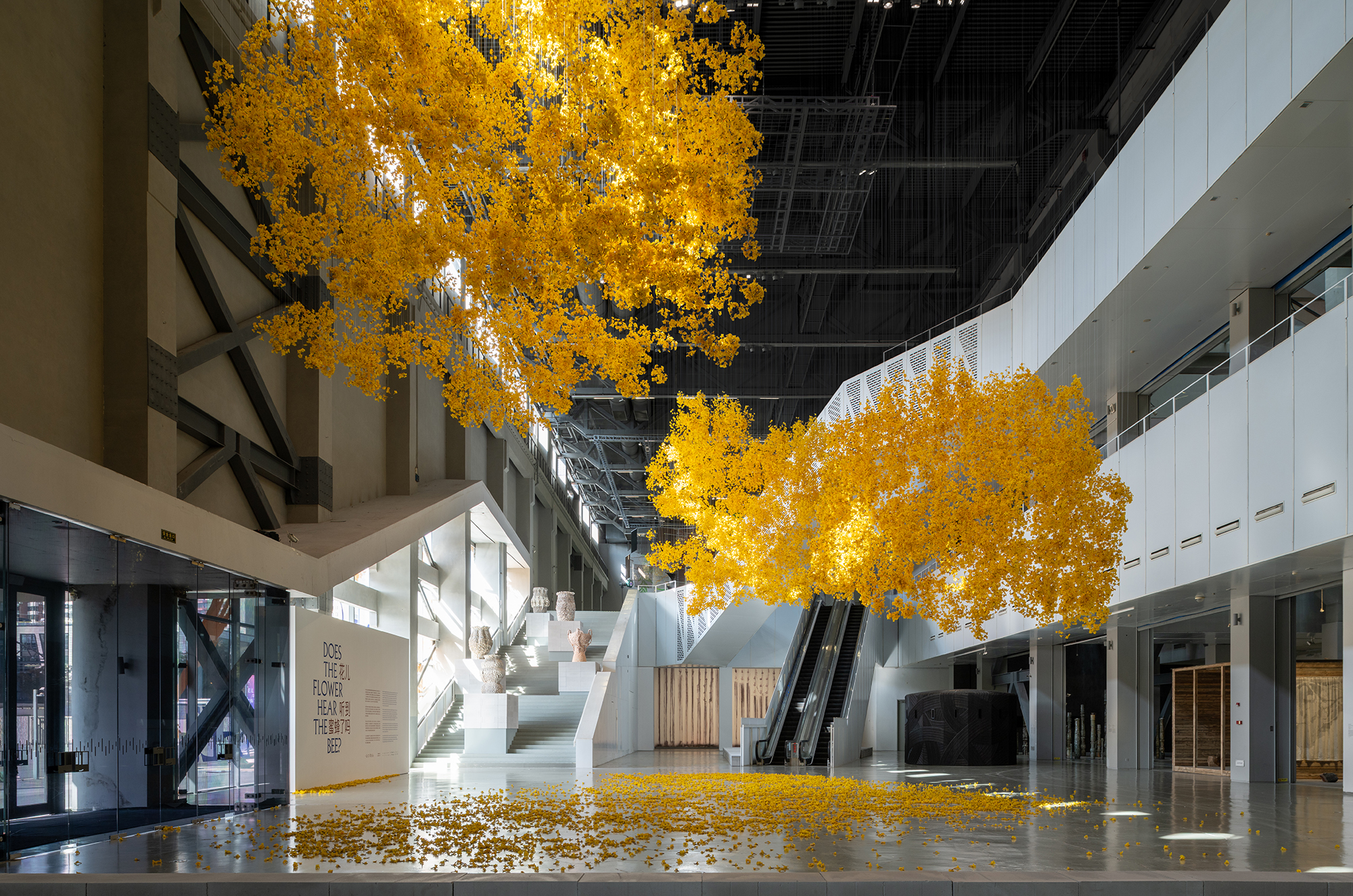
Enter the PSA’s vast atrium and you’re greeted by clouds of yellow synthetic flowers floating in the cavernous central space of the former coal-fired electricity generator. The same flowers litter the ground in drifts, like fallen autumn leaves. The whole is a thing of beauty; a sign of Shanghai’s changing priorities. And like all signs, it has the whiff of propaganda. But signs and symbols dominate this biennial, which hews closely to its stated theme – a study of what hears and what can be heard – in a way that, at its best, speaks to more complex relations.
The flowers belong to Puerto Rico-based Allora & Calzadilla’s Phantom Forest (2025). The blooms are both trunkless and rootless – ghosts of plants – a feeling exacerbated by the contrasting bunkerlike architecture of the former power station, which seems hermetically sealed, designed to protect what’s inside, whether that be art or power, from the outside world. A pollen-less, hypoallergenic, virtual Disneyfied nature. The idea of a blossoming tree standing in for a blossoming tree; a form of advertising. But equally the perfect selfie spot: when I was there, individuals and families clustered under the blossoms, snapping away on their phones like human bees drawn to some invisible nectar, desperately collecting evidence that they were really there; some proof of life, amid the fake nature. And by broadcasting the evidence on social media, fulfilling a role that one might assume belonged to the PSA’s marketing team. That everyone and everything is put to work in the current world order is another theme that courses, perhaps more subliminally, through this exhibition.
Before the blossoms, the ticket attendant handed me (and everyone else visiting the show) a sample pack of True Honey Company’s manuka honey ‘from New Zealand’s remote backcountry and celebrating the exhibition’s theme’, and inviting visitors ‘to imagine themselves as bees, drawing artistic nourishment as they journey through the floors of the Power Station of Art’. It only heightens the feeling of manipulation and artificiality, and makes you wonder why the honey had to come to China from New Zealand. Perhaps that’s a comment on globalisation. More likely it’s just capitalism. Or an admission that audiences need to be bribed to see exhibitions of art. There’s also a scratch-and-scan panel on the packaging offering a chance to win prizes. Presumably sweet ones.
According to the introductory wall text, the exhibition itself aims at operating between ‘differing models of intelligence, both human and nonhuman’. The world, it states, is currently a frightening and confusing place, in which ‘art offers us potential pathways out of despair and malaise, helping us to find emergent forms-of-life and new modes of sensorial communication amid this instability’. If you were beginning to think that this biennial was suggesting that art museums are places for the stupid and stupefied, here they are reconfigured as sites of salvation. And code-switching between ‘differing models of intelligence’ is something this biennial performs very well. If humans have been reconfigured as bees in the atrium, later, in How to Carve a Sculpture (2018–), a work by Aki Inomata, beavers (from Japanese zoos) become artists, gnawing away at pieces of wood that are subsequently replicated as human-size totems by CNC routers. Then there’s Xu Tiantian of Beijing’s DnA Design and Architecture, who features in a documentary film titled Into the Island (2024), talking to villagers, fisherpeople and marine biologists as she attempts to design a museum on Meizhou Island, in Fujian, in a way that serves the needs of nature as well as humans. Speaking to the biennial’s stated themes, it’s a form of intelligence gathering, even if nature itself doesn’t exactly ‘speak’. A respectful form of surveillance.
On the other side of that atrium is a giant text work (untitled 2025, 2025) by Rirkrit Tiravanija that shouts out ‘THE FORM OF THE FLOWER IS UNKNOWN TO THE SEED’, which seems to indicate that not knowing is, well, also OK. Which most people would say is useful council to those entering a contemporary art museum. And indeed, the precarity of knowledge is another recurring theme that ripples through the PSA. Once again, as a means of mitigating the sense of permanence suggested by its imposing architecture.
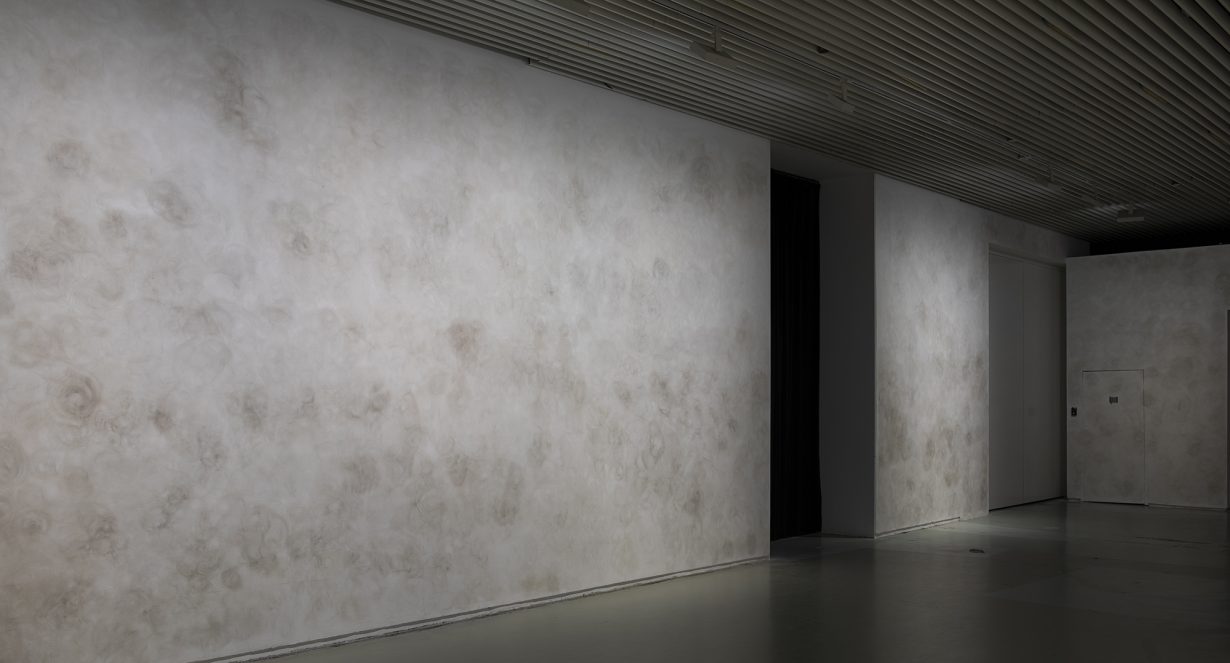
Canada-based Audie Murray (of Métis and Cree ancestry – one of several artists, among them fellow Canadian (Inuit) Shuvinai Ashoona and Brisbane-based d harding, evoking Indigenous knowledge and ways of being in the world) offers a wall covered in smudges of charcoal derived from ceremonial rituals that involve the burning of medicinal plants such as sage and sweetgrass (To Make Smoke; 2025). It’s executed with such a light touch on the museum walls that it might almost not be there, serving to disrupt the white cubism of art institutions in general, and expanding the suggestions of fugitivity triggered by Tiravanija’s text piece. Put simply, the work occupies a sweet spot between something and nothing, challenging the scent of commodification that seemed so present on entry to the biennial.
These themes are echoed and pushed further in Chen Ruofan’s Dust (2025), which features sawdust, gravel, sand, nylon thread and other debris gathered from a furniture factory in Wuhan (the label accompanying the work identifies the factory as an unpleasant and inhuman place in which to work). The detritus is arranged in a floating, striated cloud structure; a riposte perhaps to the flower garden at the entrance. Gözde Mimiko Türkkan offers up 20 hypnotic, slightly crazed red-acrylic paintings of waves (all from 2025) that by turns look like contours on a map, the whorls of a fingerprint, energy waves or earthly strata, and come with titles ranging from Unknowable Waves #8 (one of several titled similarly) and Feminist Waves, to Waves of oppression and Space debris and celestial bodies surfing the atmospheric waves of our planetary spheres (a vortex of hand-drawn concentric circles). It’s an obsessive body of work that collectively suggests that everything is the same and hovering on the edge of meaningfulness and meaninglessness. It’s a suggestion that echoes throughout the biennial, with a certain amount of bravery, given that it’s one that no museum marketing team would make. Even if the artists here do.
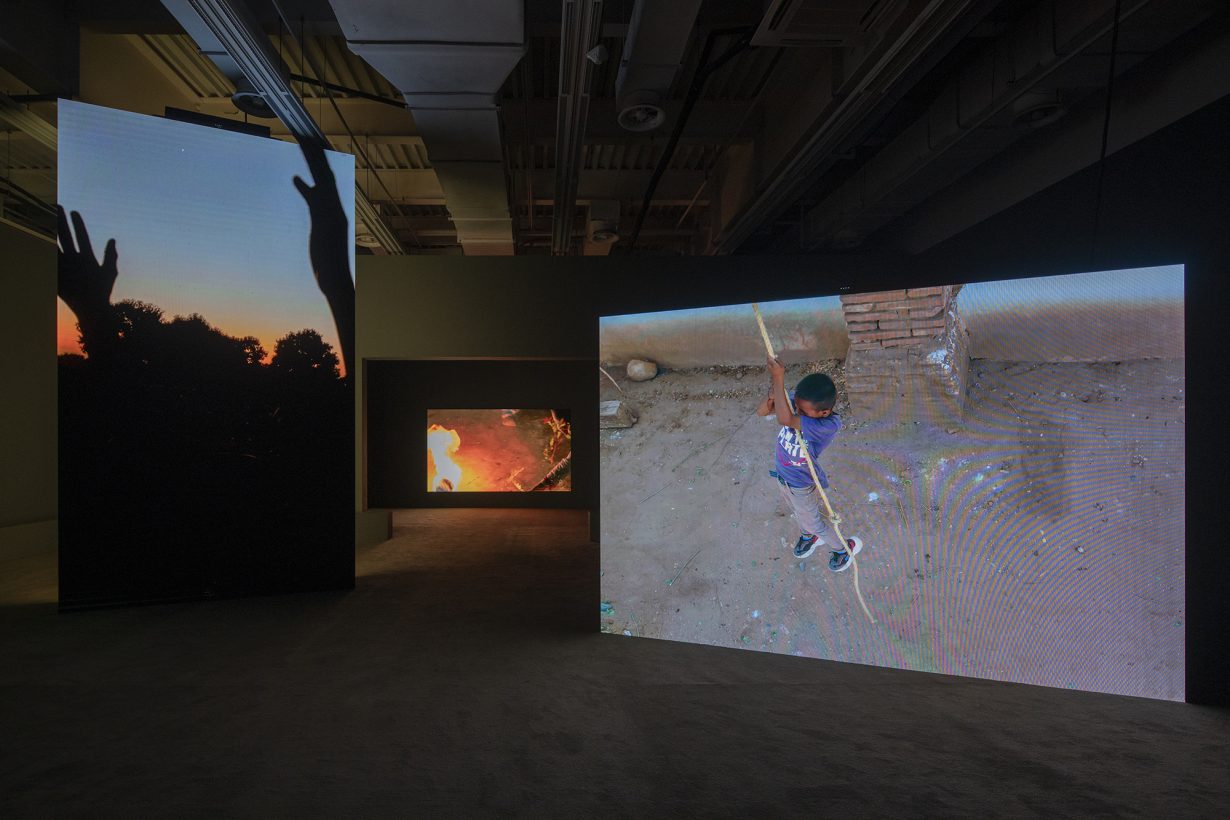
‘I was asked what the works in this room are about,’ writes Francis Alÿs next to a series of 2D works. (It’s a feature of the show that many of the wall texts present the artist’s own words.) ‘It’s a question I sometimes ask myself as well,’ Alÿs continues. ‘For sure the Fire of Fires image popped up while I was reading K’s [chief curator Kitty Scott’s] curatorial pitch for this Biennale. A flame sparked a bird, the bird lit a comet, and from the comet descended a donkey – only to escape into sleep. I wouldn’t be able to articulate what this is all about but maybe this round responds to the moment we live in, if somewhat irresponsibly?’ The aforementioned characters sit on a series of untitled collaged, stitched and painted canvases, hung on the museum walls, tucked across corners as if unfolding a slightly baffling fable. As the artist’s caption indicates, meaning and meaninglessness are close to hand. Which might either be annoying or a true reflection of where the world is right now. Of course, it can be both simultaneously. And often is.
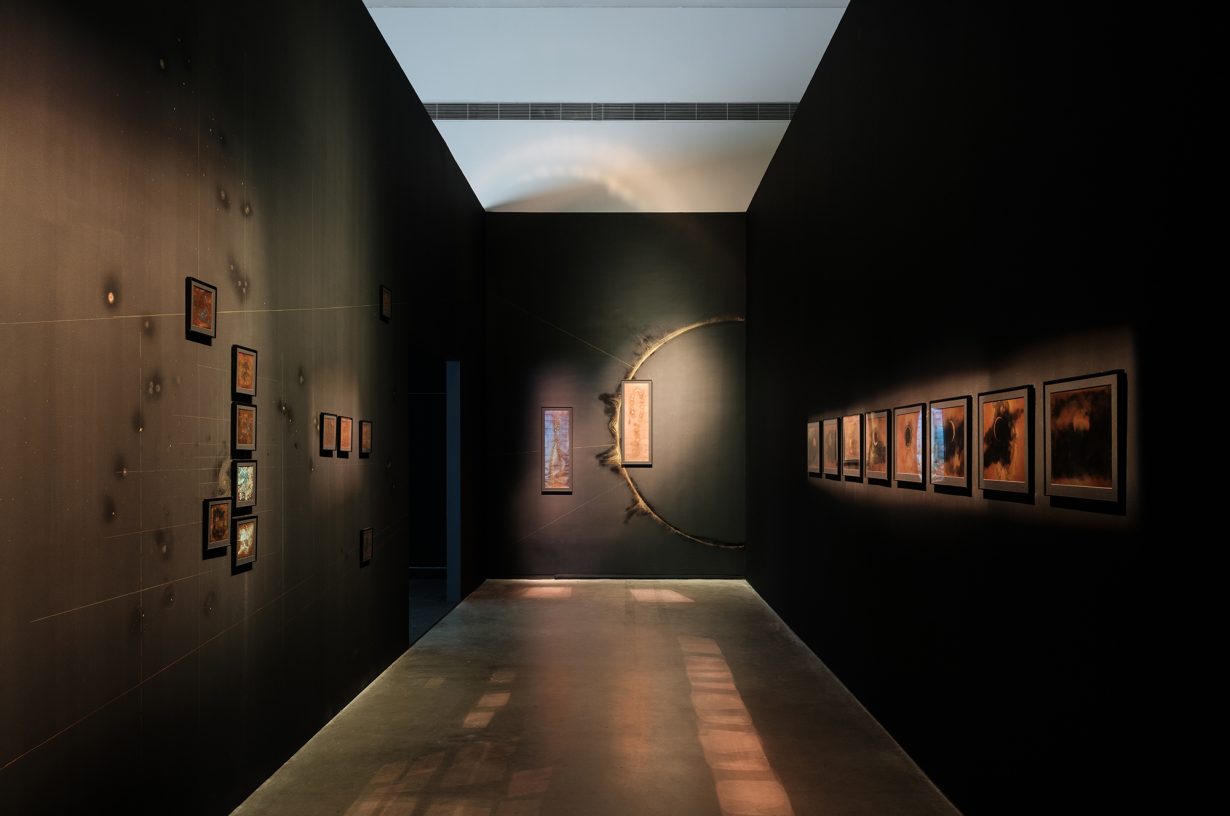
Still, all of the above means that artworks that engage more directly with the world really stand out. As is the case with Cansu Yıldıran’s photographic series The Dispossessed (2015–25), shot in her mother’s homeland of Çaykara, in Trabzon Province, Turkey. There, the personally written wall text informs us, women are banned (by tradition, rather than law) from owning land or houses. Yıldıran’s photographs of women (who labour on the land, but are also captured holding rifles and in other poses of power), animals and land offer a portrait of other kinds of attachments and different solidarities, ones that are outside hierarchies of ownership or commercial gain. Similarly, Rohini Devasher’s four-channel video One Hundred Thousand Suns (2023–24) and related series of drawings and prints is based on the history of the Kodaikanal Solar Observatory, in Tamil Nadu, India, a key site for solar physics studies that has been recording images of the sun for over 125 years. In it, the attempt to chart and understand a distant, flaming ball of gas is intertwined with histories of colonialism and human cartography, as well as more philosophical attempts to understand the universe (or the unknowable), and the evolution of media used to record it and memory on both human and interstellar levels. Moreover, its situated searching and attempts to understand what seems like the unknowable ground more abstract works such as Gözde Mimiko Türkkan’s waves, or Alÿs’s struggle to understand his own fairytale and locates them in a space we might recognise as that of daily life: a little bit messy despite our attempts to order it into a routine, but inevitably present.
15th Shanghai Biennale: Does the flower hear the bee? at Power Station of Art (PSA), Shanghai, through 31 March
Read next 14th Shanghai Biennale Review: Stick to the Script