The year in religion: What, in 2025, was contemporary art’s relationship to a world of changing – and radicalising – spiritual cultures?
Where once religious bodies were the overwhelming patrons of – and their teachings the subject of – art, questions of canonical faith have all but disappeared as a presence within contemporary galleries and museums. Too tricky, it seems, too much baggage, not easily passed into curatorial speak, too much cancel culture to be wrestled with. Like the British government, curators ‘don’t do God’.
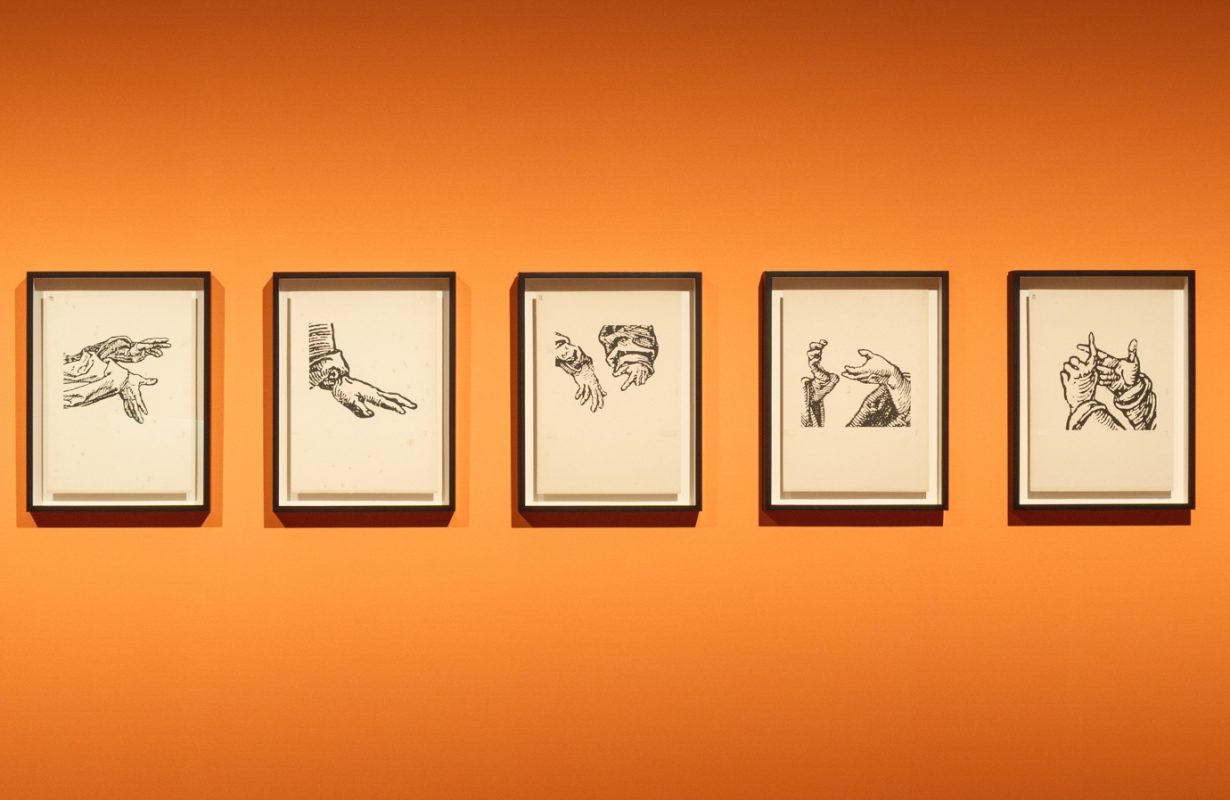
For many twentieth-century artists, especially those from Catholic societies or those exploring queer identities, the Church provided a social and political force to fight; a monolithic presence against which artists including Andres Serrano, Maurizio Cattelan or David Wojnarowicz could transgress. Now the odd tale of art being deemed blasphemous seems quaint to the point of ridiculous in much of the West: in March, contemporary engravings by Christophoros Katsadiotis on show at the National Gallery-Alexandros Soutsos Museum in Athens were vandalised by a politician from the rightwing Greek Orthodox Niki party for their supposedly sacrilegious quality; while the same month, sexually explicit paintings by Fabián Cháirez of queered clergy were taken down from Mexico City’s Academia de San Carlos Centro Histórico, but both stories were treated as anachronistic and with bemusement by most media outlets. Amy Sherald’s self-cancellation of her Smithsonian exhibition, over censorship of her 2024 Trans Forming Liberty painting, came amid a US culture war where religion really only plays a bit part for those actually with the power (however much Donald Trump benefitted from the Republican Party’s evangelical base).
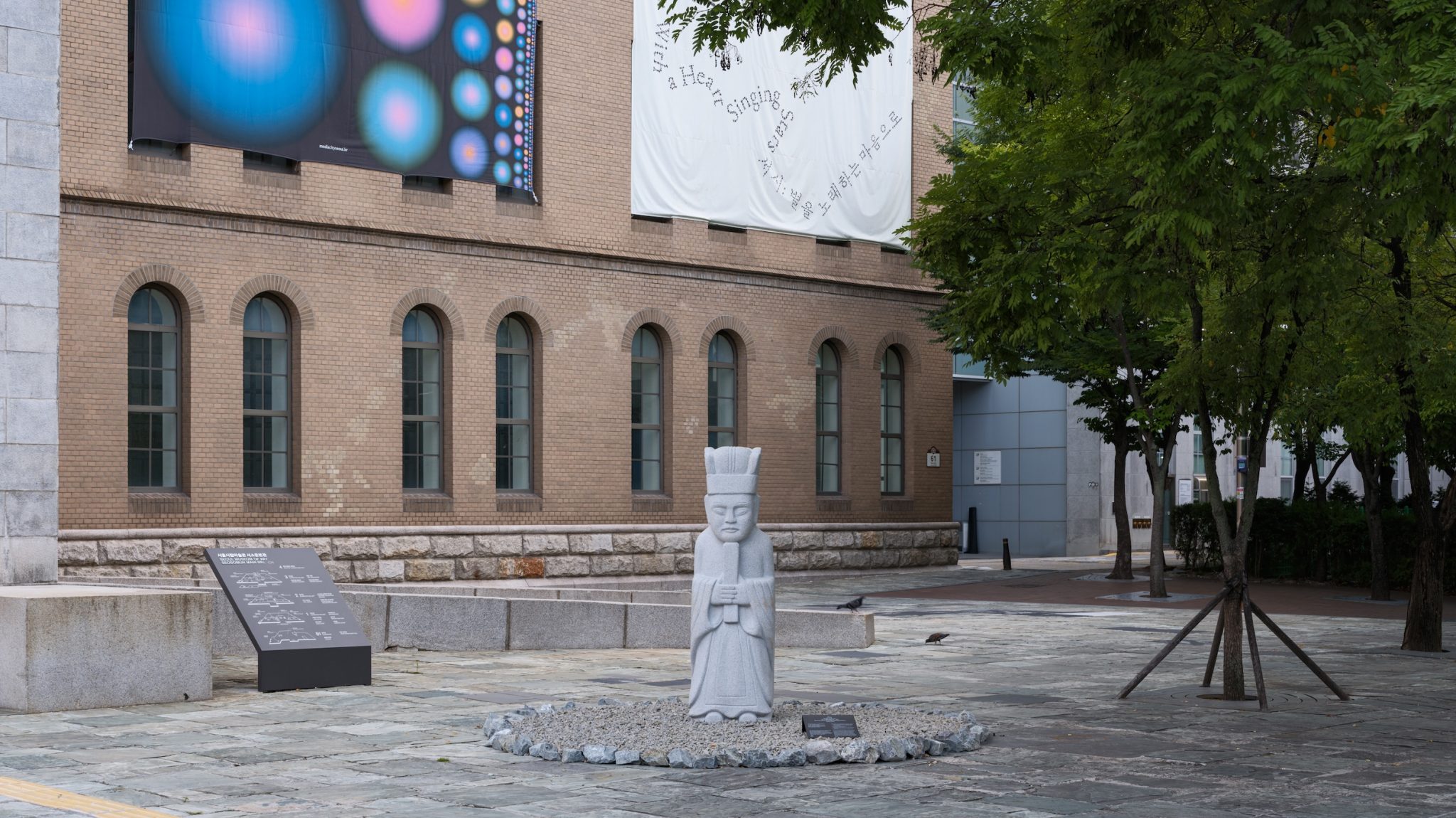
Which is not to say that spirituality has exited the gallery, as many of the most high-profile exhibitions and biennials this year attest to; but it manifests primarily in references to faiths that sit outside the major religions. The Bienal de São Paulo, titled Not All Travellers Walk Roads by curator Bonaventure Soh Bejeng Ndikung, leaned into notions of non-Western, Afrobrasilian or Indigenous cosmologies, animist incarnations and expressions of spiritual ritual. Such themes also threaded the Seoul Mediacity Biennale with curators Anton Vidokle, Hallie Ayres and Lukas Bras’s show Séance: Technology of the Spirit posing the question of ‘what role has spiritual experience played in the development of modern and contemporary art?’ One answer would be to look at the work (and phenomenal ‘rediscovery’ in recent years) of Hilma af Klint, whose otherworldly career was surveyed at MoMA, New York, over the summer.
This thematic turn is located in curatorial decolonising missions, as well as ecological research; a welcome reach for something beyond anthropocentrism, and the related European canon, bringing us here. There is an argument that such an emphasis is a convenient sop, emptying exhibitions of more contentious political references (Germany-based Soh Bejeng Ndikung, for example, was criticised for not addressing Palestine in his show by many reviewers, worried no doubt about reaction back home), and in their search for inclusion curators ignore a large subset of their audience with doctrinal faith (84 percent of Brazilians identify as Christian, for example, while a third of South Koreans do). At its worst – the sound installation in the Bienal de São Paulo that implored me to “send love to guide the path to truth” springs to mind – it’s all a bit esoteric. Yet the foregrounding of art that fuses the sublime and the immaterial is an understandable, and vital, counter to the technological, ecological and political alienation that otherwise seems all-pervasive. The Bienal de São Paulo was subtitled ‘Of Humanity as Practice’, but it might as well have taken the Jon Fosse line ‘the human being is a continuous prayer… a prayer through his or her longing’ as its mantra. Whether your liturgy is to the orixás of Candomblé or to Fosse’s Catholic Trinity, the effect is the same.

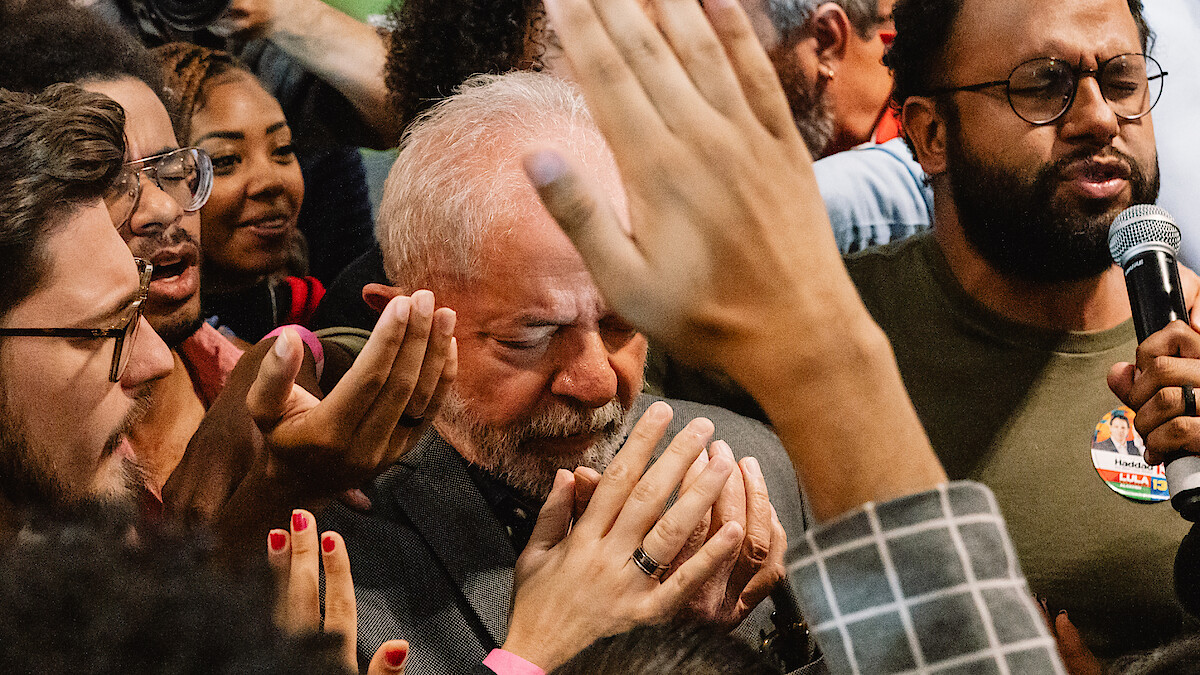
The Catholic Church is not the monolithic beast it once was either (here in Brazil, the evangelical movement has all but replaced it within the populist Bolsonarismo right, something essayed in Petra Costa’s excellent new documentary Apocalypse in the Tropics). Pope Francis’s death in April was mourned beyond the Roman faithful, the South American a rare voice of humanity on the world stage. His personal journey from conservative bishop during the Argentinian dictatorship to relative progressive – the pope who called the parish priest of the Church of the Holy Family in Gaza every night – was much mulled over, not least as the cardinals headed into the Vatican conclave. Out emerged the Chicagoan-born, Peru-naturalised, Pope Leo XIV: TV correspondents and social media, delighted with his Anglophone familiarity, concentrated on inconsequential titbits such as his support of the White Sox baseball team or love of Wordle. Only later did it emerge how Leo would lead the growing 1.4 billion papal faithful, his calm demeanour masking a religious service in Chiclayo that centred on refugees and human rights. Now as pontiff, risking a schism in his liberalism, he’s decried clickbait news, offered criticism of the murderous Israeli and US regimes (and their fig-leaf faith) and pleaded for an end to the ‘third world war fought piecemeal’ that currently convulses humanity.
I took a walk through downtown São Paulo, where I live, while writing this. It was one of those days before Christmas when the Brazilian heat rarely abates. Outside the city’s largest cathedral, I found a Jesus Wonderland. Fibreglass nativity figures, three-metres-tall, gathered around a stable – a tableau overseen by the secular gods of Father Christmas and a flock of festive penguins. Sacral music was broadcast from speakers as huge projections filled the church’s Gothic Revival facade with silhouettes of Mary and Joseph. Beyond this ostentatious kitsch, the usual patrons of the square continue to mingle: the crack cocaine addicts, the homeless, the possessed and dispossessed. It seemed to encapsulate the dichotomy of religion, whatever the faith, and how any reflection of the last 12 months necessarily deviates towards the spectacular: the major headlines of papal successions and doctrinal division, sectarian and interfaith conflict, rightwing and nationalist co-option, scandal and politics.
I could write more on the dawning battle for the next Dalai Lama, India’s slide into all-out Hindutva nationalism, the Scottish Kingdom of Kubala sect. Instead, walking on, I wondered where the soup kitchens and showers for the homeless normally installed near the cathedral had been moved to. I found them on a side street. It was 6pm and the queue snaked 200 metres round the corner. Volunteers staffed a table, ladling hot meals into polystyrene bowls; a priest from the cathedral in a matching fluorescent bib worked the line, chatting and joking with his regulars. It is these small moments of pastoral care and service that get lost under the headlines, the quiet, personal expressions of faith, meaningful to the individual believer, that are harder to parse. Let the bowls of beans and rice in Praça de Sé represent that.