An eighteenth-century cataloguing project by an amateur British botanist working with a Chinese artist and a translator lays bare the tangled roots of colonialism
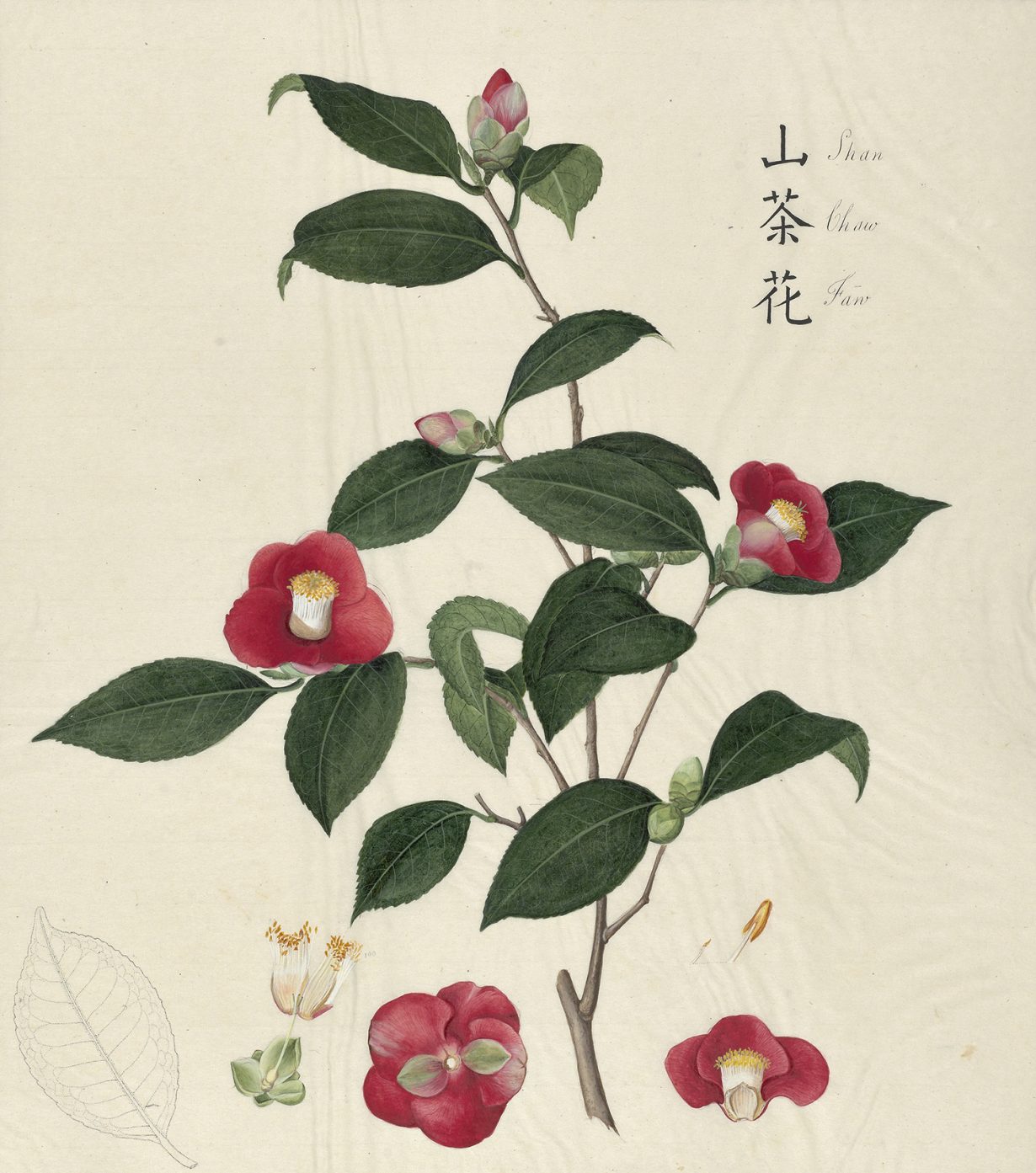
A watercolour painting of a Camellia japonica, currently on view in the exhibition Seeds of Exchange at the Garden Museum, London, features a delicately painted branch of rose-coloured camellia against a blank background in the style of an objective botanical illustration. The sample is carefully figured to represent all stages of the flower’s growth on a single branch: from bud to bloom. It is flanked by detailed anatomical views of the flower: from the bottom up, cross-sectioned or zoomed-in to its dense bouquet of stamens exposed on a petalless sepal. By the side of the image is its Chinese name, accompanied by the English transliteration of its Cantonese pronunciation. The image was made in Canton in 1773, a collaboration between a Cantonese painter, Mak Sau, and British East Indian Company supercargo (the officer in charge of a merchant marine vessel’s commercial interests) and amateur plant hunter John Bradby Blake, shortly before the latter died, at the age of twenty-nine, in China’s southern port-city Guangzhou. The Camellia japonica, long domesticated in China and Japan, though yet to be introduced to the West, would be the subject of a ‘Camellia craze’ that began during the early nineteenth century.
The first Chinese flora arrived in Britain not as plant specimens, but as seeds and images. The camellia painting, one of several of the species, is part of Blake’s unpublished Flora Sinensis, the first attempt to systematically catalogue the complete Chinese flora, which through Blake’s own social circle would later influence the collecting practice of Sir Joseph Banks, honorary director of Royal Botanic Gardens, Kew, and the content and drawings of his Chinese commissions. During the eighteenth century, plant hunting – the practice of sourcing rare or unknown plant species, whether as cuttings, seeds or other forms – was a nascent business. It was emerging from the already popular cabinets of curiosities, but received a major boost after Swedish naturalist Carl Linnaeus published his Systema Naturae in 1735, and later Species Plantarum (1753), where thousands of species were categorised under his version of the binomial nomenclature system. The eighteenth-century plant hunters were not yet professionals, but predominantly traders working at maritime commercial companies, a fashion of accumulating knowledge and materials which came to be known as ‘Company Science’.
Of course, scientific knowledge was not the only motivation. Plants and seeds were also picked for economic as well as aesthetic values. And plants were circulated in such a way that they greatly shaped the landscape of both Britain and its colonies. Wisterias, magnolias and Camellia japonicas decorated British gardens, while rice, tallow-tree and tea plantations would be introduced to colonies in the Americas and South Asia. This forced migration helped the British Empire gain not only control over plantation towns and trade routes (Robert Fortune, for example, another British plant hunter, smuggled tea plants out of China, which lead to the British Empire’s monopolisation of the tea trade), but also domination over knowledge production – the plants that travelled to foreign lands were assimilated into the Linnaean system, which then, once the specimens were transported, displaced the local naming, indigenous knowledge and cultural significance.
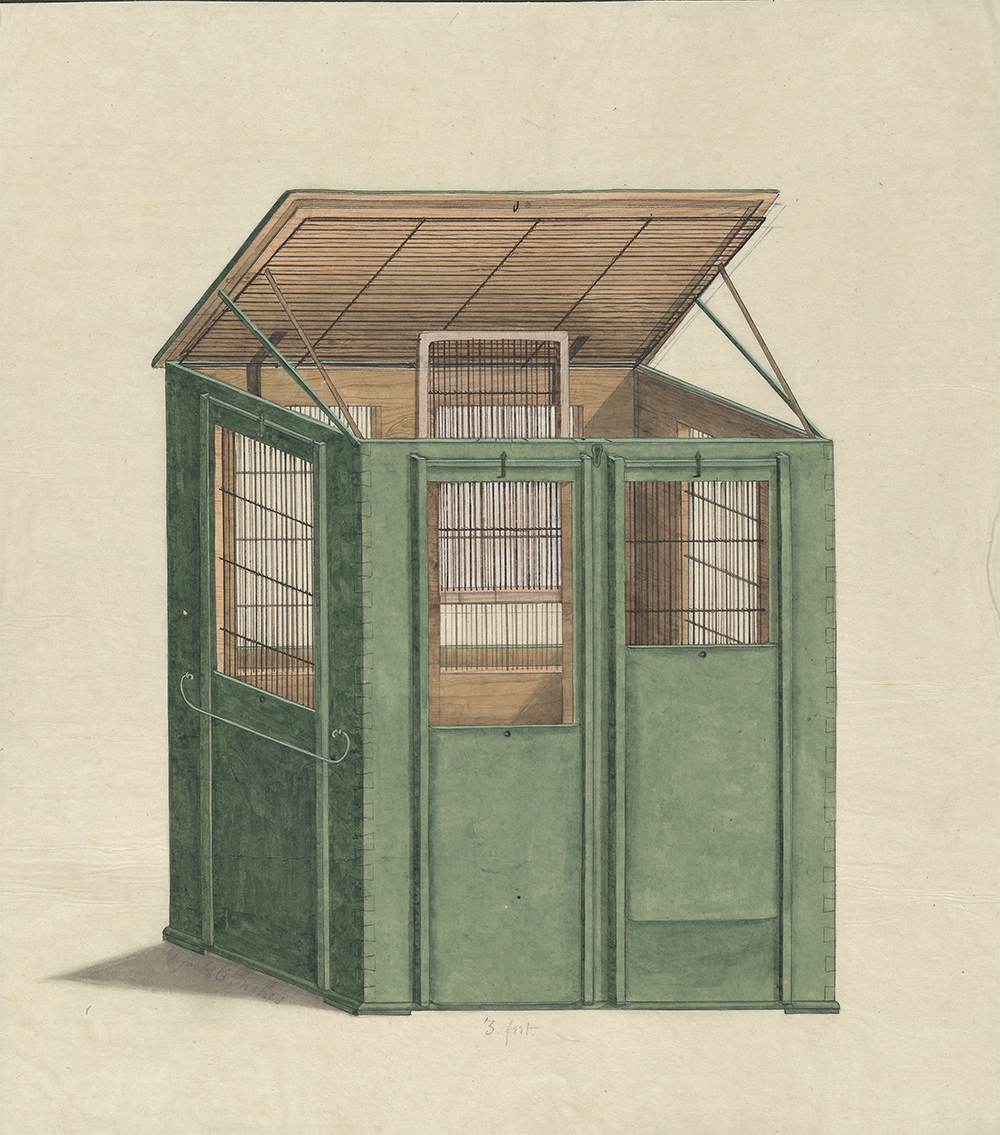
What makes Blake’s project stand out, besides its sheer ambition, are the traces of collaboration that emerge through his documents and survive a project associated with Western scientific triumph. The only son in a lineage of British East Indian Company officers (his father, John Blake, captained the ship Halifax to Southeast Asia early in his career), Blake followed his father to become a supercargo on a ship to Canton, at the age of twenty-three. It’s not clear how his interests in botany developed (some sources suggest that the plant nurseries that dotted his childhood neighbourhood of Westminster had played a role), but by the time he decided to head East, it was with the ambition to hone his skills as a naturalist. Before he left London he met one of Carl Linnaeus’s students, Daniel Solander, and R. John Ellis, who advised him on practical matters of handling and shipping specimens over long distances. Ellis had invented ‘seed boxes’ for transportation; Blake junior would use a similar version to send seeds back to his father.
Blake sailed to China during the Canton Trade period (1757–1842), when the activities of Western traders were restricted to the coastal city of Guangzhou during a ‘trade season’ (October to March); for the rest of the year they’d have to retreat to Macao. For Blake, being confined to Guangzhou not only meant living in the international residence called the ‘Factories’, but also that his searches for inland plants required him to rely on local facilitators. His letters mention hiring Chinese collectors to travel through the countryside around Guangzhou and return with botanical specimens. Still, a large portion of his painting commissions are of local species – from hibiscus and cotton tree flowers, to jackfruit, bitter melon and various kinds of chillis. Once he secured seeds and cuttings, members of the local community were also crucial to understanding what they were – how to identify, use and successfully breed them. If he wasn’t exactly generous in identifying his helpers, he did mention how their local knowledge came to inform his own. On one occasion he mentions ‘a Chinese’ giving him detailed instructions on planting his seeds: ‘the stone ought not to be planted above one inch and a half, or two inches (at most) deep in the Earth’.
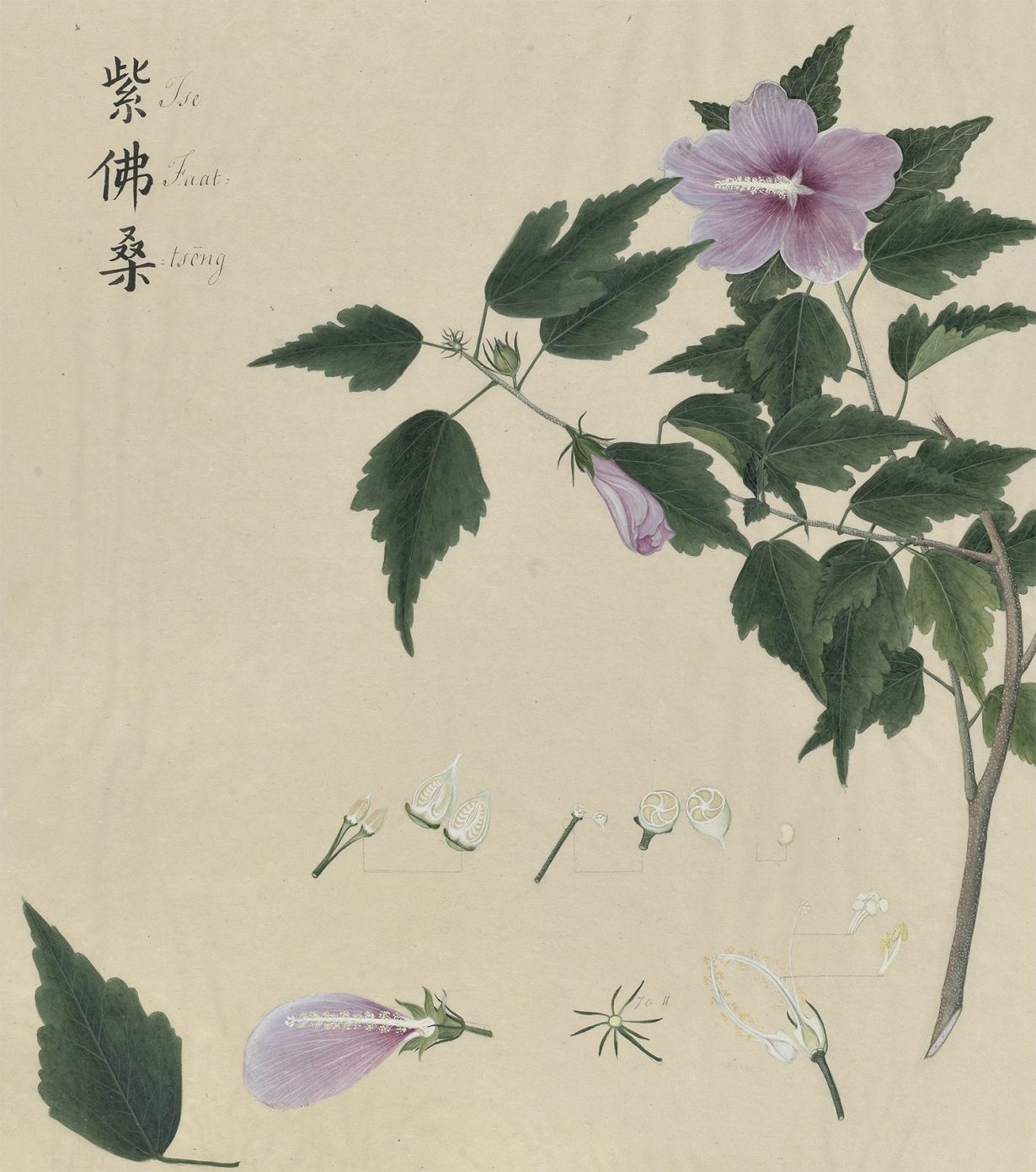
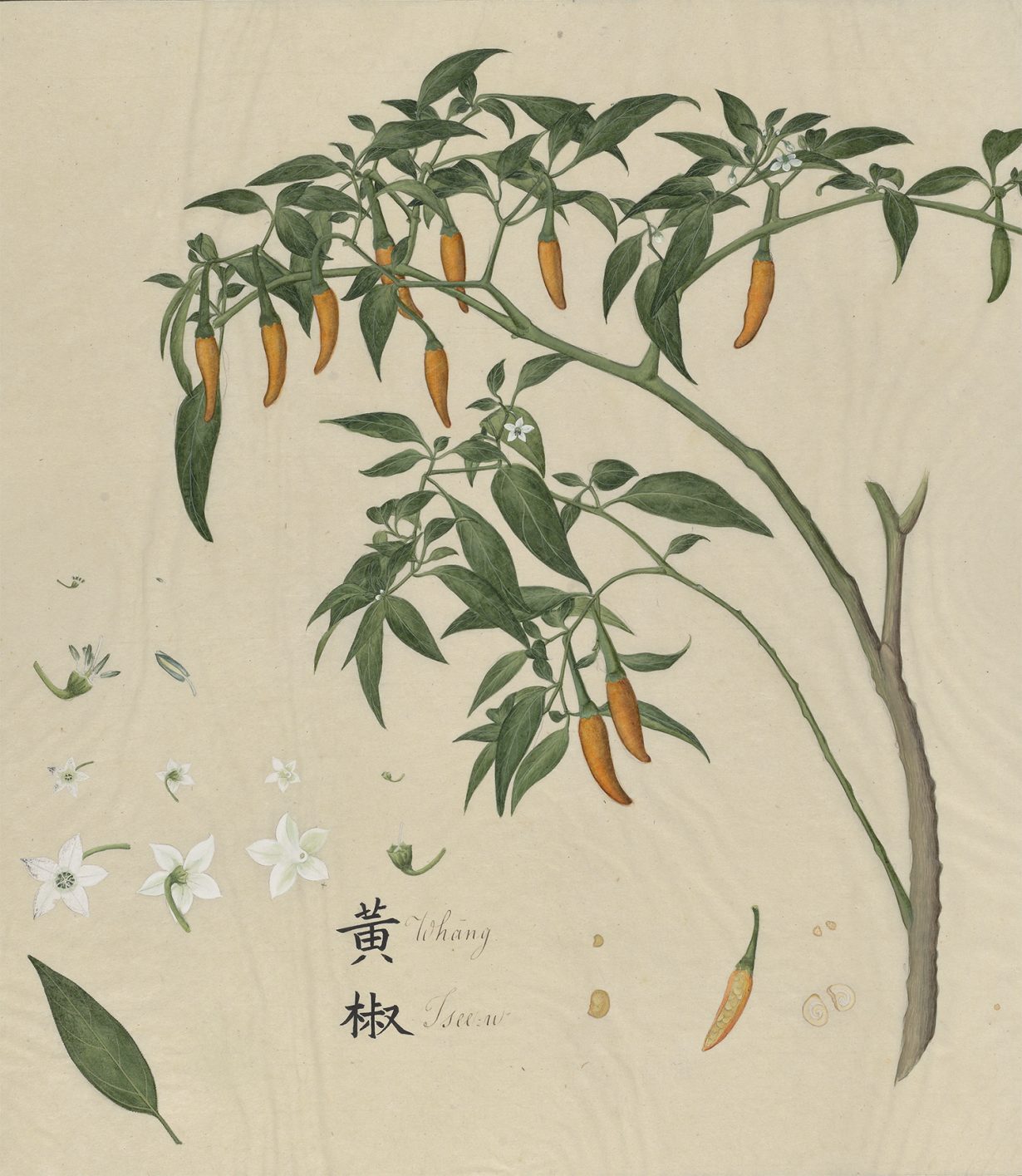
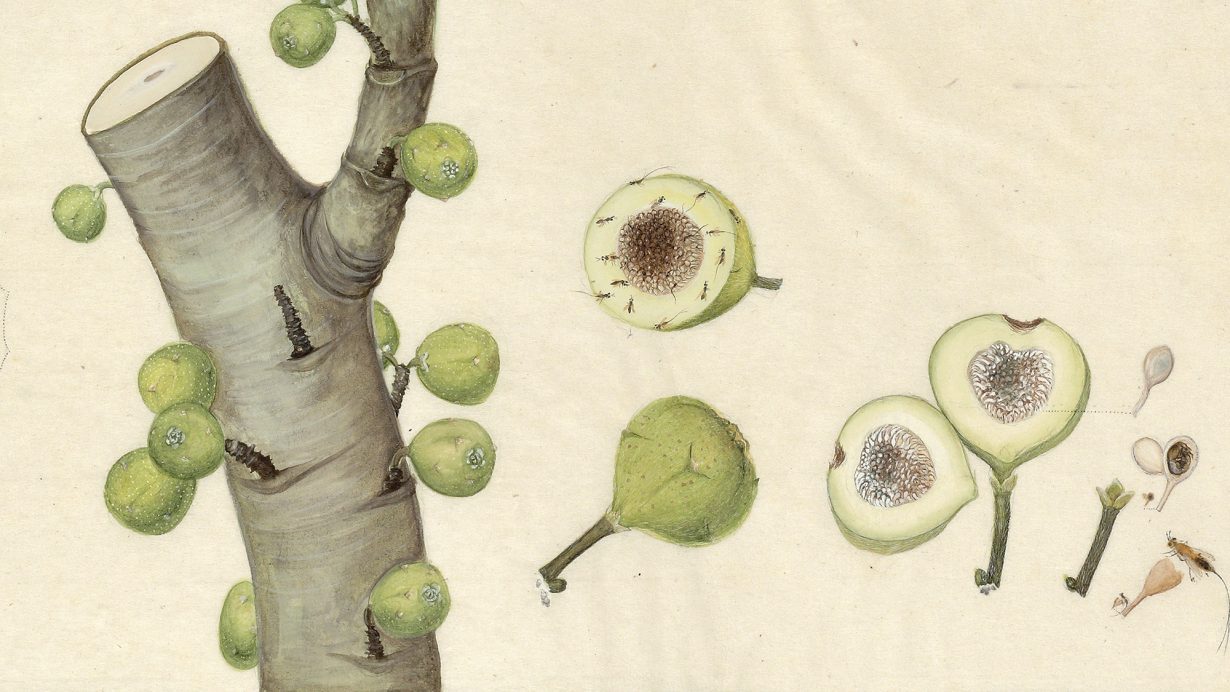
More in-depth was his collaboration with Mak Sau, ‘a very ingenious Chinese’, he tells his father in a letter, who ‘is very capable of copying exactly from nature by my assistance’. He paid Mak Sau (‘at no small expense’) to work exclusively for him: ‘He is with me every day, from nine in the morning till six in the evening, and when my duty does not call me elsewhere, I sit at the same table with him in my apartment’. The extent of this relationship is visible through the paintings they produced. A typical composition of a Blake commission comprises the sample’s name calligraphed in Chinese characters with a transliteration of the Cantonese pronunciation, a plant cutting at the centre, flanked by detailed, sometimes magnified, views of variously dissected fruits and seeds in the scientific manner. Sometimes insects are included to indicate the plant’s connection with the wider biosphere, with which Mak Sau would have been more familiar – in the case of a fig plant, the seeds are depicted alongside the plant’s pollinator, a miniscule fig wasp. Though each branch looks elegantly poised, it was often painted cumulatively throughout the seasons as the plant grew, with flowers and fruits added to the compositions later on – which would also suggest close collaboration over time. One may marvel at the ‘scientific’ treatments of the paintings – Blake obviously instructed Mak Sau to paint like Linnaeus’s artist Georg Dionysius Ehret. Though, at the time, they would have also reminded a Chinese viewer of the flower and bird paintings of the gongbi tradition, which became popular during the thirteenth century and were known for their naturalism and meticulous attention to detail, if not so much to lighting – a tradition that would have prepared Mak Sau for painting in the style of the Western canon.
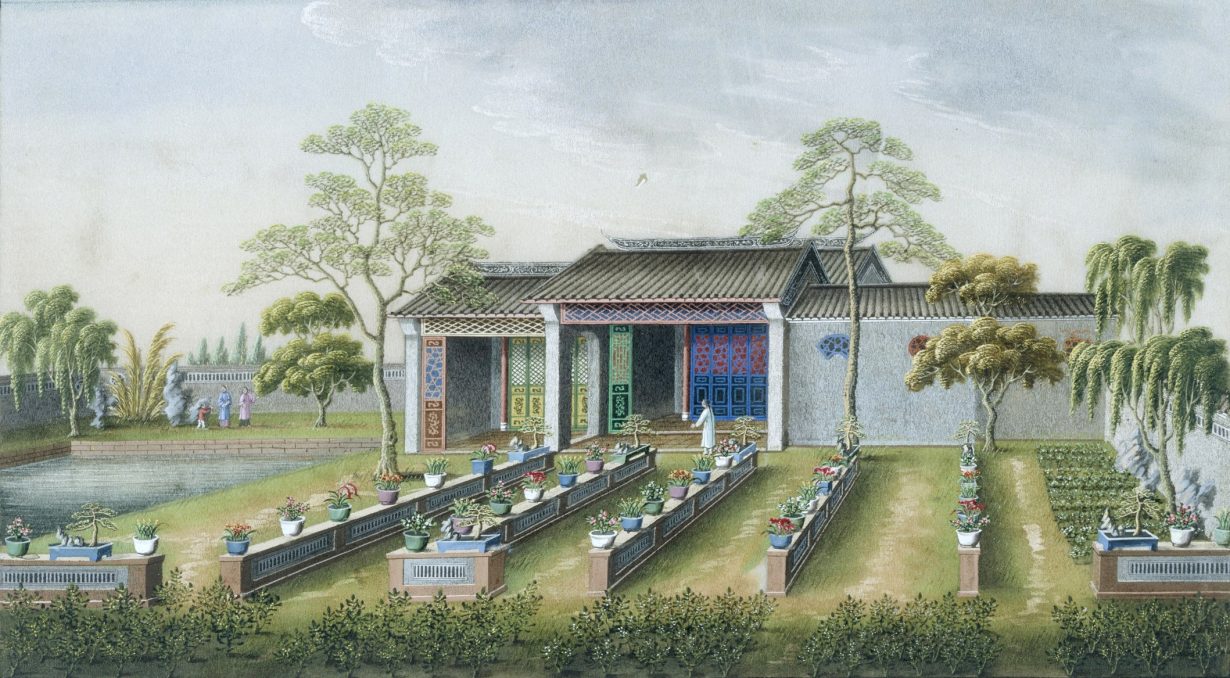
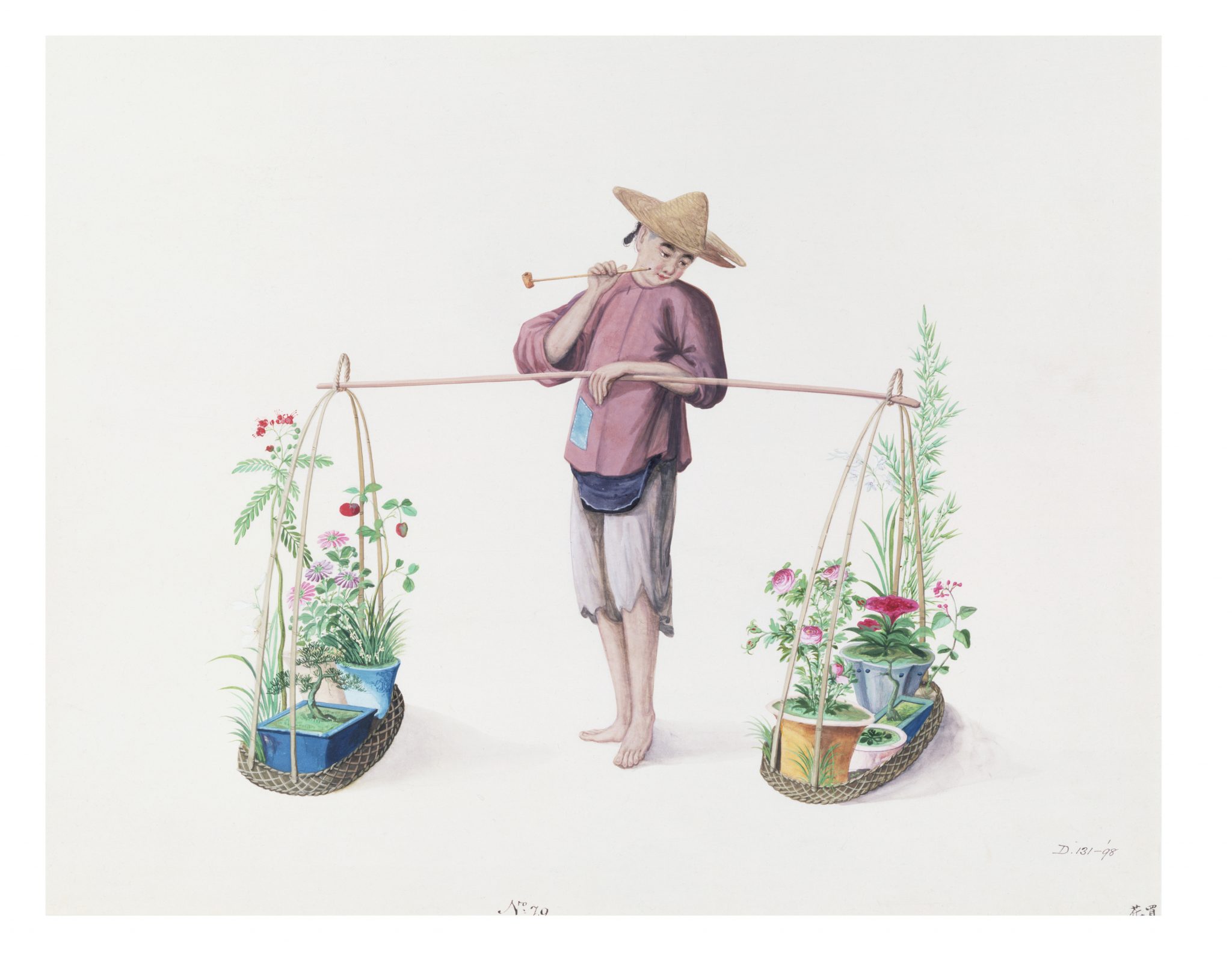
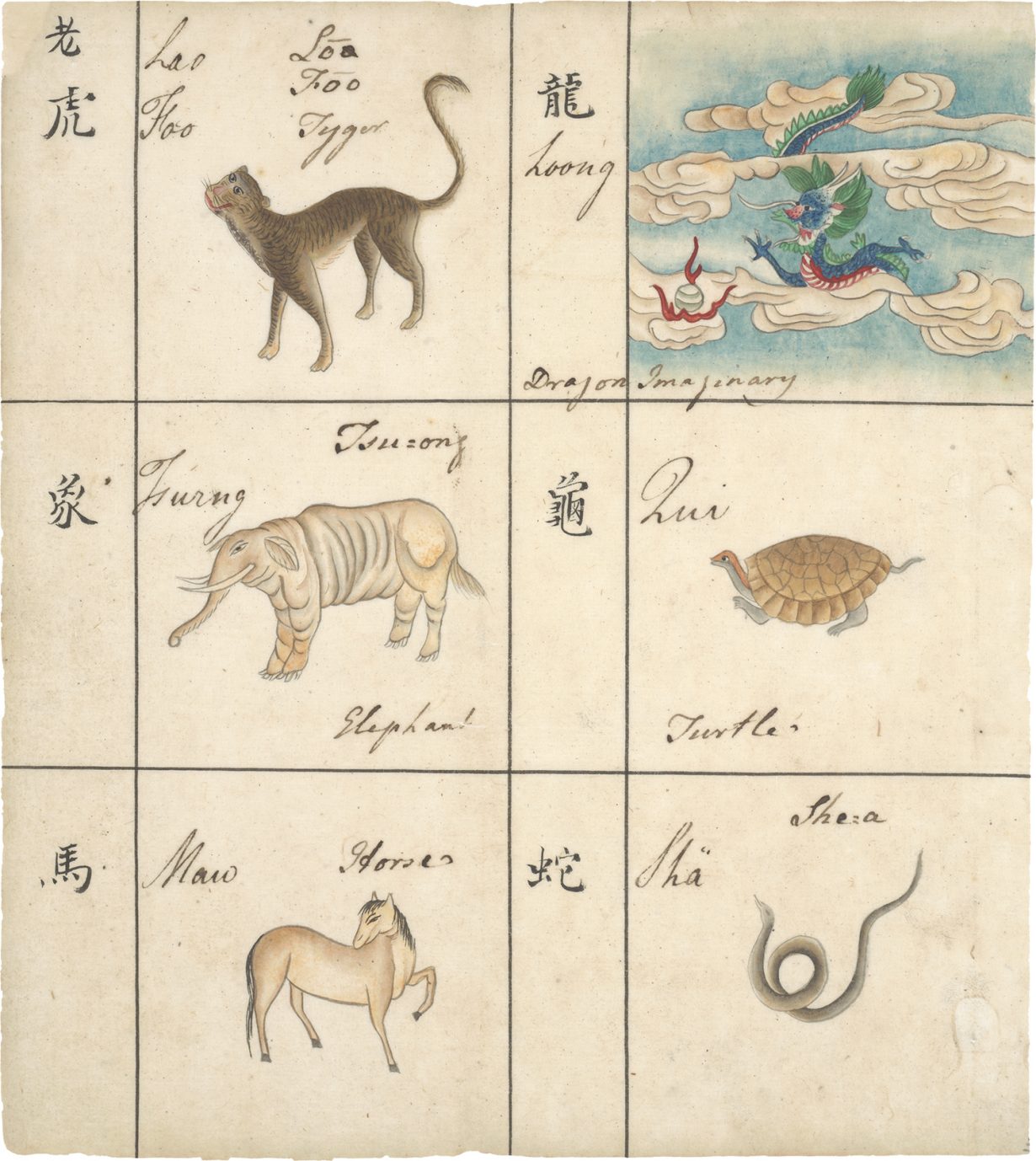
Other stakeholders in this process were Guangzhou’s own plant collectors, often wealthy merchants who had access to and knowledge of rarer plants from the broader region, spanning from Taiwan to Southeast Asia. An export painting – paintings made for Western traders – Garden Scene, Guangzhou, China (c. 1850–70), for example, depicts a Chinese garden in Guangzhou, showing how plants were collected and displayed in Chinese contexts: pruned bonsai (or penjing in Mandarin) potted in porcelain pots are displayed in arrays in a courtyard, some decorated with the porous and gnarled taihu stones to represent a mountainous landscape and suggest how plant collecting in China at the time emphasised aesthetic refinement. Another important interlocutor for Blake was his translator Whang At Tong, who supported him in his efforts to learn some of the Chinese language. Alongside his plant commissions, Blake also took notes on Chinese vocabularies and written script, and commissioned an illustrated dictionary containing not just plant-related terms, but also animals and kitchen tools, including the mythical Chinese dragon and a Chinese-styled iron wok. These fragments come together to demonstrate how a field of expertise is collectively built and sustained. After Blake’s death, Whang brought Blake’s archive to London and continued to work with Blake’s father on the collection. Of the specimens Blake collected and distributed through his network, Cochinchina rice was brought to Jamaica and South Carolina, and the tallow tree to the broader Caribbean region, and is today classified as an invasive species, whose spreading thickets displaced native vegetation. His other seeds were sent to British institutions such as Kew Gardens and the Chelsea Physic Garden.
What Blake and Mak Sau’s story helps us understand is the extensive collaborations that grounded Western science, and the amount of knowledge, skills that would have been left unrecorded and gone outside the perceived work of ‘science’. In Blake’s time, travelling plants were seeds of opportunism – they enriched the British Empire and fed its rosy picture of affluence and prosperity, though they destroyed the prosperity of others and left out their hidden, often exploited, labour. Today, plants and seeds are picked and preserved for other reasons: seed banks now represent efforts to ‘conserve biodiversity’ around the globe and as precautions against extinction events, whether natural or (more often) man-made, with the old notion that these genetic specimens constitute some sort of scientific capital and intellectual prowess. With in-depth genetic research, and even more hegemonic claims of scientific truth, they’ve made Blake and Mak Sau’s flower records – with Mak Sau’s poised aesthetics and craftsmanship, as well as Blake’s method of giving species definition via their superficial appearance – look like decorative artworks. Though questions remain: as we procure and preserve evidence of knowledge for the name of science, what are we ready to lose in the process?
Seeds of Exchange: London and Canton in the 1700s is at the Garden Museum, London, through 10 May
From the Spring 2026 issue of ArtReview Asia – get your copy.
Read next How Singapore Made Orchids a Tool of Foreign Policy