***Subscribe now or get your copy from our online shop***
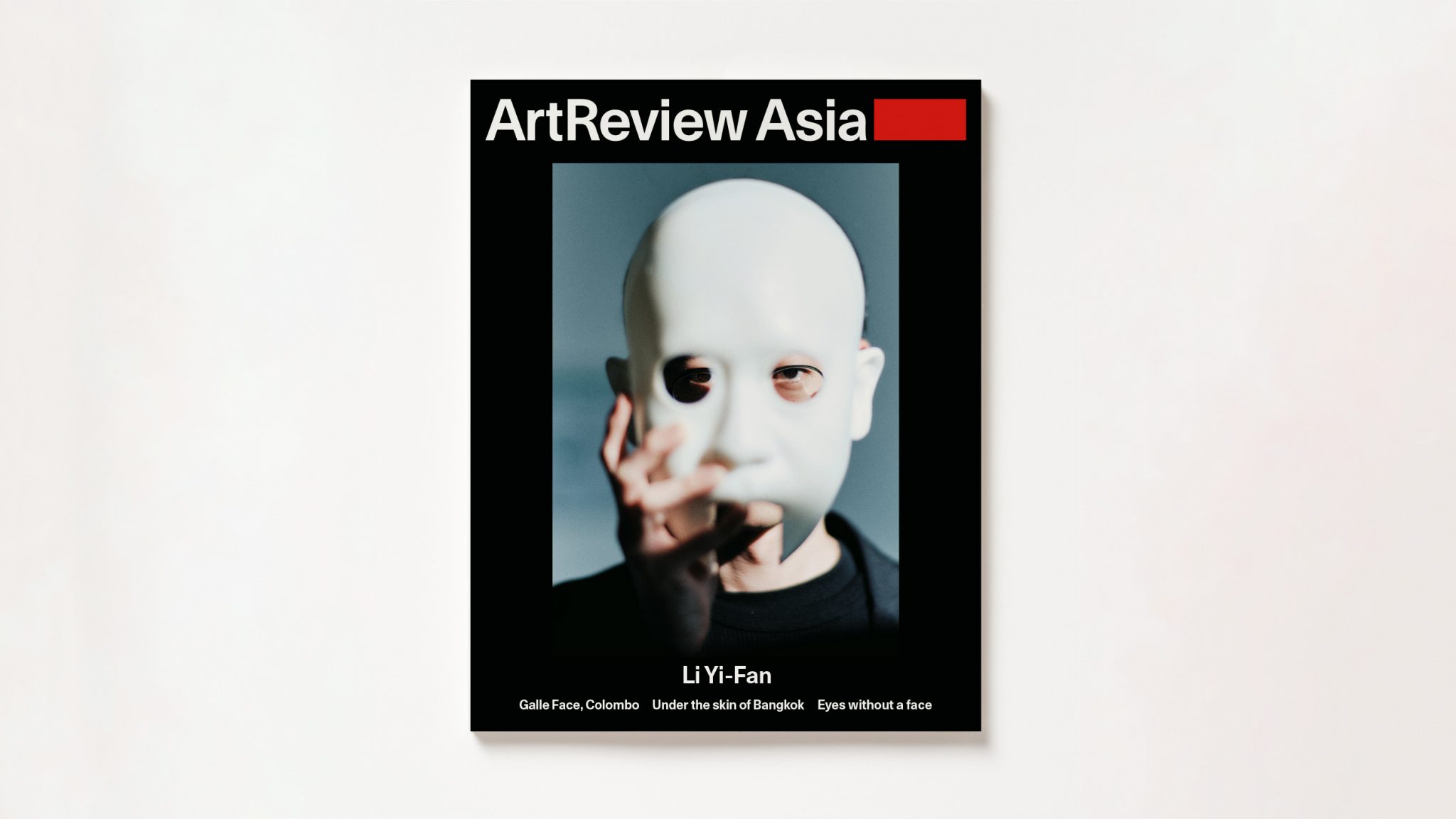
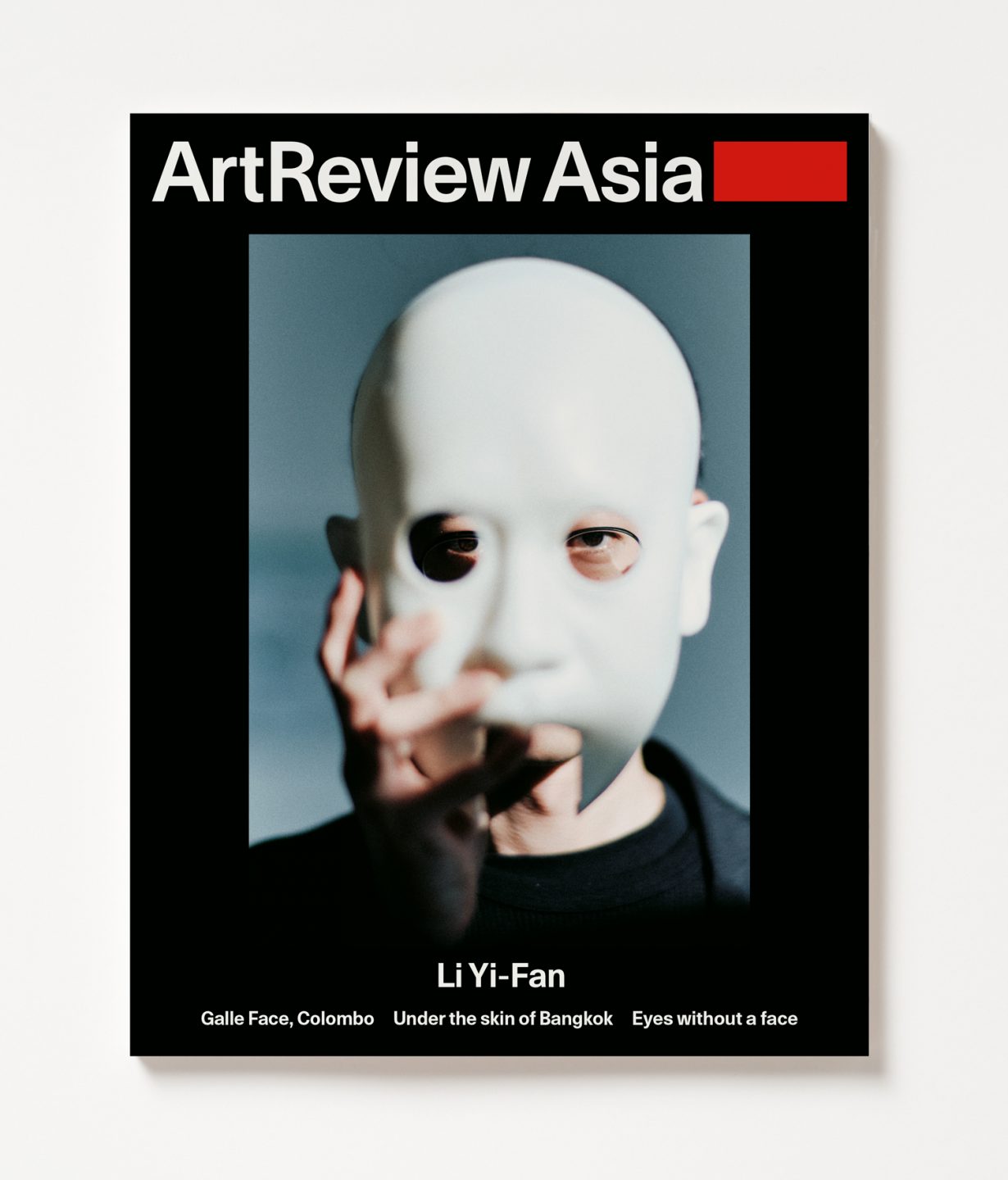
Why is technology, once the engine of progress and hope, at the root of so much current pessimism? ‘The machine is not our friend’, writes Travis Jeppesen in the opening lines of his profile of Amsterdam-based Li Yi-Fan, identifying what he sees as the artist’s baseline position. Yet Li’s works contain the suggestion that humans are themselves machines. Li, who will be presenting Taiwan’s collateral event at the Venice Biennale this May, is known for freewheeling, free-associative video installations and performance lectures that feature characters voiced and directed, like digital puppets, by the artist himself. Li’s project for Venice will focus on AI and likely feature the weaponised humour on view throughout the artist’s body of work. For Jeppesen, there are abundant metaphors at play here ‘between Li’s enacted situation and our own condition as twenty-first-century puppets’.
For those who have been touting Bangkok as home to one of Asia’s most promising contemporary art stories – a city of vibrant art scenes, creativity and energy – Max Crosbie-Jones points out that such excitement has visited Thailand’s capital previously: during the 1960s, in the mid-70s, again in the late 90s and during more recent times. Still, the current exuberance is strongly felt, particularly from abroad. Crosbie-Jones examines recent developments on the ground in Bangkok, identifying strengths and ongoing challenges.
‘Colombo is a city obsessed with the future,’ writes the artist Abdul Halik Azeez in an illustrated text on moves by planners in Sri Lanka’s commercial capital to reinvent the city, following 25 years of civil war, in the likeness of Singapore or Dubai. Just what this promise of progress might look like, and what is lost in the process, is nowhere more evident than in Galle Face, writes Azeez, targeting the recent history of destruction, clearances, protest, development, economic collapse and maybe a coming politics of solidarity in this district of new highrises.
Plant hunting – sourcing rare plant species in the East for export – resulted, writes Yuwen Jiang, in ‘a forced migration that helped the British Empire gain control over trade routes and domination over knowledge production’. But in a story that reveals the tangled roots of colonialism, Jiang considers an exhibition currently at The Garden Museum, London, that showcases an eighteenth-century collaboration between an amateur British plant hunter and a Cantonese painter. And in notes on an excerpt from The Travels of Ibn Battuta (1829), Mark Rappolt draws lessons on the ‘Other’ from a great explorer.
Also in this issue, Adeline Chia explores Taiwan’s cultural ecology under the influence of a string of ambitious museum developments, including the Taichung Green Museumbrary complex; and Anandi Mishra, newly relocated from Delhi to Gothenburg, writes on the unexpected challenges and pleasures of reading in each of these cities. Plus exhibition reviews of Biennale Jogja, Singapore Biennale, Thailand Biennale, Guangzhou Image Triennial, Diriyah Biennale, Kochi-Muziris Biennale, Taipei Biennial and Chobi Mela, alongside solo and smaller group shows. In book reviews, Why Are We in Okinawa? by Jon Mitchell, and Hooked, by Asako Yuzuki, among others. And the final word on ‘justice’.
***Subscribe now or get your copy from our online shop***