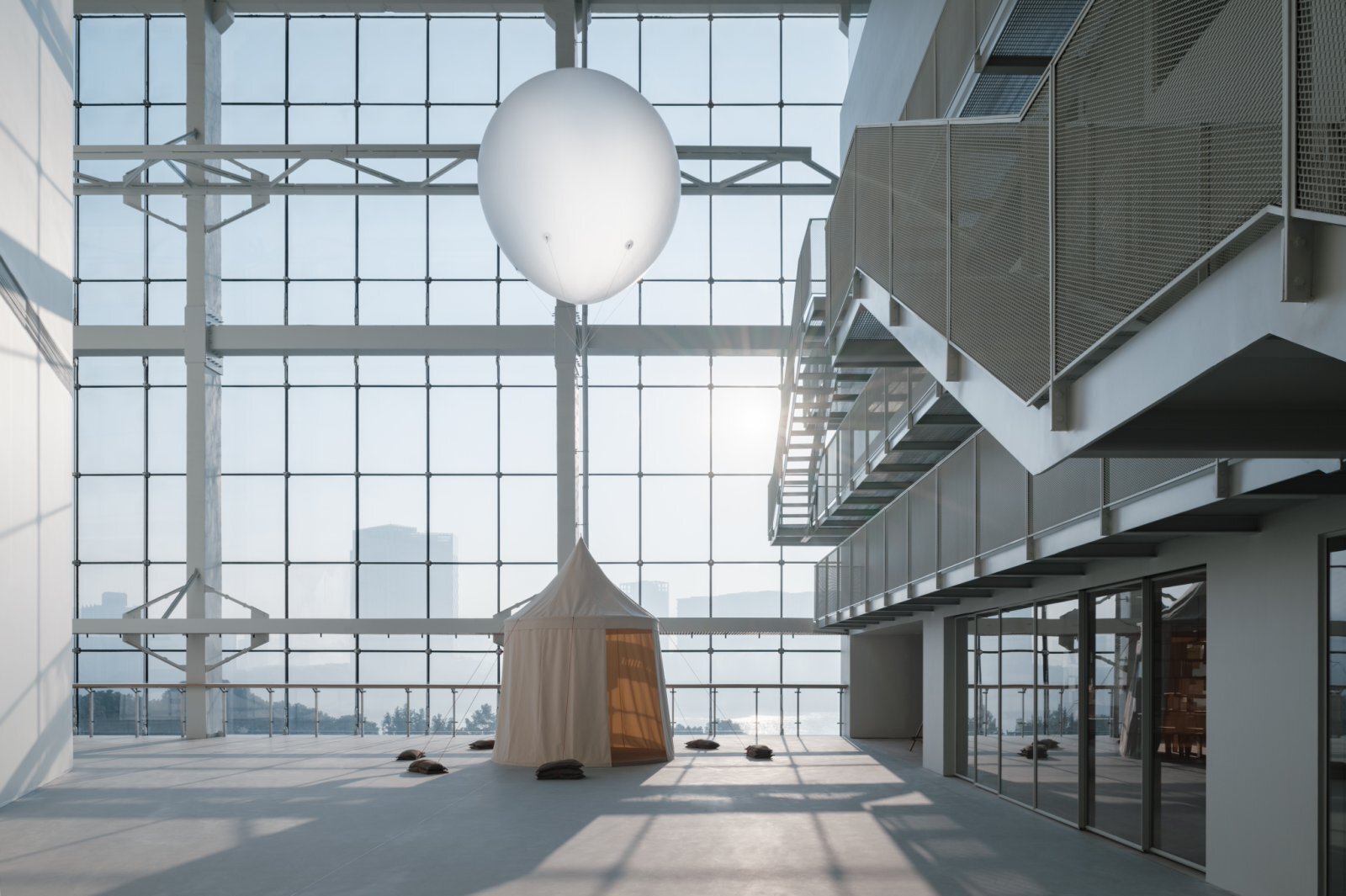
The Power Station’s third storey is now home to a multifaceted research and exchange platform.
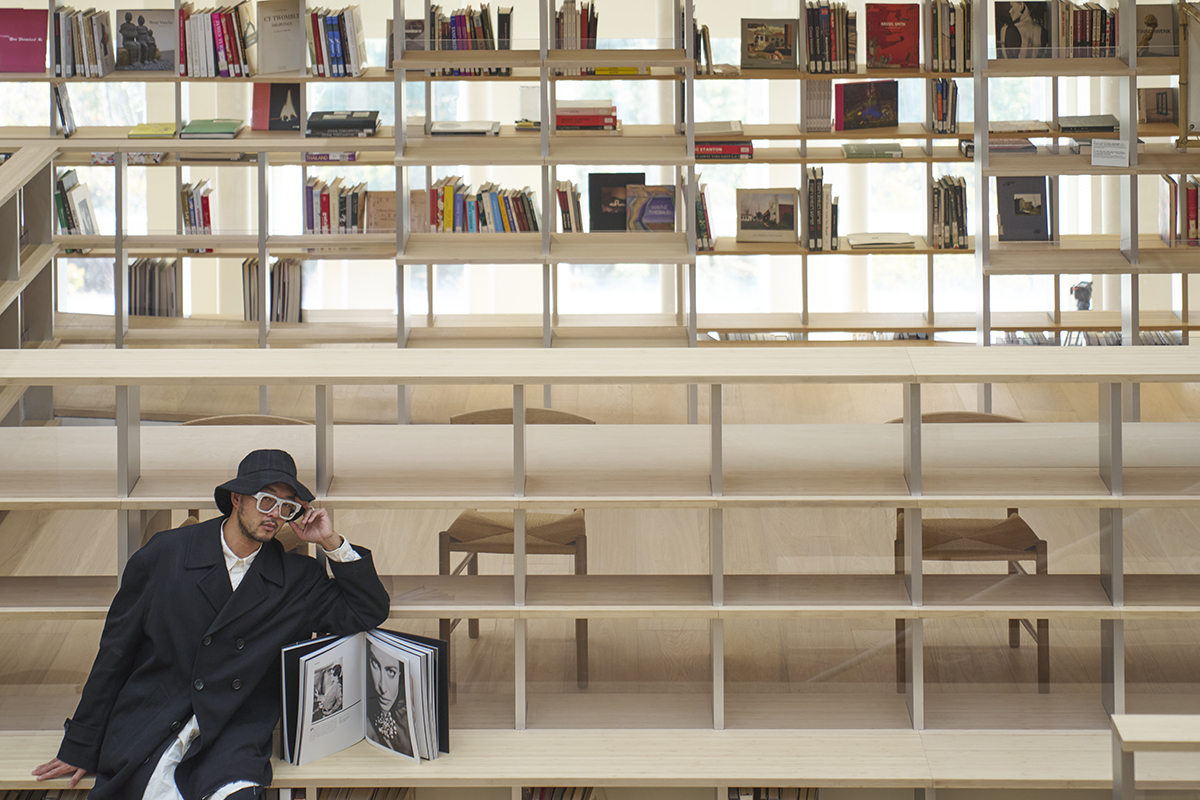
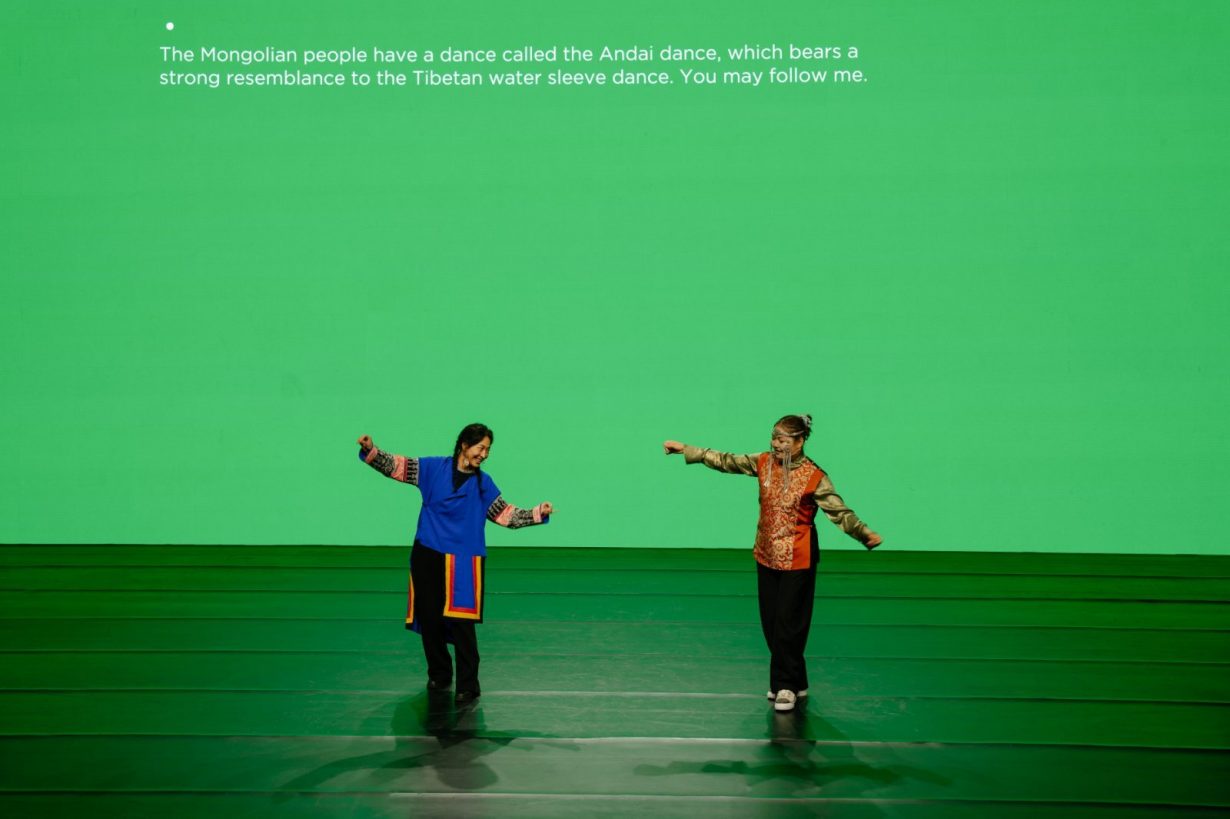
Shanghai’s Power Station of Art (PSA) and CHANEL have launched Espace Gabrielle Chanel, a new multifaceted space that enhances the institution’s capacity to create deeper engagements between artists and audiences. Espace Gabrielle Chanel holds China’s first publicly accessible contemporary art library and archive for contemporary Chinese art (designed by Japanese architect Kazunari Sakamoto), and also features a theatre, exhibition space, design centre (Power Station of Design) and riverside terrace. The opening of the centre was marked by a new exhibition curated by Hou Hanru titled Home and Beyond, which reflects on the fluid, often precarious condition of ‘home’ in a world shaped by migration, displacement and rapid urban transformation, alongside a commissioned performance by Xiao Ke and Zi Han, All Possible Bodies AP91 (2025), using dance and video to explore the multiple facets that lie within constructing identities. Xiao Ke and Zi Han are Next Cultural Producers, a PSA and CHANEL Culture Fund open-call initiative that supports emerging artists and cultural innovators, as well as makers in craft, architecture and theatre.
Launched in 2012, PSA is China’s first public contemporary art museum, hosting the Shanghai Biennale and a series of regular exhibitions. The CHANEL Culture Fund was founded in 2021 to support arts partnerships internationally, and immediately began by partnering with PSA on the Next Cultural Producer programme. The Espace Gabrielle Chanel evolved from this collaboration, devised as a space to allow for further growth, experimentation and cross-cultural conversations.
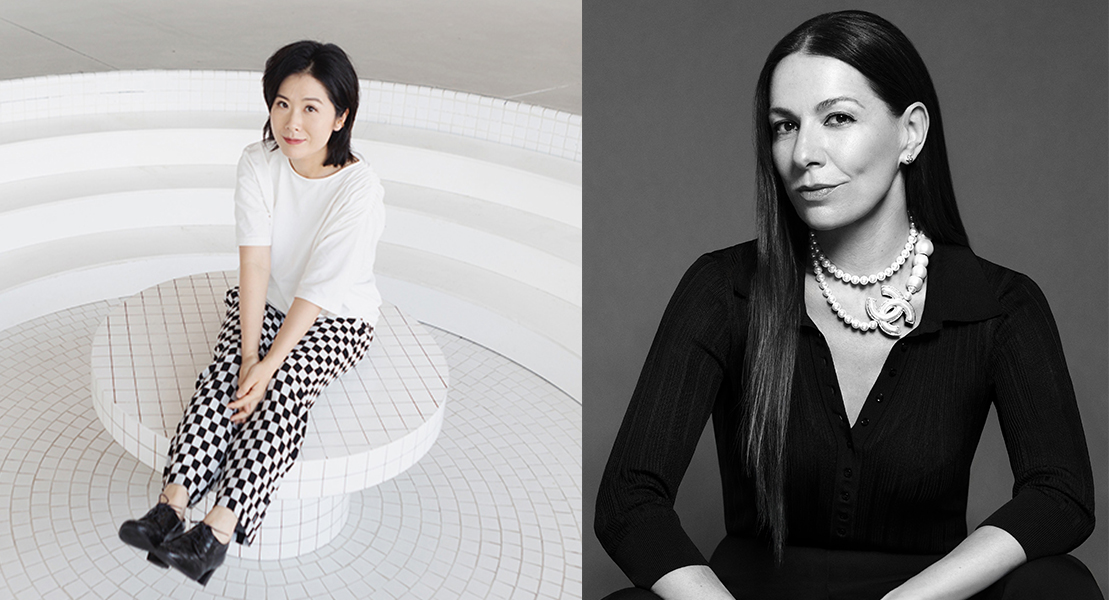
PSA’s new space is the latest in a lineage of CHANEL’s cultural partnerships that extend across the Asia region. “Part of what we do is weave a web,” Yana Peel, President, Arts, Culture & Heritage at CHANEL, tells ArtReview. “In Korea we have built an Idea Museum with Leeum Museum of Art. In Taiwan we support Camping Asia, a fluid knowledge-exchange programme around dance. In Hong Kong, with M+, we restore and promote avant-garde cinema. Across mainland China we have numerous projects in Beijing, Shanghai, Xining and Xiamen”.
“In 2025, there could be nothing more powerful than creating a civic space that celebrates human creation,” continues Peel. “The Power Station already welcomes approximately 500,000 visitors a year; this space is built for them and for future generations.”
Peel’s framing positions the Espace not as a standalone gesture but as part of a longer-term model of patronage, one that prioritises infrastructure, trust and locality over short-term visibility. Within this framework, institutional partners are encouraged to rethink how audiences encounter art as a lived civic experience rather than a discrete exhibition format.
Gong Yan, Director of PSA, describes how the centre furthers the potential for what a museum can be now. “An exhibition today must become a meeting point – a place where like-minded people gather, discuss immediately and cocreate. That dialogue itself becomes part of the exhibition. The library lets us go deeper, connecting us with history and with other imaginative minds. The ultimate goal is to make the museum truly part of people’s lives.”
This emphasis on encounter and copresence echoes a broader commitment to enabling artists and institutions to operate within supportive ecosystems. Across CHANEL’s cultural partnerships, the focus remains on creating conditions where experimentation and dialogue can unfold over time rather than in isolation.
“It’s an ambitious project to create the first public library in China entirely dedicated to arts and culture,” stated River Lin, curator of the Camping Asia festival, an event at the Taipei Performing Arts Center that is also supported by CHANEL. “Seeing Xiao Ke and Zi Han’s commissioned work presented for the reopening of the theatre and the launch of this space shows that PSA is willing to embrace fearless, cutting-edge practices that question identity and everyday politics. That means something very important to the artist community.”
Alongside commissioning new work, the Espace Gabrielle Chanel embeds these practices within a wider infrastucture of learning and reference, where access to archives and shared histories plays a central role in sustaining artistic communities across generations.
As Sunjung Kim, artistic director of the Art Sonje Center in Seoul and a long-term art partner of CHANEL, noted: “This space brings many possibilities for the audience. I was especially impressed by the Hou Hanru archive. It’s important for young people to see how one of the most important curators of our time worked with artists. The library also becomes a great knowledge place for younger people to learn about everything.”
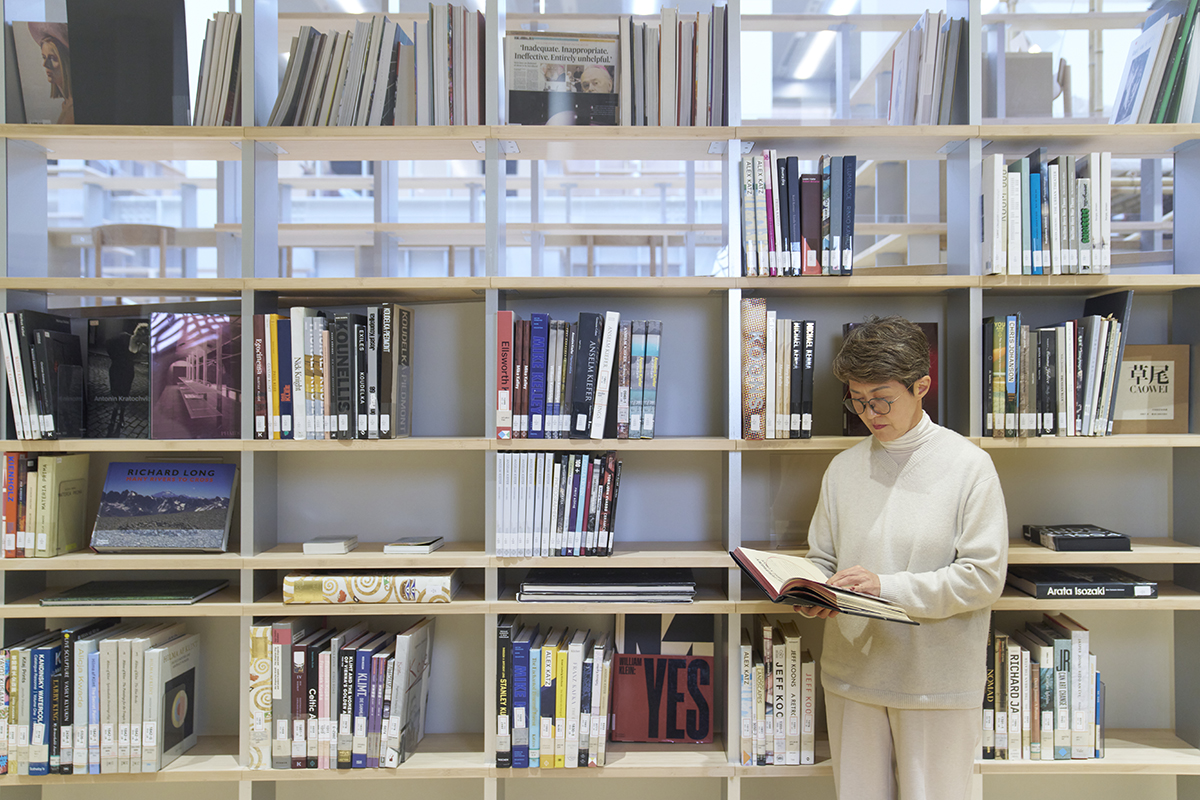
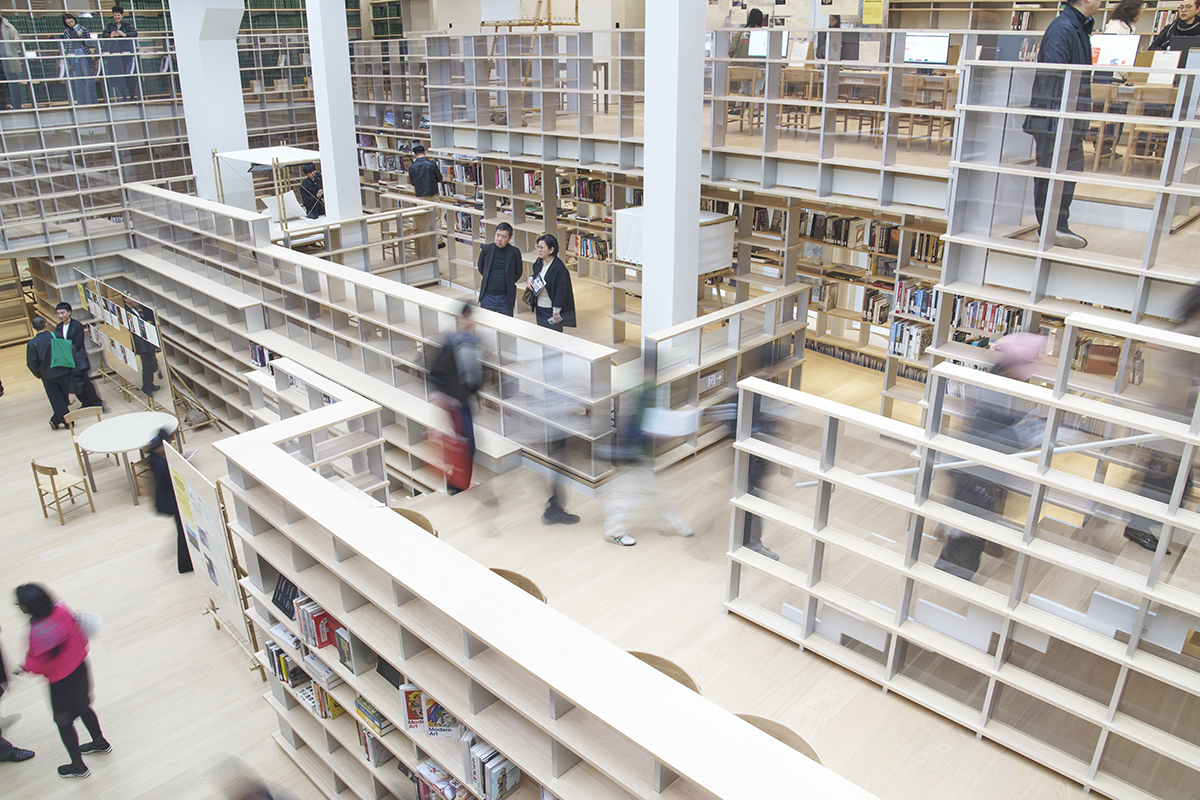
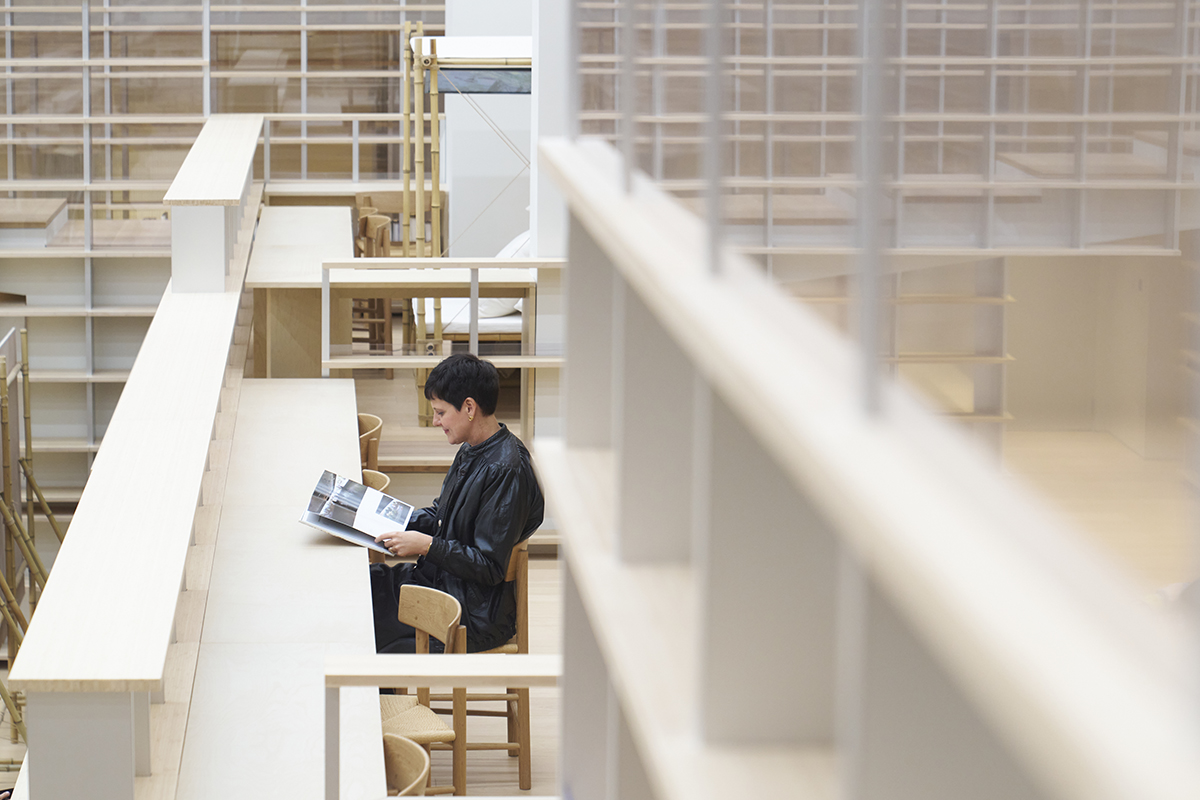
The architectural and spatial design of the Espace Gabrielle Chanel reinforces this ambition to make cultural engagement collective and embodied, countering the increasing dematerialisation of knowledge in a digital age. Physical proximity – to books, images and other visitors – is treated as a catalyst for shared experience and exchange.
The Espace’s design involves large open spaces, with the library shelves integrated with a long ramp, creating an interactive and fluid environment. “The fluid passages where you look at books and at each other reminded me of a cinema experience – enjoying culture socially makes a huge difference in individualistic societies,” said Silke Schmickl, CHANEL Senior Curator, Head of Moving Image at Hong Kong’s M+ Museum. “Browsing a physical library is completely different from scrolling on a phone – you take an object, open it, it has smell and texture. It’s quite extraordinary.”
While supporting art initiatives and cultural partnerships internationally, the opening of the space marks a further engagement with institutions across Asia. “CHANEL acts as a connector, linking institutions – large or small, public or private – that share the same values,” PSA’s Gong notes. “It provides a platform for cultural creators and managers to share trends and phenomena, offers multifaceted support and turns isolated islands into an archipelago where voices resonate and cocreation becomes possible.”
“CHANEL plays an important role as a mediator. Arts institutions in East Asia rarely collaborate, even within the same country,” Lin adds. “CHANEL takes time to build genuine partnerships and bridges those gaps, creating more opportunities for artists, not just for programmers, to be in dialogue with each other and with institutions. In many places in Southeast and Northeast Asia, public arts ecosystems are limited or nonexistent. When a globally recognised partner gets involved, artists finally feel seen and valued despite the lack of cultural infrastructure. Many artist-run collectives struggle with sustainability; this support gives them confidence.”
Taken together, these perspectives articulate a model in which CHANEL operates as a connector, linking institutions across Asia into a network shaped by shared values rather than uniform outcomes. The Espace Gabrielle Chanel emerges as one node within this constellation, locally grounded yet in active dialogue with a wider transnational cultural landscape.
“We are partner-led and deeply localised, creating the conditions for artists across disciplines to go further than they could alone,” Peel describes. “Our model is one of patronage: we work with the greatest cultural leaders, remain deeply localised and accelerate ideas that advance culture.” Espace Gabrielle Chanel is now open as a resource for Shanghai’s current and future audiences. “The goal is genuine exchange, knowledge-sharing and collaboration on a global scale,” Peel adds. “It has been an organic, trust-based process – le temps CHANEL is very long, it flows like the Huangpu River.”