The Dhaka photography festival probes the narrative possibilities and limitations of image-making as a vector for understanding the world today
In the introduction to his 1968 essay ‘Beginnings’, Edward Said suggests that we understand beginnings after the fact: ‘a beginning is always being left behind…’ Does the same thinking apply to renewals? To begin again is still to be oriented towards the departed, because there’s no ‘again’ without a ‘before’. A cyclical temporal constellation guides dawn to dusk, beginning to end, past, present and future. Now in its 11th edition – the first significant one since COVID-19 and the July 2024 uprising – this year’s Chobi Mela photography festival in Dhaka rallies around a similar and proverbial second – or third, or more – shot. Helmed by artists and photographers Munem Wasif and Sarker Protick, it takes Re as its theme and is a call for tenacity, particularly in lens-based narrativisation. ‘In a world of impasse,’ reads the curatorial statement, ‘Re dares to begin again.’
The work of 58 artists from 18 countries are arrayed over nine exhibitions at public and private institutions across the Bangladeshi capital, alongside talks and workshops, film and public-education programmes. In a city of crumbling infrastructure and inhospitable architecture, it’s difficult for people to breathe, let alone create art, and some venues can be equally forbidding. But instead of escapist embellishments, the curating here was brisk and sparing, particularly at the main and most challenging site, Bangladesh Shilpakala Academy: the result was uncluttered, encouraging a slower pace and a deeper look.
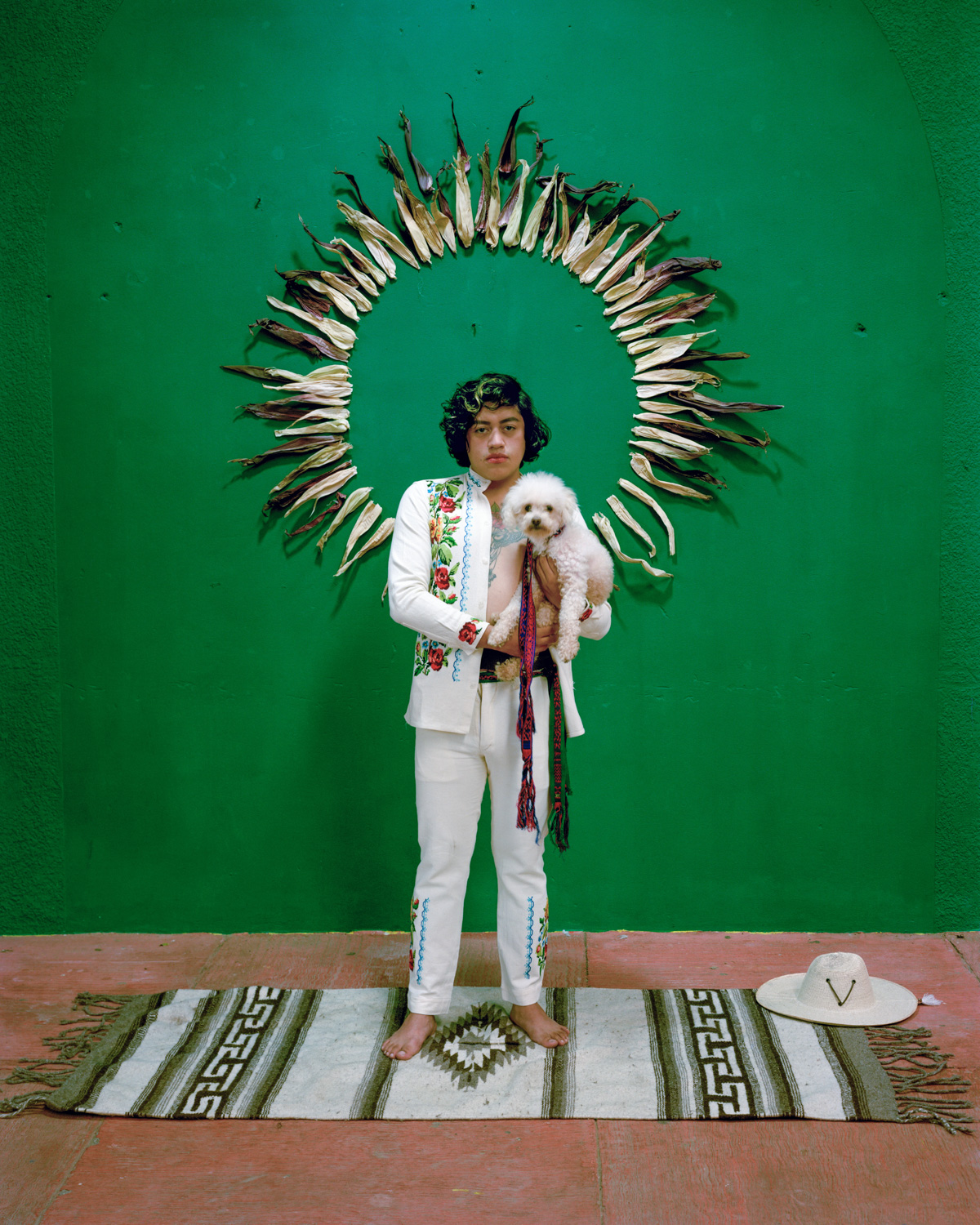
Combining documentary and staged photography, oral histories and ritual artefacts, Paris-based Ritual Inhabitual’s Oro Verde (2019–24) is a ‘mytho-documentary’ retelling of the Indigenous Purépecha community’s successful struggle against capitalist depredations in Cherán. In an all-too-familiar story of land theft, forest destruction and industrial agriculture packaged as economic development, the Mexican state of Michoacán saw the confiscation of Indigenous lands, high rates of murder and extortion, intrusions by loggers and drug cartels in collusion with the police and politicians invested in avocado farming. Led by women, the community drove them out to establish an autonomous, self-governing council. Realised through local artist and community collaborations over several years, the work is sublime and startling – especially a tableau of uncanny cutouts, from a fighter in camouflage to half an avocado and a woman tied and hung from a column evoking sacrifice – shedding the passive voice conventionally associated with documentary work in favour of the active and insistent.
Just as searing is Kazi Sharowar Hussain and Gitartha Goswami’s Songs of the Shore (2025–). Comprising spoken and written testimonies and reflections (some of which aired in the room, making an aching soundscape that ripples through the display space), copies and fragments of administrative documentation and voter registers, poetry and photographs, Songs of the Shore presents an album of attachments and affirmations of ‘Miya’ Muslims of Assam. Under assault as intruders and cast as ‘doubtful Bangladeshis’ and neither Indian nor Assamese in the eyes of the state, they are the inhabitants of a capricious floodplain. In one such testimony, Shona Bhanu from the Barpeta district of Assam reports: ‘They took us to the border and pushed us into no man’s land.’ Though presented separately, Oro Verde and Songs of the Shore force a reckoning: there is a difference, often of life and death, between chronicles of resistance within an oppressive template and those that seek its overturn.
In Our Own Backyard, a display assembled from the personal archives of Lala Rukh and Sheba Chhachhi and originally presented at the Asia Art Archive in Hong Kong, and Amanul Huq’s The Romantic Documentarian (c. 1950–90), featuring works by the pioneering Bangladeshi photographer drawn from the Drik Picture Library Archive, at DrikPath Bhobon and the Bangladesh National Museum respectively, highlight historical events and social-political movements at a time of surging ressentiment. In Our Own Backyard plots the spirited course of feminist initiatives across the subcontinent from the 1980s onwards. Posters, pamphlets and images of public and behind-the-scenes gatherings offer a glimpse into the labour behind those movements. Meanwhile The Romantic Documentarian presents Amanul Huq’s mostly black-and-white opus, an enduring photographic reference of East Bengal through its many transformations – from colonial Bengal to East Pakistan to Bangladesh – that documents its political upheavals alongside the quietude of everyday life. It’s not resolution but presence and proof-of-life that inform these two works; they form between them a complex and unresolved partnership of evidence and memory.
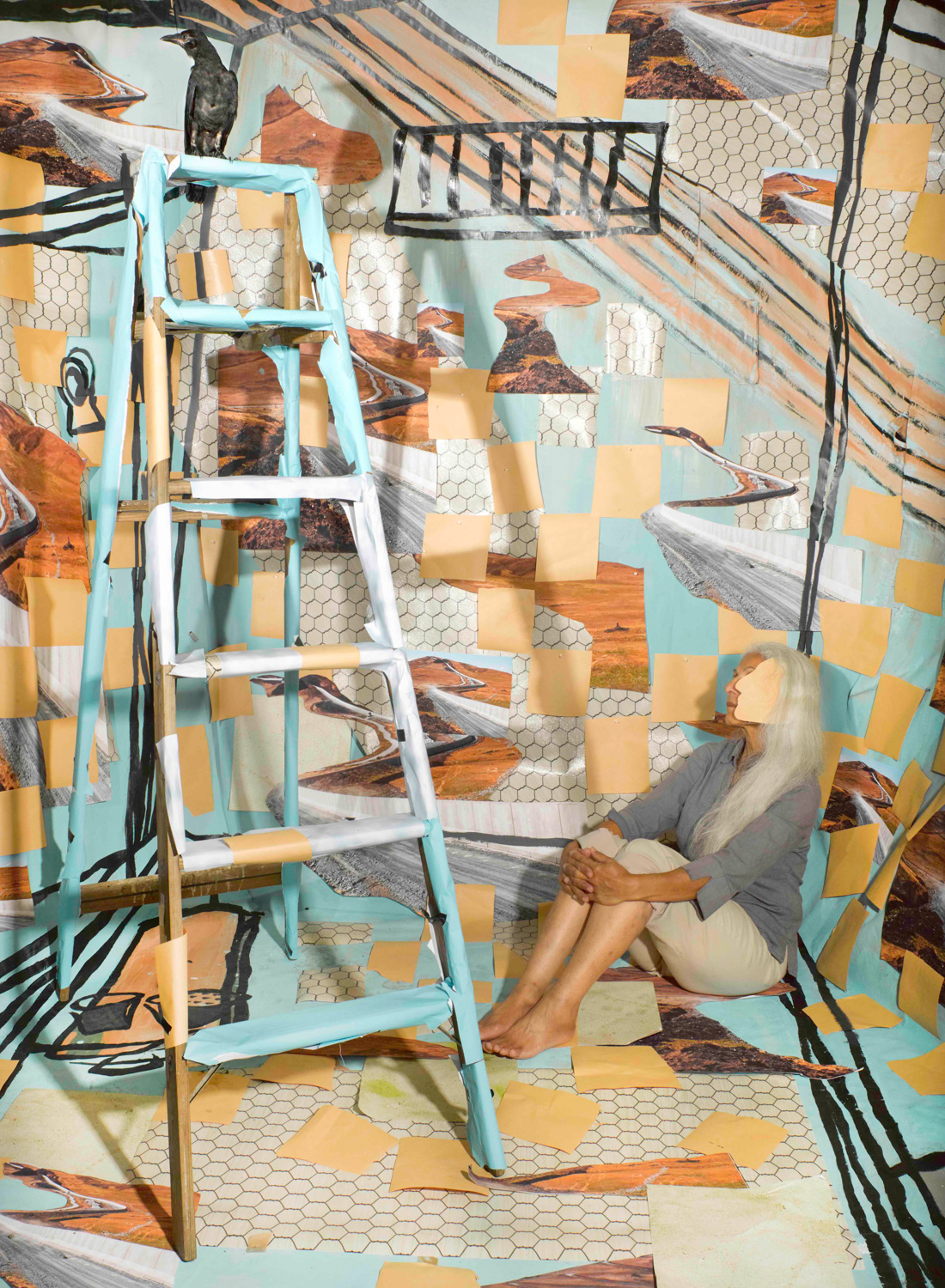
Elsewhere, Sheida Soleimani’s Ghostwriter (2021–), carefully assembled photomontages cocreated with her parents, who are exiled from Iran, eschews both realism and memorialisation in favour of whimsical collage and set-piece compositions on freedom, migration, escape. Each image is a fabulist riposte to the agonies of exile, in which her parents often appear as avatars, with their faces partially or fully hidden, against chequered, gameboardlike backgrounds. In one, a woman, presumably her mother, sits on the floor with her knees folded, staring at a bird atop a step ladder. Crafted in the manner of a (dishevelled) studio portrait or a screensaver with a background of cutup squares of paper, some of which are low-resolution pictures of mountain passes, with the same pieces scattered on the floor, it’s revealing of a manufactured, or gamed, condition of existence. A section titled ‘DHEU’ (wave) displays younger artists offered a fellowship at the festival, the highlight among which is Mong Mong Shay’s installation of multichannel moving-images and papier-mâché sculptures Nothing can heal the wound (2026). Anchored around a large disk hung above eye level, red LED screens heave flat on the ground, and sculptures stand eye-level like otherworld sentries fitted with screens, one of them a third-eye palm with a probing, bulging, bloodshot gaze – the work conjures the feeling of encountering a threshold. In each of them, an echo of a manoeuvre reverberates, that there’s a hand or perhaps a spell, not always our own, that reroutes histories and our presents.
Presented in spaces that recall a majlis, Karachi LaJamia’s Ecstatic Ecopedagogies (2015–24) sits alongside the exhibition (un)learning Palestine, embodying solidarity, both offering a series of texts, images, mappings and audiovisual materials that invite contemplation, especially on the ruins that underwrite so many ‘beginnings’. In a supplement produced by LaJamia titled ‘Militarisation and the University’, the first words I encounter, on a proposed development in Karachi, are precise: ‘The inception of Education City illustrates well the instrumentalisation of education by the military-development nexus… Education City is threatening the settlements, livelihoods, agricultural fields and pasturelands of forty villages located between the Sukhan and Malir rivers. In public discourse, this land is perceived as empty.’ We are all too aware of another ongoing extremist project of land clearance and elimination, and Samaa Emad Abuallaban’s Genocide Kitchen (2024) in the Palestine section is a painstaking digest of handwritten notes and fragments of images of meal preparation and ingredients amid forced starvation and bombardment – an undertaking no one should have to perform.
Bani Abidi’s well-travelled suite of works including The News (2001), The Reassuring Hand Gestures of Big Men, Small Men, All Men (2021), Proposal for a Man in the Sea (2012) and The Speech Writer (2011) featured at Alliance Française de Dhaka (AFD). The inclusion of Security Barriers A-Z (2009–19), a diagrammatic rendition of familiar implements of surveillance in Karachi, but just as widespread across many of our segregated cities, felt ironic given its presence in a gated and securitised cultural hub like the AFD. Indeed, presenting the work at a site of conditional access is emblematic of a type of amputated, oppositional commentary often dispatched through the very institutions founded upon and maintained by an uneven, asymmetric arrangement of blockades, borders and cultural peddling.
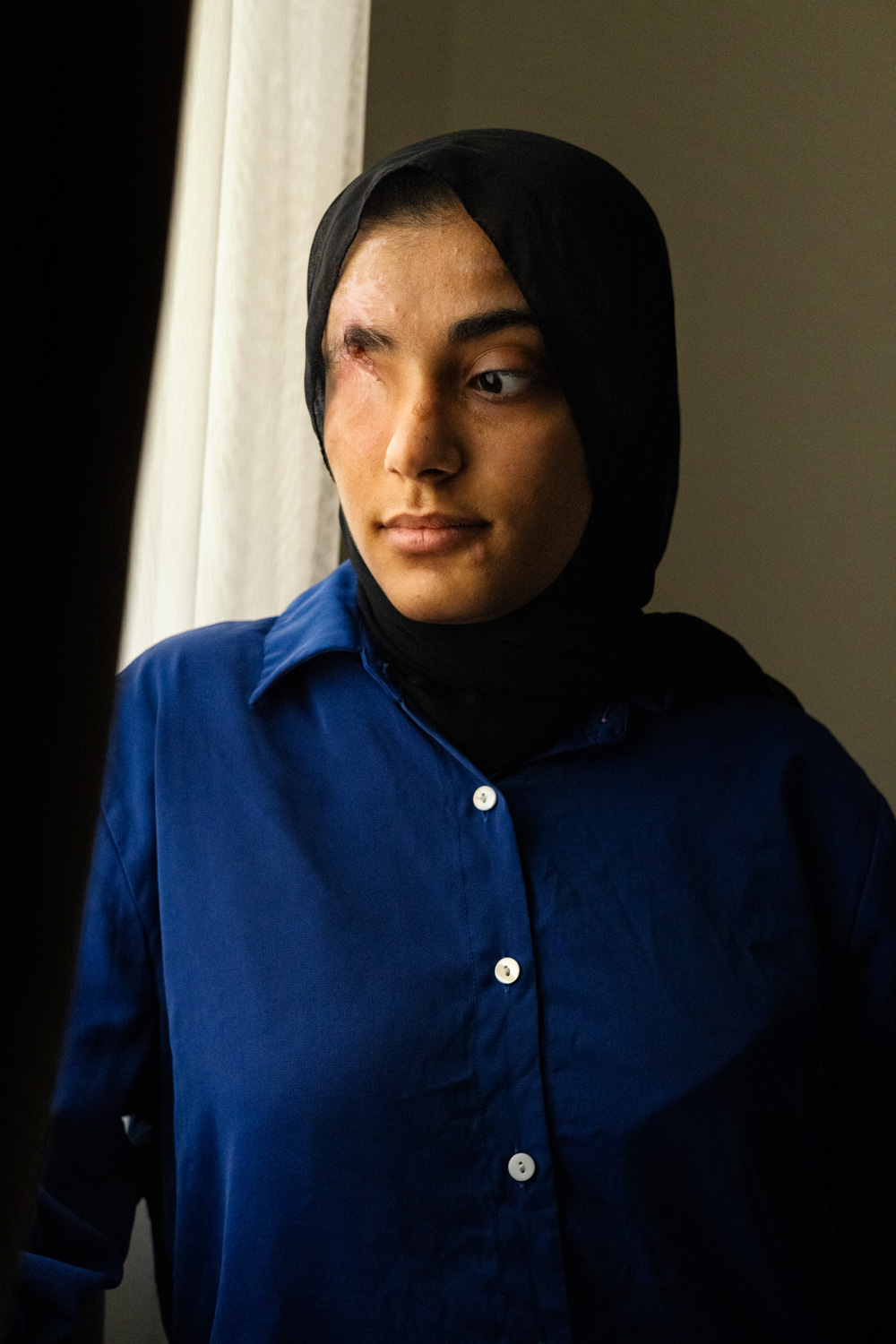
Since its founding in 2000, Chobi Mela has embraced an extended idea of image and representational politics. Twenty-five years on, the balancing act of photography between ‘scientific and social documentation on the one hand, and [as] dream factories of mass media on the other’, as art-historian Angela Miller et al. write, is clearer than ever. The proliferation of photography also suggests a rhetorical impasse in which meaning and mimesis compose each other, and the resulting digital debris is part of our visual vocabulary. Chobi Mela XI mounts a qualified presentation of the narrative possibilities and limitations of image-making. There may be no alternative to beginning again, but when a restart remains tethered to what came before, the question becomes whether the impasse it refers to ought to be unsettled from its foundation or left undisturbed. Is recompense possible by seeking accommodation within those foundations? Among the documents gathered in (un)learning Palestine is poet Mohammed el-Kurd’s book Perfect Victims (2025) alongside Samar Abu Elouf’s 2024 photo of injured Palestinian Ruba Abu Jibba from The New York Times; I know where I stand.
Chobi Mela XI: Re, Dhaka, 16–31 January
From the Spring 2026 issue of ArtReview Asia – get your copy.