Let’s not see that as a threat, but as an opportunity for new thinking
The announcement in December that Tate director Maria Balshaw will step down this spring will inevitably be accompanied by an analysis of where the organisation is now, and where it might go next: ‘Tate Museums Are in Choppy Waters’, proclaimed The New York Times when reporting the story. Regardless of Tate’s particular difficulties, it’s arguably the case that many public museums are swimming in similar seas right now. The annual conference of the International Committee for Museums and Collections of Modern Art (CIMAM) was held in Turin at the end of November. Under the title of Enduring Game, it examined new models of museum-making against the background of a destabilised world. Cuts to public spending, postpandemic recovery, culture wars, cyber wars, ‘real’ wars, decolonisation and restitution, political polarisation and the politicisation of funding have all chipped away at the bedrock of our inherited public museum infrastructure. The conference was conducted in the shadow of the Flemish government’s unfathomable decision to cancel the new M HKA building and, alarmingly, remove its museum status.
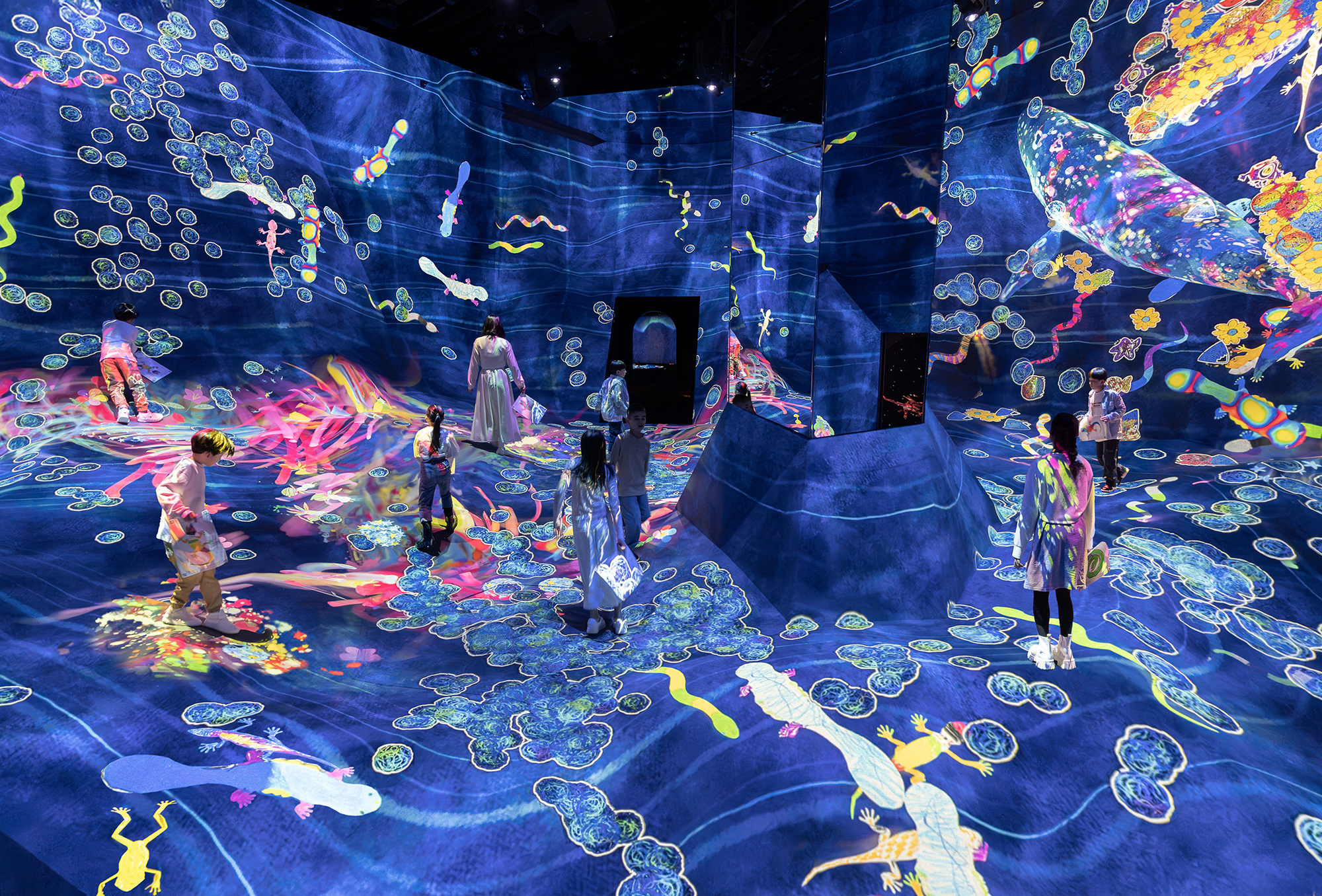
But while the problem of funding looms large, there is also a technological challenge to our institutions of art, which we should address but also see as an opportunity to redefine our role and value for society, especially in this moment of great cultural and political upheaval. The recent ArtReview conversation between AI-involved artists pointed to a new attitude towards living with constant change and adapting to the proliferation of mutating, self-metabolising images and data, and to the proliferation of technologies and platforms used by artists. I would argue there is now a multiplication and mutation of artworlds that is challenging the sovereignty of the museum and art as we knew it. AI is pulling the rug out from under the autonomous artist, copyright and even subjectivity. Everyone is a prompt artist. Agentic works, blockchain and NFTs (which are still a thing, despite their reported demise) propose new artworlds pulling away from the old centralised system. Digital immersive exhibitions of Van Gogh or Monet or Hockney draw large crowds, regardless of the scorn often heaped on them from some of us in the ‘curatorial class’. And now a wave of new technologically powered institutions are rubbing shoulders with the museums of old. The Outernet in London claims more visitors than the British Museum. Similarly, Mercer Labs in New York, teamLab Planets in Tokyo and Refik Anadol’s forthcoming Dataland in Los Angeles are the new centres of gravity in our attention-driven economy. Largescale institutions imagined in the heady days of ‘peak contemporary’ during the 1980s and 90s – such as Tate Modern in Britain and my own institution, ZKM, in Germany – are certainly feeling the pull.
The counterclaim often voiced, for now at least, is one for an exceptional criticality, social integrity, even seriousness, that these shiny upstarts cannot provide. Ben Davis’s ‘intelligent lava lamp’ dismissal of Refik Anadol’s Unsupervised (2022) at MoMA comes immediately to mind. This division between what is seen as popular and what is seen as critical, while not new, is now embedded in the landscape created after the popularisation of contemporary art and the museum building boom around the millennium. As our museums have been sucked into the orbit of complicity with neoliberal economics, urban regeneration or soft-power politics, this has created a counter imperative to reassert the critical function of art and denounce the idea of museum as a neutral space (as Laura Raicovich argued in her book Culture Strike, 2021) in order to activate it as a site for the formation of culture and society in the broadest sense.
From a personal perspective, I have always been an advocate for politically active forms of art, but I am no longer sure these oppositional arguments can hold in the emerging era. We need a new view, and new tactics.
The conceptual architecture of our institutions regularly turns in phases, and we have seen the transitions, from the post-1945 modernist art museum, to 90s cool biennialism and globalisation, replaced in turn by the decolonising and demodernising practices of the last decade. But more recently the idea of the art museum that underpinned all these phases – the museum as an effective critical counterpoint – has been hit hard by the new revolution from the political right (no more so than in the US), which often dismisses the social and ethical stances of museums as elitist, leftist, hectoring and out of touch with the broader public (at least as they define it).
Nonetheless, our cultural institutions still feel it vital to hold onto the critical museum model, compelled to rage against the dissolution of the postwar consensus and a return to an age of empires.
The emerging postdigital landscape of fragmenting artworlds, institutions, images, media, politics, realities and intelligences has no tolerance for fixed positions or the oppositional. What is needed is something more fluid, adaptable and responsive in real-time. The generations of practitioners working with the latest advanced technologies, including biologics, offer ways beyond insider-outsider, visible-invisible dichotomies, working in flows, dancing within the machinery and seeking change from within – even in very specific local circumstances. We could think here of the Chinese artist Zheng Guogu who speaks of a shift from semiotics to energetics, that is from the old world of signs and symbols, self-expression, representation and gestures – that of the ‘age of empires’ – to a way of living, acting and moving with the energies between things, in the present. His work swims among technology and nature, authoritarian control and spiritualism, digital data and craftsmanship, and is manifest across platforms such as gardens, gaming, architecture, painting, sculpture and tea making.
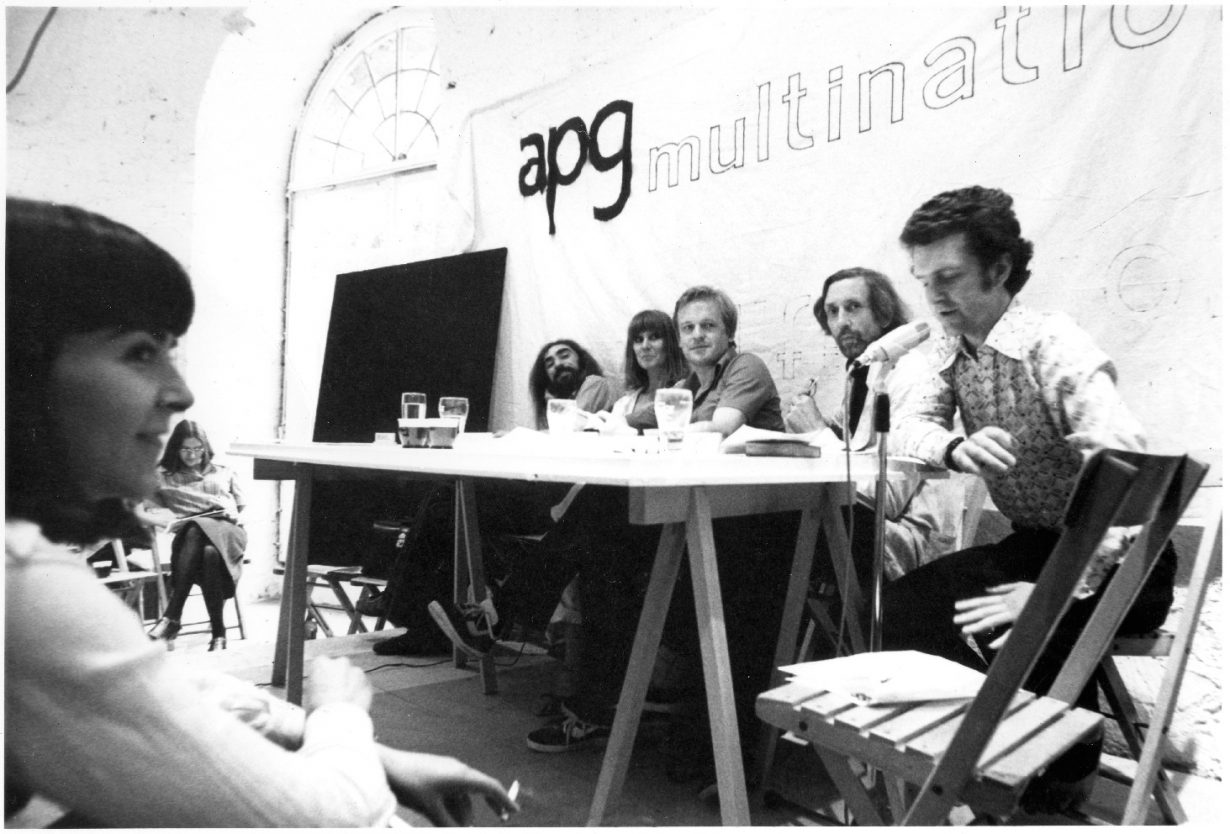
This offers a clue to the way we might also change gear with our art institutions, where we could open up a dynamic field of play between publics, politics, industry, mainstream discourse and complex ideas that encourages a more collective, shifting, but generative idea for a museum, that would allow for a multidimensional spectrum between joy, making and social transformation. That would be a museum not as repository or educator, but more in the original sense of a place to collectively commune with the muses of our age. Beyond the polarity of business bad/culture good is a need to engage head-on, be in the mix with the technosphere as it is and relish its complexity, sophistication and unpredictability. Such institutions would incorporate the multiplicities of what art can be to different generations and cultures, and the expanded ecology of platforms art now inhabits: blockchain, gaming, biological forms, nonterrestrial art, nonhuman art, parasitic art. There are art-historical models here that could be revisited, from the Bauhaus, to the Artist Placement Group, to the cybernetic adventures of the 1960s and 70s; less anarchists-versus-corporates, and more of a multi-intelligence forum for shaping the culture we live in, using the new capacities to process complicated things – with artfulness and wonder. If we want to put art at the centre of society, we need to rebuild our cultural machinery with the tools of our times.
From the January & February 2025 issue of ArtReview – get your copy.
Read next Are museums for the dead or the living?