“I don’t think any language is universal. Sadly, not even sex. Maybe maths?”
ArtReview sent a questionnaire to artists and curators exhibiting in and curating the various national pavilions of the 2026 Venice Biennale, the responses to which will be published daily in the leadup to and during the Venice Biennale, which runs from 9 May through 22 November.
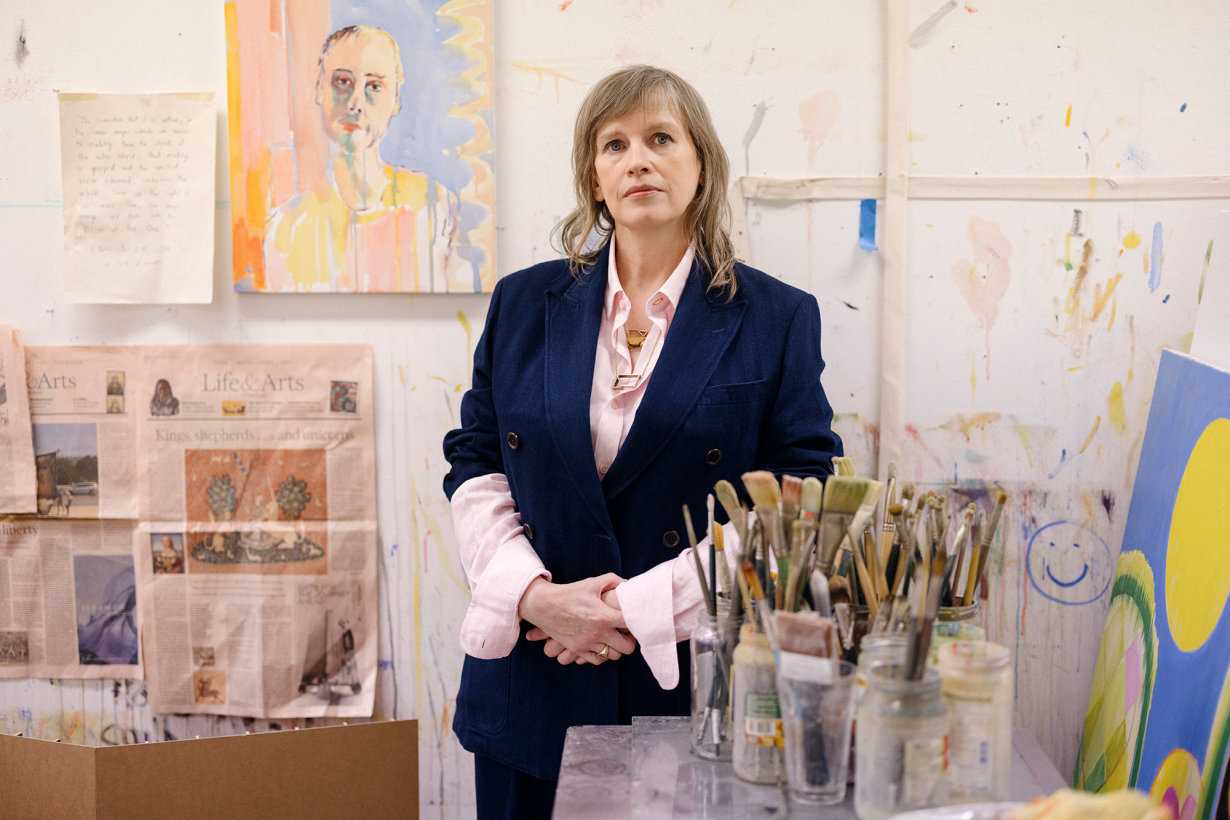
Isabel Nolan is representing Ireland; the pavilion is in the Arsenale.
ArtRreview Tell ArtReview what you plan to exhibit in Venice. What has influenced or inspired you?
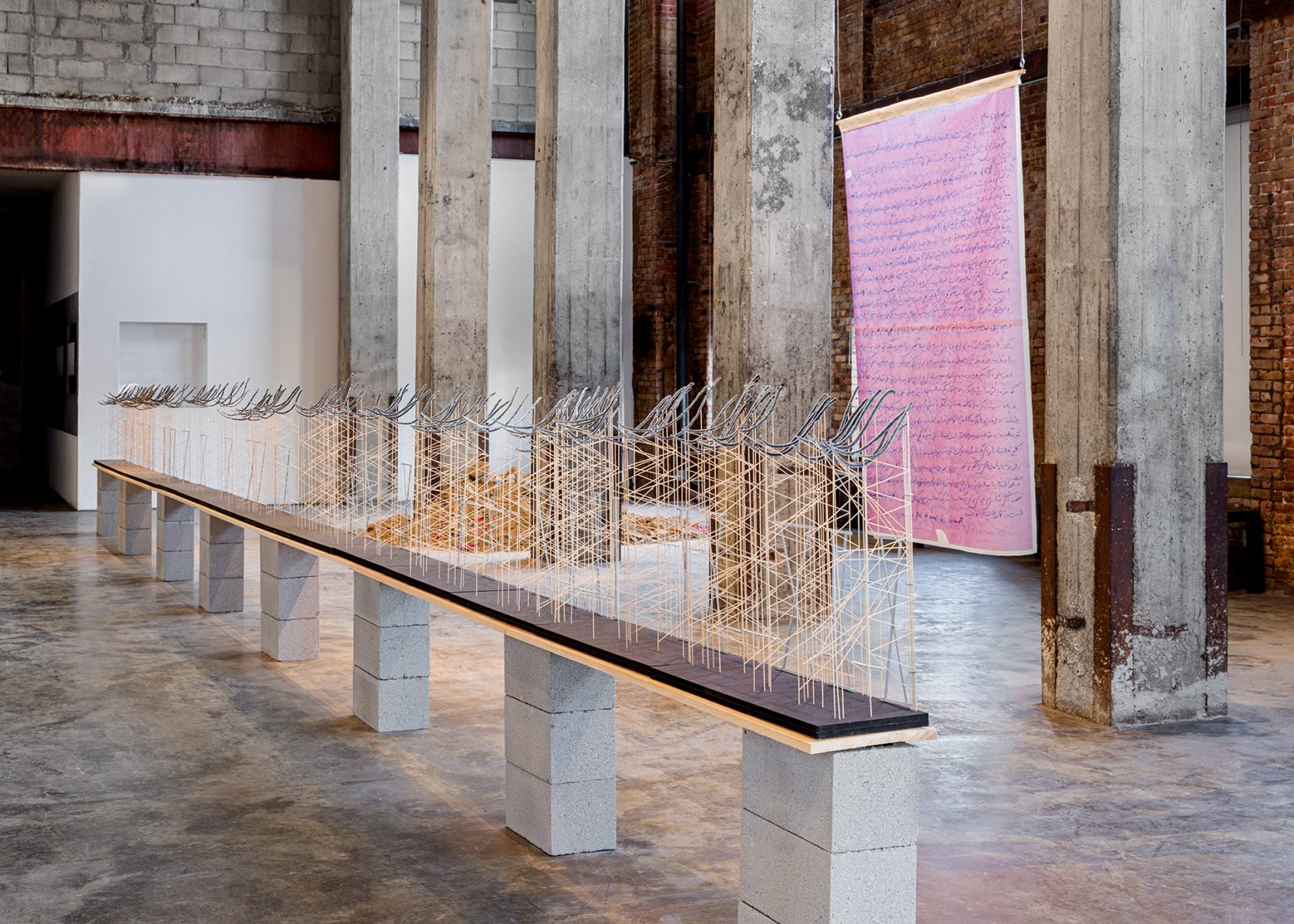
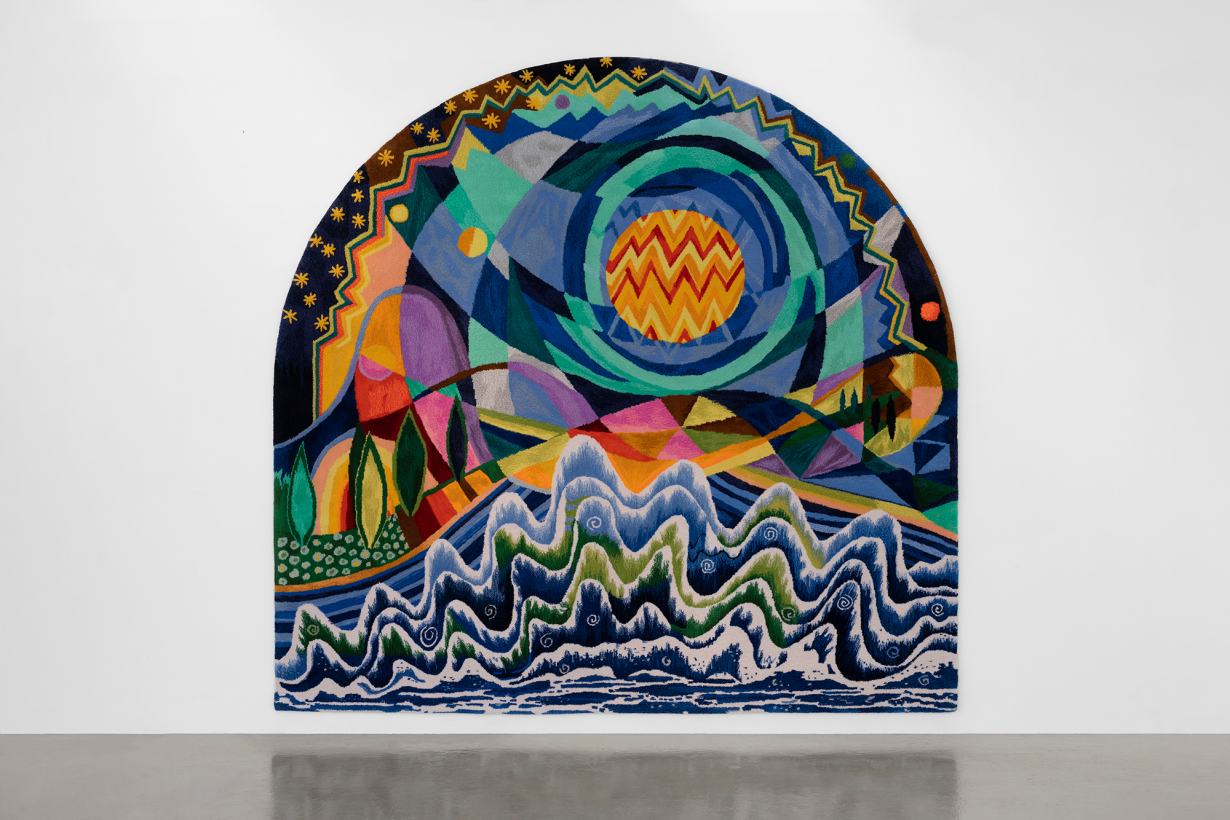
Isabel Nolan A room of tapestries, sculptures and drawings. The title of the show is Dreamshook.
In the late Middle Ages, in the midst of warfare, devastating famine, plague, and profound crises of both religious and political authorities, independent thinkers in Europe started to ask if humans have inherent goodness and if we could live meaningful lives partaking in the here and now (rather than solely focusing on redemption and securing a berth in heaven). It was a radical question for Christians to ask. It was an optimistic movement predicated on spending a lot of time in libraries; writing letters to friends and colleagues; and valuing expertise and learning rather than brute or orthodox authority, (all while aspiring to live in relative comfort and be polite to each other). The influence of this humanist turn is hugely significant – though, of course, not all benign.
Speaking as someone whose horizon is the western edge of Europe, I became fascinated by the numerous events and ideas that manifested in central Europe in the late Middle Ages which set the conditions for the emergence of modernity and a kind of smug eurocentrism much tested in recent years.
As you’ll see in the exhibition, I grew particularly interested in an Italian printer/publisher who set up in Venice in the 1490s. He was basically the first person to consciously style a print shop as a publishing house with a specific intellectual agenda, a house-style and catalogue, etcetera. He is famous for being a deeply committed humanist and for developing pocket sized books that are widely seen as ancestors of the paperback. He was certainly keen on profitability, but he combined that with a genuine dedication to producing books that were portable and beautifully readable; and to making classical and humanist literature widely available.
Given contemporary events, I suspect it’s absurdly wistful if understandable that I was drawn to an affirmative story about technological innovation that was profoundly, bizarrely hopeful.
AR In what ways (if at all) does your work relate to the theme of the Biennale exhibition, In Minor Keys?
IN The language in the curatorial statement resonates as it seems to be tuned to the hum of the fundamentals of human life, an emotional capacity of art that I appreciate, rather than the demand, or as they put it ‘march’, of the urgent. Also, the words beauty and tragedy are together in a sentence. That speaks to me.
AR Why is the Venice Biennale still important, if at all?
IN It’s an event that accumulates with each iteration, a bit like a tree ring maybe: the previous versions are still there, somehow informing the present. It might feel important because you’ve seen one pavilion or discovered an artist’s work that you’ll never forget, or because you see works amplify each other in an unexpected way. The scale confronts you with all the time and thought and work and care gone into it simply happening; that it is sited in such a historically rich, unique and beautiful place is a bonus.
AR What role does a national pavilion play at a time of increasing confrontational nationalisms? Is it about expressing difference or commonality?
IN There’s a question posed in a Craig Owens essay that has stayed with me since I read it in my early twenties. The gist of it is – how do we learn to conceive of difference without opposition. I read it as a call to see difference not in antagonistic, binary or polarising terms, but to see difference as something that adds value, complexity and nuance, and makes important demands of our own beliefs.
Commonality is the fundamental condition of our nature – we seem oddly inclined to forget our animality but artworks often bring us back to the body.
National pavilions obviously offer visibility and opportunities to artists, curators and arts workers from an array of places – that matters. But what is really evident with the presence or not, the exclusion or not, of national pavilions is the economic realpolitik of the visual arts, and the funding disparities that pertain.
AR Who, for you, is the most important artist (in any discipline) that your country has produced?
IN James Coleman springs to mind, but speaking purely personally it is probably William McKeown.
AR What is something you want people to know about your nation that they might not know already?
IN That the much lauded ‘Universal’ Basic Income For the Arts Scheme for artists/artworkers is being implemented as an arbitrarily-lottery-awarded, time-limited support for a tiny proportion of the artists/artworkers in this country.
Also, it’s not just marketing hype: Irish butter really is excellent.
AR Given that you are exhibiting in a national pavilion, is there something (a quality or an issue or attitude) that distinguishes the art of that nation from that of others? That makes it particular? Are there specific contexts that it responds to? Or do you think that art is a universal language that goes beyond social, political or geographic boundaries?
IN You’re never far from ‘nature’ in Ireland. I think you see that in a lot of work made here. Likewise community is a pretty vital and healthy resource here. When I was younger, I wilfully didn’t read much Irish literature and I’ve never really addressed that, so I don’t know Joyce well or share the intense grá for Beckett that a lot of people have, but I think Irish literary modernism has been quite influential. Also it’s expensive to import materials and to transport work overseas, and yet there is a lot of great, interesting sculptural work by artists in Ireland. Perhaps it is a case of constraint impacting in a positive way, necessity breeding all kinds of inventiveness.
I don’t think any language is universal. Sadly, not even sex. Maybe maths?
AR What, other than art, are you looking forward to seeing – or doing – while you are in Venice?
IN I’d like to go for a swim. I love eating Italian food and doing so with friends I don’t get to see so much is a pleasure.
AR Could you give us a brief overview of your average working day while creating your presentation in Venice?
IN Not really. I seem to work a lot but apart from meetings noted in my calendar with the people involved in helping to produce the work/exhibition I would struggle to remember or describe what I do on an average day. I always have a nap but that’s often involuntary. You can see drowsy traces in drawings – the stray marks erased after my hand has slipped.
AR Can art really change the world?
IN It can change people. We know that we live in a violent, unjust, frightening world and yet we still find beauty and reasons to stay alive. Artistic work of all kinds works with these complexities, it gives us ways to negotiate being a human – or at least a space for negotiation where the stakes are not life and death – or even just a chance to negotiate with ourselves and/or the ideas of others. Intersubjective dialogue was really crucial to humanism – and in much the same way as art it was also a conversation with the past, present and future. Art is often absurd, sometimes magic and sometimes it is important and even offers a way to love ‘the world’ or the humans in it.
The 61st Venice Biennale runs 9 May through 22 November 2026