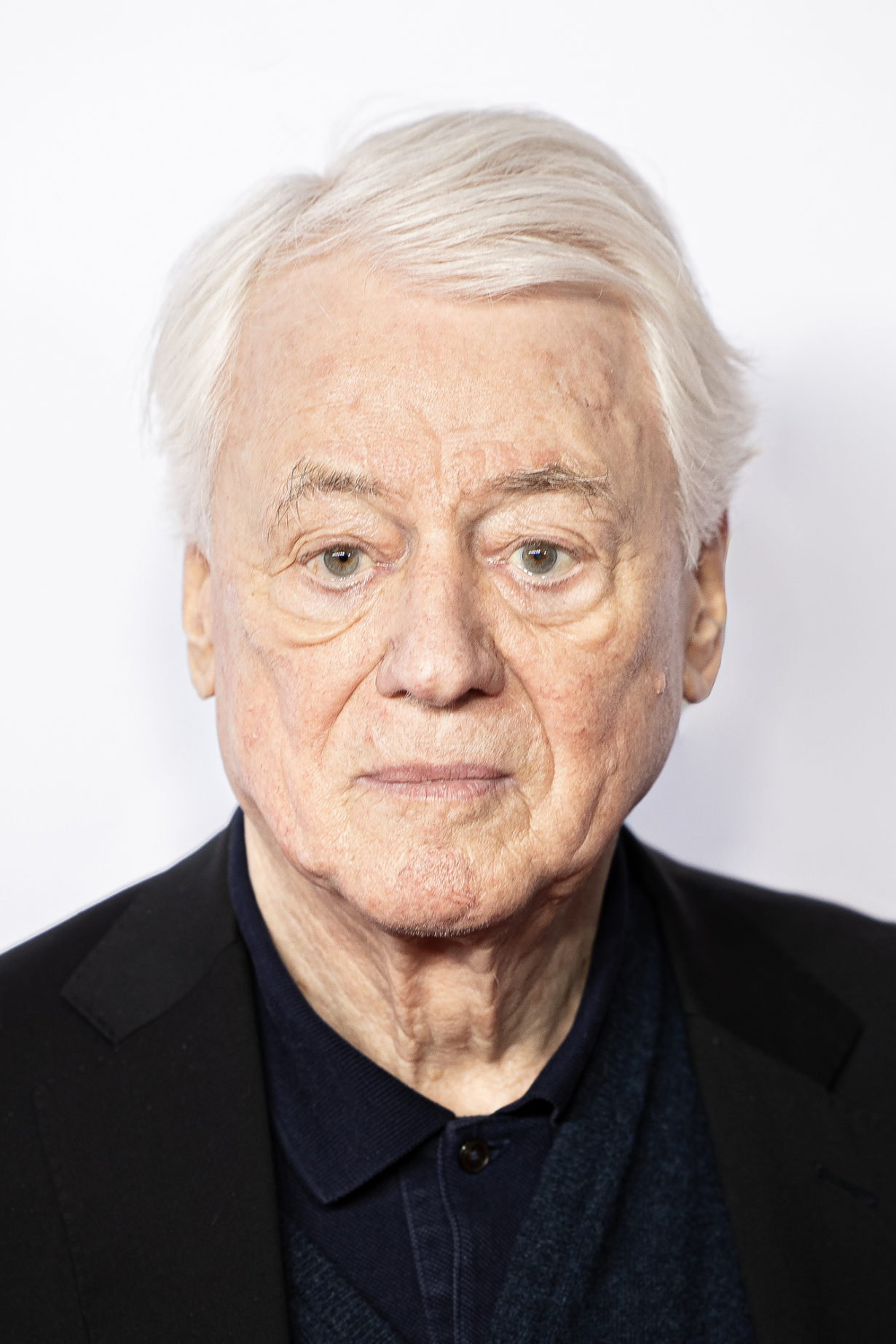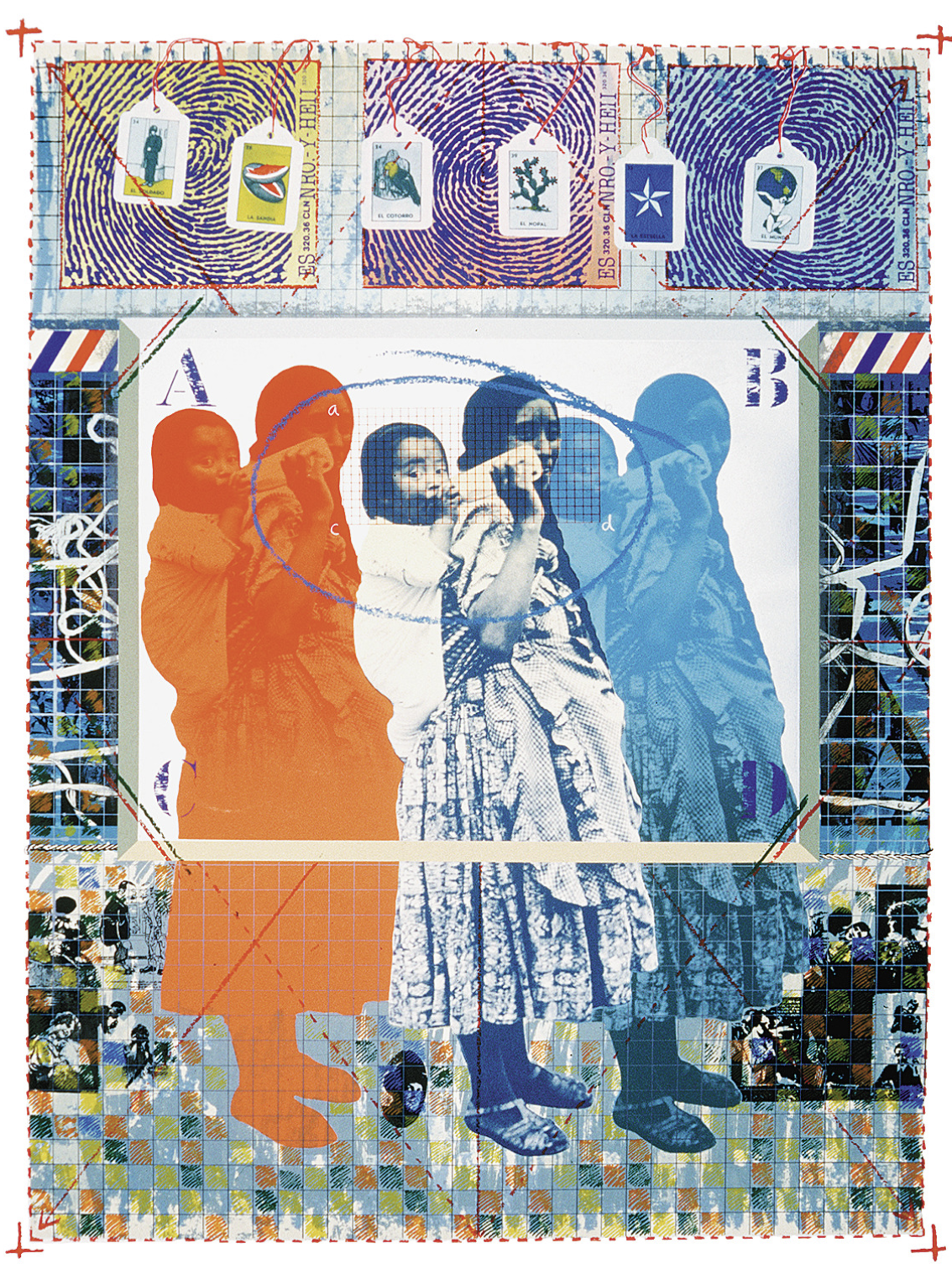
Jesús Romeo Galdámez Escobar, a key figure in El Salvador’s art scene, as well a proponent of mail art, has died.
The artist balanced his studio time, producing politically charged Xerox prints, paintings and murals that appropriated popular imagery, with teaching and various later government appointments after he returned from political exile.
Typical of Galdámez’s artwork is Declaration of Human Rights, a quarterised screenprint in which one window shows a map covered in barbed wire; below which Article 11, which pertains to the right to protests, is handwritten. A woman in indigenous dress dominates the left side of the work. Urban Landscape Record (1978) features the logos of various Latin American fruit companies, a reference to the US-backed right-wing dictatorships that took control of the export markets in the region.
After initial studies at the National Center for the Arts of El Salvador in 1975, the artist received a scholarship to study at the Institute of Arts of the Federal University of Rio Grande do Sul in Porto Alegre, Brazil, where he completed his Bachelor of Fine Arts degree in 1979. He also studied printmaking techniques at the Porto Alegre City Hall’s free workshop between 1976 and 1977. In southern Brazil he gravitated towards the Nervo Óptico Group alongside the likes of Vera Chaves Barcellos, Carlos Pasquetti and Romanita Disconzi, using printing and collage to both attack the Brazilian dictatorship and the art market.
Such works were often distributed covertly though the postal system as a means to circumnavigate censorship in Brazil and throughout the region. On returning to El Salvador, Galdámez continued to create networks of exchanged postcards and short run zines. In 1981, at the height of the country’s civil war, Galdámez was kidnapped by the Salvadorian military, only avoiding assassination by escaping and seeking exile in Mexico.
There he worked at the Autonomous University of Puebla and later in 1986 he moved to the cities of Patzcuaro and Morelia in the state of Michoacán. In 2003, he returned permanently to El Salvador where he held positions as Coordinator of Visual Arts at the National Council for Culture and Art (Concultura), National Director of Arts at the Secretariat of Culture of the Presidency of the Republic, and Director of Cultural Promotion at the Directorate of Cultural Affairs in the Ministry of Foreign Affairs.
Read next How the Postman Delivered a Lifeline to Queer Misfits