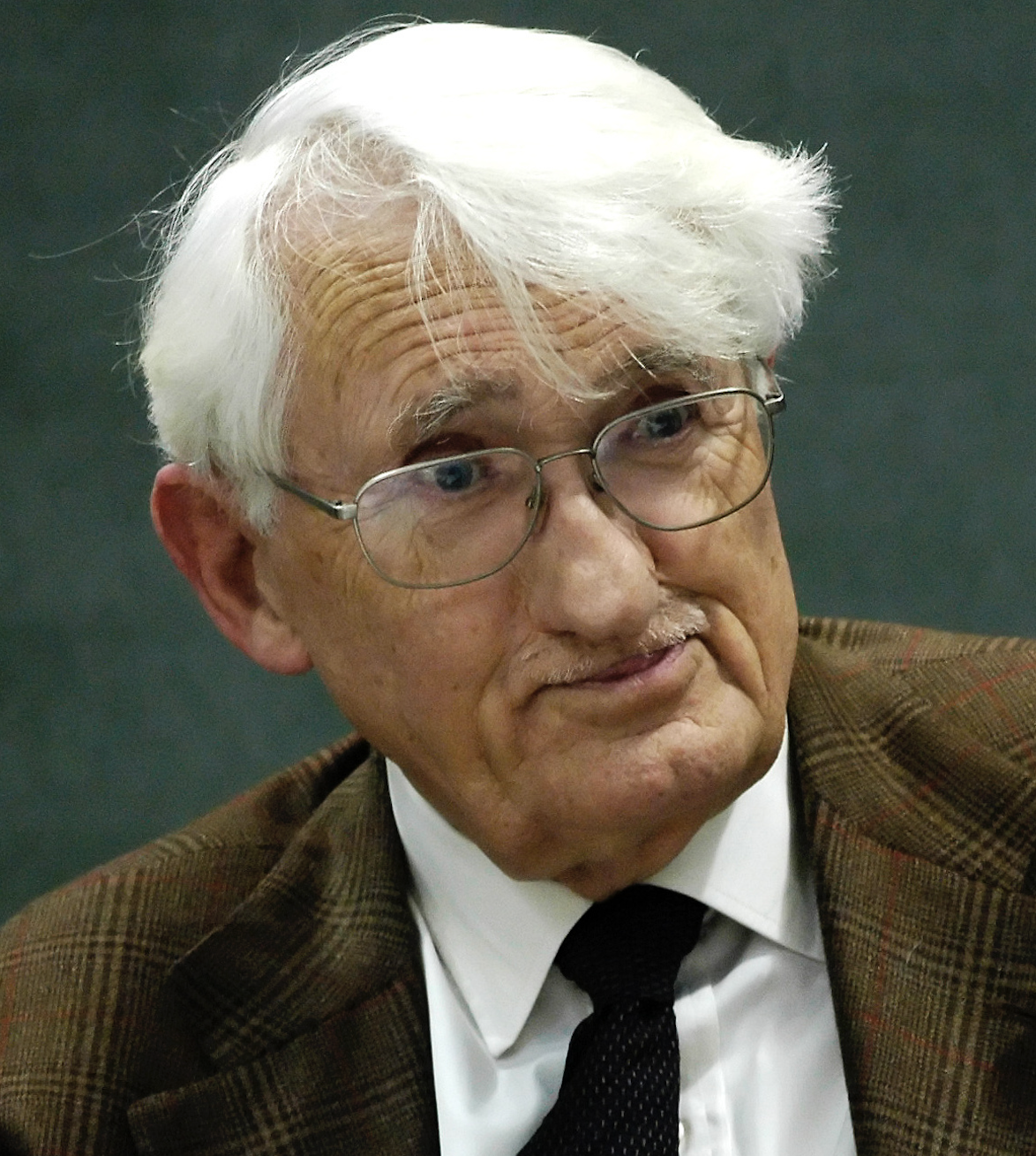
Jürgen Habermas, the highly influential German philosopher, has died aged 96.
Emerging from the neo-Marxist Frankfurt school, Habermas’s work on communication, rationality and sociology spread much further than the academy; Habermas frequently made pronouncements in the media and commentary on contemporary politics.
Such public intellectualism chimed with the thrust of the 1961 work that made his name. In The Structural Transformation of the Public Sphere, Habermas argued for a critical space in which the private individual and the government could meet, that interaction serving as an essential check on power.
A teenager in Nazi Germany, Habermas was a member of the Hitler Youth though avoided being drafted into the Wehrmacht when armistice was called. Studying in Germany and Switzerland after the war, he went on to become Theodore Adorno’s research assistant.
In 1971 he became co-director of the Max Planck Institute while lecturing at at the University of California, Berkeley, both periods proving formative to his writing The Theory of Communicative Action. That two-volume opus, published in 1981 posited language as the foundational building blocks of society.
Though he was regarded as the voice of Germany’s centre-left, his interventions into public debate never neatly fitted neat political categorisation. His ability to create what his first editor described ‘einen gewaltigen Wirbel’ (‘a huge brouhaha’) was agreed upon however.
During the COVID-19 pandemic he argued for tougher lockdown laws, writing that the subordination of individual human life to that of society as a whole is ‘Basic Law’. He also declared the demonisation of Russia after its full-scale invasion of Ukraine as ‘aggressively self-confident’ and regarded Israel’s war on Gaza as ‘justified in principle’.


