Beyond escapist nostalgia or flag-waving, how can an exhibition construct a portrait of the psyche of war?
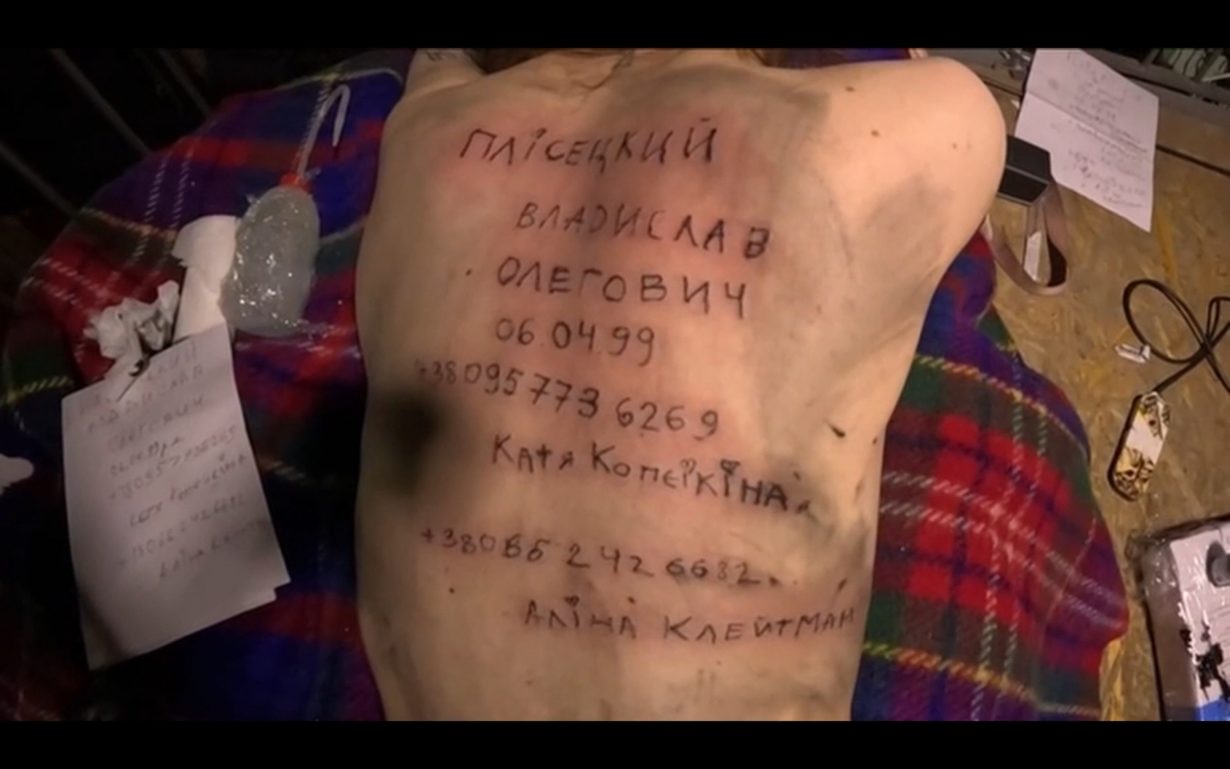
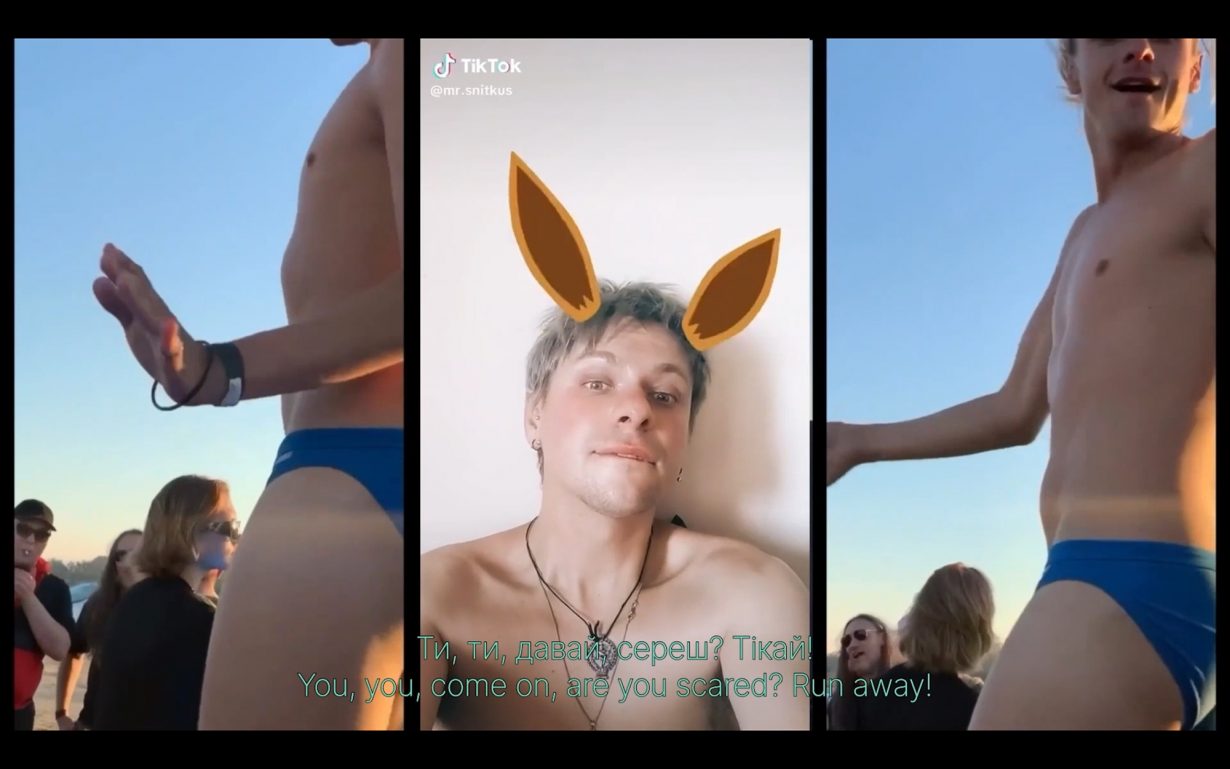
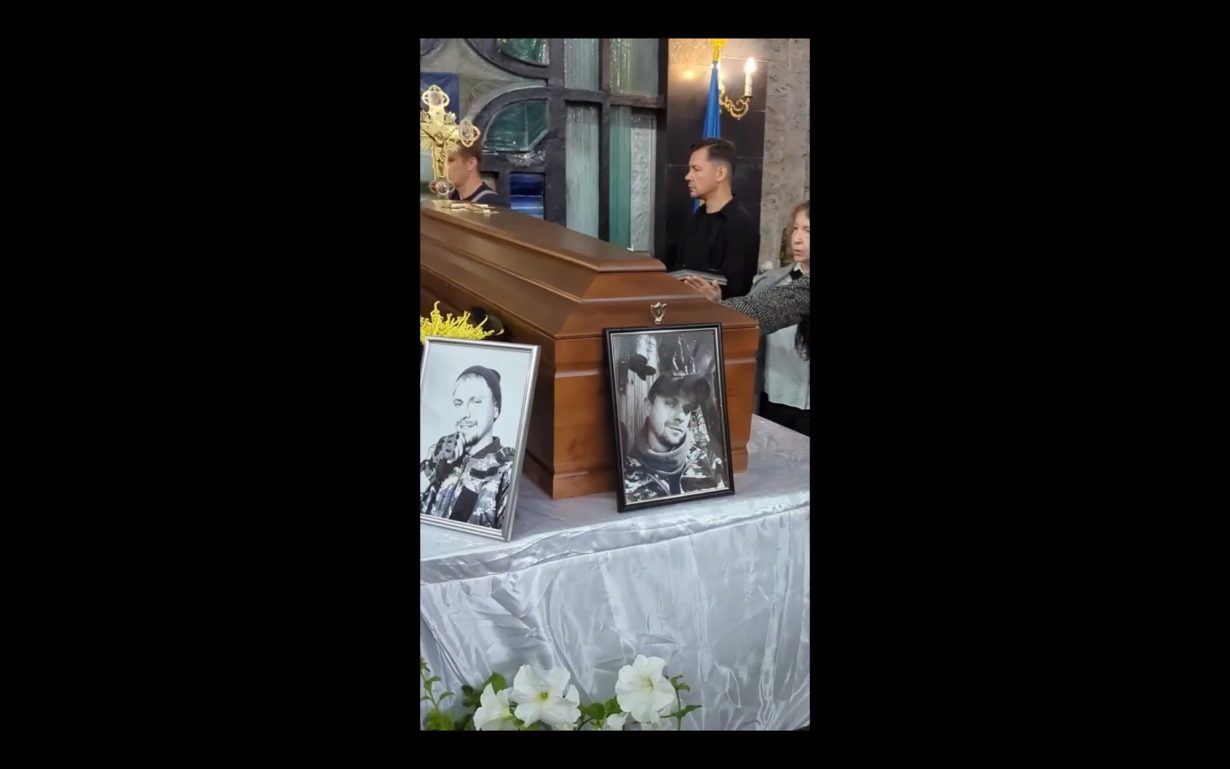
Vladislav Plisetskiy’s What Will You Do When the War Continues? (2023) might be one of the most important pieces of war art of the twenty-first century. The 38-minute documentary film, exhausting, exhilarating and ultimately tragic, is remarkable precisely because it is not about Russia’s fullscale invasion of Ukraine per se; rather it asks what version of Ukraine Ukrainians, including Plisetskiy himself, are fighting for.
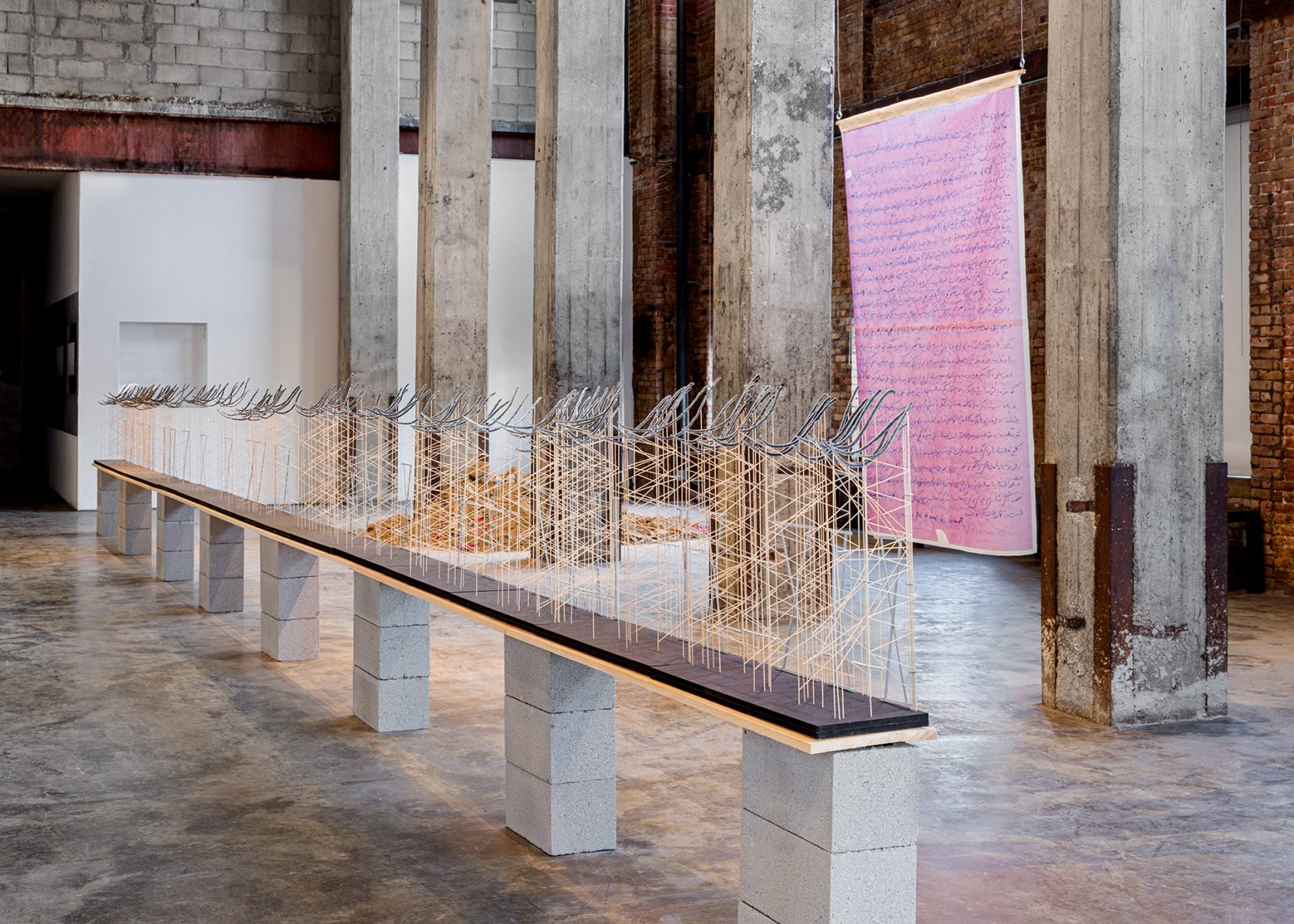
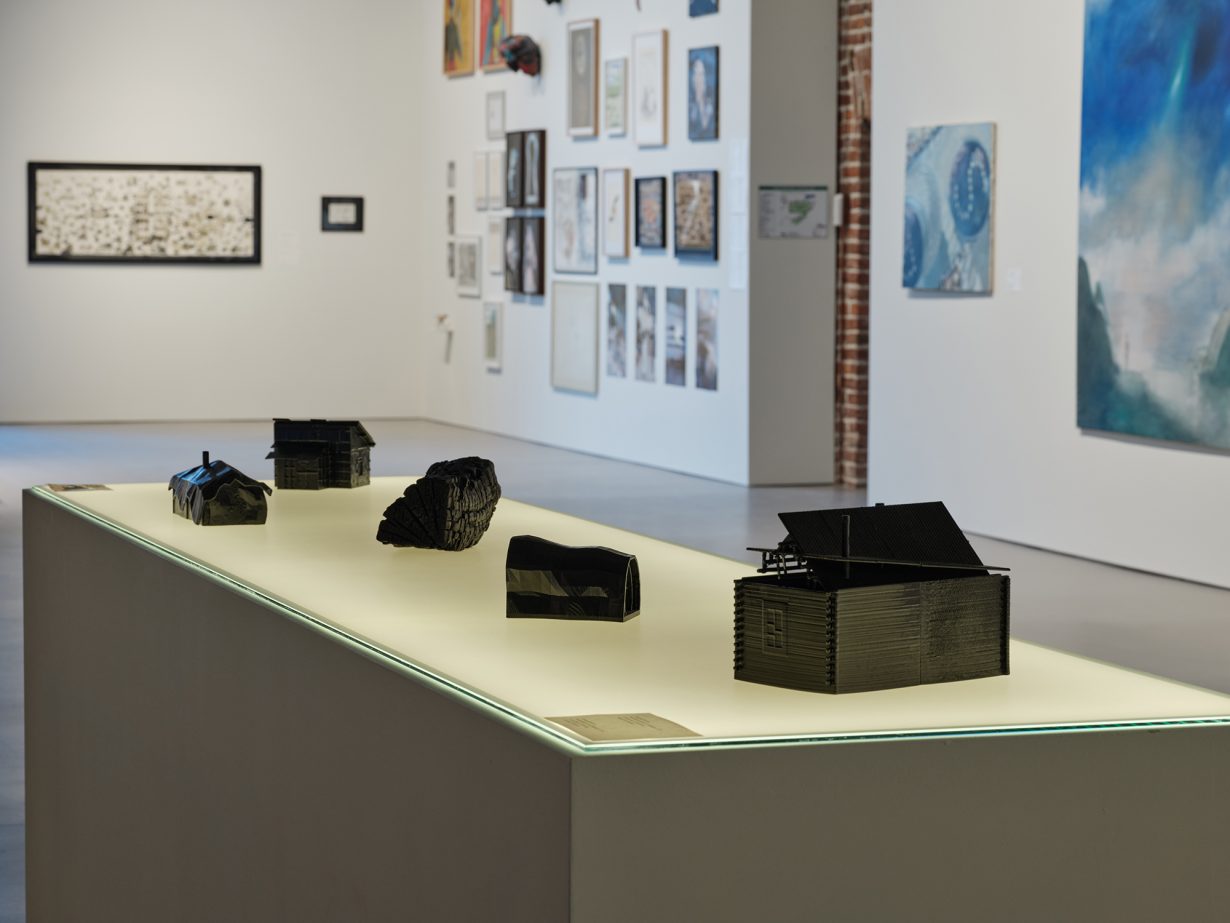
Made from found media snippets, low-fi camera-phone footage, interviews with the artist’s friends and video diaries from the front shot by the artist himself, Plisetskiy’s film traces how he went from a life amid Kyiv’s queer anarchist party scene prior to 2022, to dressing in Ukrainian pixel camouflage and fighting Russia. A frenetic goth-techno soundtrack sets the work’s pace. The irony of a figure who is against the state now taking up arms to defend it is never far from the surface. Fellow artist Nikita Kadan, curator of the exhibition Looking into the Gaps at the Jam Factory in Lviv, in western Ukraine, emerged from the same social and political milieu, and Plisetskiy’s work is something of a leitmotif for the wider show, exploring how nationalism can be negotiated in the face of an external aggressor. Plisetskiy features media vox-pops with members of the Azov Battalion, the far-right militia folded into the Ukrainian army after the Maidan Revolution, in which members dismiss the notion that LGBTQ Ukrainians might be fighting alongside them. In a freestanding vitrine near What Will You Do When the War Continues? are five black, architectural models by Bohdana Kosmina, titled Residential Complex Halabuda (2018), memorialising the Ukrainian Roma communities destroyed in 2018 in a series of nationwide neo-Nazi attacks. Both works are contentious inclusions, as the image of Ukraine as a Nazi stronghold has been a longstanding aspect of Russian propaganda, but it’s clear that Kadan is not interested in flag-waving, even while despising Ukraine’s enemy. Instead, Looking into the Gaps, the last iteration of a show that opened in Kyiv in 2024 and has since toured internationally, evolving at every stop, returns to Ukraine as a portrait of comradeship in the face of conflict.
A good proportion of the sprawling exhibition is dedicated to historicising Lviv’s art scene through connections made not in aesthetics but by tracing friendships during the dog days of the Soviet Union. Andrij Bojarov’s works, of which there are several on show, come in clusters: among them is a set of three photographs, snaps taken by Bojarov in the studio of fellow Ukrainian New Wave artist Andrii Sahaidakovskyi sometime during the 1990s. The images are hazy, featuring figures blurred from motion, and in one Sahaidakovskyi smokes a cigarette. This vibe of casual, louche bohemia is repeated in Mikhail Frantsuzov’s photograph of friend Alexander Aksinin in Tallinn in 1985, snapped outside a church and wrapped up in a hat and coat. This salon hang of art and archival paraphernalia continues: here’s a black-and-white 1990 Op-art print by Halyna Zhehulska; there’s a video shot by Bokarov of Sahaidakovskyi and Zhehulska bickering while away on what we gather to be an artist residency. Birdsong can be heard in the background, but Sahaidakovskyi is homesick we learn.
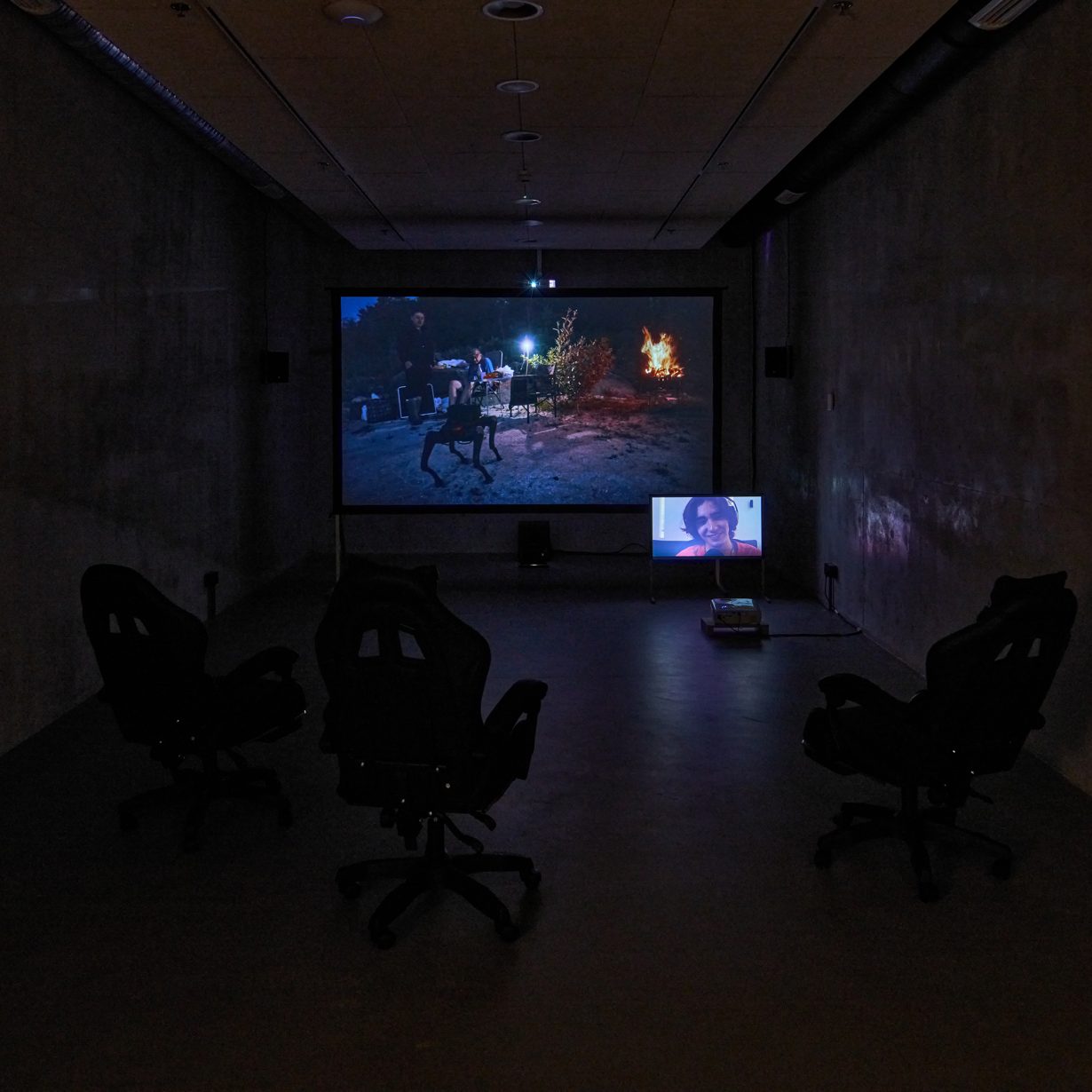
It’s obvious that this community was a bulwark against outside politics; a scene built by a few individuals. As the exhibition progresses to the Jam Factory’s basement galleries – where younger generations of artists predominate – the emotional tenor of Kadan’s show becomes more fraught, more melancholic, understandably more anxious. Context is everything: to get to this part of the exhibition you pass the entrance to the institution’s air-raid shelter. Yarema Malashchuk and Roman Khimei’s two-channel, 19-minute video, Open World (2025), follows a teenager called Yaroslav as he vicariously visits his home and neighbourhood in the east of Ukraine via a robotic dog. Through the clunky, anthropomorphised machine, complete with two-way microphone and camera, controlled gamer-style by the boy in exile abroad, Yaroslav wonders at the changes made to the house, at a version of his old life that continues outside it. When the robot, which feels uncomfortably close to the remote-controlled enemy drones that plague the conflict zones, encounters the boy’s wary cat, Yarich, it becomes too much for the protagonist. No amount of technology allows Yaroslav to run his hands through the beloved pet’s long white fur. There’s a sharp intake of breath, a swallow, an utterance of “Yarich, Yarich, oh Yarich” as he stares into the live video-feed.
Dana Kavelina’s Taki pejzaż (Just a Landscape, 2024) is saturated with feelings of alienation too. The three-channel, 12-minute stop-motion animation is included in a gallery in which Kadan has placed works that are connected to the land, to nature; a soldier stands alone in a cornfield, and converses with a drone .“Though it was not your desire to end up in these fields, you are welcomed with joy,” the machine tells the ghostly figure. Just outside the viewing room is an installation, Resource (2024), of beech-tree trunks wrapped in the pixel camo by Zhanna Kadyrova and a painting by Vasyl Tkachenko in which a man lies dead in a cornfield, eyes open to the grey sky above, the body inextricably merged with the landscape for which he gave his life. The work seems to ask: whose bodies, though, whose land?
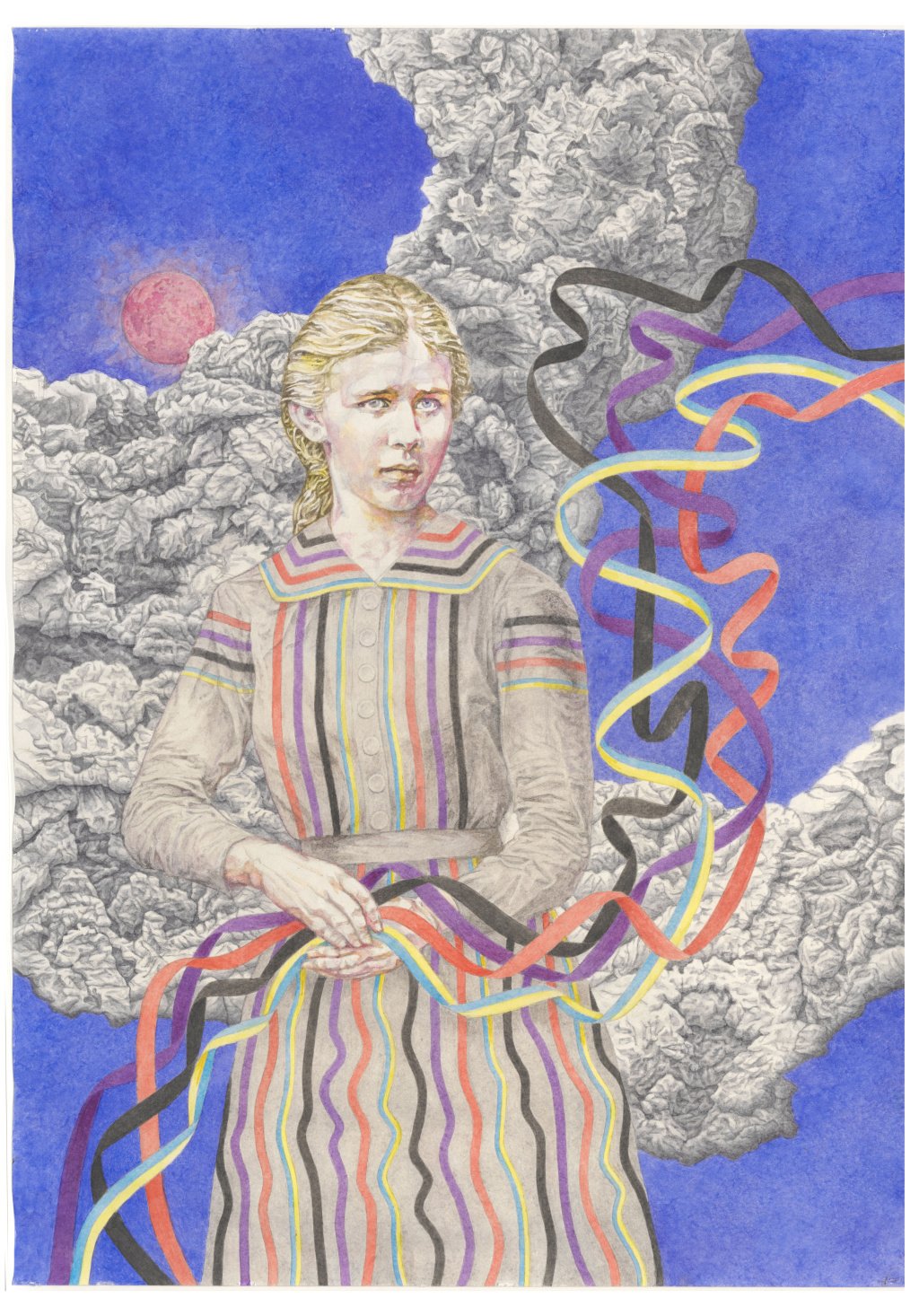
Kadan closes his exhibition – this portrait of the psyche of war, the mental gymnastics of war, the traumas of war that won’t end even if the air raids stop and tanks roll back – with his most poignant pairing yet. Davyd Chychkan, another anarchist and one of Ukraine’s most interesting painters, was killed at the front in 2025. Lesya Ukrainka and the Ribbons of Her Struggle (2021) shows the turn-of-the-twentieth-century modernist poet and radical feminist activist Lesya Ukrainka. Painted as melancholic but stoic, she casts ribbons – black, red, purple and blue and yellow – to a burning moon above. It is a strange and beautiful work. It hangs next to Blue Peppers Grown by a Ukrainian Woman in a Pot (1991), a painting by folk-artist Mariia Prymachenko, some 20 works by whom were destroyed when Russia burned the Ivankiv Historical and Local History Museum in Kyiv Oblast in 2022. Against a pink background, a great budding plant sprouts from a gayly patterned pot, full of joy, full of life. The two works are opposites in spirit, but here feel like bedfellows. Realism and optimism: when the war continues, these will be two traits that will need to be reconciled.
Looking into the Gaps at Jam Factory, Lviv, through 17 May
Read next Nikita Kadan: How to Be a Wartime Artist