The Munch Museum in Oslo’s second edition seeks to understand our era’s loosening grip on reality, whatever that means, no less looks like
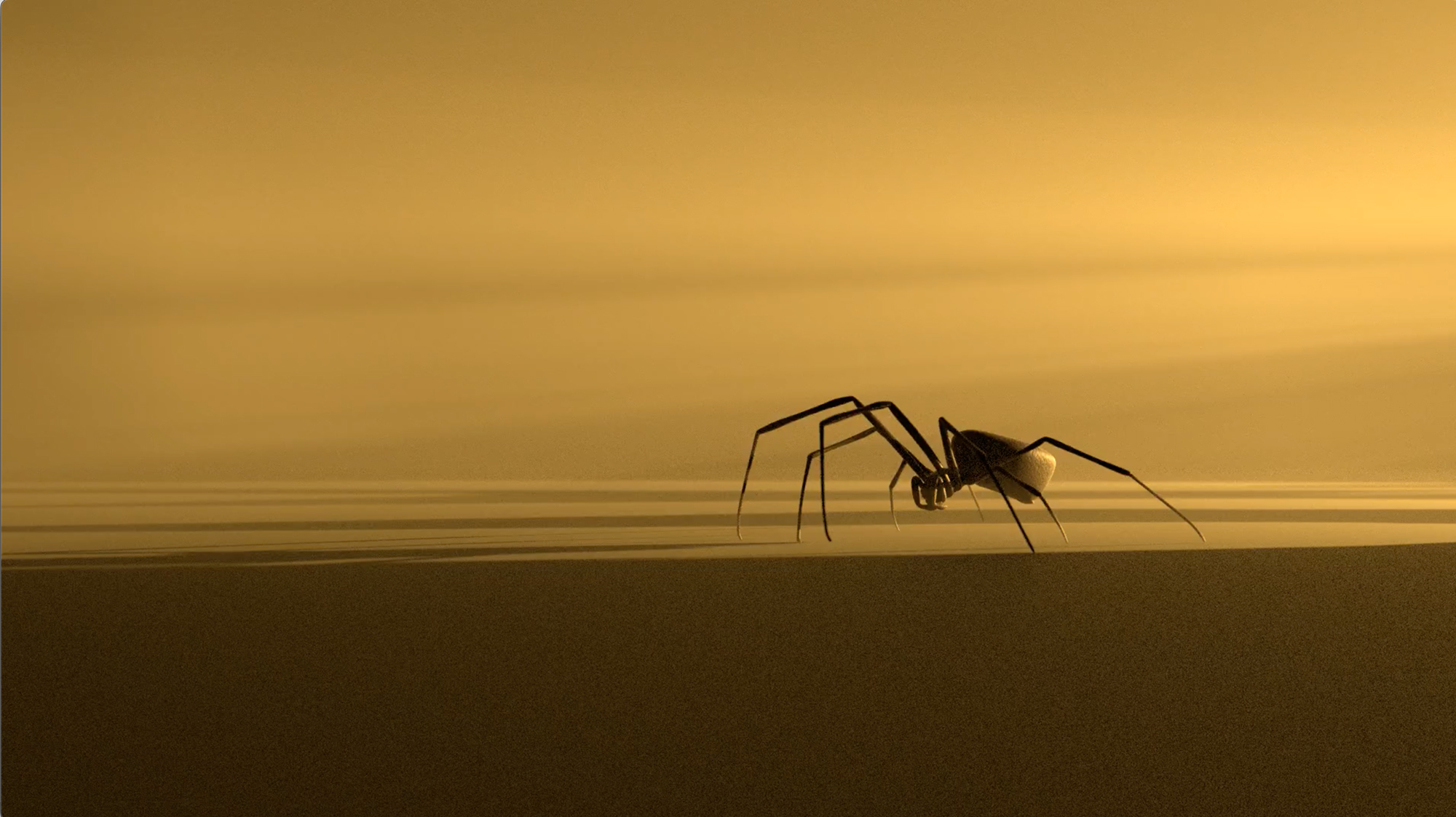
Some colours catch your attention more than others. In a darkened corner of this second Munch Triennale, orange light flickers amid a black batten structure. The former emanates from a small, square screen like a glass stove door. In Ann Lislegaard’s continuously looping video In the shadows of Trio A (2025), a 3D-animated spider scuttles in strange patterns in an arid void. From out-of-shot, as if lit by some primal, Platonic fire, sheets of light angle across the arachnid, lines defined and sharp as if cut through a dust cloud. The wall text tells us that our spider is performing The Mind is a Muscle, Trio A (1966) by dancer Yvonne Rainer, but there’s little to be construed from the choreography. Rather, it is compelling because of its agitation, its inscrutability. Who’s not caught a spider in a cup, and watched?
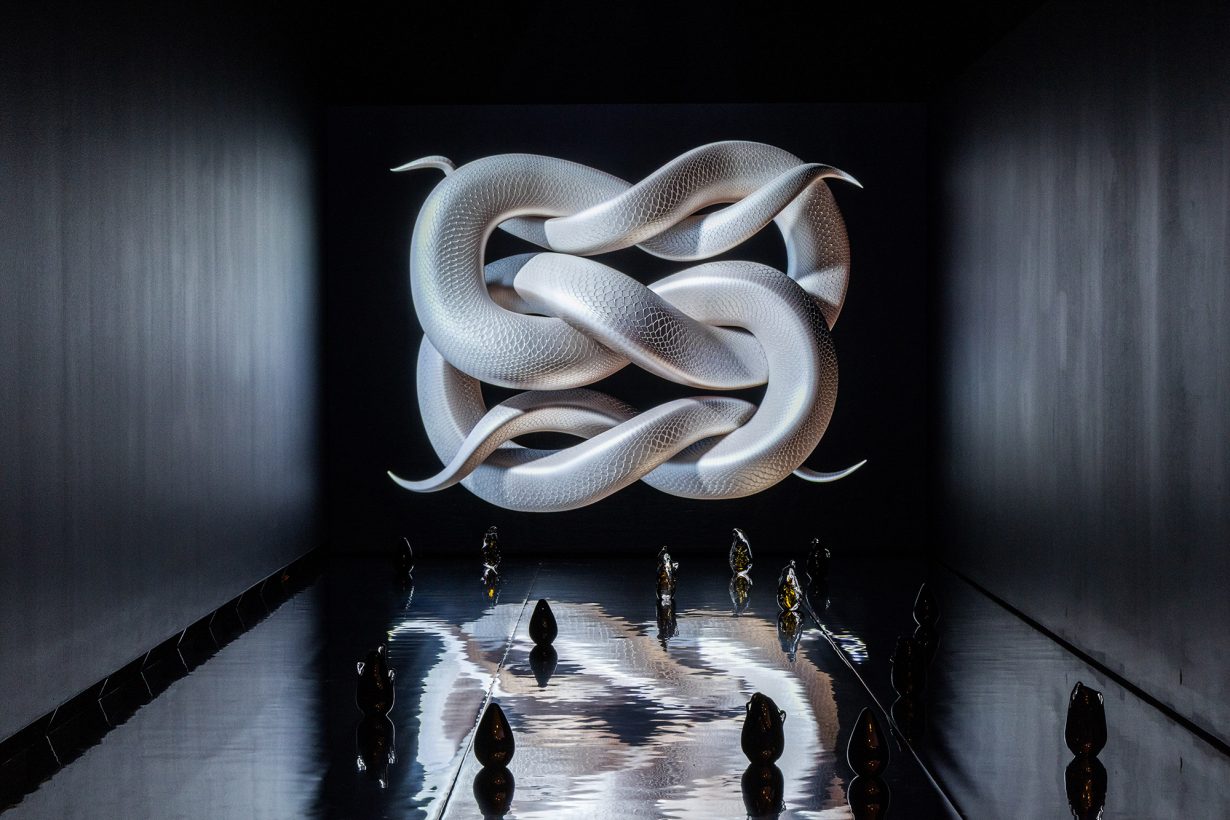
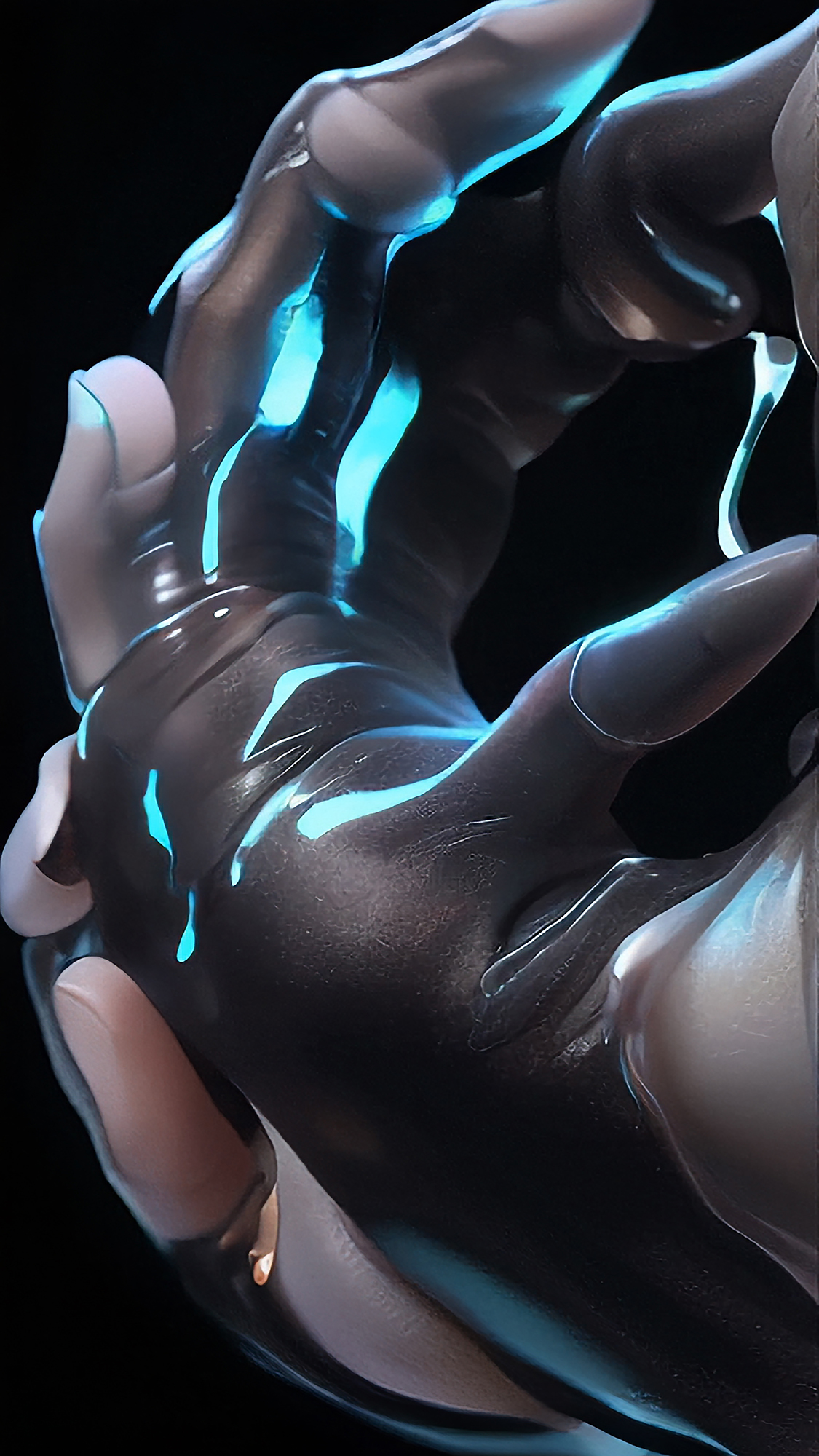
The environments in which the slippage between real and unreal can be rendered and observed is this 20-artist exhibition’s primary concern. Indeed, it’s been a primary concern of contemporary art for a decade, throughout which the use of game engines and machine learning has become en vogue – and receives ample attention here. Alice Bucknell’s film Earth Engine: Ground Truthing (2025) explores the immutable nature of the natural world by designing it in a videogame environment. Cinematic sequences of swooping crane shots and timelapse passages stage Bucknell’s critique of the “destabilising, dissociative” effects of the macro imaging practices, from surveillance footage of the contested Arctic to scientific studies of the Amazon. The artist’s voiceover in the video poses a question: “What if, in the quest to find the perfect model of the Earth, we drift further from the real thing?” In the dark annex of one gallery, Emilija Škarnulytė has arranged blown-glass orbs and pots across a mirrored floor (If Water Could Weep, 2025), illuminated (though only just) by a video projection of silver serpents – they writhe and align to form the shape of a strand of DNA, which, by trick of the reflection, extends through the floor. These various images and objects, the gallery text informs, are derived from Baltic mythology, updated for today’s degrading climate. The narration in Priyageetha Dia’s excellent video Spectre System (2024), meanwhile, critiques the dehumanising effects of labour – and its colonial manifestations in particular – on the individual and its legacies in the nervous system, while on a blank monitor-backdrop an amoebalike boil bubbles and warps in and out of looking like fingers, nails or flesh. My palms grew clammy. What distinguishes the unreality of Dia’s work, much like Bucknell’s, is its tone: colours saturate as textures morph; shots outstay their welcome, as if matching bewilderment, even horror, with curiosity.
The draw to nihilism is irresistible for many of the artists here. Infopsin’s film Patch Opal (2025), for instance, follows a series of distressed, humanoid figures in a swampy, evidently apocalyptic landscape. Some reach desperately to touch each other, others run across barren plains, phosphoric light bursting at random from orifices on the surface of their forms. “The pleasure of being known comes with the violence of being copied,” says one figure staring down the ‘camera’. If only such ideas and images were, well, new. In fact, little here is – Jean Baudrillard’s Simulacra and Simulation (1981) is near half a century old, Infopsin might realise, and there can be few exhibitions so dominated by the use of one gaming software, Unreal Engine, consciously referenced in the exhibition’s title.
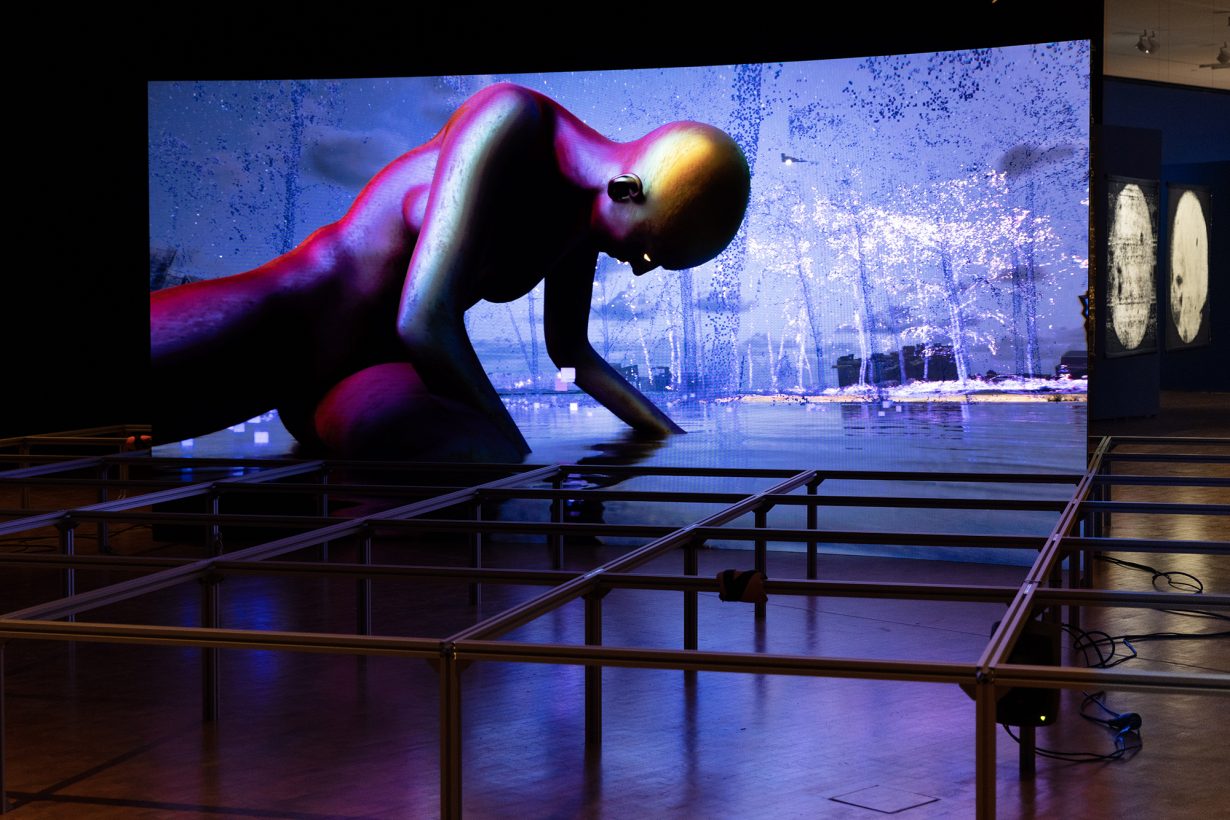
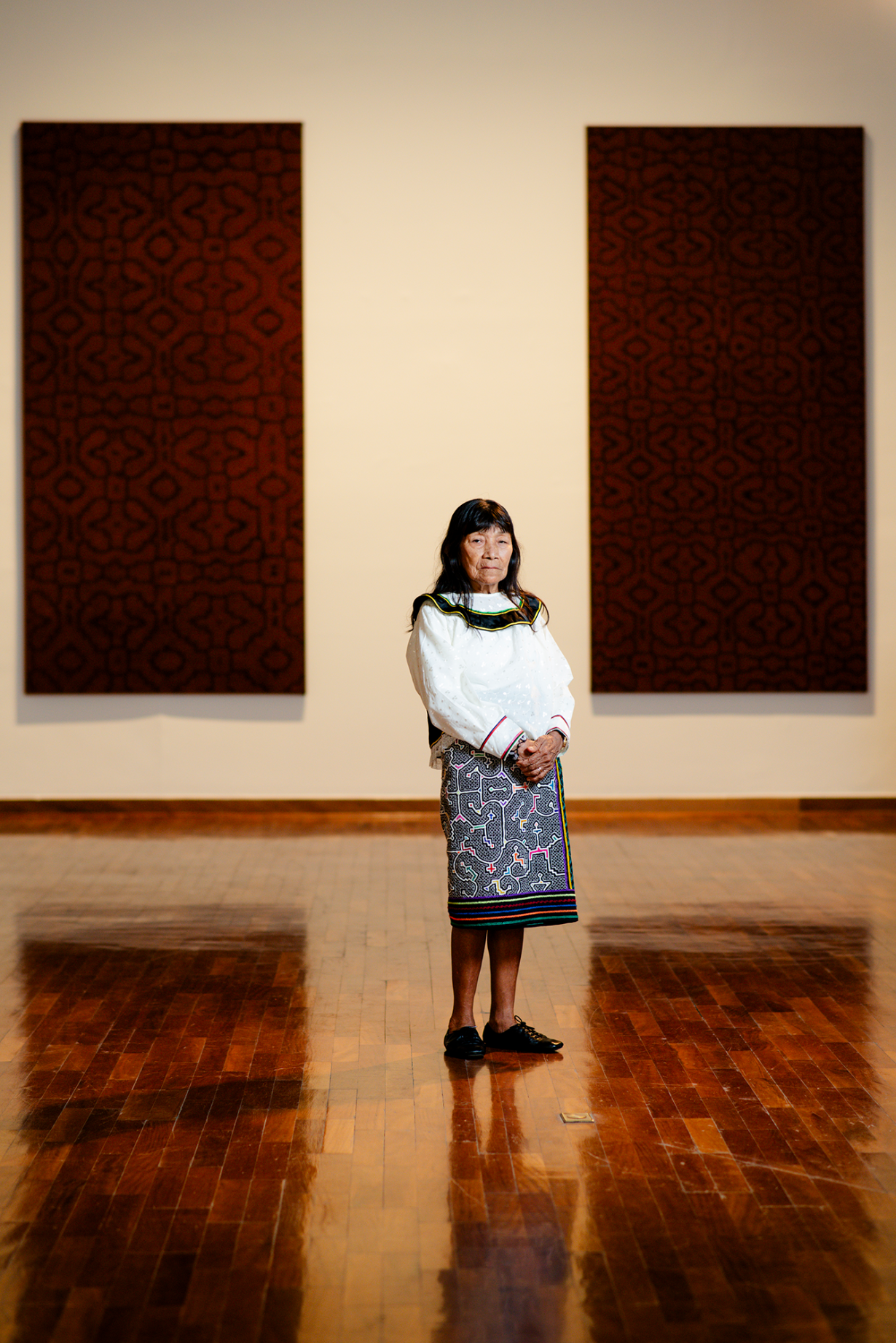
To that end, if what unites many of these videoworks is their digital form – their means of inquiry – then do their disparate contexts and politics relate to one another, or here become somehow streamlined? The exhibition’s physical works suffer a similar complex. Nanna Debois Buhl’s 2024 Lunar series of woven textiles, depicting the first photographs of the dark side of the moon, represent an earlier technological attempt to explore the unknown. The fronts of each textile panel are austere and darkened, the backs inverted negative; minuscule reflections of threads sparkle technicolour in the gallery light. Further along the wall, Mazenett Quiroga’s Technology of Enchantment / Enchantment of Technology (2025) reworks discarded motherboards into animals, masks and figurines inspired by native Amazonian imagery. The viewer is being asked in both, one suspects, to identify how the real can be made to feel otherwise. Such a ‘real’ world many of these artists are engaging with, however, gets lost. Because Almost Unreal reads more like a preliminary sketch than an ‘investigation’, the supposed unreality of things an unwelcome distraction from the stories each artist is trying to tell, drowned in a vibes soup. Where else is Dia and Lislegaard’s sense of unease, of nervous as well as social, structural and environmental breakdown? Perhaps that would be a little too real.
Munch Triennale: Almost Unreal at Munch Museum, Oslo, through 22 February
From the March 2026 issue of ArtReview – get your copy.
Read next Emilija Škarnulytė’s planetary scales