Faulkner’s new work at the Camden Art Centre casts in amber the physical and chemical process of image-making
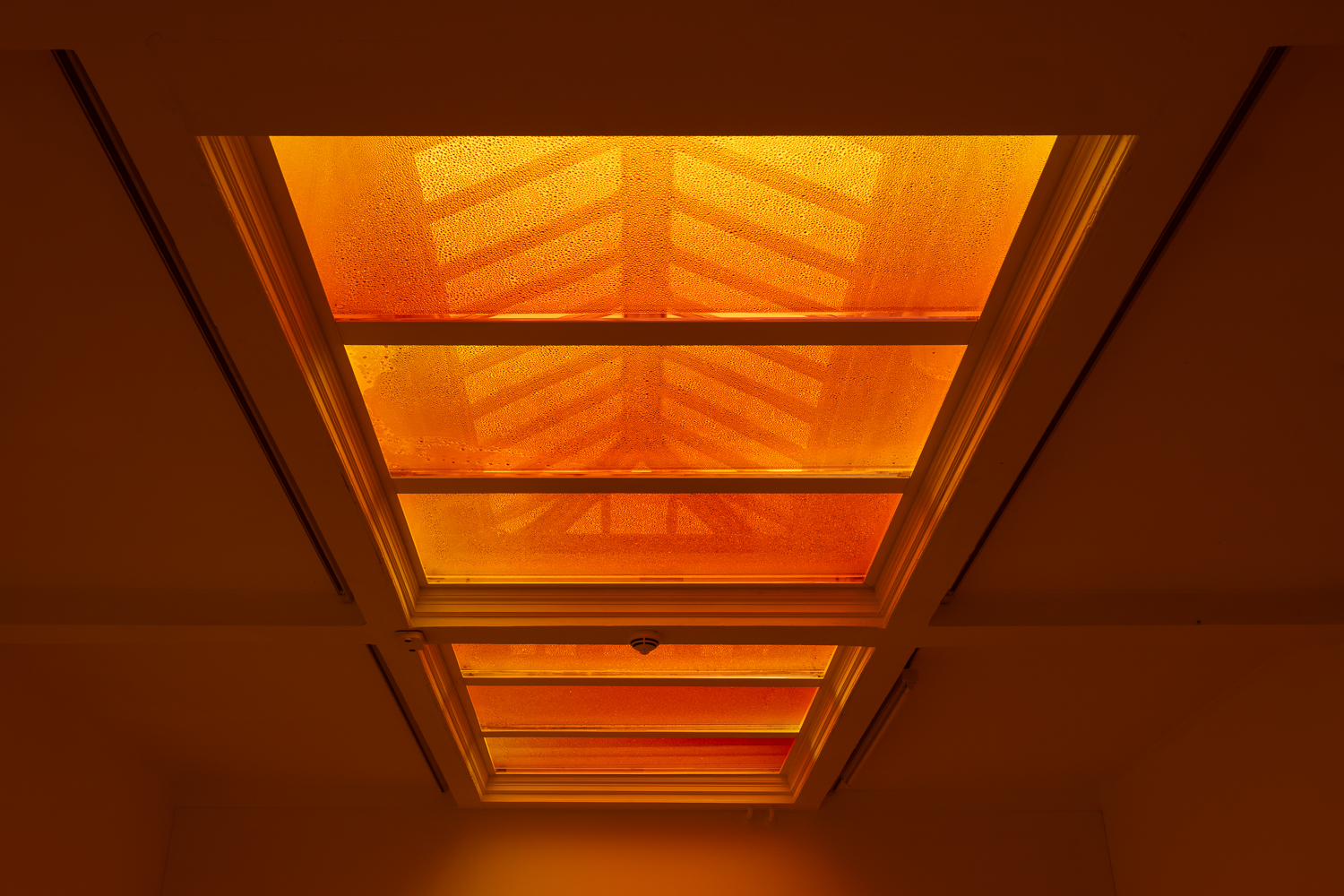
Transparent panels have been installed to span the skylights of the Camden Art Centre’s upstairs foyer, each of these slim boxes enclosing a shallow pool of iodine solution (a liquid associated with early daguerreotype photography) above the viewer, bathing the room in an amber glow. As the light from outside filters through the confined fluid, condensation forms jewellike beads on the insides of the panels. With Aperture (Iodine) (all works 2026), Faulkner positions photography not simply as an optical medium, but as a material process, seeking out how physical and chemical states of transformation might be perceived in the making of an image. Across three photographic works and three accompanying sculptural pieces, an observable tension emerges between the photographic ‘fix’, in which a moment is arrested in apparent permanence, and Faulkner’s various attempts at complicating it, making us aware of the image’s dependence on the matter that makes it possible.
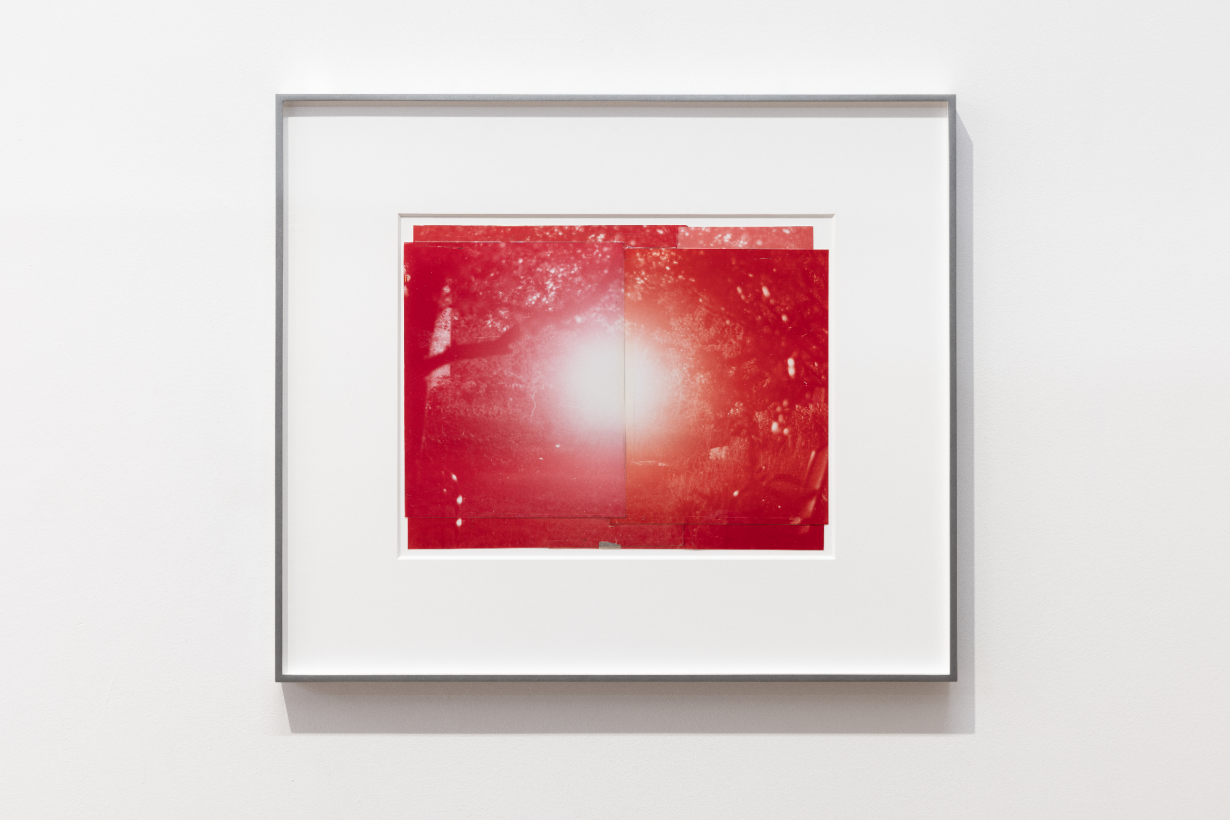
The monumental Aqua Fortis looms over the main gallery. Composed for the most part of six large, abutting silver-gelatin prints on a plywood mount that reaches almost to the ceiling, the assembled monochrome prints depict a huge scrapheap of metal detritus. That image however is framed by a larger field of black, punctuated by various scratches of white and dashes of aluminium tape that hold the prints together. At this scale, the mass of metal and the textured whorls of fingerprints caught on the enlarged image merge together on the work’s surface to produce an unexpected, abstract elegance. Nearby, Moth-catcher offers a moment of concentrated intensity: inside a slick aluminium frame, overlapping vivid red chromogenic prints are hemmed in by the surrounding card mount. A bright white light burns out the centre of the image, while illuminating a wooded scene of foliage around the margins. By documenting light itself, Faulkner is playing with another essential component of the photographic process, allowing the subject to dissolve into the materials used to capture it.
The three silver-plated Analogue reliefs placed around the gallery operate differently. Here, Faulkner records his South East London studio, where his photographic images are made by pressing and rubbing thin sheets of copper against particular surfaces, then electroplating these with silver distilled and recovered from discarded X-ray film. They are strange objects: the shimmering surfaces, dense with the punctures and abrasions accrued through their making, lend them the aura of religious relics. Analogue II (Corridor), a small wall-mounted fragment, registers neat brickwork and a curving arch, its surface pitted with scratched graffiti. Held up with aluminium tape, set apart in a window alcove, it lacks the formal resolution or spatial assertiveness of the surrounding works. Another, Analogue (Studio floor), sprawls across the gallery floor, pieced together in a fragile arrangement tapering to a thin point. Its parquet pattern precisely mirrors the gallery’s own flooring; it’s perhaps a too-intentional literal correspondence, downplaying the role of chance and error that elsewhere animates Faulkner’s work. Yet this literal ‘grounding’ serves an important function, forcing us to encounter the work not as an image of a floor but as a physical engagement with the studio’s material existence.
The silver surface of the analogue reliefs may shift over the course of the exhibition, reacting to atmospheric conditions, much like the liquid contained within Aperture (Iodine). This latent chemical instability keeps the works in a state of exposure, positioning them as mutable participants within the present environment. This is not image-making in the traditional sense, but rather imaging: an enigmatic process of realisation in which subjects are extracted from the world and remade as spatial, material propositions – transient and contingent.
Nat Faulkner, Strong water is on view at Camden Art Centre, London, through 22 March
From the March 2026 issue of ArtReview – get your copy.
Read Next How Photography Tells Lies