A new show at Museum of Art and Photography, Bengaluru reveals the commercial and colonial interests masked by historical ventures of scientific curiosity
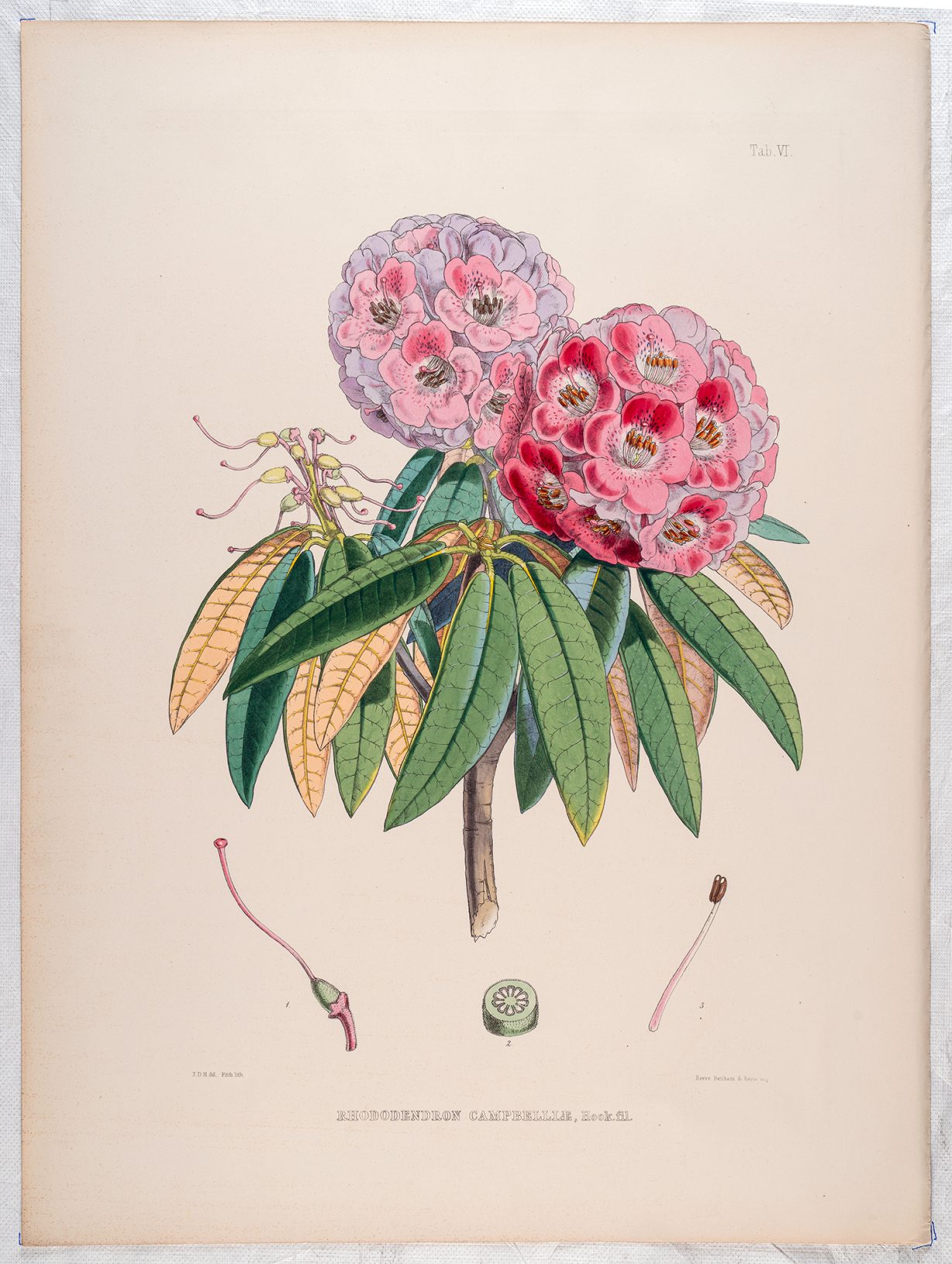
The hand-coloured lithographs of pale red, pretty white-and-bright pink rhododendrons are clearly the showstoppers in this exhibition of botanical art. That’s not necessarily to second-guess the intentions of curator Shrey Maurya, rather it’s based on the observation that the corner in which they are on display appears to be a favourite with selfie-takers. It is easy to see why. Whether one is aware of the many layers of history, migration and colonialism that complicate the genre of botanical art or not, the rhododendrons are very attractive. In the south of India, far from its native Himalayas, where it is part of everyday life (and even a cooking ingredient), the flower is a novelty. Less than a metre away are a watercolour over pencil and a mezzotint of British botanist Joseph Dalton Hooker, who in 1847 was commissioned by Kew and the East India Company to survey the flora of the eastern Himalayas and the Sikkim kingdom. In both the works, he is seen accepting rhododendrons from natives. The women who offer the flowers look scared, subservient, as if they just hope the white man is satisfied with what they have brought. The images are like a gut punch; the aesthetics cannot hide the troubling reasons why most botanical art exists in the first place.
While a scientific outlook was being ostensibly cultivated in Europe during the early eighteenth century, colonialists had begun to consolidate their presence in the Indian subcontinent. With it, the need to survey the land and its flora developed as much for potential commercial purposes as for reasons of scientific curiosity. In line with these activities was the need to maintain visual records in the form of detailed drawings and illustrations, which, over the decades, developed into an artform that would have its set grammar and visual language distinct from other recorded images. Local artists from India would bring their own experiences and traditions, and this in turn would elevate the otherwise clinical botanical works – which captured plant life stripped of its geographical context, lonely and sterile against generally white backgrounds – to works of aesthetic value that popularised the artform and made them coveted collectibles for even those outside the scientific community. There was an unequal collaboration in the field and on the drawing table between the local artists, knowledge keepers and traditional custodians of the flora, and the botanists of the Empire. The lineage of this inequality continues in the present. Hundreds of thousands of plant specimens were snatched from their soil and local contexts and forced to migrate to alien climatic and cultural environments.
These and other stories of the violence of the colonial project caption the large collection of botanical images on display. There are works from Hortus Malabaricus, the seventeenth-century compendium of medicinal plants in the Malabar Coast, which names plants in at least four languages – Malayalam, Konkani, Arabic, Latin. Wall text reminds viewers of the absurdity of the familiar colonial claim of having ‘discovered’ something, and the unfairness of naming plants after rich patrons, the royal family and senior colleagues, while rarely recording colloquial nomenclature.
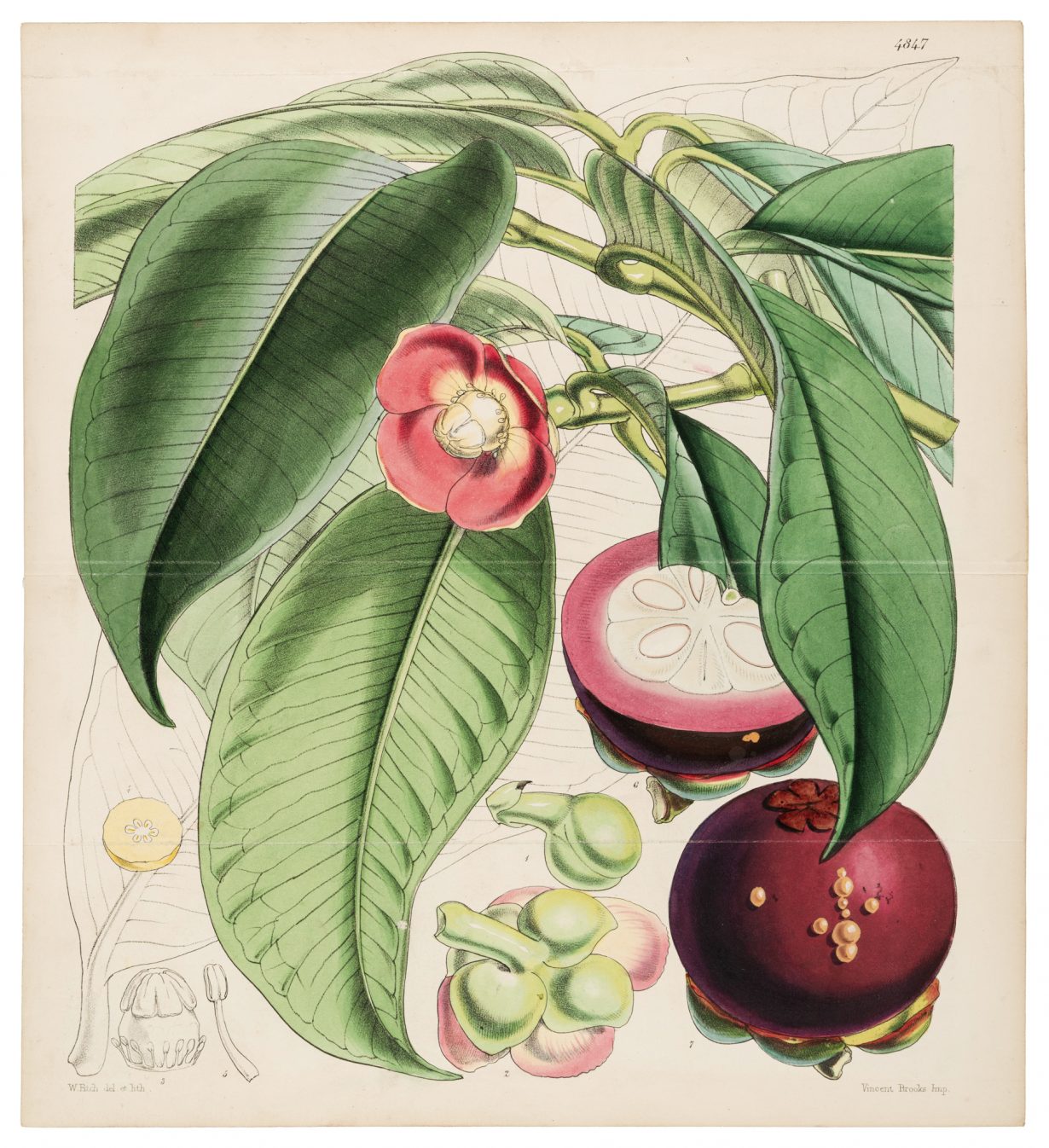
Other drawings dissect commercial cash-crop plants like indigo and pepper. There is a section dedicated to Curtis’s Botanical Magazine, the longest-running botanical periodical in the world. Many hand-coloured lithographs of familiar plants like the meswak (toothbrush tree), breadfruit and tamarind, and those unfamiliar, like orchids and flowers from Eastern India, or the Pride of Burma flower, are included as well. There are paintings of marigold in bloom, a watercolour of the Holi festival being celebrated with a vast garden in the background, illustrations of intricately designed gardens from Baburnama and other examples of the Mughal-style paintings. A small set of watercolours made at the Government School of Art, Calcutta, indicate that botanical art had become popular enough to be formally taught in art schools. However, in a minor disappointment, Bengaluru’s fame as the garden city and the history of Lalbagh, one of the city’s best-known gardens, founded by Hyder Ali and improved via botanical diplomacy with other countries by his son Tipu Sultan, take up lesser wall space than it merits. What started off as a charbagh, a quadripartite design in the Mughal garden style with nonnative cypress trees, was later developed by German and British botanists into the local landmark that Lalbagh now is. The jacaranda, pink and golden trumpet trees brought to the city in the nineteenth century, are iconic to Bengaluru’s spring season today, but the origin of the garden in the father-son duo’s interest in botany, well before the British idea of decorative gardens reached the subcontinent, is rarely acknowledged in popular memory. This act of remembrance is important in an atmosphere where Ali and Sultan are vilified today by far-right political projects in India for having been Muslim, for their alleged cruelty and alleged forced conversions while ruling the erstwhile Mysore state, where once they were hailed, by the public and governments both, as heroes and among the country’s first freedom fighters against British colonialists. A greater focus on the city’s own gardens would have given more context for a show that claims to want to restore formerly erased contributions of Indian artists and botanists in the making of colonial botanical art.
Paper Gardens: Art Botany and Empire at Museum of Art and Photography, Bengaluru, through 5 July
Read next A Muddy History of Plant-Hunting