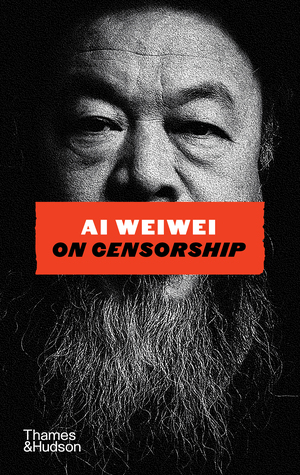
In 2015, artist Ai Weiwei left his native China for good, after years of state harassment, surveillance and eventual police assault and detention, all for asking awkward questions about Chinese politics and the Chinese regime. On Censorship is both a bitter – if, at only 88 pages, far too sketchy – critique of the role of censorship in an authoritarian state and an attempt to make sense of how censorship works in the ostensibly more ‘open’ democracies of the West.
The trouble with On Censorship’s brevity is that although Ai outlines issues we can agree are problems – the attempt to manipulate consensus, the repression of dissident opinion – he offers little detailed discussion of the ways in which free speech has become a battleground in the West since 2015: no mention, for example, of ‘cancel culture’, nor any real detail about the ramping up regulation and criminalisation of speech, particularly online. Instead, Ai delivers grandiloquent declarations: ‘Freedom of speech represents the last line of defence against the collapse of individual consciousness or the collective awareness of a society’. Very true, but what about ‘hate’ speech or even just the speech of those you violently disagree with?
Occasionally Ai’s current preoccupations poke through this oddly euphemistic polemic. Mostly they are about Israel and Gaza. He records how, following his exile, many corporations withdrew sponsorship for his international shows, then later mentions a ‘comment I made on social media’, which ‘resulted in the postponement and cancellation of exhibitions’. He doesn’t mention that his tweet (in Chinese), made a month after the attacks of 7 October, declared that America’s ‘political, financial, cultural, and media sectors are largely under Jewish control’. Ai is entitled to express his opinion without being cancelled or arrested, but there are many other people (now in the West) who are being shut down. He is right to conclude that in this emerging culture of indoctrination, ‘the capacity for independent thought fades, and a personal view on history and reality disappears, as does the capacity to question’. But such studied generalising doesn’t describe what’s actually going on. One wonders how many would actually agree with his contention that censorship (as long as it’s the other guy’s opinion) is really such a bad thing.
On Censorship by Ai Weiwei. Thames & Hudson, £12.99 (hardcover)