‘The flag of Peru was born from a dream. We, the Shipibo, carry a dream of our own: the dream of self-determination as an Indigenous nation’
ArtReview sent a questionnaire to artists and curators exhibiting in and curating the various national pavilions of the 2026 Venice Biennale, the responses to which will be published daily in the leadup to and during the Venice Biennale, which runs from 9 May through 22 November.
Sara Flores is representing Peru; the pavilion is in the Arsenale.
ArtReview Tell ArtReview what you plan to exhibit in Venice. What has influenced or inspired you?
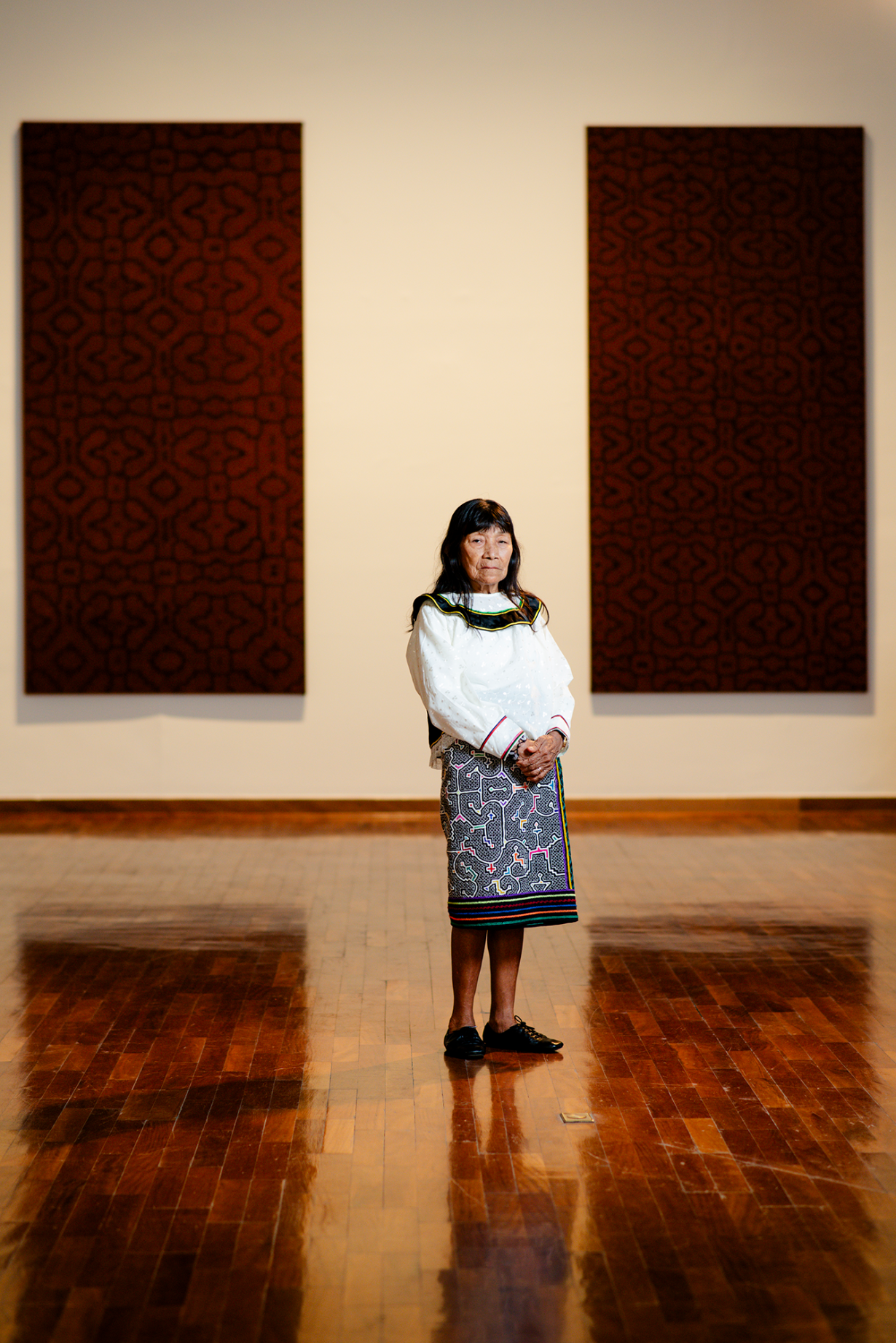
Sara Flores I will present a new body of largescale kené paintings, ethereal painted sculptures, and a video work specifically conceived for the Peru Pavilion. Due to their scale, some works will be truly immersive, inviting the viewer not only to look but to enter a state of attention: one of calm, presence and grounding.
The exhibition, conceived together with the curators Issela Ccoyllo and Matteo Norzi, is titled From Other Worlds. It brings together works that function as portals to the ancestral knowledge of my people and to pathways towards Indigenous futures.
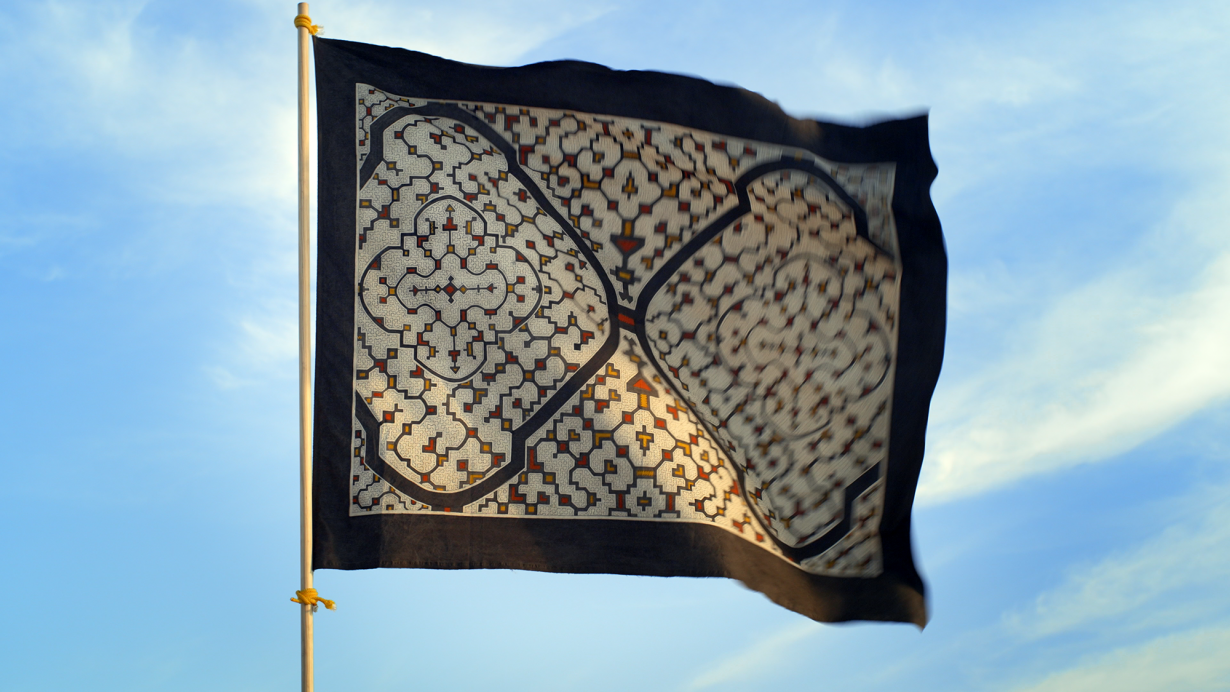
My practice is rooted in kené, the design system of the Shipibo-Konibo, the people to whom I belong. Kené is a living visual language that comes from the forest, the rivers, medicinal plants and from songs transmitted through generations of women. Both the inspiration and the materials used to create it are expressions of the environment. An environment that is also the territory at the heart of our struggle for self-determination as an Indigenous nation, at a moment when encroachment has reached unprecedented levels.
AR In what ways (if at all) does your work relate to the theme of the Biennale exhibition, In Minor Keys?
SF When I read the curatorial text for In Minor Keys, I felt a profound resonance with the world from which my work emerges. The exhibition concept speaks about ‘shifting to a slower gear’ and of ‘the harmonies of those repairing wounds and worlds.’ Kené is precisely that: a practice of repair. It is a visual medicine transmitted by women, a way of restoring balance between body, spirit, community and forest. In a territory marked by extractivism and ecological violence, continuing to paint kené with natural dyes is already a form of territorial resistance.
The curator also described ‘endlessly rich ecosystems, social lives that are articulated… within much larger political forms and ecological stakes,’ and evoked ‘an archipelago of oases… intimate and convivial universes that refresh and sustain even in terrible times.’ My community in the Ucayali region lives among those larger political pressures: logging, mining, monocultures such as palm oil and coca. Yet within them we sustain intimate universes –gardens, communal spaces, ceremonies, workshops – where knowledge circulates and life is renewed. My paintings carry this ecosystemic and relational way of thinking.
The exhibition text ‘invites listening to the persistent signals of earth and life, connecting to soul frequencies.’ Kené originates precisely from that act of listening. The designs are received through visions and dreams, from plant teachers, from what I would call a silent yet resonant world.
I was particularly struck by the emphasis on ‘artistic practices that open portals.’ In our tradition, kené is a portal between visible and invisible realms.
The curator spoke of animism and of ‘a radical reconnection with art’s natural habitat.’ For my people, art has never been separate from life. Design is embedded in ceramics, textiles, clothing and bodies.
It is also meaningful that the only other Peruvian artist included in the main exhibition of In Minor Keys is Celia Vásquez Yui, who is also Shipibo and my friend. This convergence shows that my selection to represent Peru is not accidental but deeply fitting. It signals that what might once have been considered peripheral or ‘minor’ knowledge is now recognised as central to the questions of our time. The presence of two Shipibo artists in this context affirms that our cosmology, our animism and our relational way of understanding the world are fully contemporary.
AR Why is the Venice Biennale still important, if at all?
SF I cannot comment on that yet because it will be my first time there.
AR What role does a national pavilion play at a time of increasing confrontational nationalisms? Is it about expressing difference or commonality?
SF Let me look inward. This is the first time in the history of the Peruvian Pavilion that an Indigenous artist has been selected to represent the country in Venice. This inclusion is obviously very welcome, yet it does not erase the burden of previous exclusions.
What feels significant is that it expresses a reckoning with a new sense of national identity: one that opens up a pluricultural perspective. It is an act of poetic justice but also an invitation to focus on what we share rather than what separates us.
AR Who, for you, is the most important artist (in any discipline) that your country has produced?
SF I would not know how to answer that.
AR What is something you want people to know about your nation that they might not know already?
SF The flag of Peru was born from a dream. We, the Shipibo, carry a dream of our own: the dream of self-determination as an Indigenous nation.
AR Given that you are exhibiting in a national pavilion, is there something (a quality or an issue or attitude) that distinguishes the art of that nation from that of others? That makes it particular? Are there specific contexts that it responds to? Or do you think that art is a universal language that goes beyond social, political or geographic boundaries?
SF I think of art as a universal language.
AR What, other than art, are you looking forward to seeing – or doing – while you are in Venice?
SF We, the Shipibo, are river people. I am very excited to move through the city of water and the lagoon.
AR Could you give us a brief overview of your average working day while creating your presentation for Venice?
SF The presentation includes the largest painting I have ever created. It took four months of work, day and night, resting only on Saturdays.
AR Can art really change the world?
SF I don’t know if this world can be changed or saved. But art can plant the seeds of whatever will germinate after.
The artist’s answers have been translated from Spanish
The 61st Venice Biennale runs 9 May through 22 November 2026