Teresinha Soares, the Brazilian artist whose Pop work was infused with sexual politics, has died.
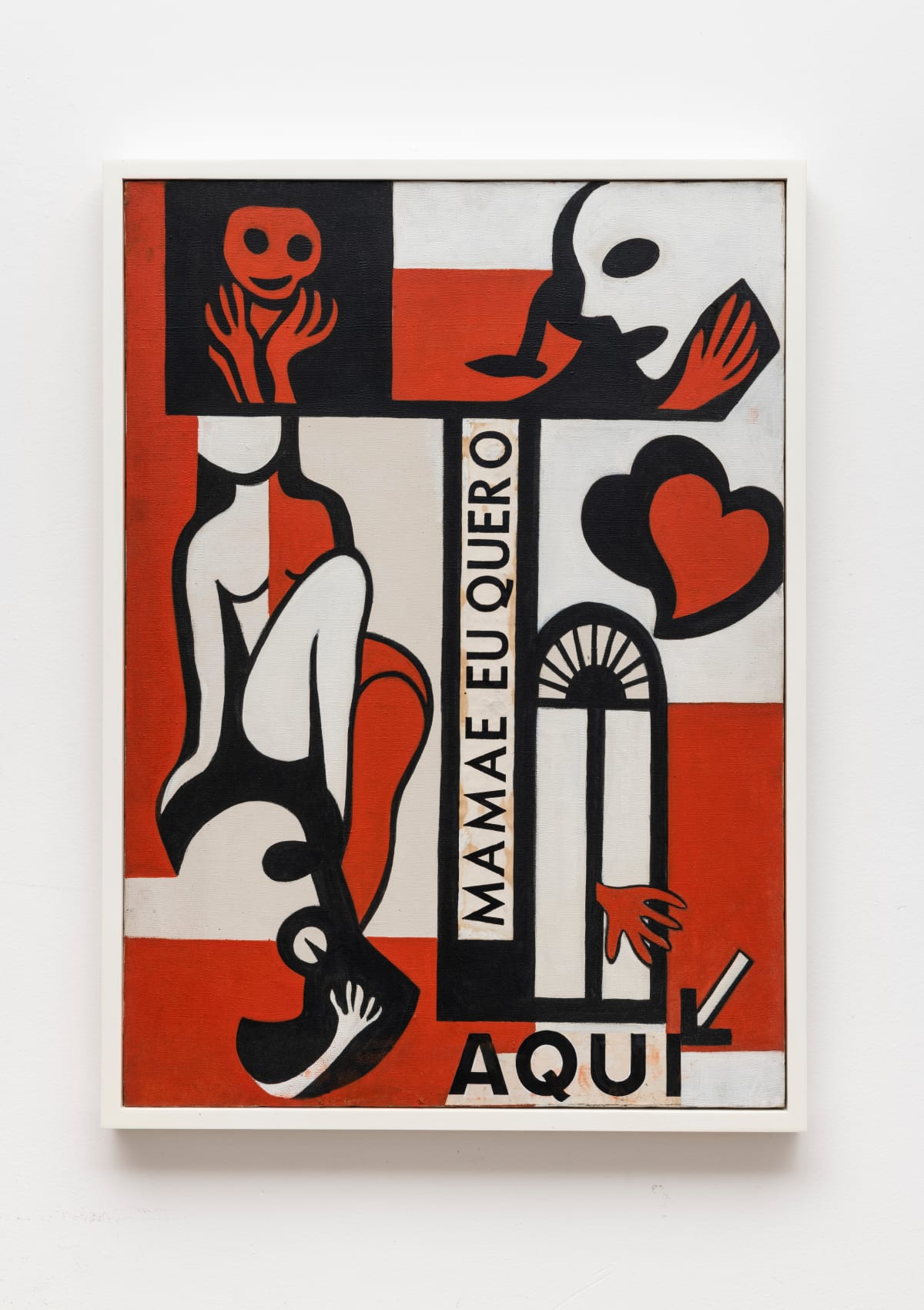
Born in Minas Gerais, Soares studied at the Universidad Mineira das Artes in Belo Horizonte, graduating in 1965 as Brazil’s military dictatorship was beginning to clamp down on radical expression in the arts. Her paintings nonetheless included mouths, breasts, genitals and liberated female bodies. The press too was scandalised: ‘Painter Teresinha fears no sexual taboo’, ran one headline, while another proclaimed ‘Teresinha Soares and art as a volcano of Eros’.
In the late 1960s, Soares started a series of shaped painted wooden-panel works, referencing the Vietnam War, American imperialism, sexual repression, the oppression of women, and the torture and death of political prisoners in Brazilian prisons. One work of the period, painted to appropriate the form of a film negative, So Many Men Die and I Am Here So Lonely (series Vietnam) (1968), features ambiguous bodies entangled, either fighting or having sex.
She stopped making art abruptly in 1976, a decision she said she could never explain, but her work appeared in The World Goes Pop in 2015 at Tate Modern in London and Radical Women: Latin American Art, 1960–1985 at the Hammer Museum and Brooklyn Museum in 2018. In 2019 her decade of artmaking was the subject of a retrospective at the Museu de Arte de São Paulo.
She is the mother of the artist Valeria Soares.