The story thus far might be: exuberance abroad, sobering realities at home
On a Thursday morning in early February, Thailand’s caretaker prime minister stood on the steps of Bangkok’s Government House and declared the country to be a ‘land of opportunity’ – and not, as a recent Financial Times article claimed, the ‘sick man of Asia’. Through interviews with dour economists and barely solvent members of the public, this scathing report sketches out the deep-seated structural issues that have lumbered the country with anaemic growth, dampened foreign investment, saddled many citizens with debt and so forth. But Anutin Charnvirakul – who, as of writing, looks set to become the permanent prime minister after the conservative party he leads, Bhumjaithai, won a majority at the 8 February general election – was having none of it. ‘Thailand is not as it has been portrayed,’ he told the press.
At the macro level, his remark was notable for being an attempt to brush off a label that has gained traction. On another level – the level of culture – his response was striking because it hews so closely to another media narrative: a spate of events and launches in 2025, most the result of private-sector patronage, has prompted some arts reporters to portray Thailand as a glowing land of opportunity. ‘Like Miami, Thailand is a major destination for hospitality and leisure. Could Bangkok, and Thailand generally, become a similarly essential stop on the art calendar?’ pondered Vivienne Chow on Artnet. ‘Right now, Bangkok feels as though it’s at the centre of the Asian art world,’ wrote James Chambers in Monocle.
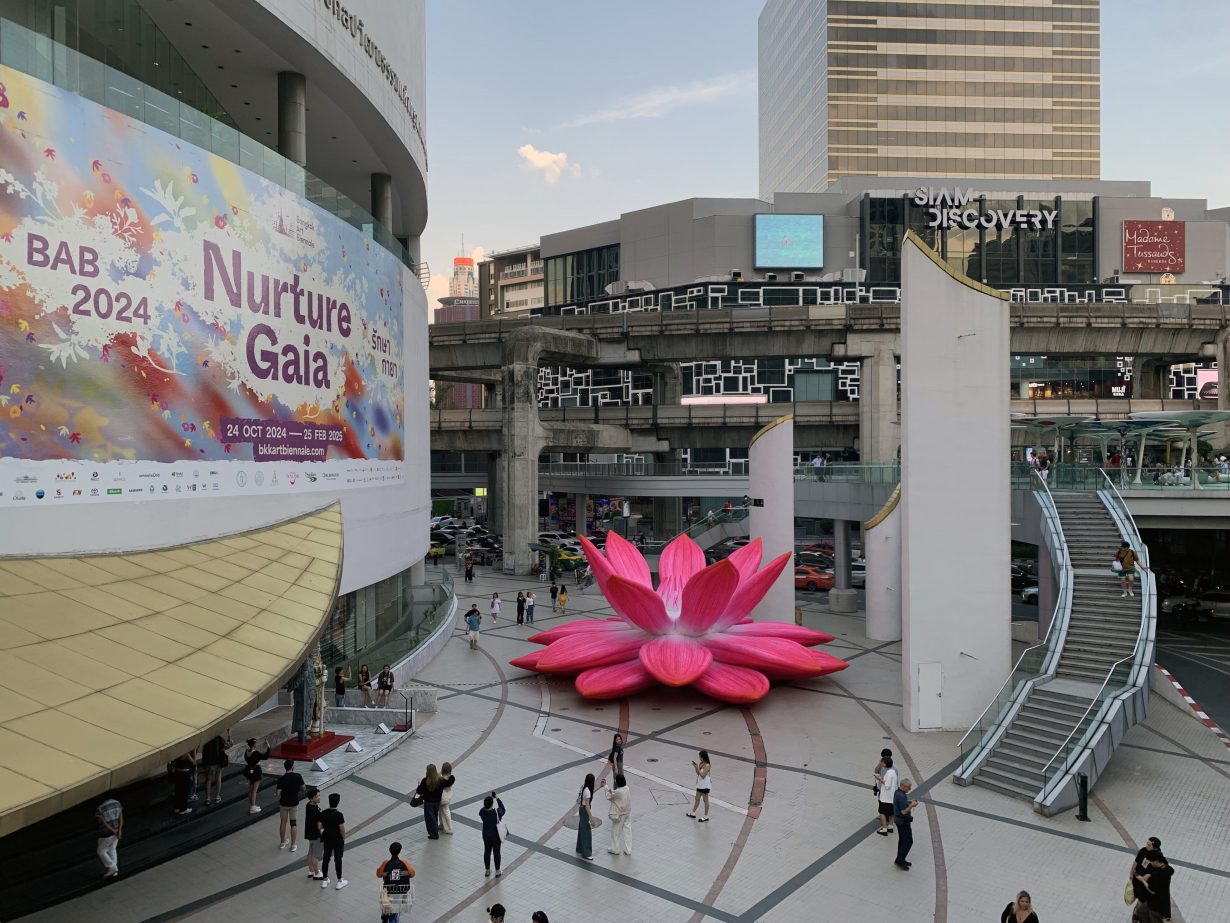
Bangkok’s art scene, it bears remembering, is prone to bursts of high spirits. ‘Few people new to Bangkok in the mid-1970s can imagine the excitement and activity among the capital’s painters, sculptors and printmakers in the early 1960s,’ wrote Michael Smithies, an art critic at the Bangkok World in that period. ‘From almost nothing… young artists suddenly blossomed, flowered, and for the most part then withered.’ During the mid-1970s, an altogether different artistic awakening took place, when artists on the left reacted to rightwing ideologies and state repression by producing sociopolitical works. And another challenge to the status quo, namely the dominance of national art competitions and art schools steeped in Modernism and neotraditional ‘Thainess’, came during the late 1990s. International curators drawn to the city’s dynamism invited artists to international shows, or acquired their work, while alternative nonprofit spaces presented a different camp – and career path – to the conservative one offered by the city’s preeminent art school, Silpakorn University. More recently, the arrival of three biennales in 2018, two of which have lasted – the Bangkok Art Biennale and Thailand Biennale – was another turning point. Today, both offer precious opportunities and production budgets, although they have also spurred debate about the place and placemaking of biennales in Thailand.
Missing from all these previous flowerings, though, was the heady combination of private investment and market buzz. In recent times, every month seems to yield new openings and announcements – from UNITED Unlimited (a forthcoming six-storey artist studio) to Misiem’s/bangkok (a nonprofit space spread across two Chinatown buildings, one devoted to contemporary projects, the other housing works by the Modern sculptor-painter Misiem Yipintsoi). And this momentum has been building for some time: while 2024 was a busy year – ‘cultural hub’ Bangkok Kunsthalle opened in an old brutalist printing-factory, the fourth edition of the Bangkok Art Biennale took place, its sponsor’s sister company launched the One Bangkok Public Art Collection – 2025 thoroughly eclipsed it with a slew of headturning developments.
Overlapping with the tail end of the Bangkok Art Biennale in January last year was the return of the Bangkok Experimental Film Festival. The ambition and polish of its multidisciplinary collaborations spoke to the massive strides Thailand’s moving-image and video-art fraternity has made since the festival was founded in 1997. Then, in February, came the launch of Khao Yai Art Forest, the rural outpost of Bangkok Kunsthalle. Founded by the Thai-Korean art patron Marisa Chearavanont, both are helmed by Stefano Rabolli Pansera, a former director at Hauser & Wirth, and guided by the same aspiration of renewal and growth. This was followed, in October, by the final edition of Ghost, a video- and performance-art festival series instigated by artist Korakrit Arunanondchai; then came Dib Bangkok in late December – a long-awaited private museum centred around the collection of the late Thai business magnate Petch Osathanugrah.
The cherry on top of what was already a banner year, Dib is cause for excitement: it is, as the press release states, ‘the first international contemporary art museum in Bangkok and the first in Thailand to present its own world-class collection of contemporary art from around the globe’. When I visited in January, its founding chairman, Purat ‘Chang’ Osathanugrah, Petch’s son, was keen to align its mission with public service. “We want to be a constant to people, for them to know that they could come and reflect here anytime they want,” he told me. “There are enough shopping malls here.” But as Philip Cornwel-Smith pointed out in Time Out, its ‘ambitions face a hurdle: Dib’s really expensive. Thais pay B550 and foreigners B700… The investment here is huge, but it’s hard to fathom the maths amid a global cost-of-living crisis.’
Another underreported nuance is this: while it would be erroneous to describe Dib as a surrogate, as a museum specifically designed to plug a gap in the capital’s public arts infrastructure (Petch began dreaming and collecting decades ago), its mission has been shaped by that gap. Over coffee at the onsite café, Chang explained that Dib would have “drilled down” further into his and his late father’s personal way of collecting if Thailand already had such an institution. “Now it’s a lot more: ‘How would this artwork help?’ or ‘How would it fill the gap of being a public institution for Thais?’” he said. In a separate discussion, Dib’s director, Miwako Tezuka, added that another goal is generating an energy and collective spirit that “moves the government to think about the value of arts and culture”. “Because so far,” she went on, “the issue has been that once government policy changes, things stop.”
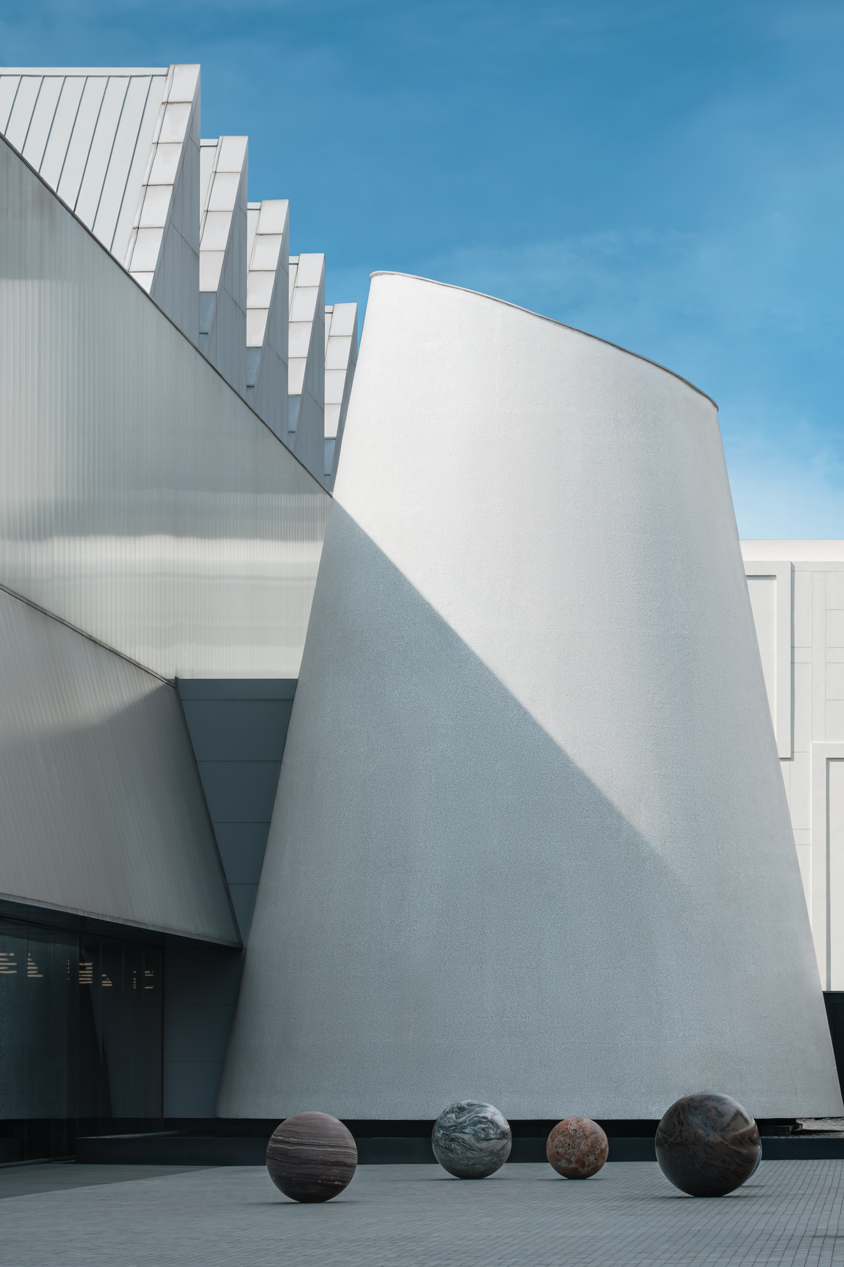
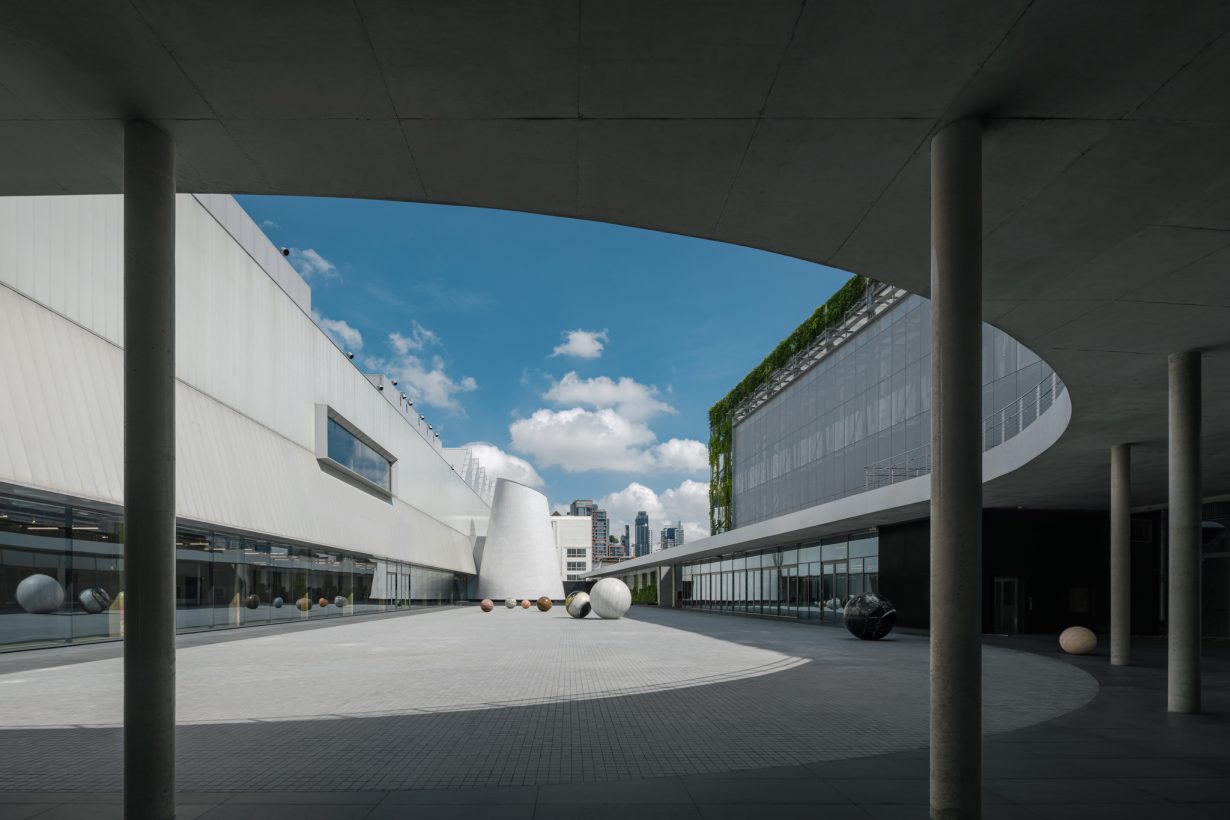
Their comments gesture towards a widely perceived disconnect: a schism between the latent potential and lived reality of Thailand’s contemporary art scene, largely due to the stop-start nature of government arts policy (something the domestic political flux of the past two decades has intensified). Several examples could illustrate this point (including the vanishing of a Thai Pavilion at the Venice Biennale), but in the context of Dib, the ongoing limbo of the country’s National Art Gallery is probably the most salient. Within the government’s Thailand Cultural Centre complex on Bangkok’s Thiam Ruam Mit Road sits a severe glass-and-raw-concrete structure that, while being the product of a design competition held during the mid-2000s, hardly screams innovative architecture. But the main issue is that the venue, beyond a few cursory acquisitions shows by the Office of Contemporary Art and Culture, still hasn’t opened. To many, it would appear to be the obvious low-hanging fruit waiting to be plucked from Thailand’s succulent soft-power tree – but the budget and willpower, the team and vision, just aren’t there.
Another striking example of policy failing to deliver is the fate of the Thailand Creative Culture Agency, or THACCA. A project conceived and initiated by Pheu Thai, the party that led the last coalition government, THACCA aspired to be a superagency that unlocks the power of the country’s creative industries – much like the Korea Creative Content Agency (KOCCA) does, only broader in scope. In pursuit of this goal, 11 subcommittees – including one for art – were established with the goal of addressing the funding and bureaucratic issues holding back their respective fields. While these technocratic committees worked on drafting an act that would codify its provisions and enshrine THACCA in law, two editions of SPLASH in 2024 and 25 – a ‘soft power forum’ in Bangkok with a fairlike atmosphere – showcased its policy proposals to the public and media (among them an arts council similar to the UK’s).
THACCA’s lavish spending, outlandish targets and mercantilist notion of soft power (on the sidelines of the first SPLASH, THACCA chairman Surapong Suebwonglee told me that “our goal is that we use soft power as an economic tool to help us out of the middle-income trap”) earned it many detractors. But it was on course to deliver legislative change, it seemed, until, as its dormant website shows, it was frozen in its tracks when the coalition led by Pheu Thai collapsed last September. At the first SPLASH, in June 2024, a grinning Anutin Charnvirakul appeared onstage with other cabinet members of that troubled administration; but since he became caretaker prime minister, he has shown no interest. Some budgets were allocated, and policies passed, but the future of THACCA and its holistic reforms look shaky, to say the least. “It’s not dead dead, but everyone is waiting for the new government,” says one insider.
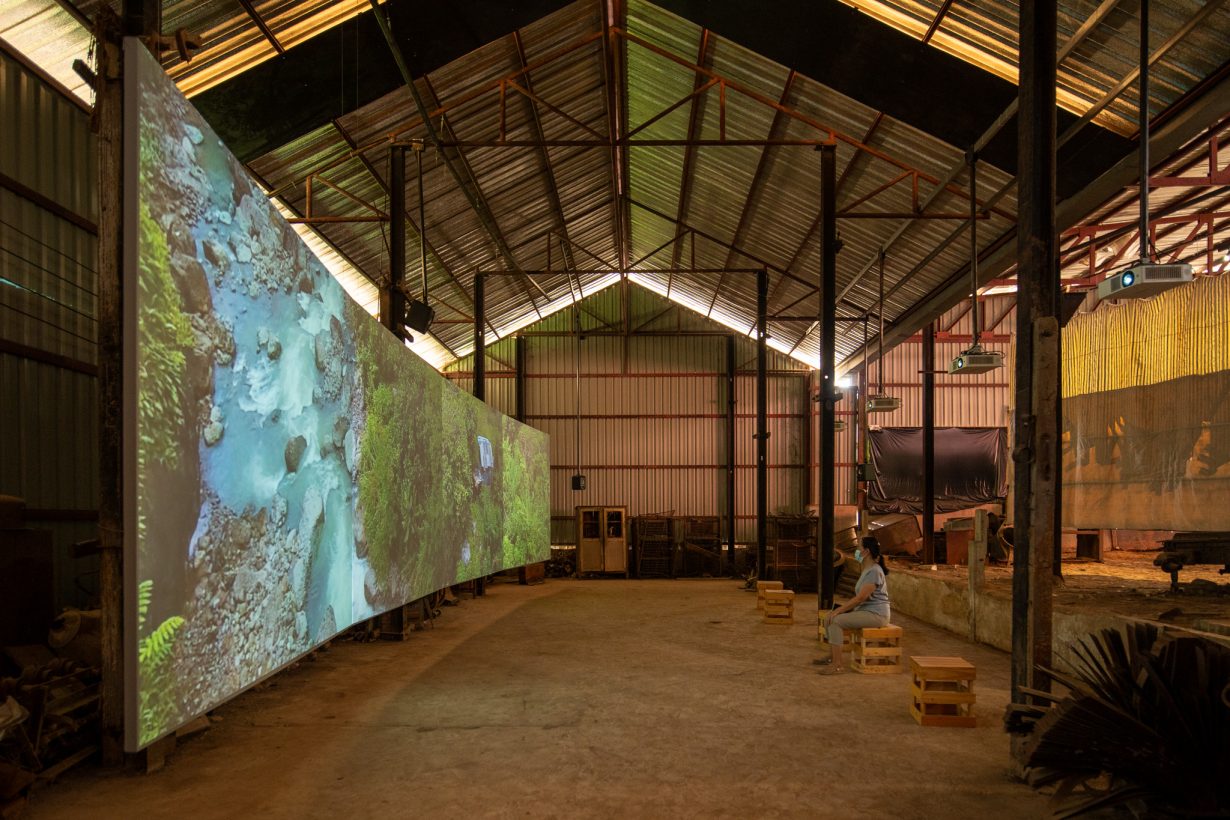
The state’s involvement within contemporary art is bearing some long-lasting fruits, despite its inefficiencies often being baldly apparent. When the fourth Thailand Biennale opened on the island of Phuket in late November, for example, around 30 percent of works had not yet been fully installed, and the curatorial team were not shy about assigning blame. “In order to keep it going, they’re going to have to get an arm’s-length foundation that can run it without all of the incumbrance of government,” David Teh, the codirector alongside artist-curator Arin Rungjang, told me. Yet for all the internal wrangling, the Thailand Biennale’s engagement with regional contexts not known or cut out for largescale exhibitions fits within a wider trend: the decentralisation of the art scene away from the capital. And with the next edition set to take place in Rayong (another patently ill-prepared province), it remains, for now, that rare thing: a quixotic government project with legs.
Then there’s the Bangkok Art & Culture Centre, or BACC. A hulking, nine-storey, Guggenheim-inspired edifice in Bangkok’s main shopping district, it has been underfunded by the local government, the Bangkok Metropolitan Administration, ever since it opened in 2008. Over the years, it has also been broadly criticised – with everything from its prominent retail stores to its exhibition spaces and programming called into question (including by the late Petch Osathanugrah: “If the Bangkok Art & Culture Centre had had the right amount of budgeting and support, not to mention world-class architecture, Bangkok would have been the centre of contemporary art in Southeast Asia, instead of Singapore, because we have better artists,” he told me in 2016). Reputationally, things reached a nadir there in mid-2025, when Constellation of Complicity, a show about networks of authoritarianism, was censored in response to an intervention by the Chinese embassy. Its curators, both political refugees from Myanmar’s Shan State, promptly fled the country.
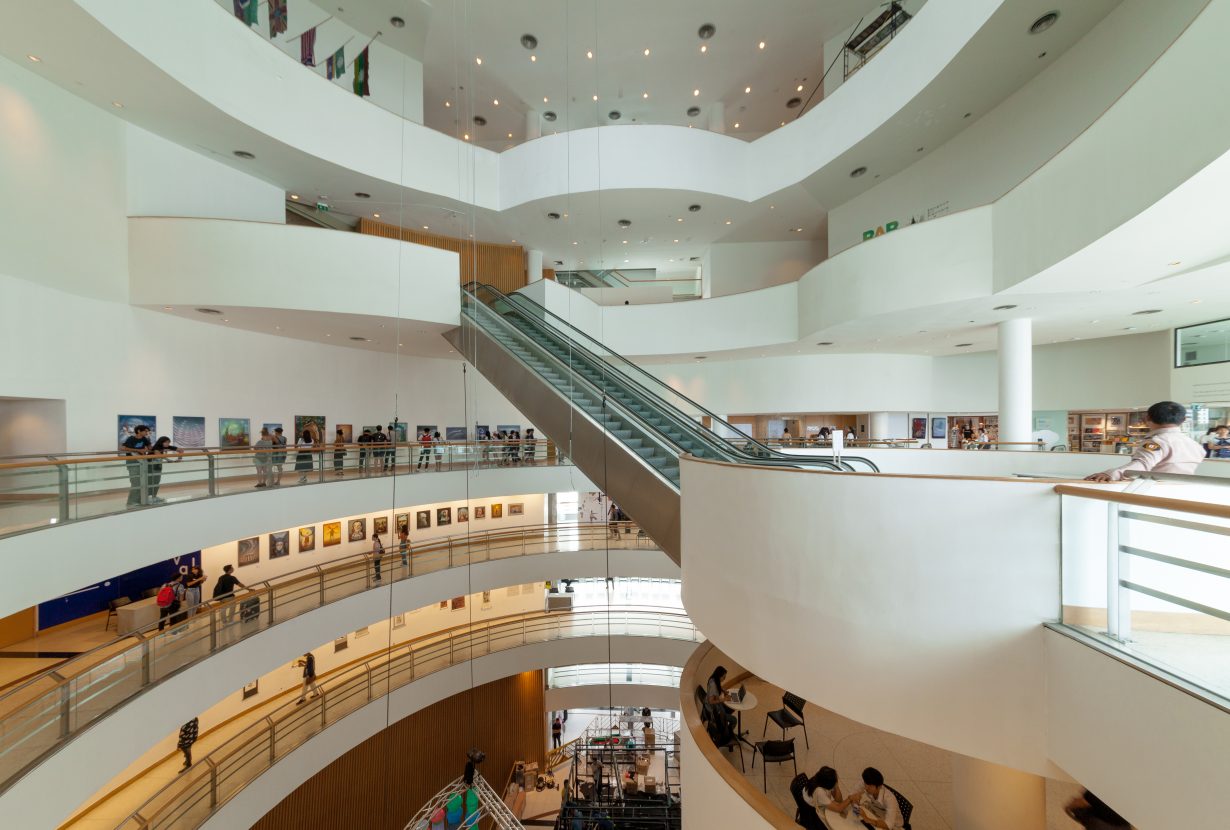
This widely reported incident contradicted, and arguably set back, the country’s recent soft-power overtures, but BACC director Adulaya Hoontrakul insists it has not resulted in increased curatorial vetting or artistic control. “Our commitment to artistic freedom remains intact,” she tells me. “What has evolved is our awareness of risk, not as a mechanism of suppression, but as a form of institutional responsibility.” Moreover, while the BACC’s programming can still be uneven and jarring – on a recent Saturday, a rigorously curated show about climate change and Catch the Moon, a scintillating retrospective of the painter Chatchai Puipia’s four-decade career, were joined by the 18th edition of an annual exhibition of photo snaps by a Thai princess – an attempt to build an institution more rooted in global contemporary discourse and the community it serves is afoot. “The work underway is structural rather than cosmetic,” insists Hoontrakul.
Throughout BACC’s history, funding has been an existential issue that its management has effectively navigated by renting out its commercial spaces and calling on the largesse of the private sector. The lights have been kept on, literally at times, through artistled pressure and support from the likes of drinks conglomerate ThaiBev, which is the ‘Principal Corporate Supporter’ for most exhibitions (and also funds the Bangkok Art Biennale), as well as donations and gala fundraisers. This is, of course, not an unusual quandary or model for such an institution, although for some the finer points of its predicament reveal the infirmity of the wider art ecosystem, despite all the recent hype.
“If you look closely, there aren’t enough collectors to support our scene,” says gallerist Atty Tantivit, who runs the gallery ATTA in Bangkok’s trendy Charoenkrung neighbourhood. On a trip in Japan at the end of last year “many people talked about Thailand as a new up-and-coming place to show and buy art”, she says, but she was reminded of just how small the country’s collector base really is at the latest BACC gala in February, where many of the art patrons bidding were the same faces as in past years, including BACC board members. Another pressing issue she identifies is a commonly cited one: many collectors and artists in Thailand circumvent the gallery system entirely. “Their behaviour needs to change,” she says bluntly. “If the artist still thinks ‘OK, I’m going to get a quick sale and not think too much about my future career path’, it’s not going to work. And collectors who try to get the best price available by negotiating with the artist are not true patrons of the field.”
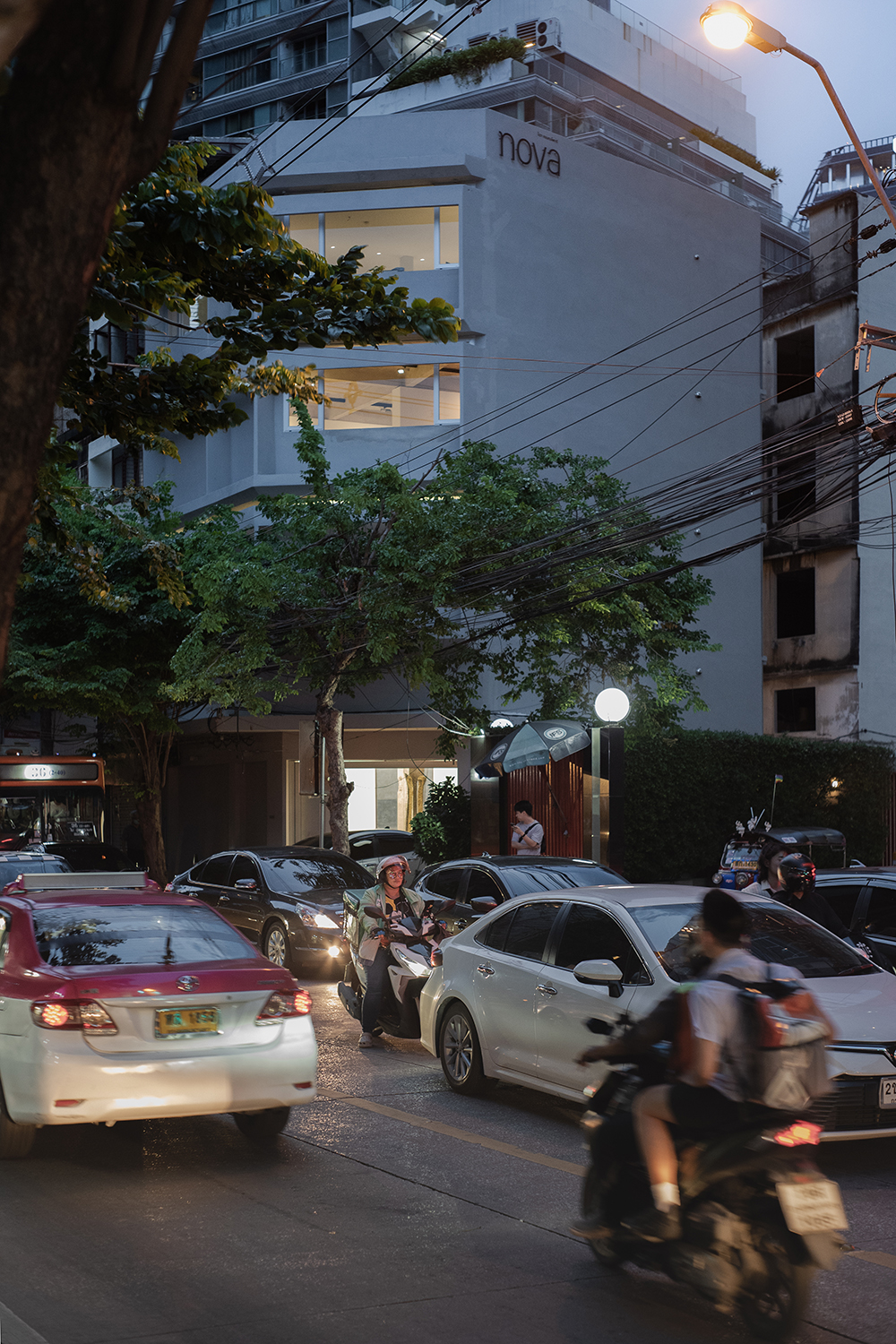
There are positive signs in the commercial gallery sector. In 2025, Bangkok CityCity – a gallery at the vanguard of Thai video and performance art – marked its tenth anniversary with a series of ostensibly uncommercial shows. Yet it is one of the few galleries in town to represent a roster of artists and to incubate younger ones. “Even when we’re not showing their work, we’re still working with them,” says cofounder Akapol Sudasna. The same goes for Nova Contemporary, a gallery that recently moved to bigger premises and represents emerging talents alongside well-established names. In mid-2025 the scene was also buoyed by news that the New York gallery Harper’s will open a space in Bangkok – a development that augurs well for the growth of the local art ecosystem, more so than the government’s potentially onerous and tepidly received tax incentives (since January 2025, art buyers have been able to deduct the purchase of artworks up to a value of 100,000 baht, although the artists must be registered with the Office of Contemporary Art and Culture).
However, with most galleries still adopting an ad hoc, show-byshow approach, the fact remains that many artists don’t have representation. As Gridthiya Gaweewong, director of the Jim Thompson Art Centre, a constant within the scene for over 20 years, recently put it: “The problem in Thailand is that the relationship between artist and gallery is more like a one-night stand. It’s not: let’s have a long relationship, I want to marry you.” Speaking on a panel about artistic production at the recent ART SG art fair in Singapore, she also highlighted a trend that may well exacerbate things. “Many commercial galleries in Thailand are trying to rebrand as nonprofits, which creates an unhealthy and unsustainable ecosystem for artists who lack long-term professional relationships,” she said. 100 Tonson Gallery, a stalwart of the Bangkok art scene, became 100 Tonson Foundation in 2020. Others, such as ATTA and SAC Gallery in the Sukhumvit area, are planning to follow suit. “SAC as a commercial entity doesn’t work anymore,” says managing director Jongsuwat Angsuvarnsiri. “We want to change direction, to move towards academic investigation into art and art history, but I must also admit that slow sales contributed to the decision.”
Given these sobering realities, one could be forgiven for calling into question the recent international exuberance. Living here, the country does seem perpetually to be on the cusp of greater things. Or, more accurately, seems perpetually to be portrayed as such: local media-outlets regularly report on new plans, roadmaps or visions that promise the earth economically and socially. Perhaps the international media, lured by the slick press releases and media junkets, have fallen prey to the private sector’s hype machine, too? Yet it would be churlish to deny the energy surge, the impression of a scene maturing, if not quite prospering. It is something you sense when mentally mapping your afternoon of gallery hopping (now it is less a question of which one or two to schlep across town for, but which cluster), when walking around the BACC and when talking to people whose interest in the scene lies mainly in its creative, rather than commercial, properties. As Michael Smithies’s vivid account of the ‘false spring’ of the plastic arts in 1960s Bangkok shows, convictions of this kind are not new; but today the experimental spirit in the ether is being co-opted and underwritten by private backers – Thai multinational Central Group, to name another example, will launch deCentral, an art initiative-cum-social enterprise split between Bangkok and Chiang Mai, led by artistic director Zoe Butt, later this year. And this trend – which represents an opportune shift away from the ephemeral event towards the more enduring – is proving enticing to those looking in. “What initially drew me to Bangkok was the hospitality of my Thai friends and partners. But it didn’t take long to realise that something larger was taking shape,” says Harper Levine, who, on 30 March, opens Harper’s in a street-facing space a short walk from the BACC and Jim Thompson Art Center. “Bangkok is being thoughtfully positioned as a destination for international art travellers, with serious institutional investment and long-term commitment from collectors and legacy families. I’m convinced the city is poised to play a significant role in the international art conversation.”
Yet for all the concrete change, there is still much to play for – it remains to be seen whether the arts infrastructure arms race within the private sector will last, whether the collectors eluding galleries will materialise and whether a new government with its own roadmap will revive the botched projects and stalled reforms of past administrations. As a recent Bangkok Post business op-ed regarding the moribund economy puts it: ‘Thailand’s potential has never been the problem. Execution has.’
From the Spring 2026 issue of ArtReview Asia – get your copy.
Read next Why aren’t the literary scenes of Southeast Asia getting more regional and global traction?