Turner Prize-winning artist Nnena Kalu makes her work in a supported studio. What kind of artworld might emerge from such setups?
When Nnena Kalu was named winner of the Turner Prize 2025, she took to the stage with her studio manager and longtime facilitator, Charlotte Hollinshead. Nnena did speak on the microphone but, with limited verbal communication, the significance of her win was communicated by Hollinshead in a wonderfully pitched speech in which she celebrated Kalu’s practice and called out the discrimination Kalu has faced during her career. Then she invited everyone in the room to come dance after the dinner. It might have been, for many, the first time they had seen an individual artist with a learning disability as the focus of an artworld event; a moment that made visible that Kalu and others like her exist, as well as the challenges and joy of supporting learning-disabled artists.
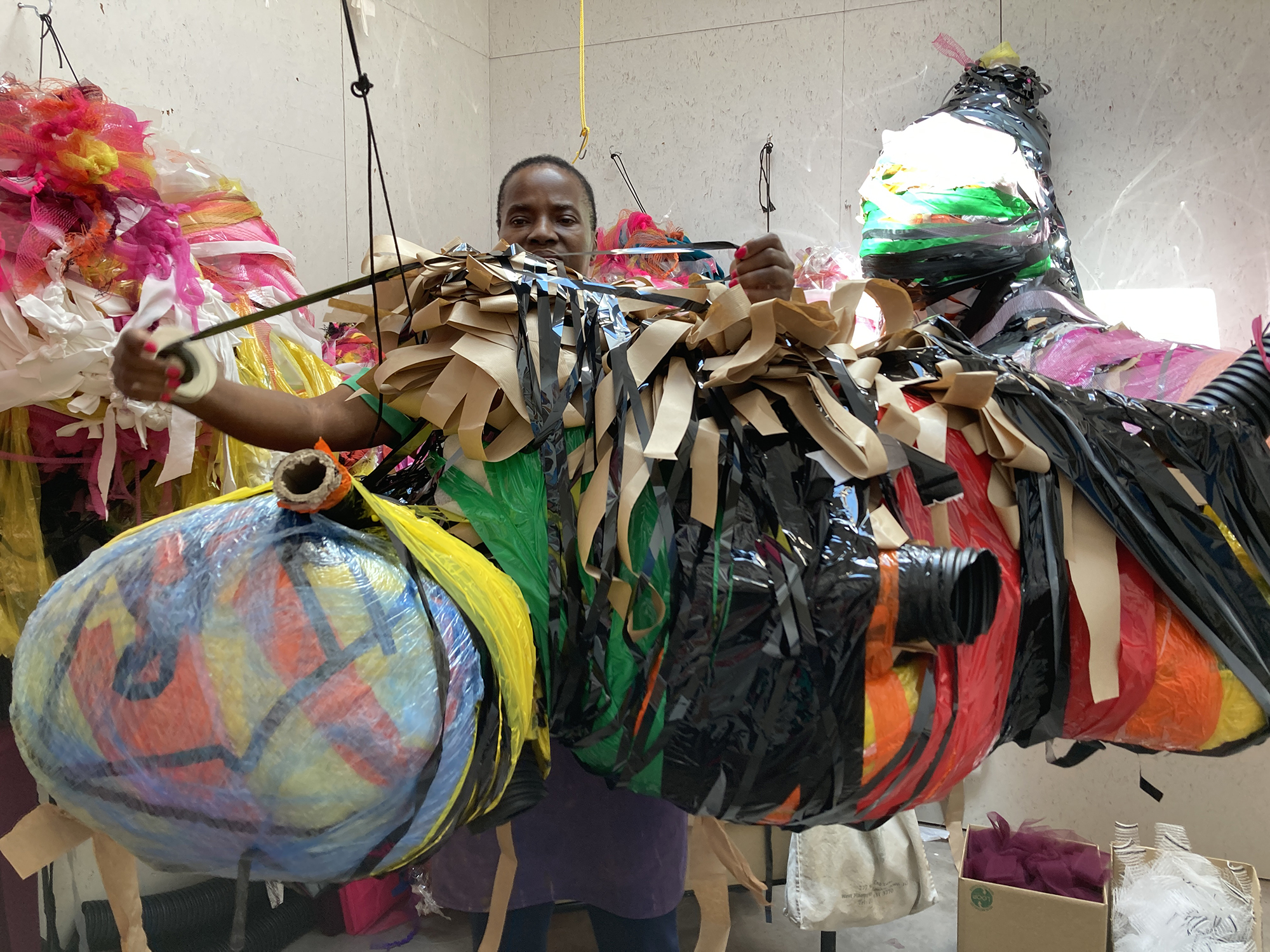
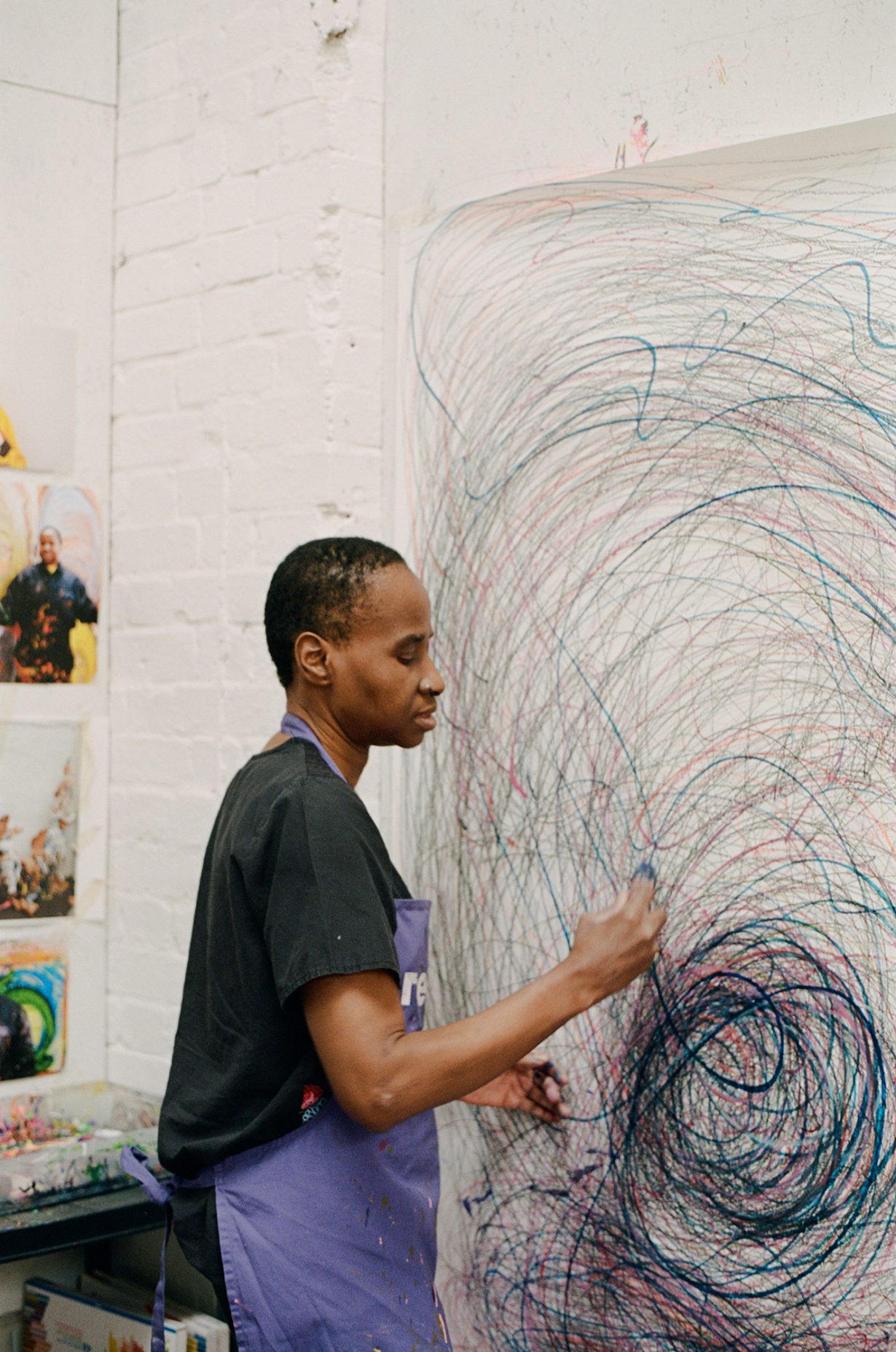
The first time I saw Kalu’s work was in 2018 while volunteering in the supported studio in which she has been based since 1999: spiral drawings on paper, and sculptures of tubing wrapped in cardboard and tape of different kinds – masking, coloured gaffer and shimmering magnetic VHS tape. Run by arts organisation ActionSpace within nonprofit gallery and studio space Studio Voltaire in South London, this is where her practice has grown and expanded alongside that of innumerable other learning-disabled artists over the years.
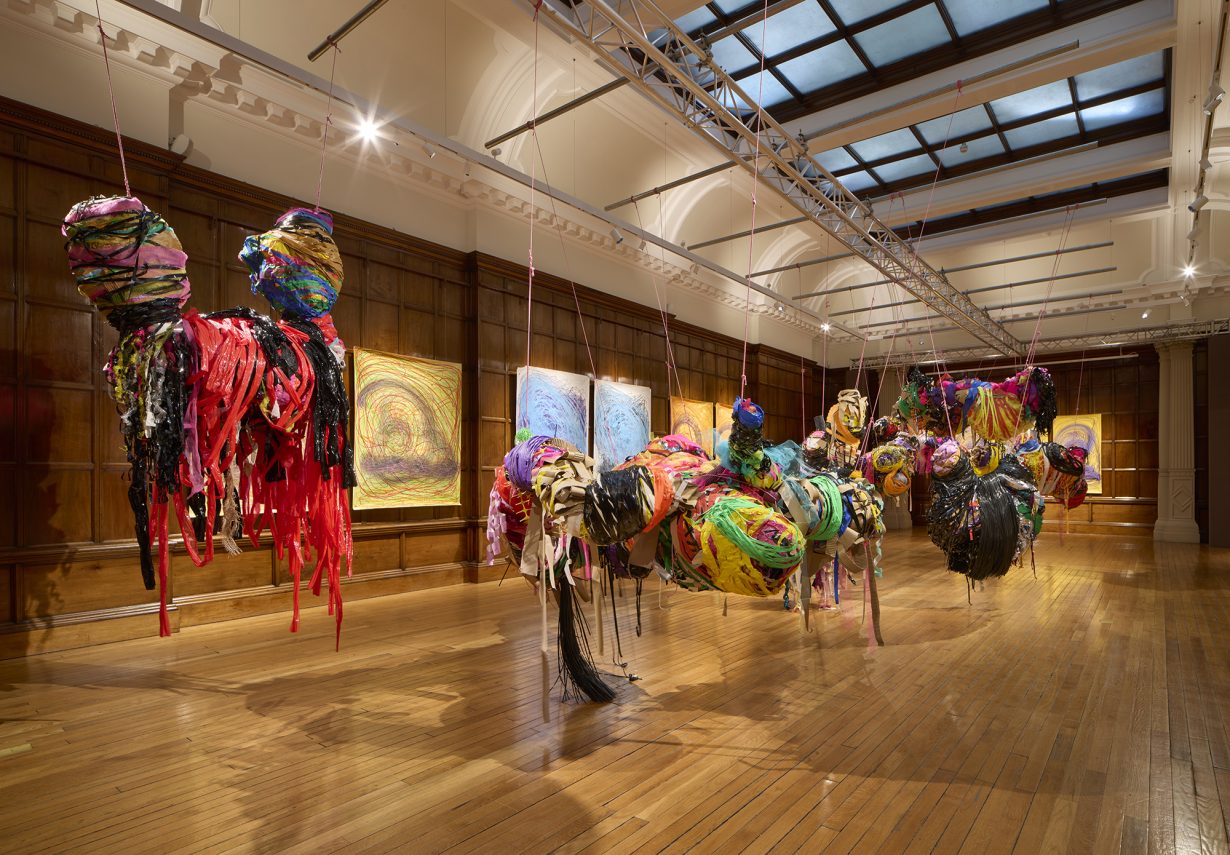
Kalu’s practice could arguably not exist without the structure of the supported studio, which is in one sense easy to define: a space in which artists with support needs can discover, develop and sustain a practice. At the same time, such endeavours are incredibly specific and difficult to generalise. In the UK, most such studios centre around supporting people with learning disabilities, and/or autistic and disabled-neurodivergent people. They are essential to removing disabling barriers for artists: providing space and materials, creating links to the artworld and advocating with, or on behalf of, artists. Approaches can differ in the way studios operate, from supporting people to make work that is accepted as ‘contemporary art’ in terms of materials, approaches and language, or supporting work, like Kalu’s, that challenges institutional ideas of who can be an artist, how work is made and how it is spoken about.
In the supported-studio environment, the organisations that run them and the artists go hand in hand: more often than not the identity of the studio is better-known than any individual. But there are artists from supported studios in the UK gaining mainstream recognition alongside Kalu: Michelle Roberts, supported by Project Art Works in Hastings, had a retrospective of her intricate paintings at the De La Warr Pavilion in neighbouring Bexhill-on-Sea last year; and Andrew Omoding, who is also supported by ActionSpace, had a solo show, Animals to Remember Uganda, at Camden Art Centre, London, in 2024.
Back in 2018, in the ActionSpace studio, I was shown what specific materials to set out for each of the five artists that would be there that day. Other learning-disabled artists would also use the space throughout the week, and it was impressive to see how it accommodated so many unique practices in one room. That day, Robin Smith painted large figures while the meticulous construction of kinetic sculptures by Linda Bell took place, each new piece played with before it was attached to a larger whole. Mark Lawrence was developing a light installation with paint, movement and film, with drawing, sculpture and performance from Pardip Kapil happening too – his work was made, installed and intentionally destroyed within the same session. The artists worked hard and continuously, with facilitators not so much assisting as removing barriers for the artists, by gathering materials, setting things out, moving things around, documenting, listening, talking, encouraging, planning. The communal nature of the studios is in part due to funding requirements, as most studios are reliant on limited public funding to operate, but also due to understanding the importance of the mutual support that comes from being with peers, and that the idea of the monolithic artist is pure delusion.
The time spent in the studio had a profound impact on me, in both how I work as an artist and in my ongoing work with supported studios. It made me understand better the larger intertwined and networked nature of artmaking, but also what can be taken for granted as an artist with independence. I believe supported studios, as ultraprogressive, inclusive and open-minded spaces, offer us insights into why and, crucially, how we might radically reimagine the artworld, education and society.
From the January & February 2025 issue of ArtReview – get your copy.
Read next Disability is not a separate category of personhood