In her two- and three-dimensional works, Young In Hong channels the possibilities of sound into colour, texture and form
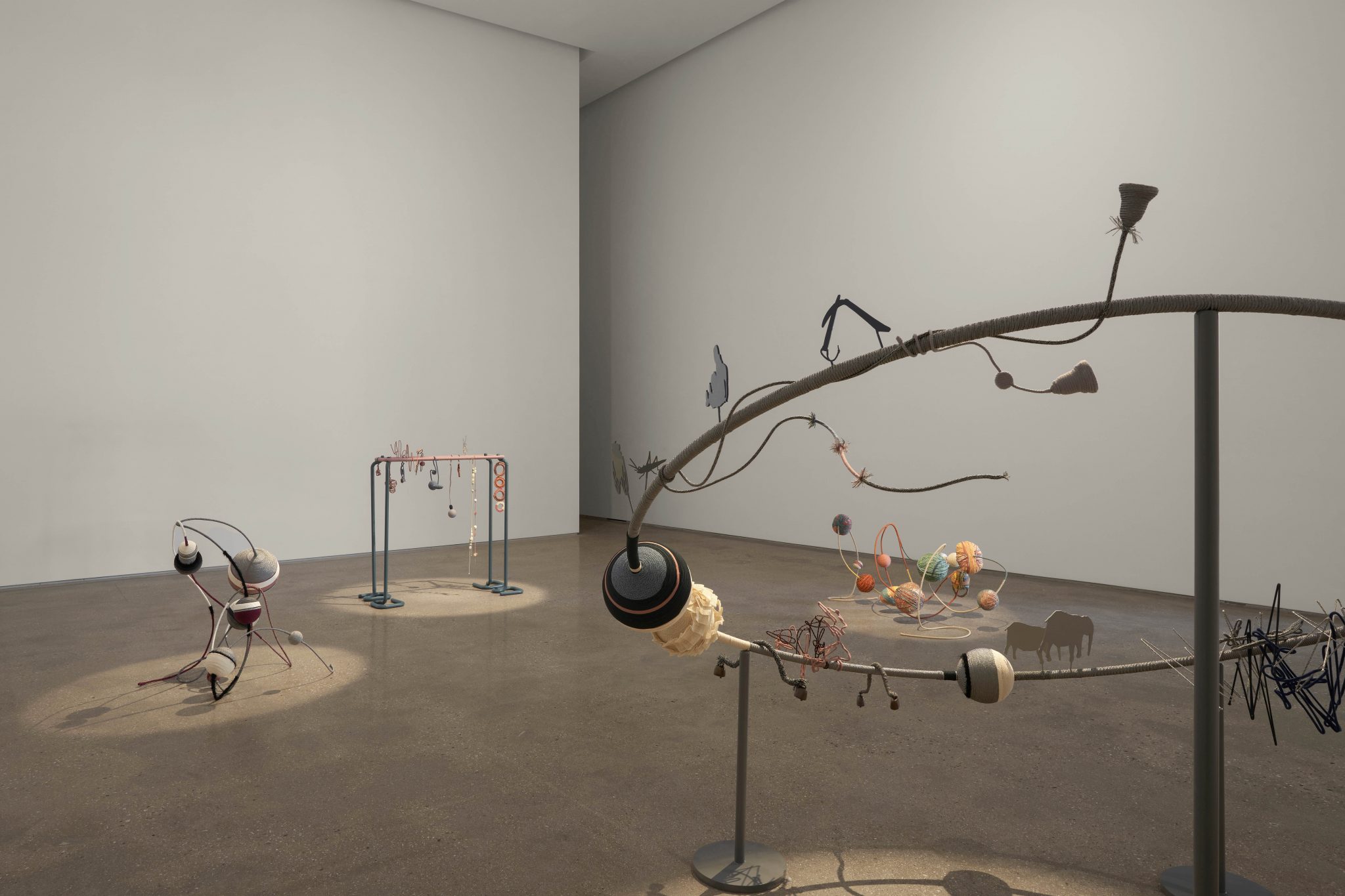
Young In Hong’s sculptures are poised for play. In works such as Acoustic Pattern II (2025), chimes hang from braided rings that await the slightest breeze from passersby, while in An ancient bird… (2025) bells balance precariously on woven structures, as if ready to fall and ring out. These sculptures take a range of sonic inspirations – church bells heard from the artist’s studio in Bristol, or the song of the cranes that are thriving in Korea’s demilitarised zone – and render them as texture, colour and line. Resembling toys, mobiles or instruments, the works invite touch.
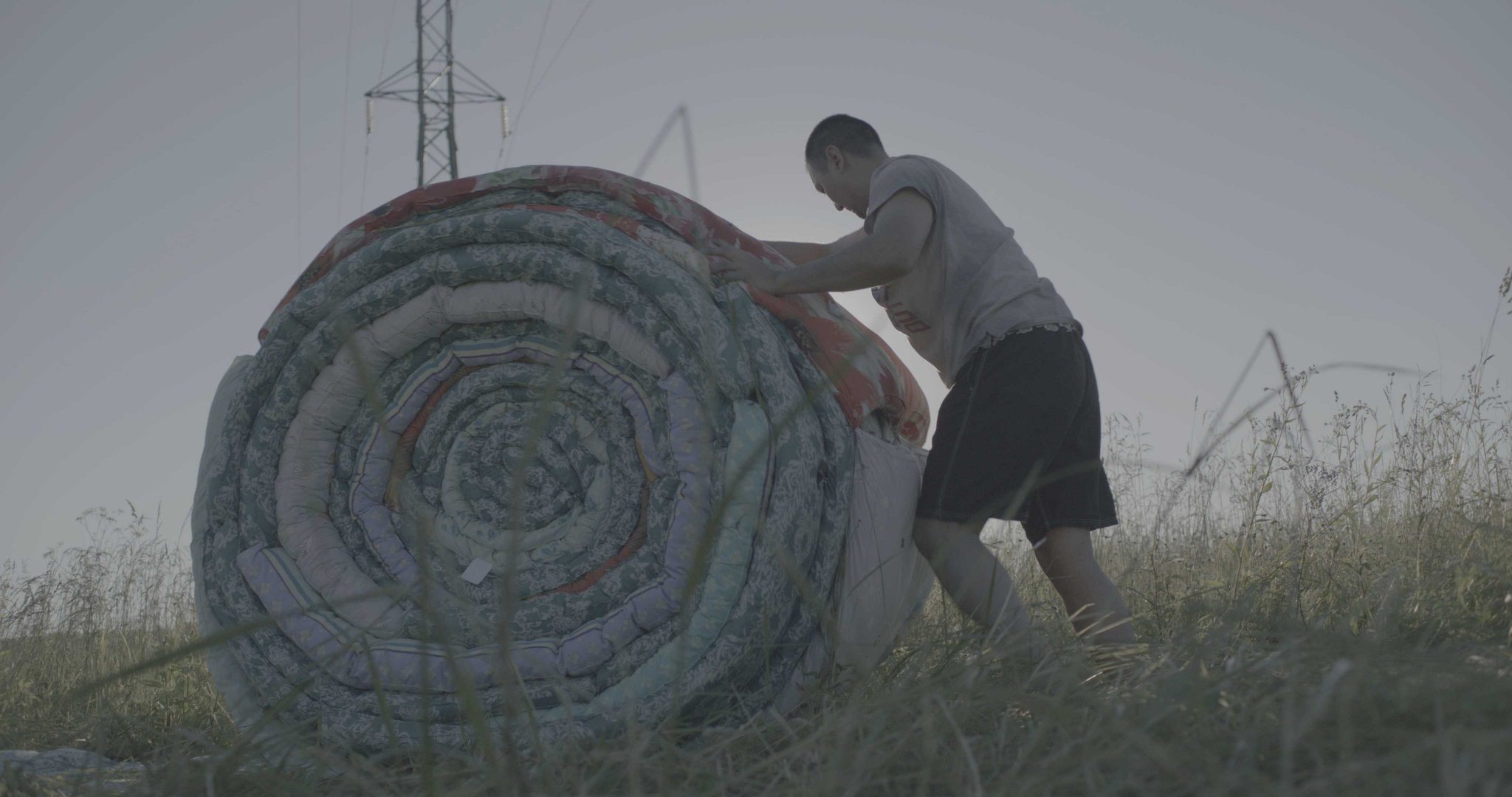
Hong’s wider practice – represented in a separate space in the gallery – has closely engaged questions of the social through a focus on different bodies: bodies at work; bodies in struggle; bodies in proximity. In Five Acts (2024) Hong embroidered images of Korean women – courtesans and female divers who opposed Japanese colonial rule during the early twentieth century, textile workers who protested against harsh working conditions during the rapid economic growth of the 1970s and 80s – onto a monumental bolt of cloth inspired by the eleventh-century Bayeux Tapestry depicting the Norman Conquest of England. A video shows five performers subsequently drawing on the events depicted in the tapestry to elaborate an improvised performance with makeshift instruments, gestures and vocalisations.
Courtesy the artist and PKM Gallery, Seoul
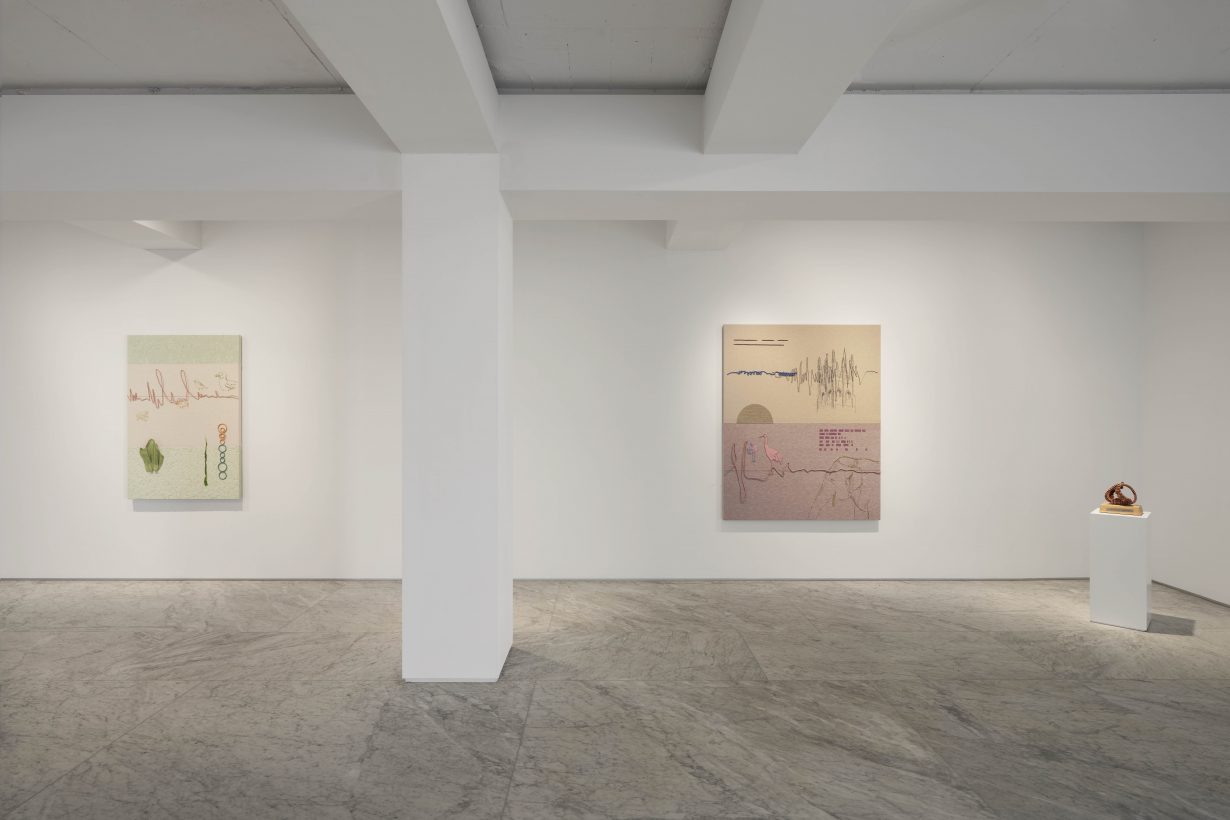
Another collection of works focuses on nonhuman bodies. On canvases like Symbiotic Composition 2… (2025), Hong stretches textured fabrics that recall lichen, gathers thread into seaweedlike forms and embroiders images of frogs and birds whose calls are rendered as snaking waveforms of cord and twine. These works record the artist’s attempts to attune, by ear, to the nonhuman frequencies around her. What emerges is a polyphonic world that materialises through a chorus of colours, textures, marks and forms.
Sculptural works displayed in the main exhibition spaces build on these two-dimensional pieces. Here the cord waveforms disrupt the flatness of the canvas and, liberated, unspool in three dimensions, becoming ever more playful and improvisatory. The newer works also incorporate shapes that echo visual motifs from earlier work, including insects, birds and sewing tools. The sewing machine is always present in Hong’s flat works, as in Patterns for Morton Feldman 1 (2025), where neat, intricate animal imagery emulates the industrial embroidery produced in textile factories during the 1970s and 80s, offset by hand-sewn and quilted elements, frayed edges and loose threads. But in the sculptural works like An ancient bird…, the addition of sleek images appears incongruous to the artist’s broader interest in the labouring body, as well as the warmth and humility of her textiles, evoked in the ‘amateur’ of the exhibition’s title.
Building on the tactility of textiles, the three-dimensional works can also produce sound through contact with their bells, balls and chimes. But here, no notes ring out. Most visitors are kept at a respectful distance, the only touch coming from the gloved hand of an assistant coolly demonstrating the works’ sonic capabilities to private collectors visiting during Seoul’s art-fair season in early September. While this distance might seem a strange fit for these textured, sonorous sculptures, it corresponds with their ecological sensibility, their demand that we look but don’t touch, that we listen to the world around us without needing to act upon or fully grasp it. The exhibition’s lasting feeling is one of caesura: that momentary pause between notes in a musical phrase. These works wait – just as we must.
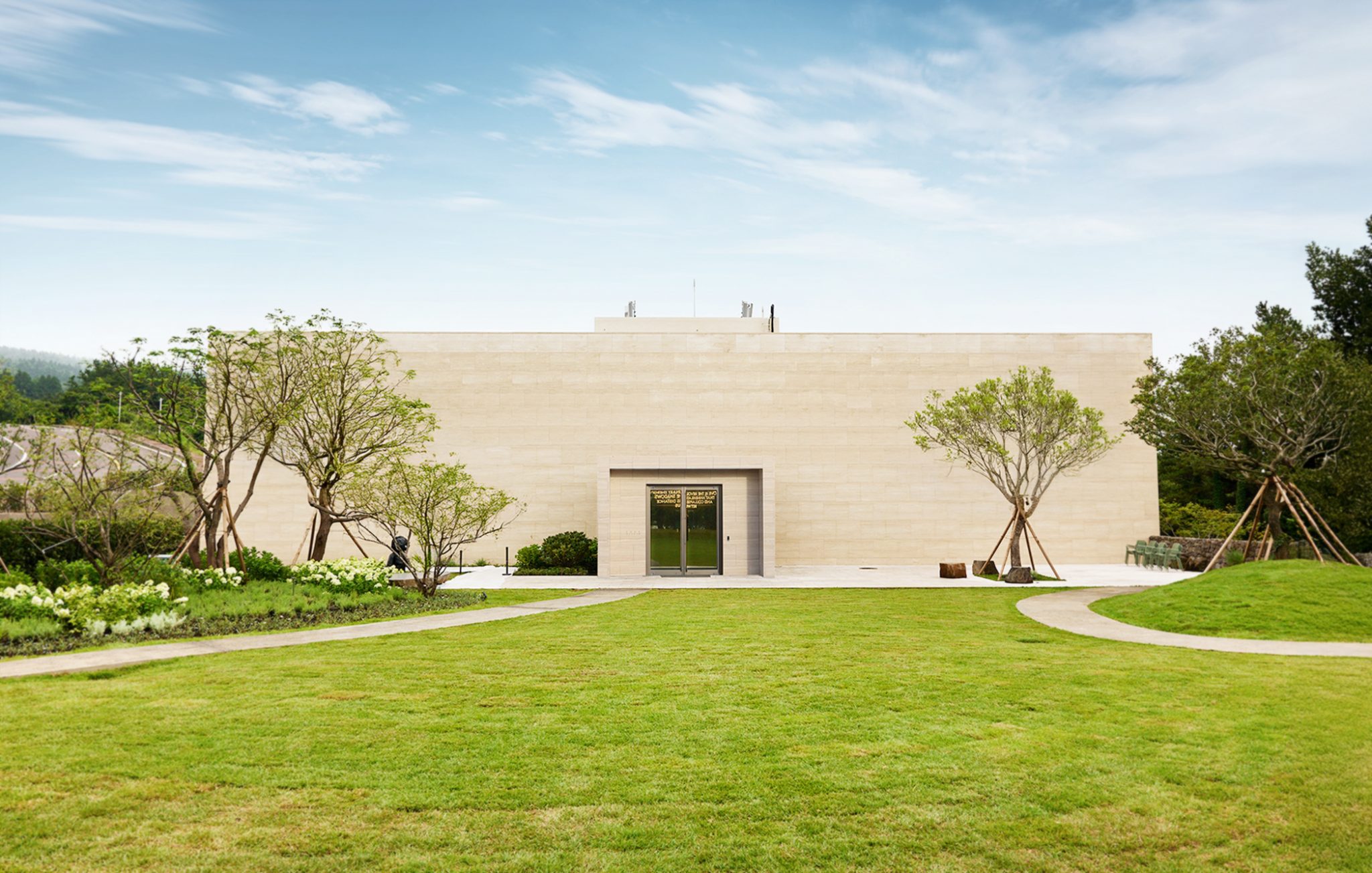
Young In Hong: Amateur Composer at PKM Gallery, Seoul, 20 August – 27 September
From the Winter 2025 issue of ArtReview Asia – get your copy.
Read next The Year AI Captured Art