Majumdar’s novel meditates on how we live together and how fragile the ties that bind society can be
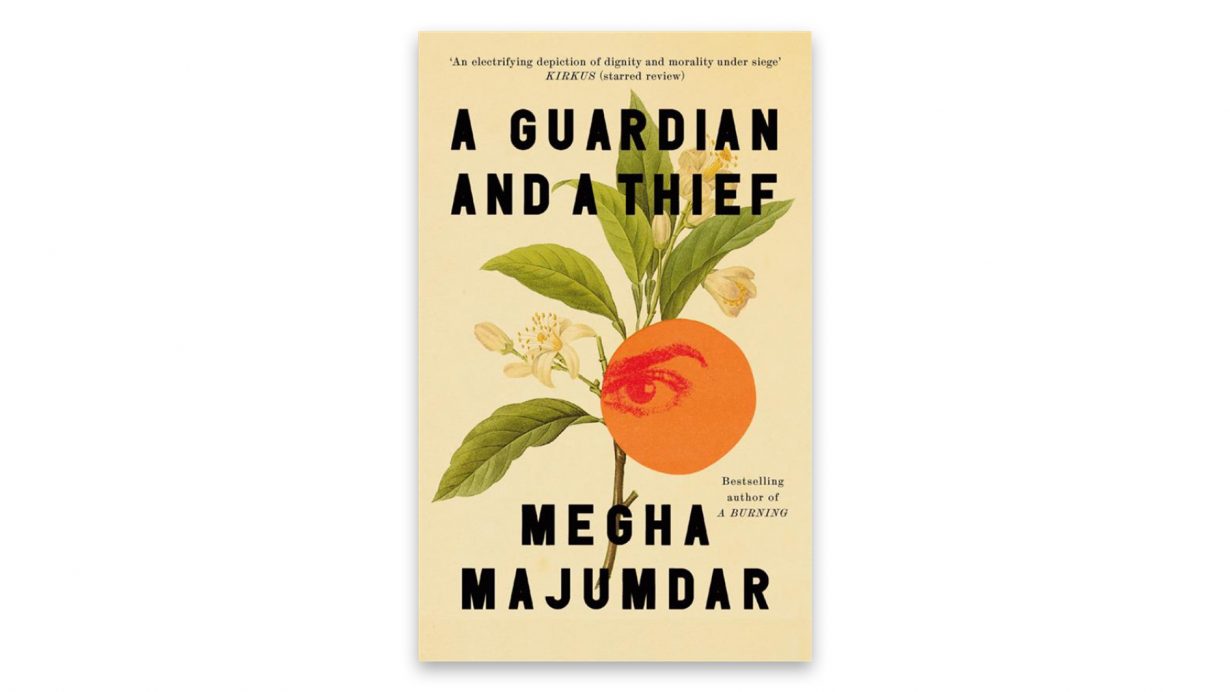
Early on in Megha Majumdar’s second novel, a police officer solemnly dispenses this commonplace wisdom: ‘One thing I have learned in my line of work is that criminals come in all types.’ And it’s around this highly unoriginal observation that the author’s distinctly more original tale turns.
Set in a Kolkata of the near future, in which climate change has led to drought in India, food shortages and the attendant price inflation, black marketeering and collapsing social structures, the author takes us to a place that’s familiar yet alien – something to which all her characters struggle to adapt (as they are forced to change habits and diets). As those climate refugees who are wealthy or privileged enough to flee to the cooler climes and better economies of the West do so, an impoverished, starving underclass from the Indian countryside rush to take their place. And so we encounter Ma, a middle-class Kolkatan, until recently the morally upright manager of a homeless shelter, who has obtained the visas and tickets to get her daughter and father out of Kolkata to join her husband in Ann Arbor, Michigan, where things will be better. And Boomba, an economic migrant to West Bengal’s capital who is struggling simply to gain a foothold in the city in order to bring his ailing younger brother and parents from their ramshackle shack in the countryside to the city, where things, he figures (despite the many obstacles to his schemes) will be better. As we encounter them for the first time, Ma is on the verge of making a dignified exit from her hometown. Boomba, after multiple setbacks, is prepared to beg, borrow and steal to make his dreams a reality. And it’s while he is performing an act of theft that the paths of these central protagonists cross, with what turn out to be dire consequences.
The last include an escalating litany of deception, dishonesty, forgery, more thefts, assaults, kidnap and some things even worse as, by turns, each of Majumdar’s central characters swaps between the titular roles of guardians and thieves. Even if, as the tale commenced, it seemed abundantly clear which was which. Crucially Majumdar’s interest lies not in establishing any patronising tale of moral rectitude – indeed, from an authorial perspective, she deftly maintains an aura of moral ambiguity throughout – but in understanding what drives her characters to believe that their immoral actions are anything but, and thus how complex the business of judging others can be. Although naturally these subtle complexities are driven by both local and global issues of social class, economic disparity (and the selfinterested maintenance of that), ecological meltdown and a paranoid fear of migrants and Others of all types. If Ma, despite her outward appearance of caring for those less fortunate than herself, ends up resenting Boomba for using up her resources in her city, we are made aware also that she is moving to a place where she will be similarly resented for the same reasons.
At the heart of it all is a meditation on how we live together and how fragile the ties that bind society can be. ‘Everything beautiful, and everything useful, about the city,’ Majumdar writes as Ma’s father sentimentally contemplates the ideal of urban life that he will miss when he leaves Kolkata, ‘could be found in these relationships of dependence – with one’s barber, one’s rickshaw driver, one’s editor, one’s neighbor.’ By the time the novel approaches its conclusion and Ma prepares to exit Kolkata, the author offers another reading: ‘Soon the city would fall away, a region of bog and swamp and marsh that had long ago been claimed as land to be owned, sold, and inherited, though, in truth, the metropolis had been no more than riverine silt all along, no more than a densely populated fiction.’ It’s a fiction, Majumdar suggests, in which we need to believe. In one passage she recites what she describes as the ‘primary plea’ of immigration journeys: a litany of ‘please understands’ – that I am doing this for my child, that our lives can’t be explained by answering the questions on a form, and so on. Her novel is an encouragement for us to do the same.
A Guardian and a Thief by Megha Majumdar. Scribner, £16.99 (hardcover)
From the March 2026 issue of ArtReview – get your copy.