“National pavilions mostly are and should remain places of free artistic expression, free from propaganda or censorship of their own artists”
ArtReview sent a questionnaire to artists and curators exhibiting in and curating the various national pavilions of the 2026 Venice Biennale, the responses to which will be published daily in the leadup to and during the Venice Biennale, which runs from 9 May through 22 November.
Dubravka Lošić is representing Croatia; the pavilion is in the Palazzo Zorzi.
Celebrating Visions. Versace partners with ArtReview to share stories from the 2026 Venice Biennale.
ArtReview Tell ArtReview what you plan to exhibit in Venice. What has influenced or inspired you?
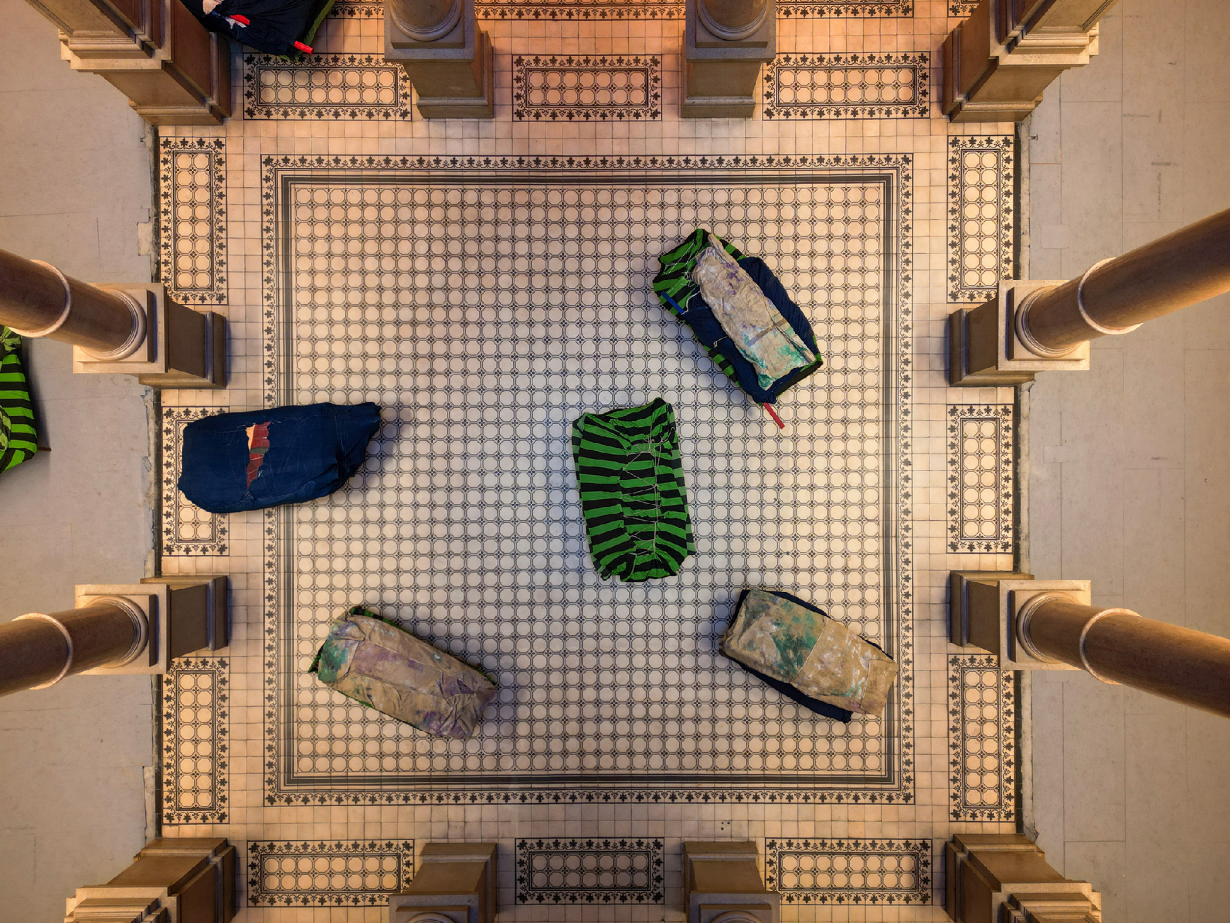
Dubravka Lošić At Palazzo Zorzi, in the exhibition titled Compelled by Fright and Beauty, I will present an assembly of works in an atmosphere that invites the audience to a sober, vulnerable contemplation situated between the frightening and the beautiful.
I create strict structures and then open them up to impulses. In different materials, from hard metals to soft wool, I decide what to contain and protect, what to reveal and let flow out.
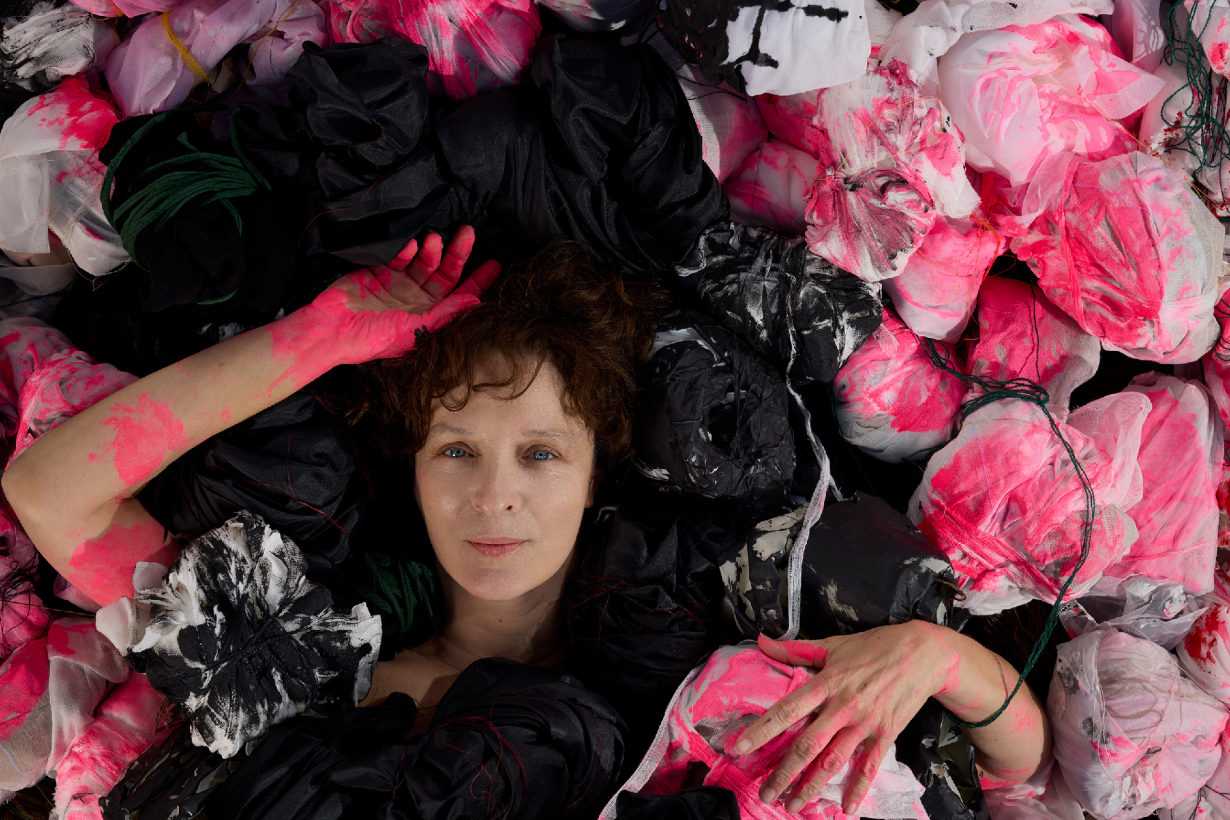
Rains Paris (2018), Alba Albula (2019) and Tondo (2020–25) are a series of works that I filled with wool, threads, textile and all the emotions until they became swelling and bubbling, then I wrapped them up. I sealed them to protect them, to calm them, although something always ended up leaking through the edges. It is inevitable. Imago Anima (1995–97/2012–13) are portraits where I painted layer upon layer until only the outline of the soul remained.
Just as I wonder what to expose and what to protect, I also wonder what will be spoken aloud, and what will speak with silence. Sharks (1986–89/2013) are objects filled with portraits and tightened with ropes. Within them are souls that want to speak but cannot. Likewise, Libertas Bells (2014–26) are bells that cannot ring. Their silence is a quiet rebellion against places that reject their own people, against the world that mistakes aggression for eloquence. Their silence speaks free from irony and bitterness. The Rosary (1987–2026) series are bushes of roses, each flower like a bead on a rosary, like a silent meditation.
AR In what ways (if at all) does your work relate to the theme of the Biennale exhibition, In Minor Keys?
DL Creating my works is a meditative, almost musical process. Additionally, the rich blend of emotions of the minor keys – melancholy and sorrow that shift into hope and exhilaration, often resulting in calm and peace – is in the very nature of my work. I always hope to resonate with the audience on an intuitive level. Of course, my work is deeply influenced by personal experiences and by the state of the world. How could it not be? Artists are soaking in the world. But I always attempt to transcend, to move beyond the information, beyond the description. To me, art is a way to observe, to process and to heal, regardless of whether I am creating it or experiencing it.In Minor Keys also speaks of places for rest and deep listening. I often exhibit in unconventional spaces: abandoned factories, shrapnel-scarred hotels, desacralised churches and 15th-century fortresses are a few recent examples. Every place is full of history and context that I respect and acknowledge, but do not provide explicit commentary on. Instead, I try to create places of contemplation and awareness.
Likewise, Palazzo Zorzi will become a place of refuge. It won’t offer escapism, but calm and consolation, away from the crowds and the chaos within and without.
AR Why is the Venice Biennale still important, if at all?
DL The Venice Biennale is still important. It is an essential place for the exchange of thoughts and the broadening of perspectives. Of course, one artist, or a group of artists, cannot actually represent the artistic landscape of an entire nation. But it is a matter of presence, of visibility that is often a privilege reserved to few countries, in art and otherwise. Despite the fact that each country has its own pavilion and that their artists often allow me to learn about specific practices and diverse issues, I always leave the Venice Biennale with a feeling of oneness.
AR What role does a national pavilion play at a time of increasing confrontational nationalisms? Is it about expressing difference or commonality?
DL National pavilions mostly are and should remain places of free artistic expression, free from propaganda or censorship of their own artists.
AR Who, for you, is the most important artist (in any discipline) that your country has produced?
DL I can’t name only one. Even if I name multiple, too many will be left out.
AR What is something you want people to know about your nation that they might not know already?
DL That there is much more to it than the beautiful coastline and war trauma.
AR Given that you are exhibiting in a national pavilion, is there something (a quality or an issue or attitude) that distinguishes the art of that nation from that of others? That makes it particular? Are there specific contexts that it responds to? Or do you think that art is a universal language that goes beyond social, political or geographic boundaries?
DL I believe that art is a universal language. But that does not necessarily mean that it goes beyond social, political or geographic context, on the contrary, it contains it.
All social and political issues are, at the end of the day, universal. They are tied to geography only in a moment in time. Like all joy is human joy, all suffering is human suffering. Oppression is oppression, today just like thousands of years ago, in one geography as much as in another. I experienced war, but one shouldn’t have to experience it to understand its horror, no matter when or where it takes place. One shouldn’t have to be discriminated against to empathise with those who are. But people start becoming apathetic and dissociated when they are overwhelmed and frustrated by the huge amount of bad. In that sense, art is a cure, it raises or maintains awareness and fosters compassion.
AR What, other than art, are you looking forward to seeing – or doing – while you are in Venice?
DL I’ve been to Venice many times and I am still excited to just wander around the city. Despite its timelessness, you can always stumble upon something new.
AR Could you give us a brief overview of your average working day while creating your presentation in Venice?
DL It’s a little bit chaotic: traveling from workshop to workshop, attending meetings, answering phone calls and emails. But it all calms down when I enter the studio.
AR Can art really change the world?
DL Art is changing the world because art changes people. It awakens, frees, inspires, bonds, heals. If art were not capable of changing the world, it wouldn’t be among the first under attack by those who want to keep the status quo. Always. In the past as well as today. But despite all challenges, we keep obsessively making and seeking out art. Our urge to create, to express ourselves, to communicate and to connect through art cannot be suppressed.
The 61st Venice Biennale runs 9 May through 22 November 2026