“As an old society with a new country, it is impossible to pretend things last forever – and that is also an optimistic thought”
ArtReview sent a questionnaire to artists and curators exhibiting in and curating the various national pavilions of the 2026 Venice Biennale, the responses to which will be published daily in the leadup to and during the Venice Biennale, which runs from 9 May through 22 November.
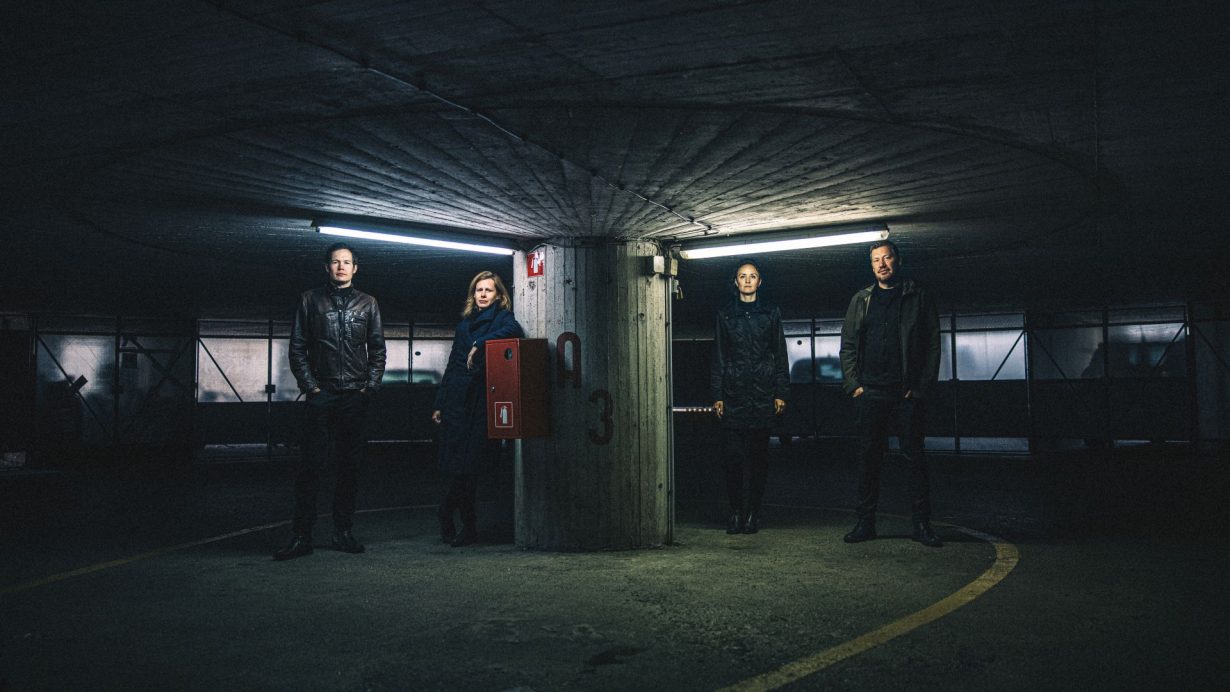
Nonument Group is representing Slovenia; the pavilion is in the Arsenale.
Celebrating Visions. Versace partners with ArtReview to share stories from the 2026 Venice Biennale.
ArtReview Tell ArtReview what you plan to exhibit in Venice. What has influenced or inspired you?
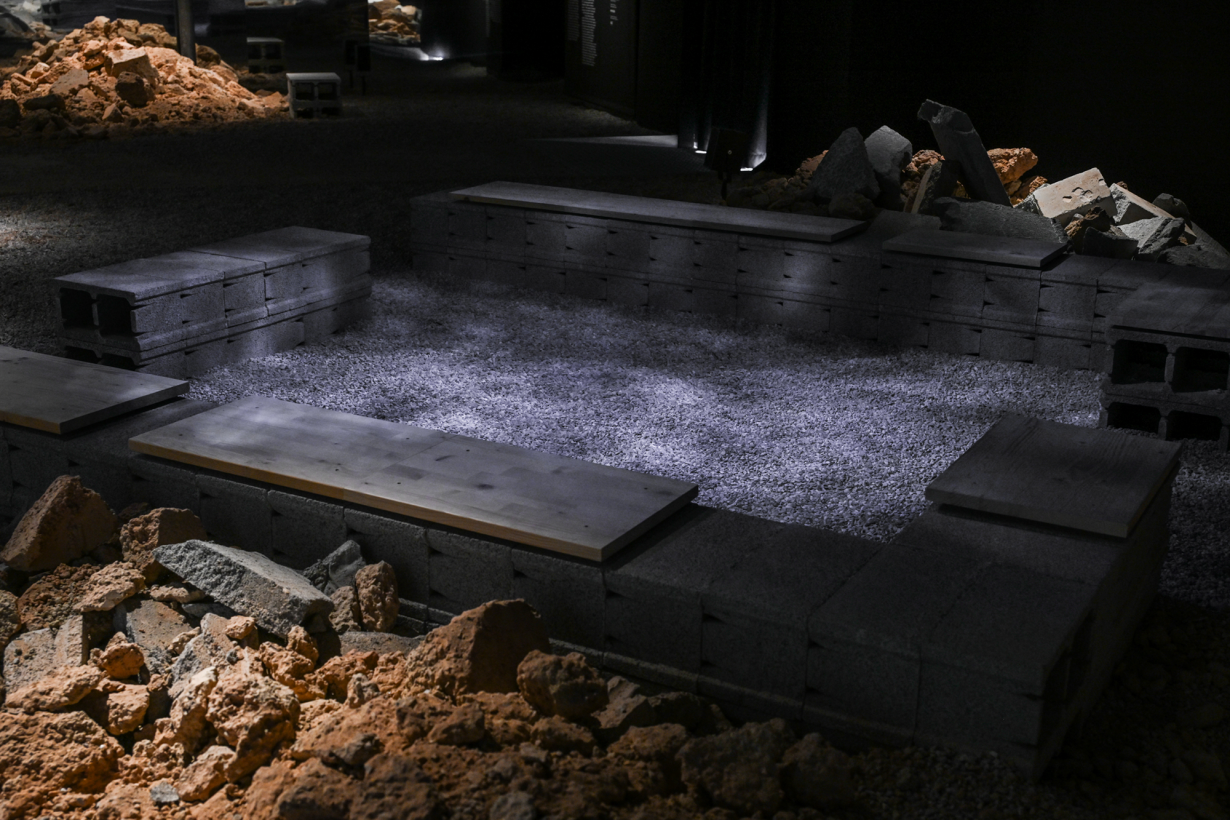
Nonument Group Soundtrack for an Invisible House is a project about the presence of what seems to be absent. This is our way of reflecting on the strong vitality and changing narratives focused on an unassuming meadow in the Slovene Alps where, for a couple of months in 1917, a small wooden mosque was constructed. Before 2020 when a new mosque was inaugurated in the Slovene capital Ljubljana, this small provisional structure for Bosnian soldiers fighting for the Habsburg Empire on the Soča/Isonzo Front was the only mosque ever constructed on the territory of today’s Slovenia. Apart from a couple of stones buried in the earth, nothing remains of it. Despite that (or perhaps because of it) this little patch of quintessentially Alpine scenery has become rich in various and competing narratives about identity, history, politics and storytelling. Our project was formed as a reflection of how hidden ruins talk less about history and serve more as an amplifier of the ongoing dilemmas that divide society. To us, the idyllic meadow represents a peaceful place but at the same time poses the questions: What is our role in this small area of peace? What are we standing on?
AR In what ways (if at all) does your work relate to the theme of the Biennale exhibition, In Minor Keys?
NG Soundtrack for an Invisible House is an artistic interpretation of what remained largely overlooked or, at best, preserved as an exotic exception in the mainstream national narrative. The mosque was an infrastructural part of the war effort, and at the same time a place of consolation and contemplation. Short-lived and largely forgotten, it remains a site of remembrance. It is a minor story but can serve as a reflection of today’s major dilemmas. And, like a nocturne in a minor key, it is both a melancholy and open to reinterpretation.
AR Why is the Venice Biennale still important, if at all?
NG The Venice Biennale cannot not be important as it is a conversation between almost 100 nations, with as many curators and artists. This means that it is a reflection of the world and that things can happen there that were not meant to happen. Especially in this year’s Biennale, where countries waging war and executing genocide in front of our eyes are trying to use art as a canvas for respectability. This is why the Venice Biennale remains an excellent starting point for any conversation about the role and reach of art today.
AR What role does a national pavilion play at a time of increasing confrontational nationalisms? Is it about expressing difference or commonality?
NG On many levels, a nation is the primary organisational unit of contemporary politics, and is likely to remain that for at least a little bit longer. Ultimately, we believe that certain organisational structures are needed to express both differences and commonalities. It matters less whether these are nations, regions, art discourses or technological infrastructures.
AR Who, for you, is the most important artist (in any discipline) that your country has produced?
NG We grew up admiring many artists that come from our country, some of whom have reached high international acclaim and some who haven’t yet. But we believe, for us as well as for them, that the question of international recognition remains secondary to the importance of their contribution to the generations of artists to come.
AR What is something you want people to know about your nation that they might not know already?
NG Given what the world is turning into, we wish for people to know about its lesser-known history of resistance to fascism. Instead of being branded as a hidden gem of Europe, we’d rather be known as a country of poets, artists and critical thinkers.
AR Given that you are exhibiting in a national pavilion, is there something (a quality or an issue or attitude) that distinguishes the art of that nation from that of others? That makes it particular? Are there specific contexts that it responds to? Or do you think that art is a universal language that goes beyond social, political or geographic boundaries?
NG The Republic of Slovenia has the good fortune of existing on the ruins of many different empires. As an old society with a new country, it is impossible to pretend things last forever – and that is also an optimistic thought. This is why art created in Slovenia in the last decades is often centred on questioning the constructions of society, economy and identity. Like all constructions, these too can be either strengthened or torn down.
AR What, other than art, are you looking forward to seeing – or doing – while you are in Venice?
NG Venice is the most beautiful inheritance (and most squandered one too) that any European empire’s military-industrial complex ever bequeathed to humanity. It’s always good to see a radiant sunset over remnants of a once-feared commercial and military power.
AR Could you give us a brief overview of your average working day while creating your presentation in Venice?
NG We are a four-member collective: three fully employed, and one full-time artist. The pavilion curator lives and works abroad, so we mostly meet online. Because we are a small team with a small budget, we take on multiple roles. Our days span artistic production, coordination, organisation, troubleshooting and a lot of meetings.
AR Can art really change the world?
NG Art is a world-making process. One immerses oneself in an act of creation in order to change the world, first around oneself, and then in concentric ripples reaching towards others. But, more importantly, and far more interestingly, the others (or the world) change art at the same time.
The 61st Venice Biennale runs 9 May through 22 November 2026