In his most intimate book yet, we learn that the philosopher loves music, the German language, the work of Rosa Luxemburg and the Bible
‘When I run out of ideas, I go to the Grand Piano, to my Steinway,’ Korean-born German philosopher Byung-Chul Han declares as he opens the last of the three lectures (originally given in German, over the space of two weeks, back in 2023) collected here. Read them and you’ll be left in no doubt that he loves music. When he heard Johann Sebastian Bach’s Chaconne (c. 1718–20) for the first time (aged seventeen or eighteen), he tells us, he immediately went out and bought a cheap violin so that he could learn it (he failed – but this is the kind of thing that will later be turned into a positive as he discusses hope). Now he makes do with a daily ritual that includes playing Bach’s Goldberg Variations (1741) on the Steinway. Both for personal pleasure and to structure his thought: ‘my books are not repetitions,’ he says, responding to one persistent criticism of his work, ‘they are variations’.
The last of his books to be translated into English, In Praise of the Earth (2025), concerned the three years Han spent tending to a ‘secret garden’ in Berlin; in this one we’re left in no doubt too that he loves flowers. During the course of two of the lectures in Portugal he makes a point of saying that he is staying at the Hotel Flores (a serendipity he attributes to his ‘guardian angel’) and suggests that his fans should bring him flowers. He goes on to confess that, when they are in season, he rampages through the streets of his hometown (Berlin) at night pilfering magnolia flowers. This is fuelled not by kleptomania but by love. He constantly tells us that he rarely travels, preferring to remain in his apartment in Berlin, which contains his writing desk, the Steinway and an abundance of flowers.
While much of the thinking collected here finds a fuller form – although given that Han’s writing generally takes the form of aphorisms (‘thinking is thanking’, for example) spun out like mantras, not that much fuller – in his classic critique of neoliberal capitalism, The Burnout Society (2010), and his more recent, more redemptive The Spirit of Hope (2024), what these lectures add is a grounding in Han: who he is and what he loves. He loves German because it is poetic; he hates English because it is an economic language. His – selective – evidence is his piano: in English it is grand, in German it is Flügel (winged).
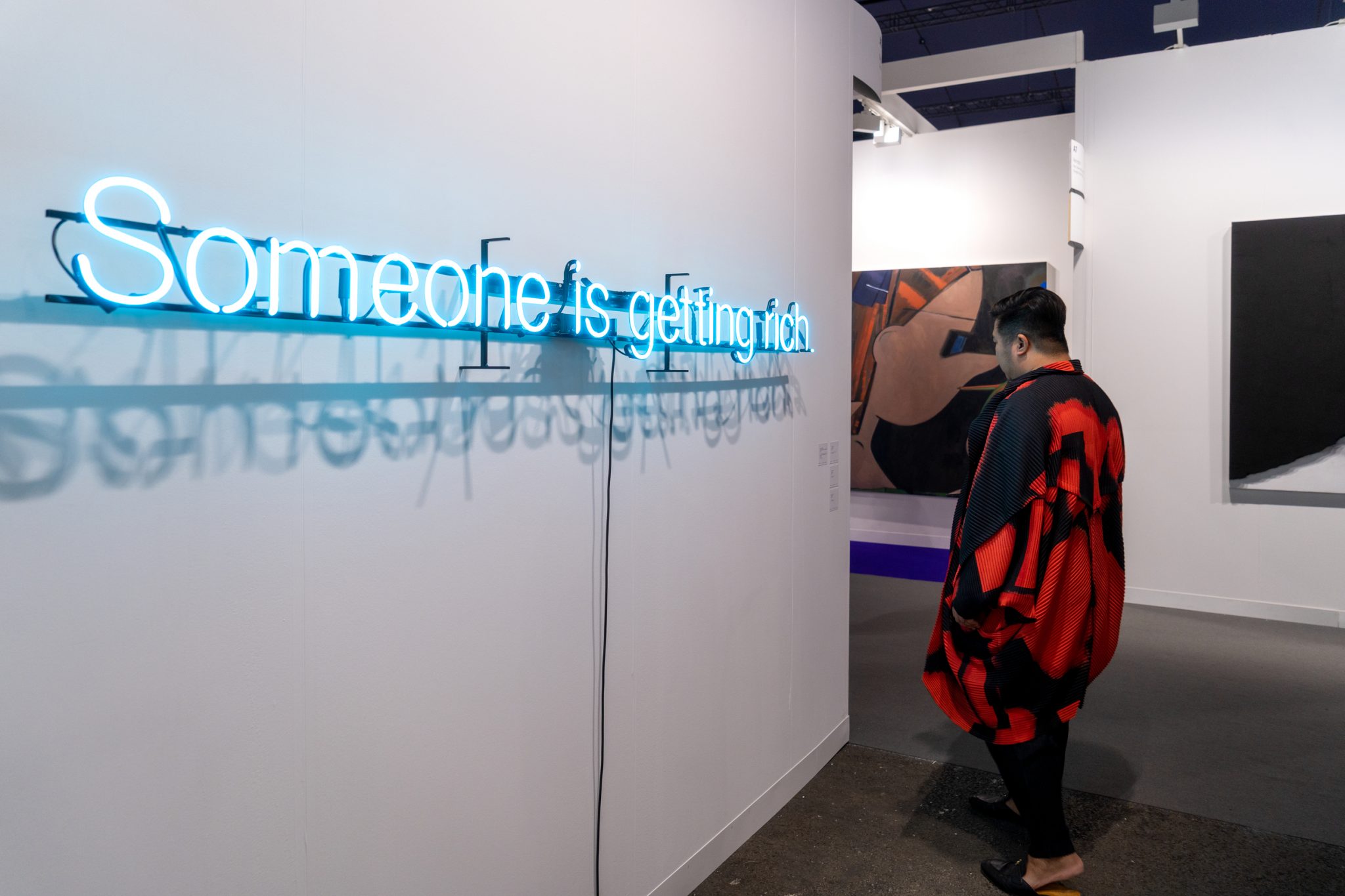
He will go on to fantasise about Roland Barthes singing (because his writing comes across as song) and the ‘mysterious aura’ of Robert Schumann’s 1853 piano work Die Gesänge der Frühe. But Han’s interests range far beyond music (although the piano is his ‘prayer wheel’) and flowers. Among the people whose works he loves, he lists novelist Peter Handke, Marxist revolutionary Rosa Luxemburg, artist Jenny Holzer, filmmakers Charlie Kaufman and Lars von Trier, poets Ingeborg Bachmann and Paul Celan, as well as philosopher Walter Benjamin and Christian existentialist Gabriel Marcel, all arranged around him like the flowers in his apartment, their thoughts similarly ‘borrowed’ (‘If asked to summarize my philosophical thoughts in one sentence,’ he remarks in the second lecture, ‘I would say: The Other disappears’). While his favourite books are the Bible (he’s Roman Catholic, despite the prayer wheel stuff) and any dictionary. All of which information goes somewhat against the grain of someone whose best-known works (The Burnout Society in particular) are set up to resist the stipulation of neoliberal capitalism that we constantly produce ourselves and wallow in a ‘pathologically excessive self-referentiality’. This book is as close as the notoriously private philosopher gets to gazing at himself, even though he does it by constantly referring to Others. Although the book is packed with images of Han giving his lectures and with QR codes that link to even more. But perhaps everyone reaches a stage at which absolute resistance is no longer possible.
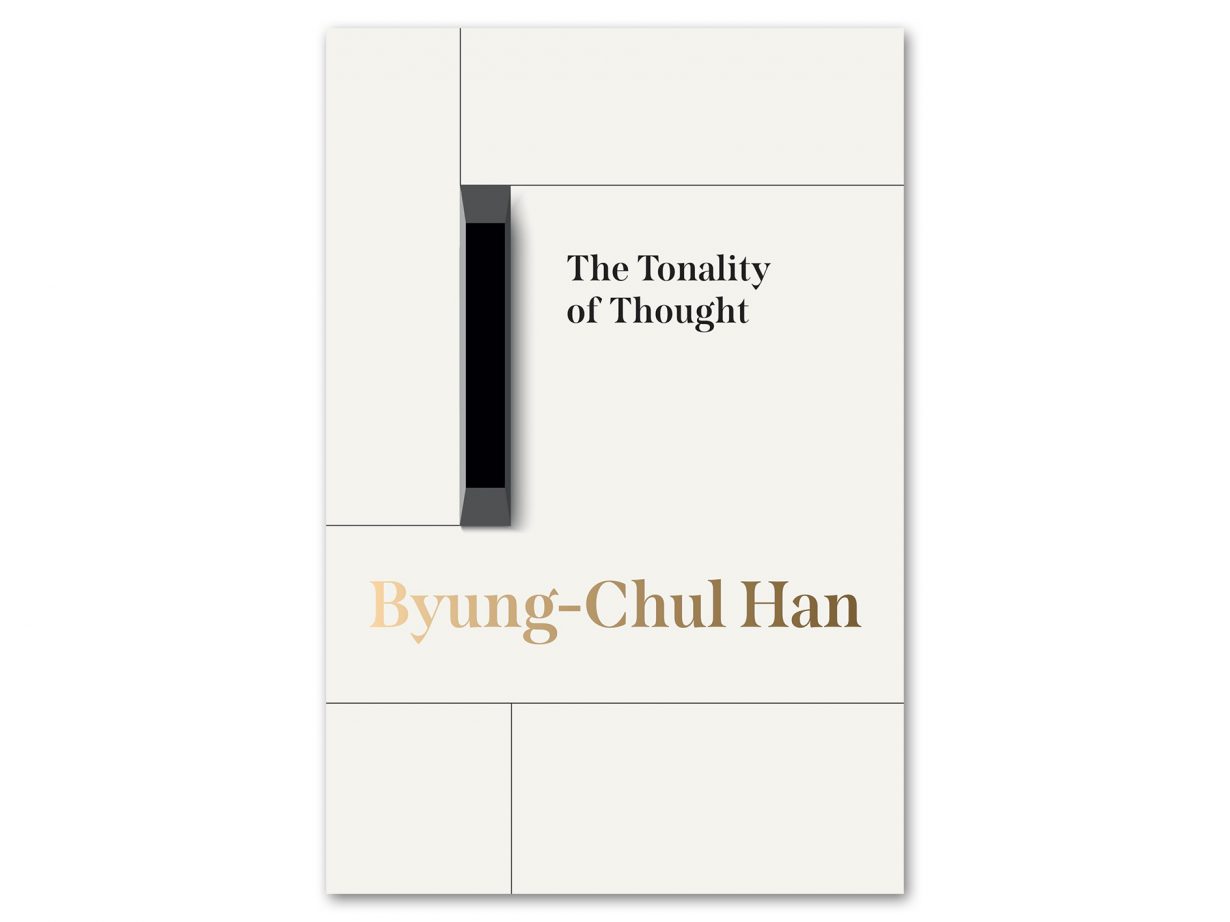
The Tonality of Thought by Byung-Chul Han, translated by Daniel Steuer, Polity, £12.99 (softcover)