The artist’s works fix together what might otherwise come apart, with a form of mending that does not conceal the wound
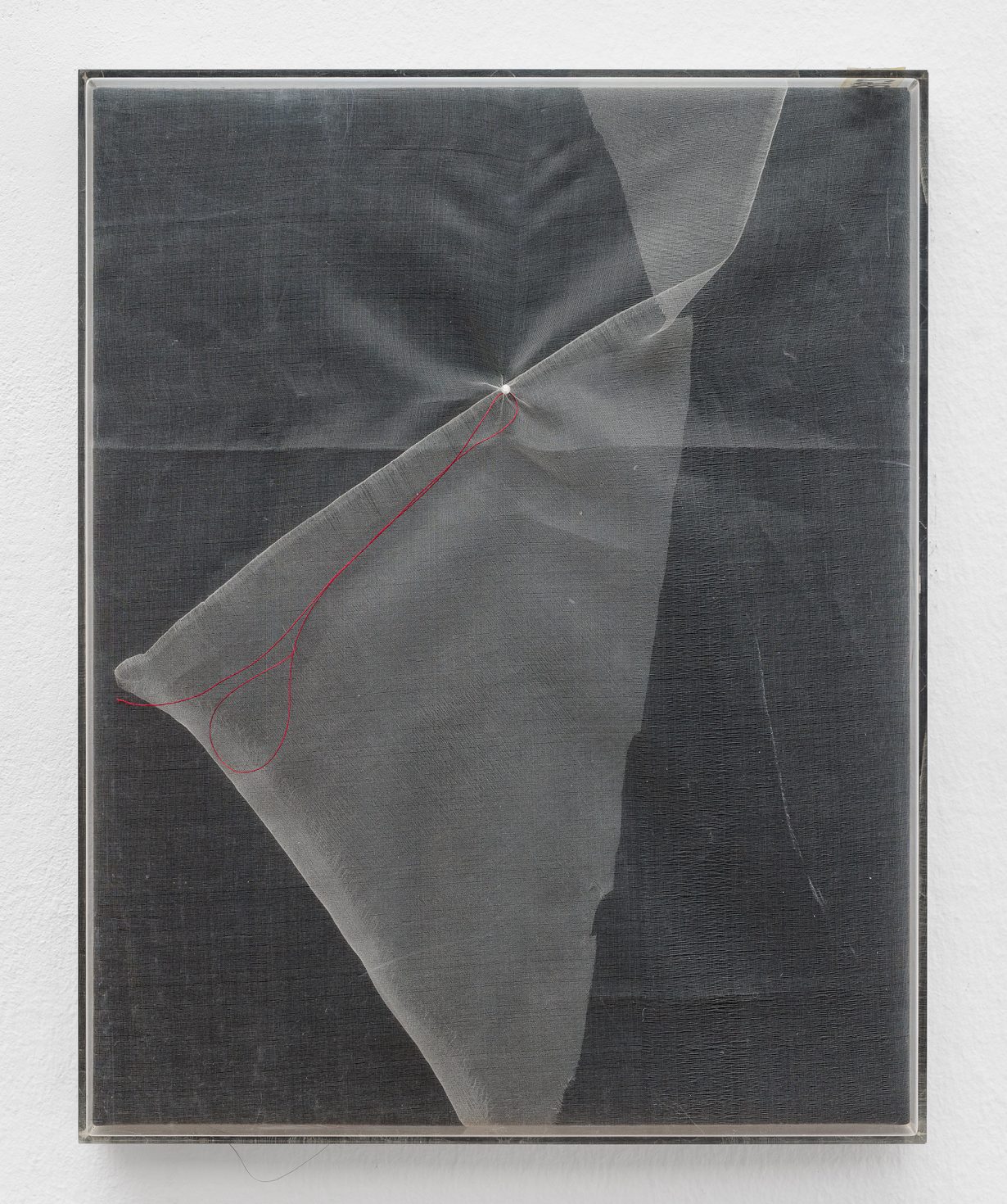
Inside a plexiglass box, a shimmering pin pierces transparent, delicately draped white fabric stretched upon black canvas. A looping length of red thread trails diagonally from the pin like a line from a gestural drawing, or a fine line of blood. It is astonishing what complex feelings Lenke Rothman’s Ur sviten plexilådor / From the Series: Plexiglass boxes (1980) triggers. Despite its modest means, this work by the Swedish-Hungarian artist appears precious and elegant, with its gentle shades of (non-)colour and precise yet seemingly incidental forms. Lightness is coupled with the serious impetus of holding something together, exuding tenderness, even longing. Fabric may function as a second skin, a boundary between inner and outer worlds, and a form of protection. Yet sticking a pin through it also conveys a certain violence: the attachment is only possible through injury.
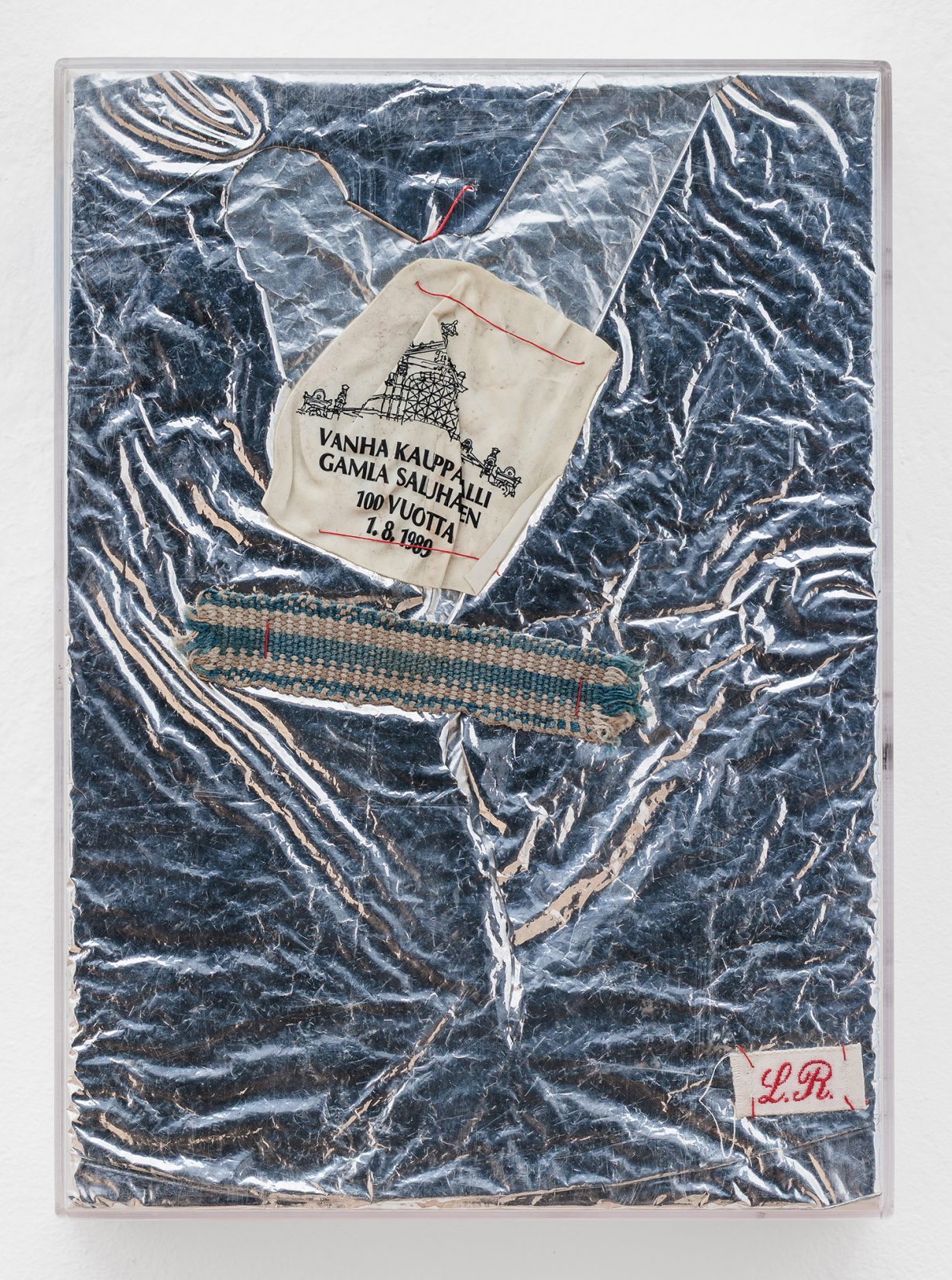
Deported to Auschwitz and later Bergen-Belsen, Rothman lost her parents and six siblings; only she and her younger brother survived the Holocaust. Brought to Sweden by the Red Cross in 1945, she spent six years in hospitals being treated for tuberculosis before enrolling at art school. Resilience and vulnerability run through The Necessities of Life and the Consequences of Dreams, guest-curated by Milan Ther, director of Hamburg’s Kunstverein, which earlier this year presented the first comprehensive solo exhibition of Rothman’s oeuvre outside Sweden. (Only three works from that retrospective are reprised here; the rest come from the estate of the artist, who died in 2008.) Two juxtapositions set the curatorial tone of this show, whose timeframe stretches from the 1950s to the 80s. A classically composed nude painting that points to Rothman’s beginnings as a painter, Modellmålning/Konstfack / Model painting/Konstfack (1953), sits beside From the Series: Plexiglass boxes (1989), in which a marketplace logo, woven ribbon and a tag are sewn onto aluminium foil with red thread. Together, they trace her development towards an understanding of image-making not as depiction but as container.
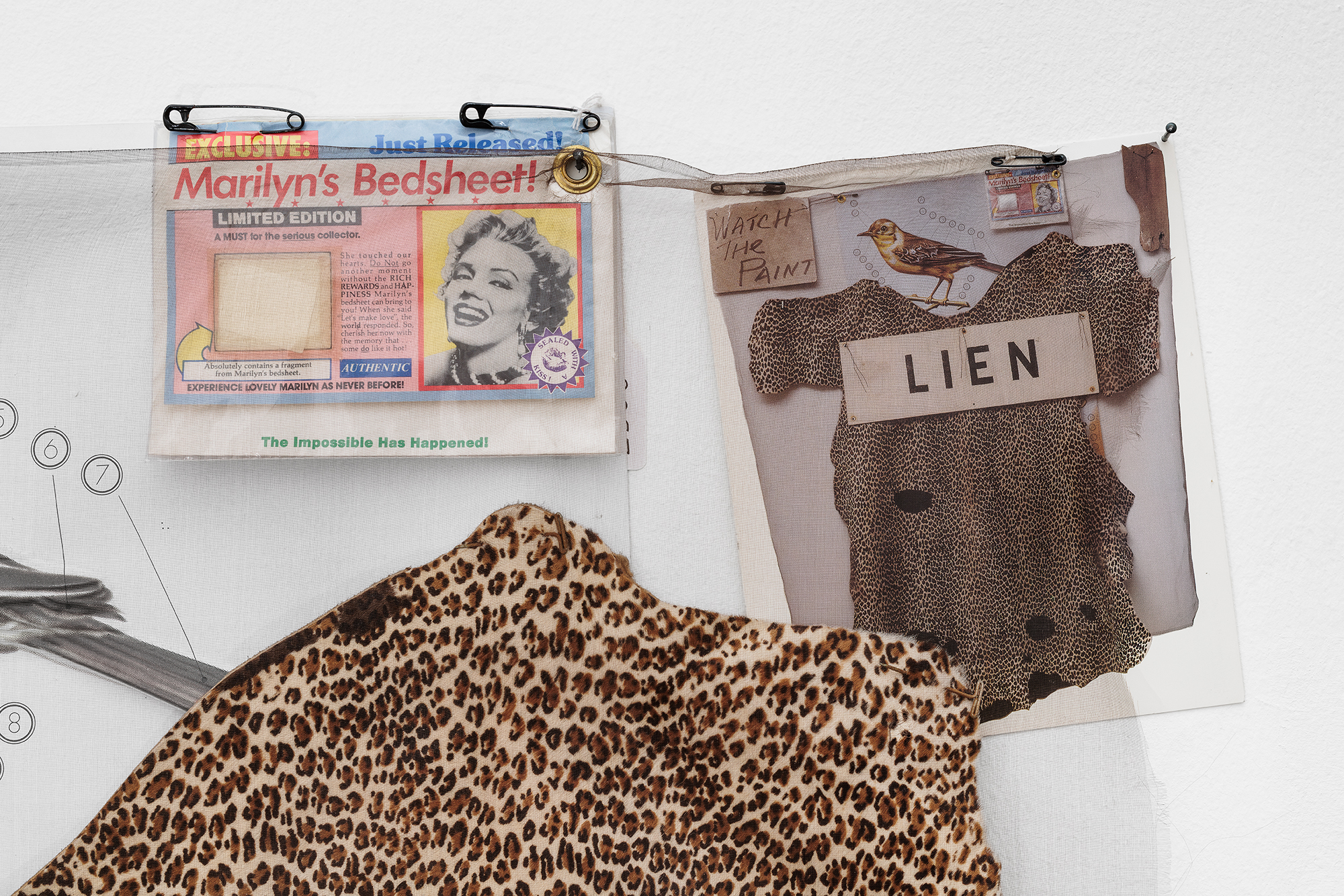
On the other hand, minimal gestures are set against abundant works by an artist known as an avid collector of everyday life’s remnants. Another 1980 Plexiglass work is filled to its edges with twisted thin yarn in gold, orange and silver, interspersed with a thick bundle of woolen threads in green, blue, yellow, black, orange and pink, a small wooden comb, a circlet of baking paper and a hair-bow label depicting two women with equally neat hairstyles. The headstrong yarn seems to resist these signifiers of order, taking on an animistic quality and allowing the piece to be read as a cheeky comment on the disciplining of female bodies. Rothman’s interest in commonplace material extended to the circulation of mass-media images. The collagelike Hud/Lien / Skin/Lien (1982) includes what is supposedly a sample of Marilyn Monroe’s bedsheet, alongside a dress-shaped piece of perforated leopard-print fabric combined with a taxidermy poster of a bird. The objectification of the animal maps onto the fetishisation of Monroe’s body and effects, while a handmade sign reading ‘WATCH THE PAINT’ humorously punctures painting’s elevated status. Another attached notice within this work, proclaiming the French lien – meaning both connection and bond – also resonates with the main gesture of Rothman’s oeuvre: fixing together what might otherwise come apart. As the scarlike stitches that appear in early paintings displayed in the gallery’s office remind us, Rothman’s work is a form of mending that does not conceal the wound.
Lenke Rothman, The Necessities of Life and the Consequences of Dreams at Croy Nielsen, Vienna, 11 September – 17 October


