An interdisciplinary reading of waterways and the narratives they carry might help us understand our fractured times
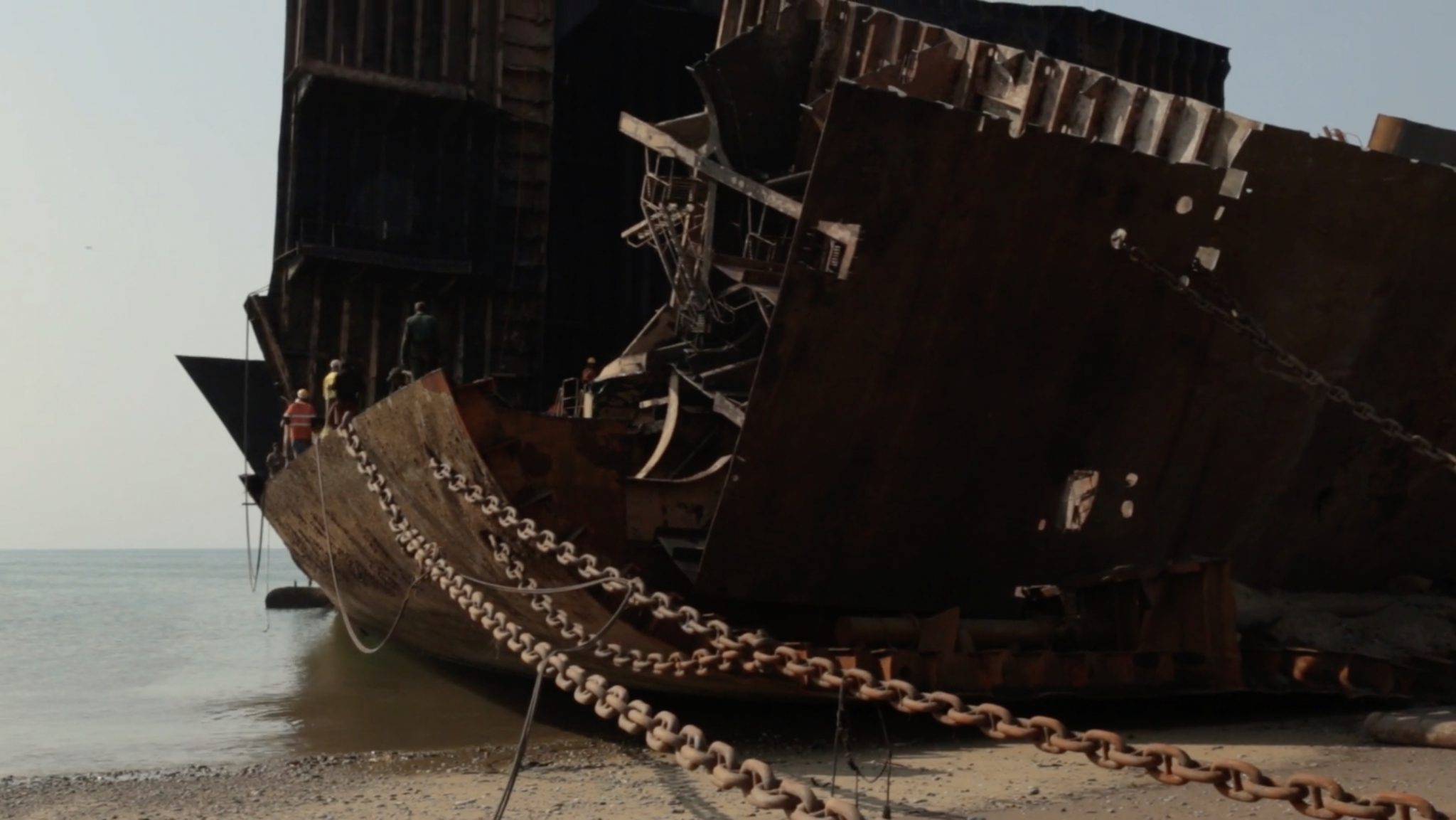
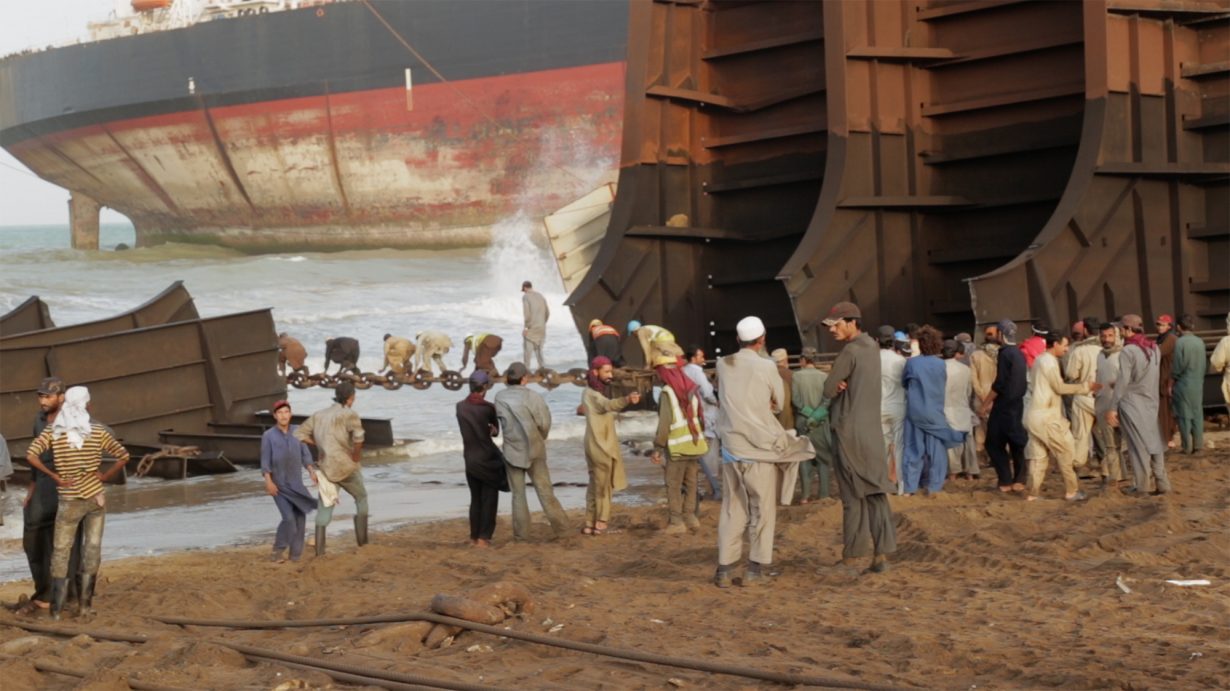
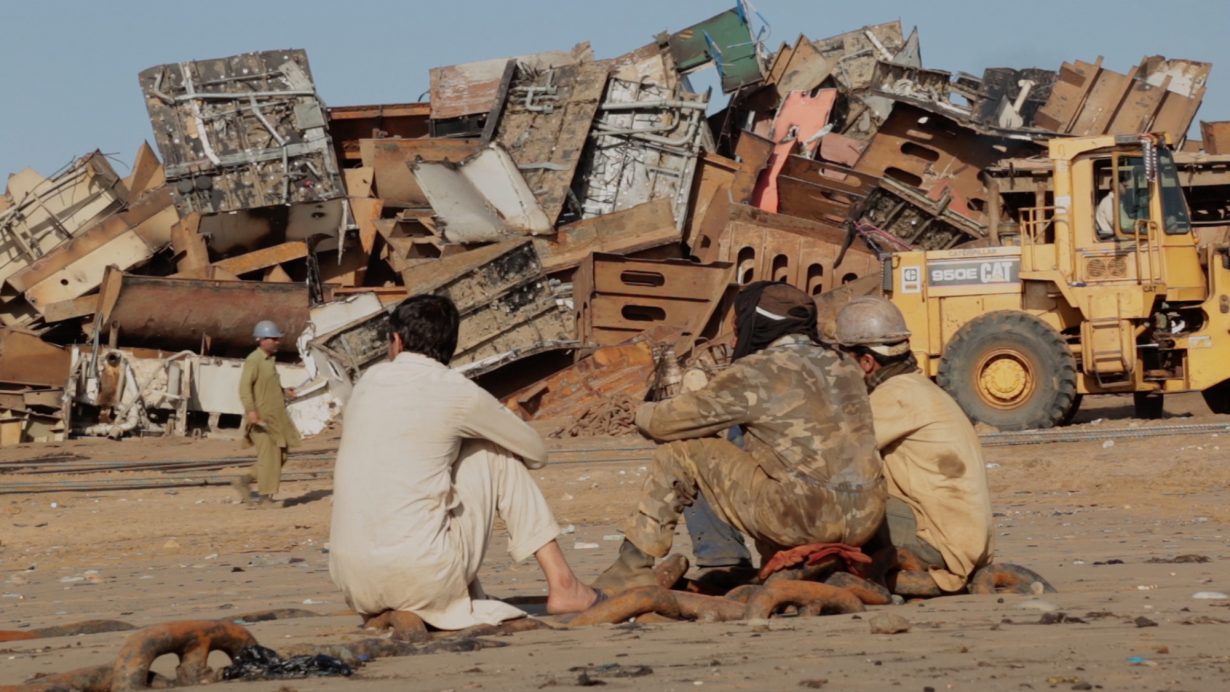
“The destruction of us all comes from the same source,” warns Ocean Master, a decommissioned container ship bestowed sentience in Hira Nabi’s film All That Perishes at the Edge of Land (2019). The ship’s wisdom feels strikingly prescient today as the blockade of the Strait of Hormuz causes oil and fertiliser prices to spiral upwards. The shockwaves felt at fueling stations the world over have made the previously invisible entanglements between military machismo, petropolitics and global financial networks suddenly apparent.
The narrow waterway in the Persian Gulf was sealed by Iran in retaliation for Israel and the USA attacking its cities, oil fields and refineries. Visuals of a dark mushroom cloud over the South Pars gas field circulated furiously on social media. As did news of dystopic black rain showering Tehran. Oil spills and sunken tankers have long polluted the Gulf, while traces of missiles from bomb sites in all directions will continually percolate through the ecoregion as a result of the seepage of groundwater. While the Strait was closed for mercantile passage, the flow of water to the Indian Ocean did not stop. Through water currents, in the bodies of fish, on the bodies of the few cargo vessels that made it through, these residues touch a significantly larger geography, predominantly along the shores of the Indian Ocean. As Greenpeace International’s Mehdi Leman writes, ‘This environmental harm is not incidental. It is one of the ways war reshapes daily life.’ Right now, this is most visible in Gaza, where Israeli violence has destroyed the land as much as the people. Across Palestine, Iran, Lebanon – and Sudan – warnings from ecologists on the generational effects of heavy munitions pollution are rarely heard.
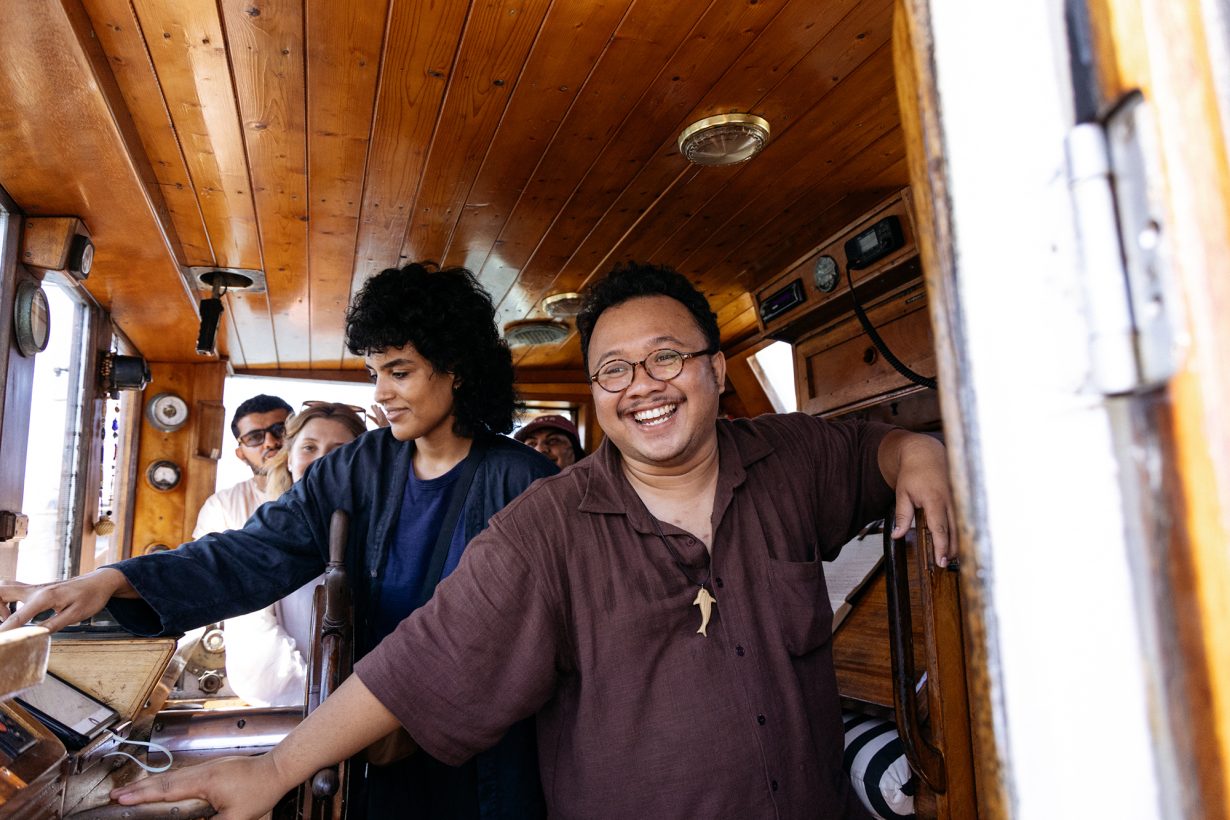
What is the source of the amnesia that allows for these continuing, ritual displays of military plumage, even while everyone knows that the costs of these performances are debited on a planetary scale? Why are we unable to remember our evolutionary connection to the soil and seas? We might attribute this to what peace and conflict scholar Susanne Buckley-Zistel has termed ‘chosen amnesia’, a coping mechanism that allows populations to continue the mechanics of daily life in the face of incessant destruction. Or perhaps, it is more ingrained. Memory studies scholar Hanna Teichler flags humans’ incapacity to conceptualise longterm ecological developments ‘in and of time in relation to environmental forms’, noting slow degradation’s illegibility to short attention-spans. “Water has memory. We are in it and made of it,” articulated Natasha Ginwala, curator of Colomboscope 2019, titled Sea Change, as part of which Nabi’s film was shown. Ginwala was back in Colombo this past January, offering a way to look into deep time while introducing Ancestral Ocean: Marine Intersections and Coastlines as Webs, a convening of artists, thinkers and conservationists, and her three-year fellowship on the Indian Ocean with TBA21–Academy, a residency that builds on her continued engagement with cultural and (neo)colonial histories of the Indian Ocean world. Teichler concurs, turning to transoceanic memory for an antidote. In this moment of planetary rupture, can an interdisciplinary reading of oceanic narratives buoy our ability to comprehend epochal change?
In scientific literature, oceanic memory is widely recorded as temperature continuums held over decades by subtropical layers of the ocean. An embodied understanding might, instead, locate memory as palimpsestial archives held in the relations between water and those who inhabit or interact with it. On the Eastern coast of India, a deep familiarity envelops photographer M. Palani Kumar’s lens as he delves into his fishing community’s generational dialogue with water. Rooted in his experience growing up with a mother who sold fish, his work is documentarian, but never anthropological. It reaches inner worlds, capturing, in one instance, the expression of respect and gratitude as a fisherman holds up his prized catch. Abstinence on the part of fisherpeople all over the subcontinental coast during the monsoon mating season has been a translation of this respect into long-established action. Hands are a recurrent motif, some marked by pervasive scars and signs of chronic edema from a lifetime of fishing in hard conditions and rising industrial pollution, others holding on to their peers, making formations that can put up a fight – even if small – against unpredictable climate and mechanised fleets.
As they circulate from port to port, large transnational vessels, like Ocean Master, accumulate memories and material residue from every load of cargo, every changeover of crew. Nabi’s film begins when, after 25 years at sea, Ocean Master is brought to Gadani shipbreaking yard, northwest of Karachi in Pakistan, to be itself fragmented, torn down and sold in its salvageable parts. The artist stages a dialogue between the carrier ship and a collection of yardworkers – whose voices decry their harsh conditions, exposure to asbestos and other hazards. One reminisces about his past as a fisherman along the nearby coast before the yard was set up. The arrival of large ships dumping waste and spilling oil caused the bountiful fish to take flight and, breaking the long lineage of his family fishing the ocean, the man was forced to take up work at the salvage yard. Further along the same coastline, at Alang, India, artist Ranjit Kandalgaonkar uses sound to encapsulate the landscape of a similar shipbreaking yard, taking us on an aural voyage: sections of the ship being cut with oxyacetylene torches; the winch dragging parts to land; tea break at the canteen. Sounding out the Labour Archive (2016), which was also on show in Colomboscope 2019, sits within the artist’s sustained research tracing the afterlives of nautical elements – from high-value steel sheets down to waste scraps, carrying asbestos, lead, mercury, cadmium and toxic chemical residues onshore.
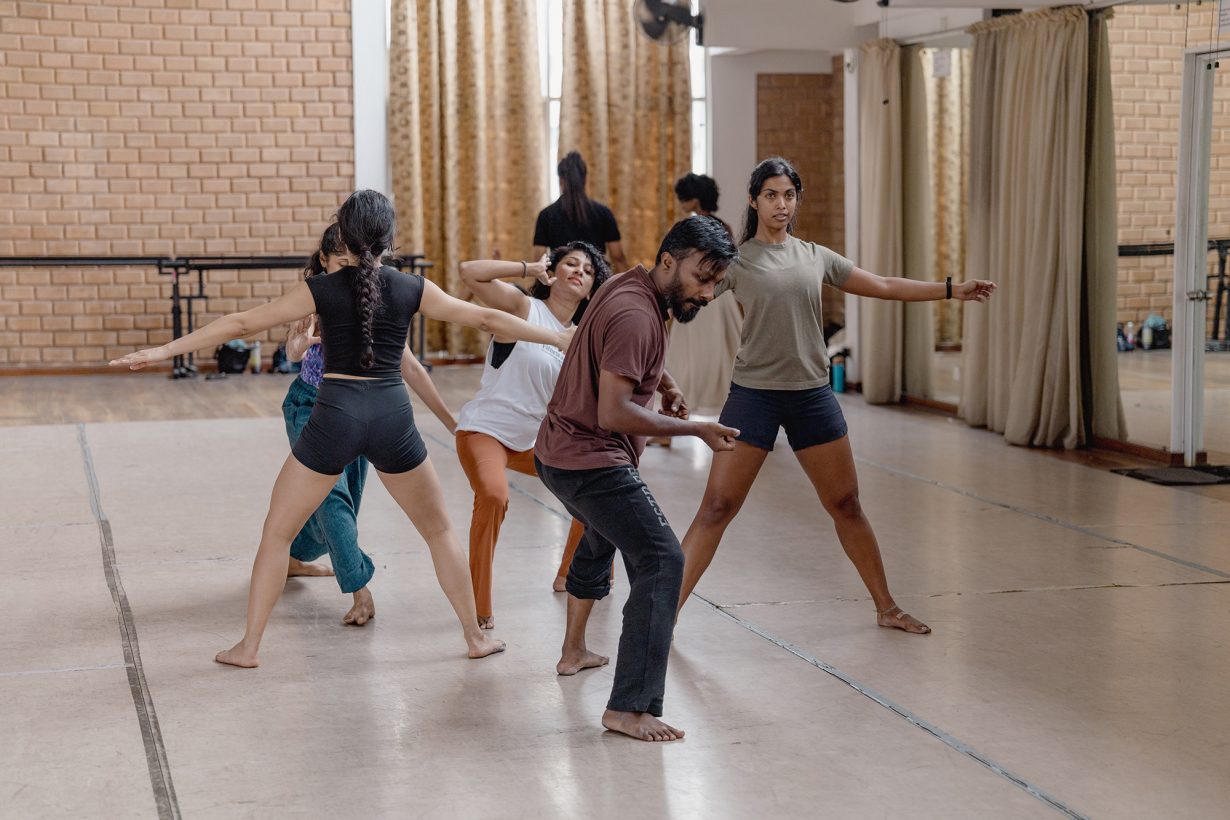
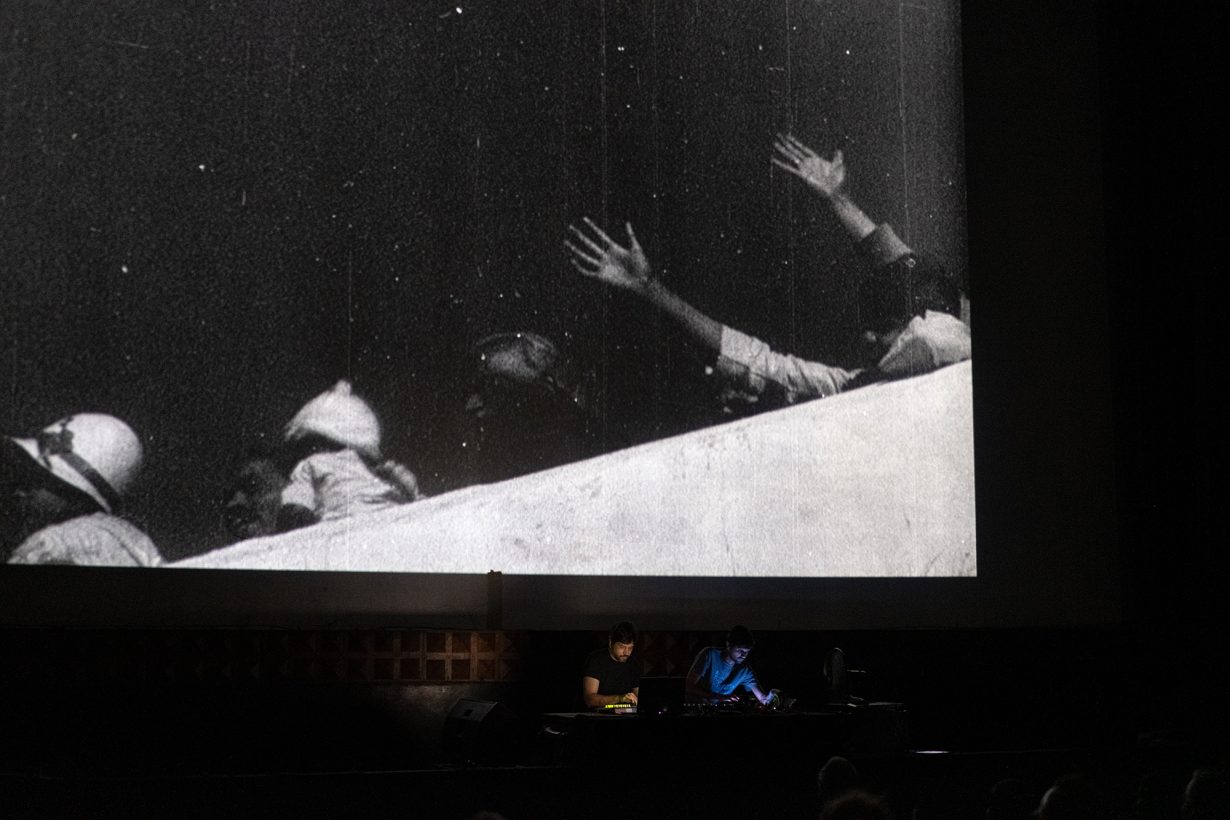
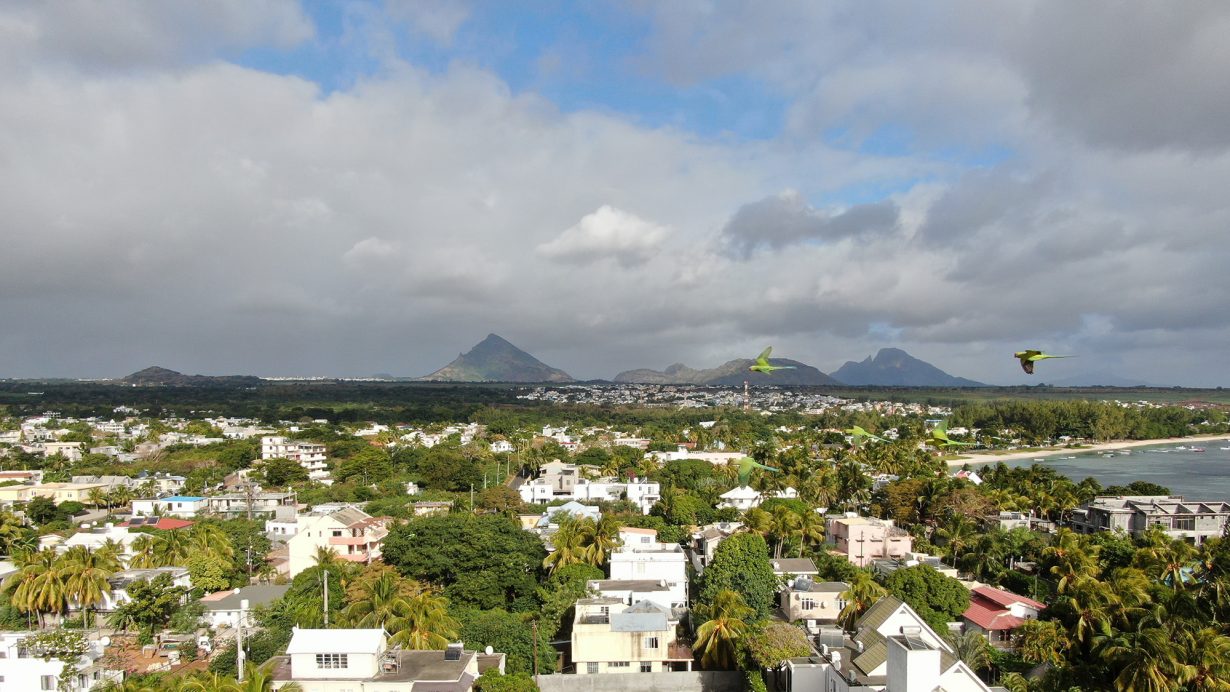
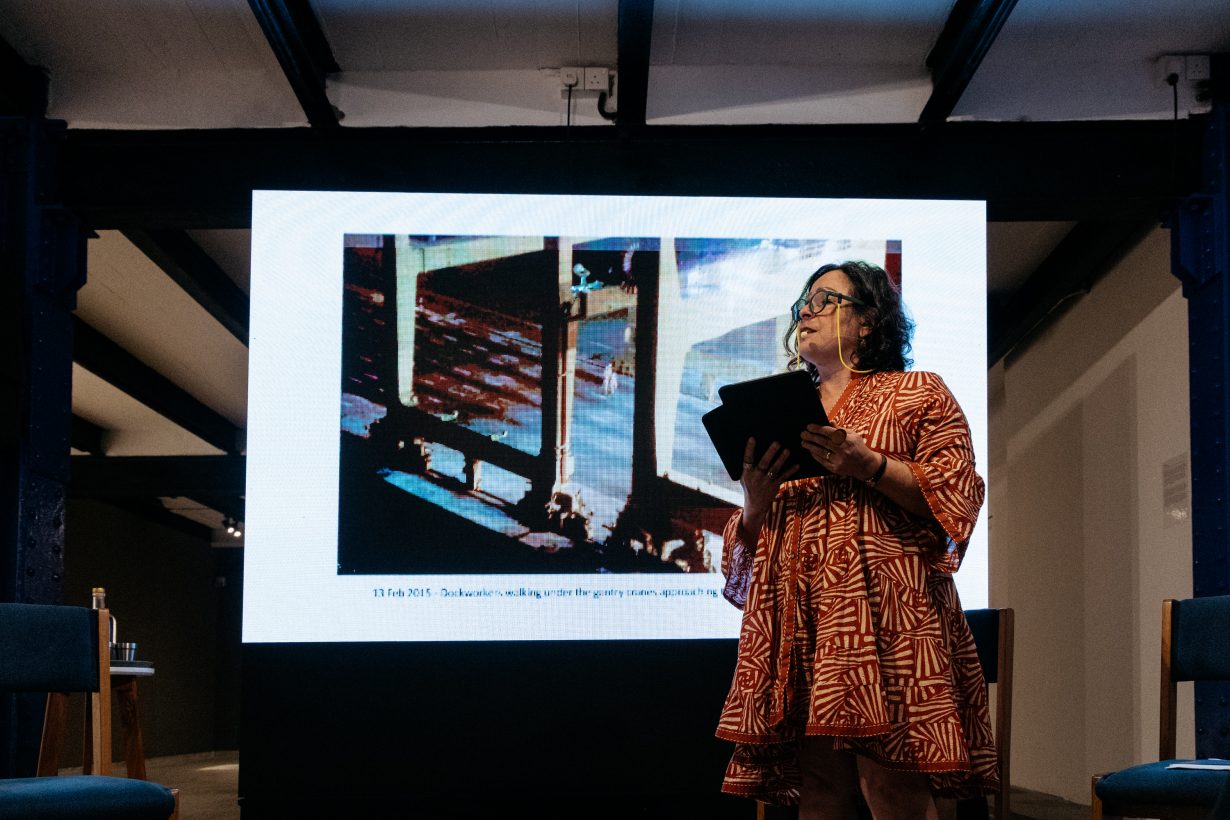
Colomboscope under Ginwala’s artistic directorship has nurtured a robust ecosystem of artistic exchange in the island country, its location’s long history as a maritime crossroads anchoring her research on the Indian Ocean – or the Afrasian Sea as it was framed in the exhibition and research project Indigo Waves and Other Stories (initiated by Ginwala and fellow curator Bonaventure Soh Bejeng Ndikung). Thinking further about oceanic rupture, Ginwala in January pointed towards the video Nests of Basalt, Nests of Wood (2023) by Berlin-based Clara Jo, whose research details the trajectory of epidemics from the locus of Mauritius. In the video, which combines documentary with animated reimaginings, we witness how a nineteenth-century quarantine station on Flat Island in Mauritius (largely used to house indentured labourers at risk of spreading cholera and other epidemics) became a precursor to architectures designed to prevent contagion, enforce detention and realise interspecies conquest.
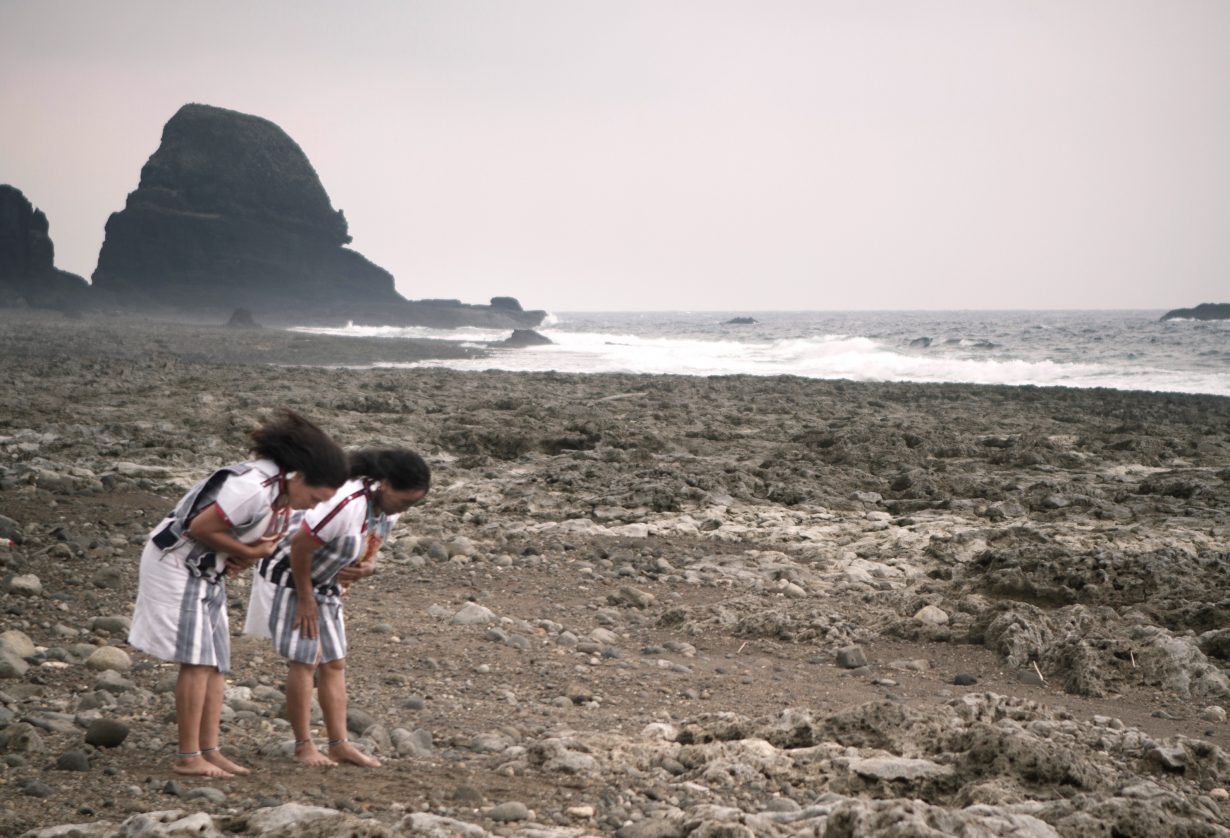
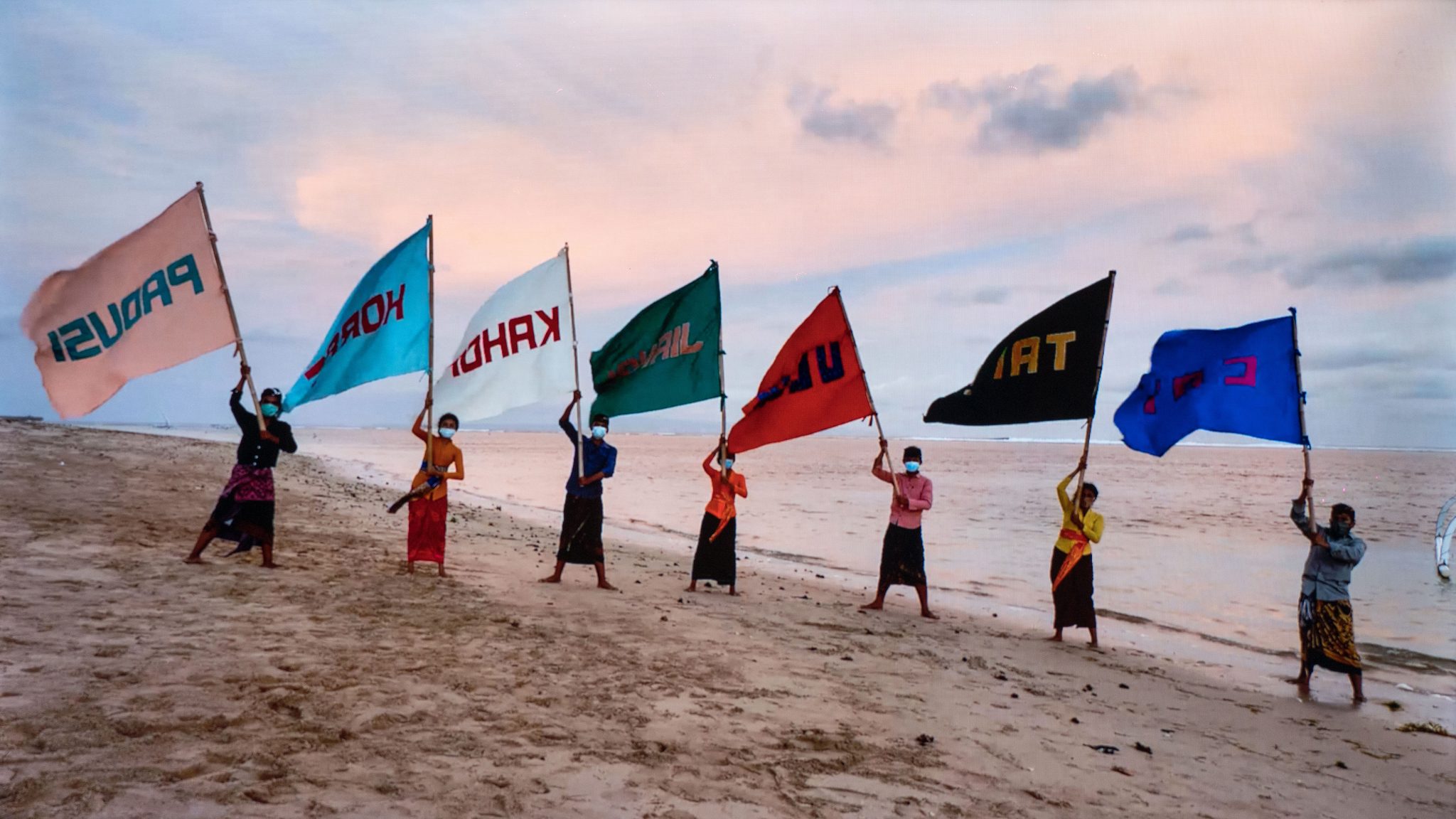
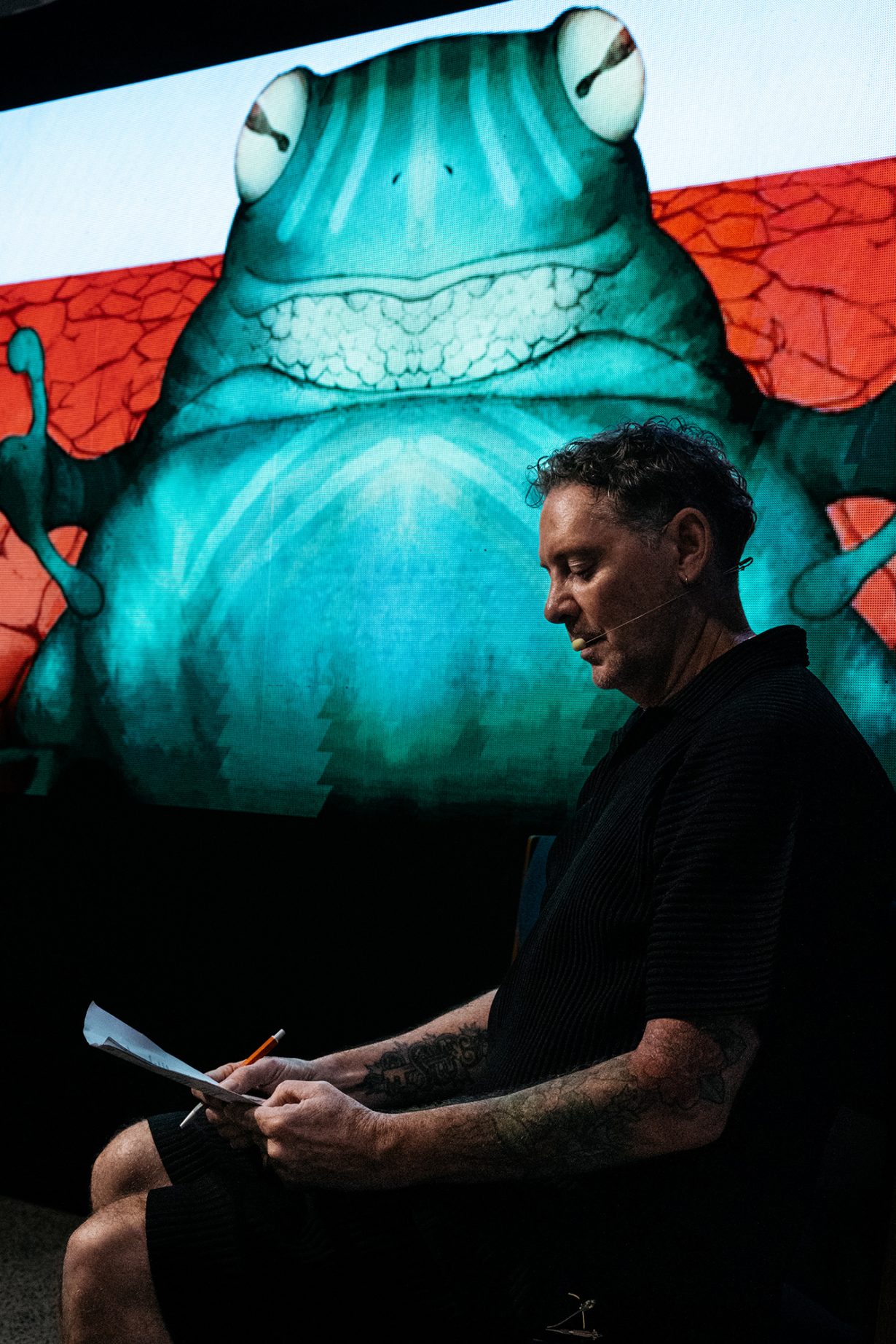
The deep synergy between Indigenous communities and water reveals another side to this sedimentation of memory. The January conference flowed with insights on everything from shark fishing to indentureship, but an oblique line emerged revealing the protective nature of aqueous traditions. From one island to another, Charwei Tsai invoked the customs of Lanyu, off the coast of Taiwan. Her video Hair Dance (2012) offers a glimpse into the Tao people’s appeal for safe sea passage. In the video we see women from the Tao community practicing an age-old ritual of emulating ocean waves with the swinging of their long hair, showing reverence while celebrating resonances felt between the body and oceanscape. The beach also becomes a site for collective prayer, with the women gathering first in circular movement and then continuing their hair dance in two rows, each rising and falling alternatively, mirroring the unending motion of the tides from whom they seek blessings. Speaking of the South-East quadrant of the Indian Ocean, Wiradjuri/Ngunnawal artist and writer Brook Andrew narrated a story of frogs withholding rain and other tales from the aqueous mythology of his peoples in what we now call Australia. Elaborating on the sacred nature of waterways, he said, “Rivers are sentinel presences that carry memory and obligation.” They are sites of witness and authority, widely venerated and used as fertile grounds for negotiations and conflict resolution, especially between seafaring nations. On fostering successful agreements, they became sites of ceremony to strengthen freshly forged bonds. The power of these waterways was so great that British colonisers specifically targeted them – waterholes were poisoned, food systems dismantled – launching sustained attacks to challenge Indigenous sovereignty.
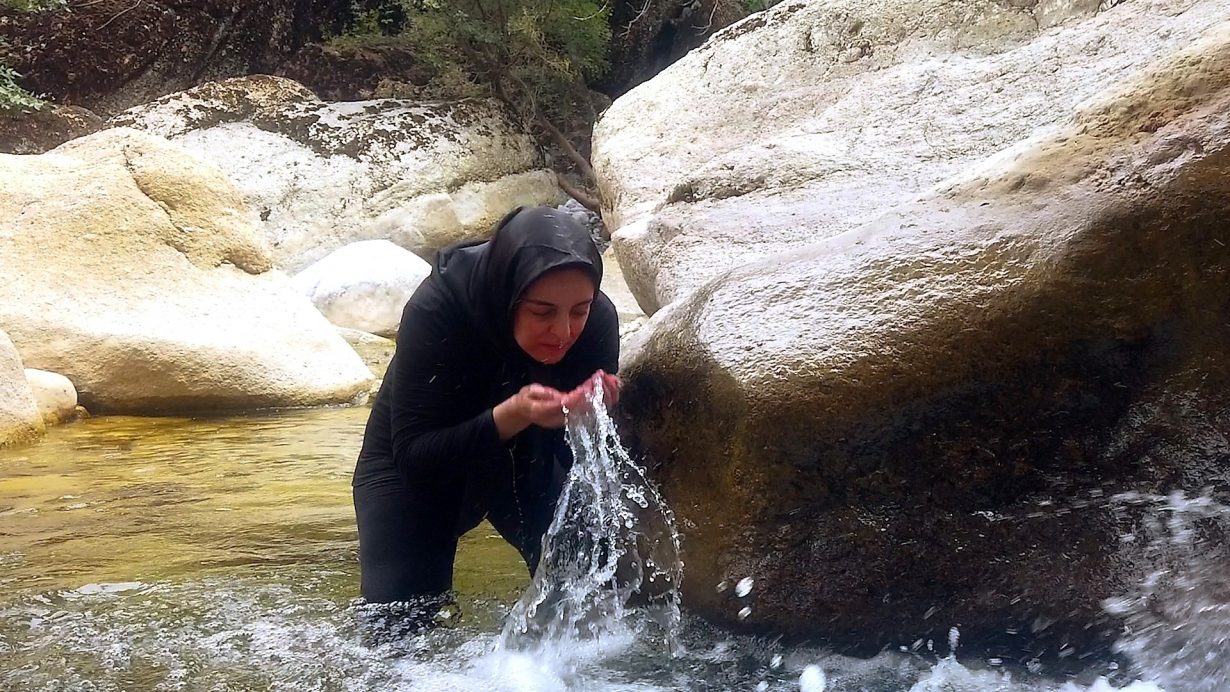
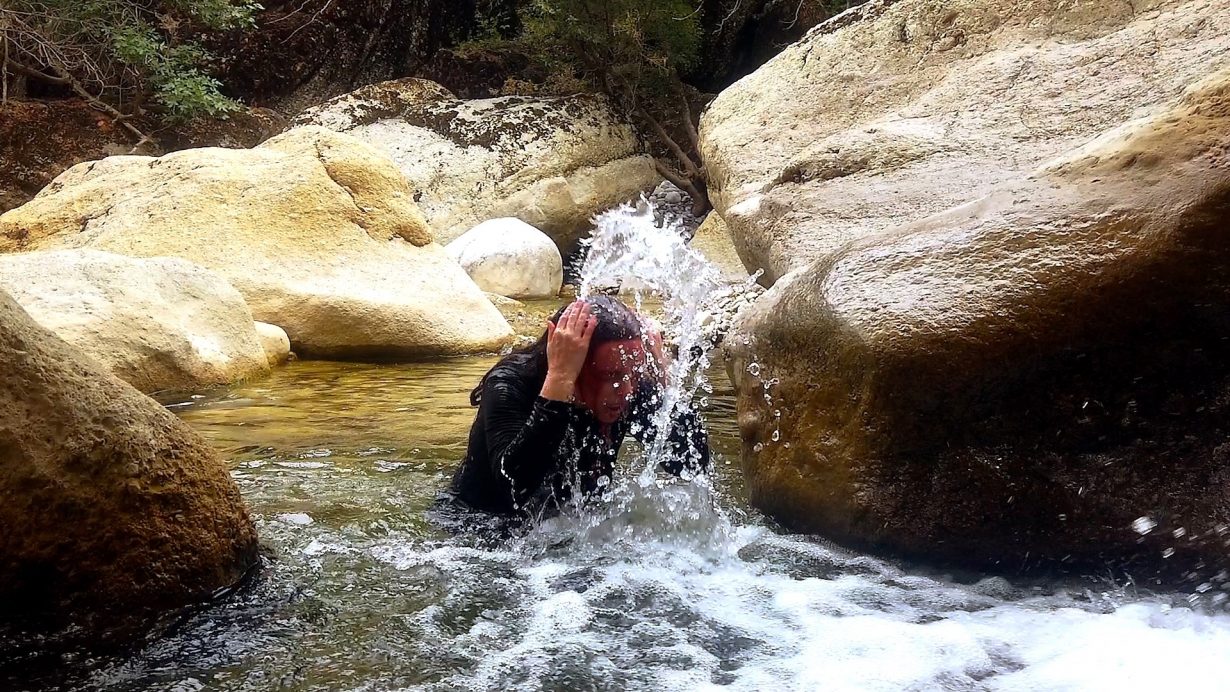
Turning back towards Iran, Razieh Goudarzi’s video performance Indelible (2023) opens space to consider the entanglement of destruction and renewal. Perched in a turbulent stream, the artist splashes water on her face, reclaiming agency by defiantly pulling off her headscarf. Subsequent splashes leave a blood-red tint to her face, unresponsive to scrubbing. ‘While water is often framed as an agent of cleansing, here it serves as a relentless witness that fails to wash away the iron-rich memory of the land,’ she elaborated over email after communication blackouts were lifted. A material detail extends the work into the heart of our present context: the indelible pigment is soil from the island of Hormuz. Blood spilled by the rule of the Islamic Republic, under which the artist grew up, as well as throughout the chronicle of this resource-rich land, is, for her, a form of memory that binds the body to the landscape. Goudarzi’s voice is one among a long lineage of artists, filmmakers and writers resisting contemporary violence in this region shaped by a vicious cycle of authoritarian regimes, trade sanctions and coups d’état in the race for control over oil. Less familiar, Gulf Studies scholar Laleh Khalili (who also spoke in Colombo) reminds us, is the trajectory of the Anglo-Persian Oil Company’s transformation into British Petroleum. One among the lines that expose colonial empire’s subtle mutation into the freemarket economy, its rebranding a facade to obscure the continuum of capitalist domination in the age of globalisation.
In Indigo Waves, Ginwala and Ndikung called on Françoise Vergès’s writings on the ‘politics of forgetfulness’, which expound the political theorist’s investigations into the systemic facets of amnesia. In her contribution to documenta 14’s South as a State of Mind (2015), Vergès traced ways in which colonialism’s violent history of conquest, slavery and epistemic erasure has transformed into ‘science, technology, militarism, and capitalism [creating] a powerful nexus to reshape the techniques of discipline and punishment.’ We are seeing new forms of watchtowers – digital panopticons and array radars – monitor, reinforce and profit from conditions of forgetfulness. In recognising that amnesia is not only chosen or biological, but increasingly manufactured, memory is a crucial site for reclamation. Looking through the lens of saltwater, accounts of disappearing ritual synergies, of fish and fisherpeople in equal danger, of shipping fleets and ecological pollution illuminate the indivisibility of social and ecological justice. Within this refraction, oceanic memory whispers, to those who choose to listen, that tools to remember, to de-fragment amnesia, are best anointed by waves of mutual respect, reciprocal protection and relentless witnessing, asking us consciously to turn to those who are speaking in the face of howling winds, nurturing the language of the earth instead of the globe, and narrating at the crosscurrents of ancestrality and direct experience.
From the Summer 2026 issue of ArtReview Asia – get your copy.
Read next The Human Story of Maritime Capitalism