These anti-nuclear protest gatherings in the late 1970s – and their atmosphere of optimism born of convivial en masse comradeship – have a lot to teach us today
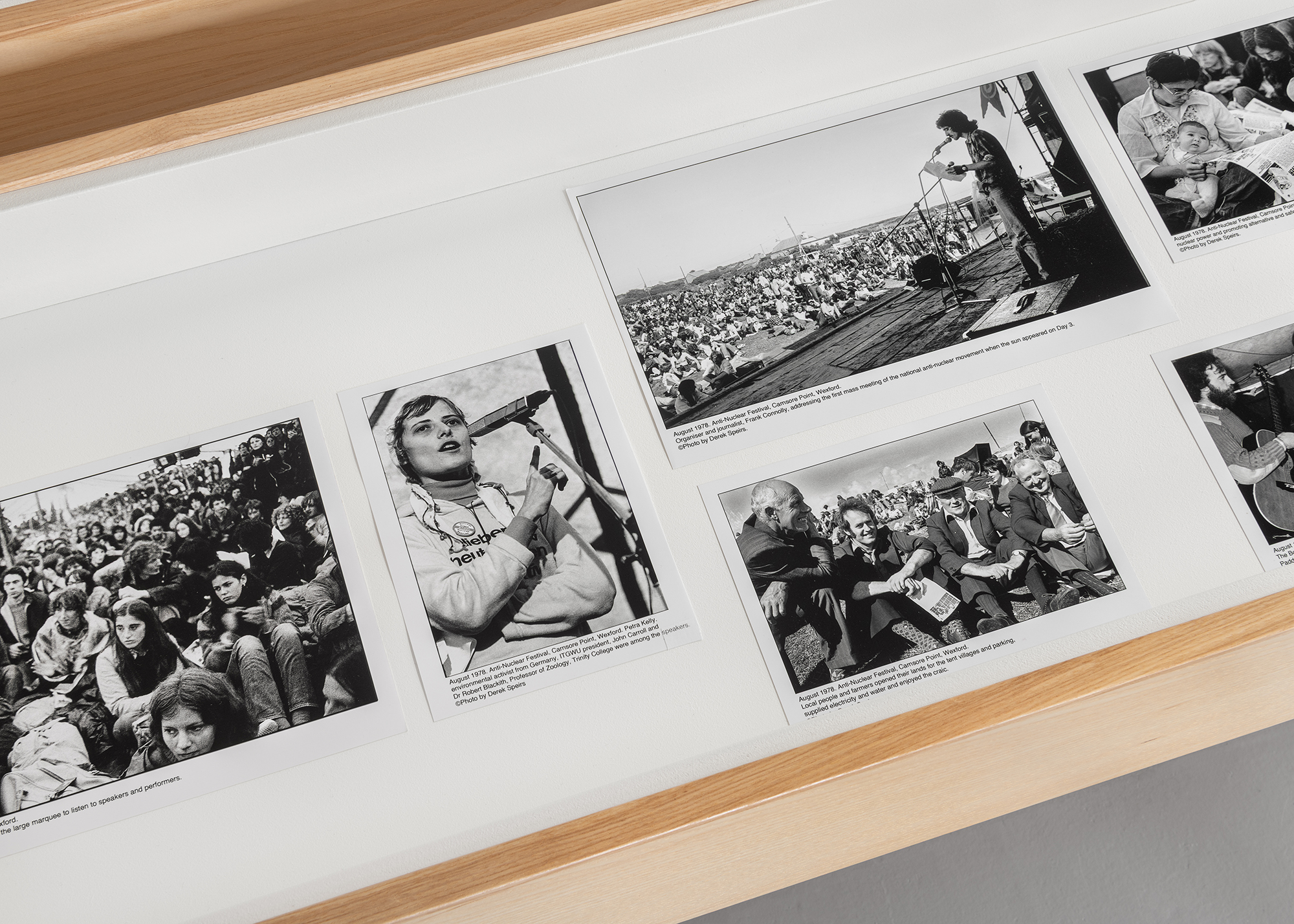
Sometime during the early 1980s, barely out of primary school, I joined the Campaign for Nuclear Disarmament. Signing up felt existentially necessary: my nuclear paranoia was experienced, nightmare after nightmare, as private, lonely, preteen dread. Elsewhere in Ireland, more mature nuclear campaigners were banding together in public, venting anger through collective action. Memory of a Free Festival celebrates one such movement. Curated by Pádraic E. Moore, this resonant exhibition combines commissioned artworks with rare archival records of the Carnsore folk festivals (1979–81): gatherings of peace activists and environmental protesters opposed to the planned construction of a nuclear plant on Ireland’s southeast coast.
Photographs and video capture the spirit of these counterculture carnivals: situations of earnest speechifying, ramshackle staging and raggle-taggle musical performance – lofty political declarations contrasting with lowly realities of assembly. Black-and-white footage (shown on a wall-mounted monitor) from 1978 of an eloquent, impassioned address by German antinuclear crusader Petra Kelly – a founding member, along with Joseph Beuys and others, of the German Green Party – segues, for instance, into an update from festival organisers on problems with the encampment’s jerry-rigged eco toilets. The prevailing tone, though, is one of joy in embodied solidarity: an atmosphere of optimism born of convivial en masse comradeship.
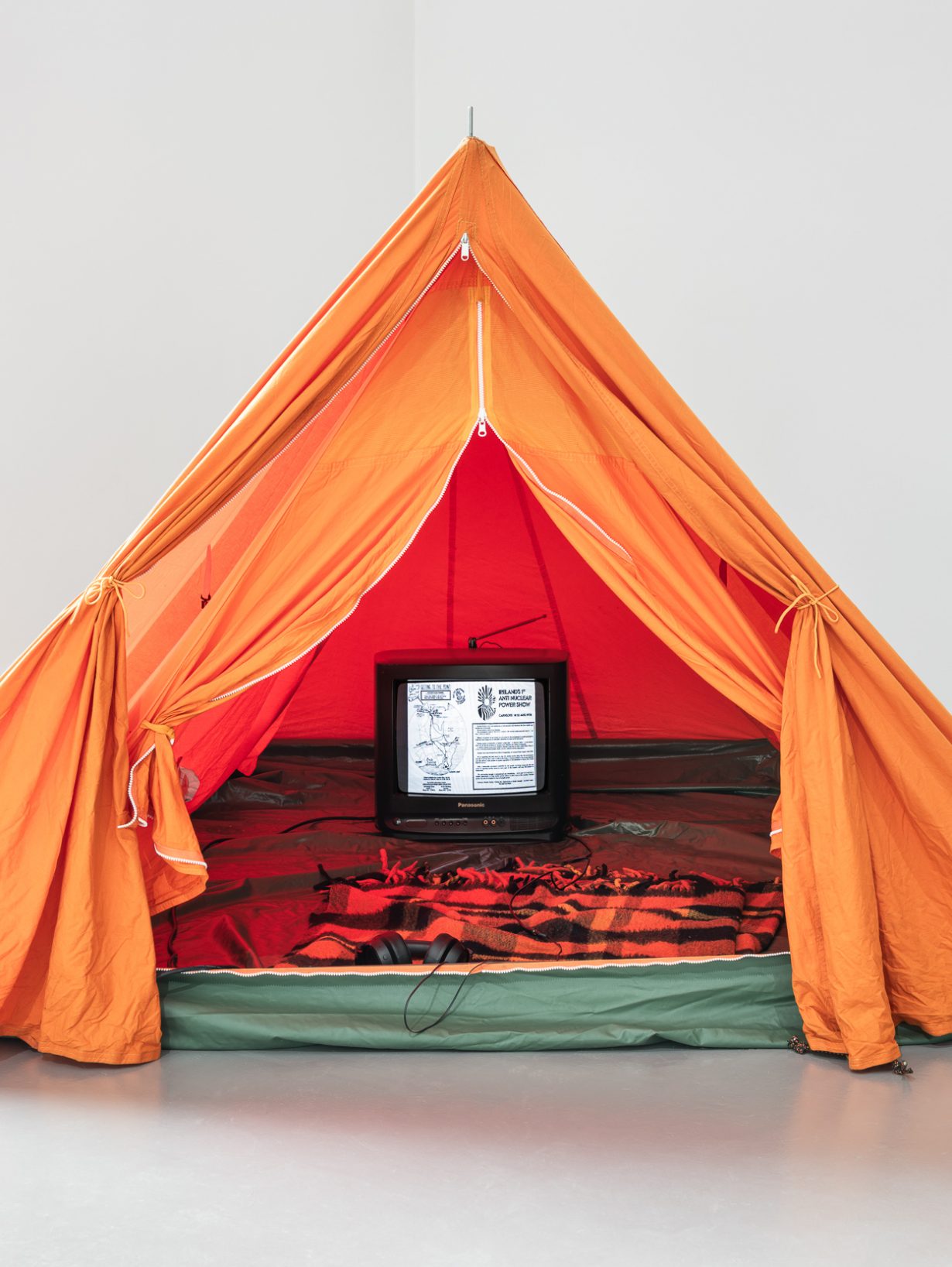
The four featured artists at Ormston House (the list will amend somewhat as the show tours to several venues) variously approach the Carnsore story head-on or slantwise. Brian Duggan has long been preoccupied by nuclear dangers: stitching textile maps of bomb-test landscapes or reproducing relics from radiated sites as forlorn sculptures. His artworks in this case, a set of wall-mounted cut-slate ‘plates’ alluding to logos used in Carnsore promotions, memorialise the show’s main focus while also linking to the lost cultural energy of other affiliated art collectives (via a short documentary video playing inside a camping tent). Alanna O’Kelly’s contribution distils decades of antinuclear commitment down to two striking floor-to-ceiling prints. A participant in ‘Sounds Around the Base’ at Greenham Common in 1983, when up to 50,000 women joined forces in round-the-clock sonic dissent, O’Kelly has on occasion centred her art on emotive keening performances: elaborations on ancient Irish traditions of lamentation. Here the photographic diptych Breath (1983/2026) is differently affecting: shadowed profiles of women’s faces at Greenham, open mouths in close proximity, the blown-up images celebrate a now-distant moment of tender unity in protest.
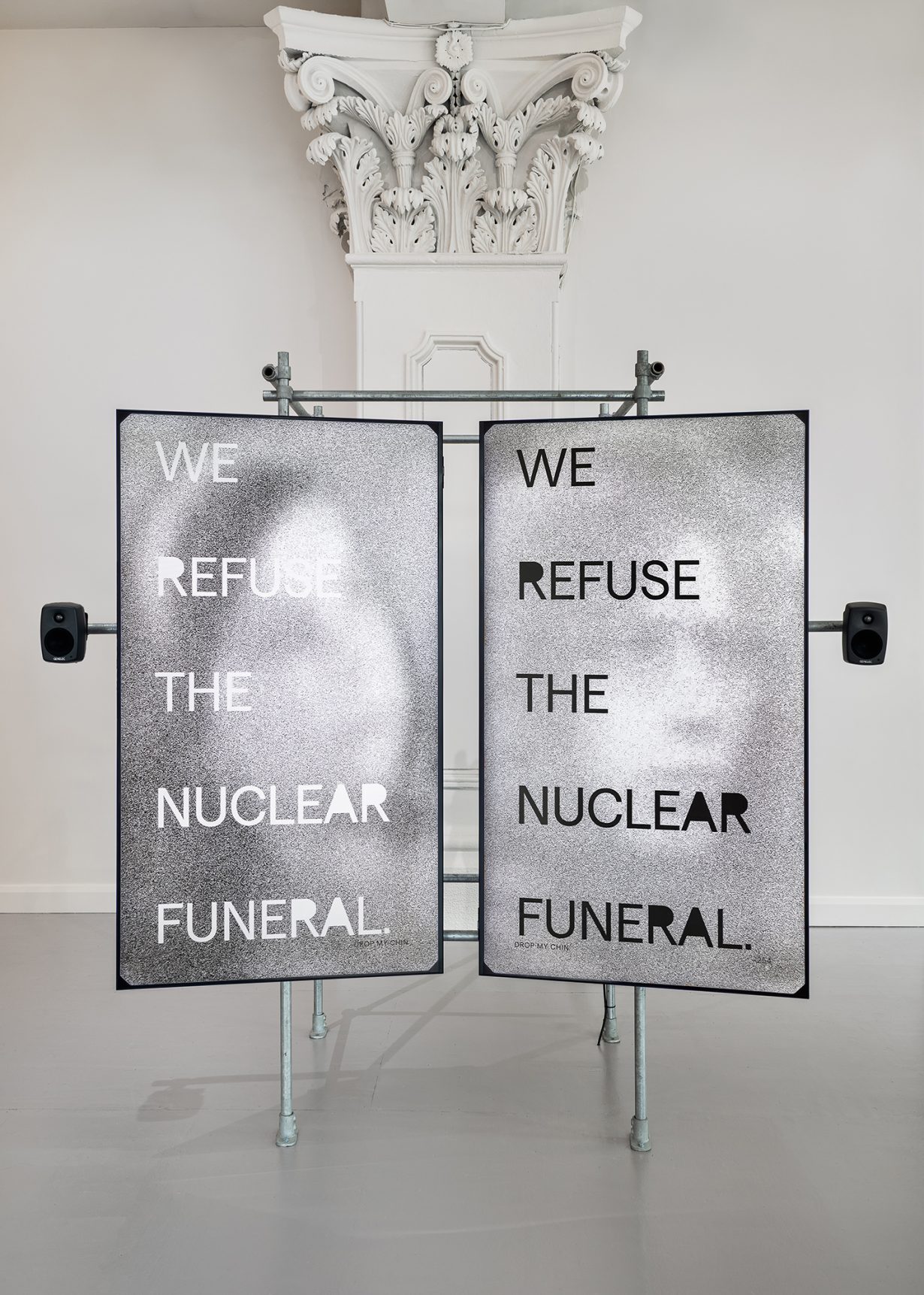
Orla Barry’s two-channel video KODAK MOON (2026) mines the Carnsore archives more directly. Now living close to the power station’s once-planned location, and in her teenage years an attendee at the festival, Barry brings firsthand, local feeling to a mesmerising image-text meditation on youthful commitment – whether to a specific cause or to the camaraderie it fosters. Photo fragments of festival scenes, interspersed with excerpts of lyrical storytelling, flicker across the parallel vertical screens, each animated ‘slide’ numbered like a book page. The elliptical montage, soundtracked with original music by composer Paul Bradley, merges personal reminiscence with an invented tale of hitchhiking Belfast adolescents, journeying to Carnsore and towards adulthood. As with the small series of photographs by Cóilín O’Connell that augments the main body of work in Memory of a Free Festival – selected from an open call, these show the littered, graffitied aftermath of illicit hangouts at Irish and other megalithic sites – Barry’s work pays nuanced tribute to the dissident vitality of (what one film caption calls) ‘freaky-chic punkhippy humans’. Like the exhibition more generally, perhaps, KODAK MOON draws nostalgic political energy from scarcely surveyed historical ground.
Memory of a Free Festival at Ormston House, Limerick, 17 April – 20 June
From the September 2026 issue of ArtReview – get your copy.