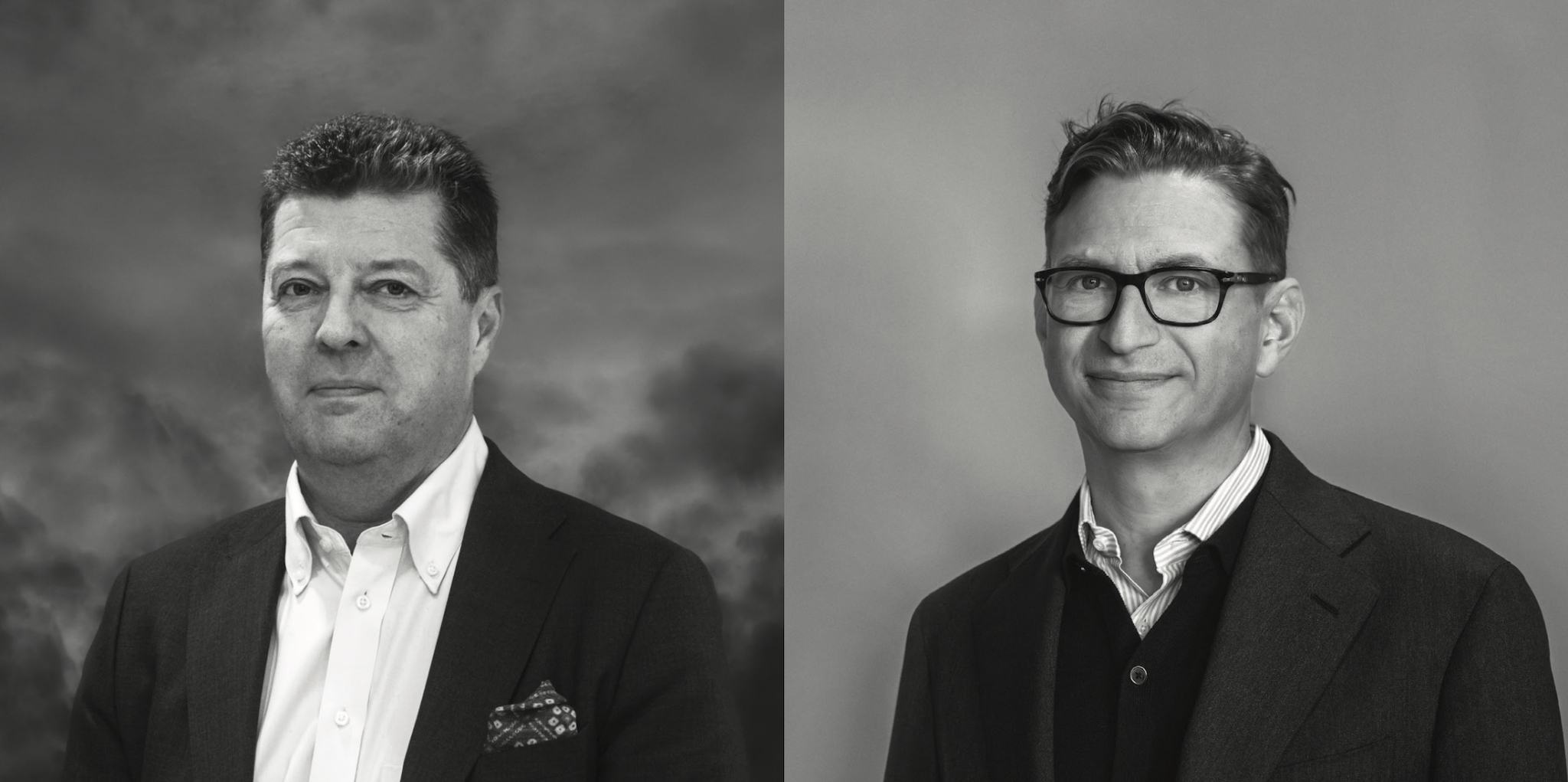
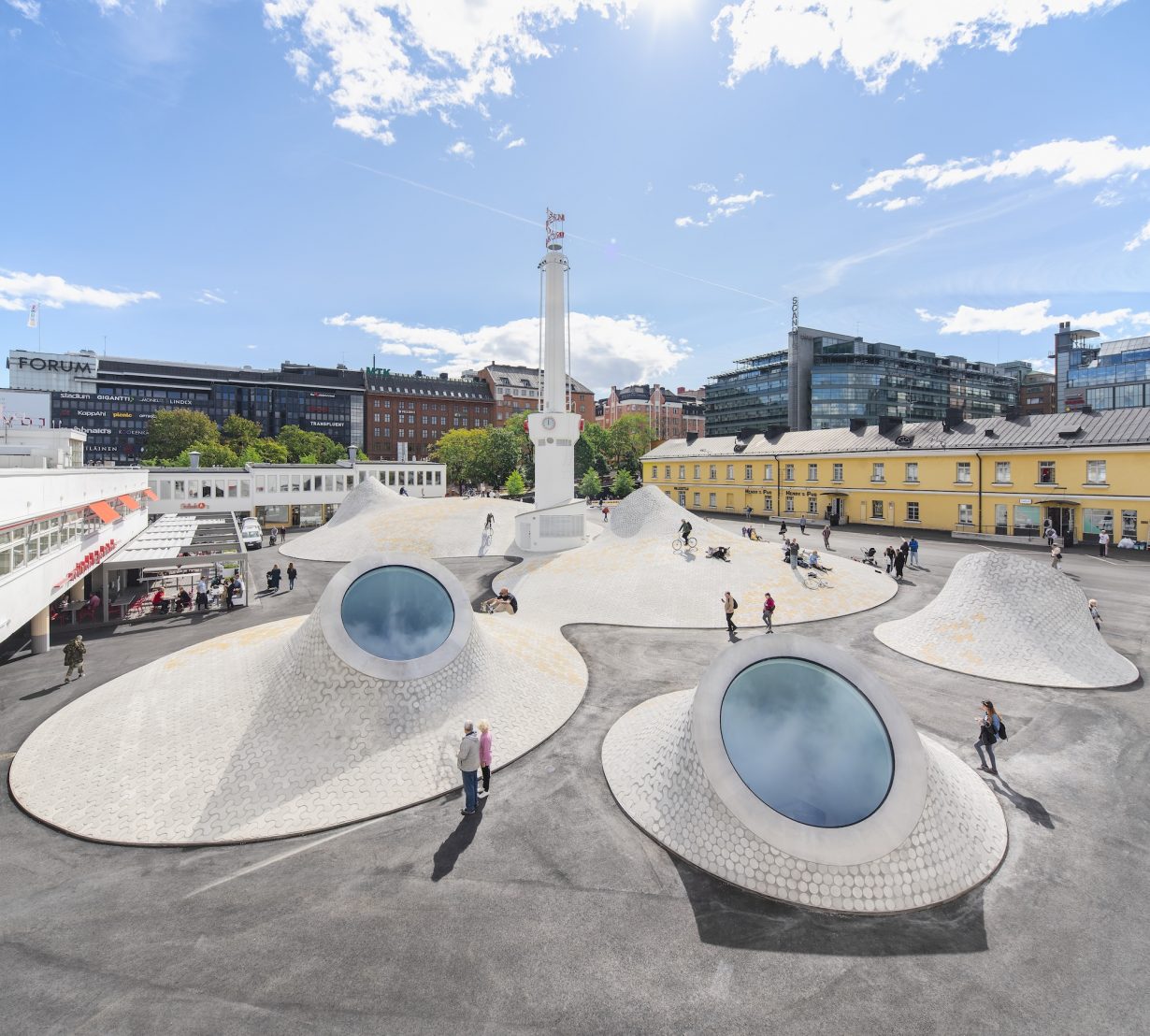
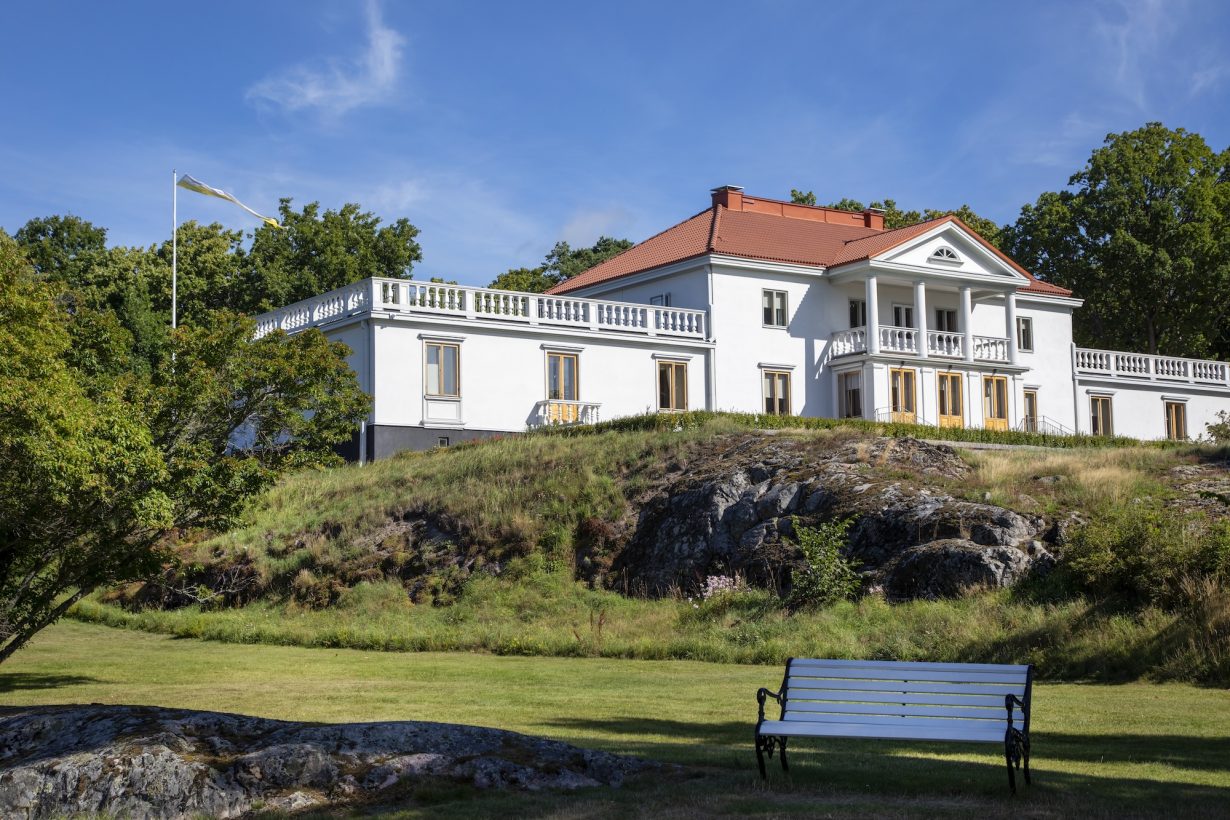
Finnish publisher Amos Anderson established Föreningen Konstsamfundet in 1940, a Helsinki-based fund that in 2025 changed its name to the Amos Anderson Fund. In 1965 the fund opened both the Amos Anderson Art Museum in Helsinki and the Söderlångvik Museum in Anderson’s former manor home in the south of Finland. In 2018 the Amos Anderson Art Museum became the Amos Rex museum for contemporary art. ArtReview speaks to Stefan Björkman, CEO of Amos Anderson Fund, and Kieran Long, museum director and CEO of Amos Rex.
ArtReview How did the Amos Anderson Fund come about?
Stefan Björkman Amos Anderson founded the fund as an ‘alter ego’ in 1940, to be his legatee and primarily to support the arts. That means that he and the fund were one over the 20 years before his death. Finland was still a young independent country, and Amos – a successful businessman, leading in the printing and media business in Finland at the time – wanted to contribute to the arts and culture of this young nation. Concretely, the idea was to establish one museum in Helsinki and another in his country house in the southwestern archipelago, at Söderlångvik.
AR How much does Amos Anderson’s original vision still shape the Amos Anderson Fund’s identity, or is the fund continually reinterpreting those intentions for the present?
SB Each generation has reinterpreted the ‘how’ in the broad outline set in the will. The governance is three-tiered. The members, the board chosen among the members and the operative team lead by the CEO. This structure ensures that there is an ongoing deliberation to improve and recalibrate.
AR What is the relationship between the Amos Anderson Fund and Amos Rex?
Kieran Long When the fund opened Amos Rex in 2018, it was an expression of a more ambitious version of its founding purpose, but also a major investment in the centre of the city of Helsinki. Our work today tries to make the most of our extraordinary position as a civic space in the city, and to excel as a place of research and curatorial activity. We have extraordinary backing, which gives us independence and a sense of responsibility. We also share the fund’s desire for our work to reach a broad public and to operate at a large scale.
SB Amos Rex is at the core. Nevertheless, the fund is at arm’s length from the artistic decisions and delegates the actual running of the operations to a professional board and management. What the fund focuses on is the impact and the ambition level. Naturally we want things to be managed in a good way financially, but we are prepared to support taking artistic risk when needed.
AR Why choose to support art? What do you believe art contributes to society that makes it worth sustaining over the very long term?
SB Art is at the core of the original mission of the fund. Culture and arts represent stability and hope in a society that is affected by war and insecurity, environmental threats and financial cuts. It was true in 1940, and it is maybe even more true now.
AR Finland has traditionally had a relatively strong publicly funded cultural sector. What role can private philanthropy play within that ecology?
SB Regardless of political trends or winds, we can take more artistic risk. We specifically focus on opening doors and offering possibilities for younger generations, who have a very hard time making their voices heard in these challenging times. Currently we are one of the few looking outside the national scene and striving to introduce new international voices to the Finnish scene.
AR And where do you think the limits of philanthropy lie? Particularly at a moment when public arts budgets are under pressure, is there a danger that private funding becomes expected to replace forms of public support rather than complement them?
SB Private funding cannot replace the public finance of all existing institutions. We have to safeguard our role in assuring money and space for renewal and new voices. But you are right, the risk for such an expectation exists. It is important that we express the limits of our engagement very clearly, not least to those in charge of financing the public sector.
AR Within the arts specifically, what kinds of activity are you most interested in making possible at the moment? Are there particular gaps in the cultural ecosystem that you think require greater support?
SB The needs of the big institutions risk crowding out emerging initiatives. We have to balance the needs of the ‘infrastructure’ and renewal and new voices.
AR What does meaningful international engagement look like for you and how do your local and international ambitions coexist?
SB The fund’s overarching position is that we want to bring new voices from the international scene to our local audience. How to do this is in the hands of Amos Rex’s team.
KL Amos Rex now has a strong international strategy, and in a small country we can only gain from the networks it is beginning to provide. The Nordic region has a strong identity and a distinctive point of view to bring to international debates, but the outside view of them can be clichéd and tired. So we aim to be present in an international dialogue in fields where we think we have something important to offer, and we aim to bring those collaborations back to Helsinki. We have begun collaborations with other likeminded institutions on commissions and research projects. This year we co-commissioned a major work in Venice, together with LAS Foundation, which returns to Helsinki in 2027. Today there are new collaborations emerging with international museums and research institutions, many of which are thanks to the international talent we have attracted to our curatorial team. All of this helps us contribute something distinctive and important to a rich ecosystem of institutions in Helsinki.
AR Your mission describes the Amos Anderson Fund as an organisation that is ‘not afraid to take risks’. What does risk mean in philanthropic terms? Is it about supporting emerging practitioners, experimental work, organisations without established funding models or something else?
SB Risk can take different forms. Not playing safe. Being quirky. Being playful. Betting on an unknown promising artist. Being ready to be disappointed with audience figures. In terms of funding and budgeting, it means that there have to be reserves if things do not work out as planned or if an opportunity arises that is too good to miss. It does not mean being without a strategy.
AR How do you balance supporting established cultural infrastructure with allowing genuinely new things to emerge? Is philanthropy most effective when it provides stability or when it enables experimentation?
SB It is a balancing act. If we don’t get it right, we try to act in favour of renewal.
AR Young people seem to occupy a significant place within the Amos Anderson Fund’s activities – Generation at Amos Rex is one obvious example. Why is supporting younger generations particularly important to you?
SB They literally are the future. We do not think there is a more important cause.
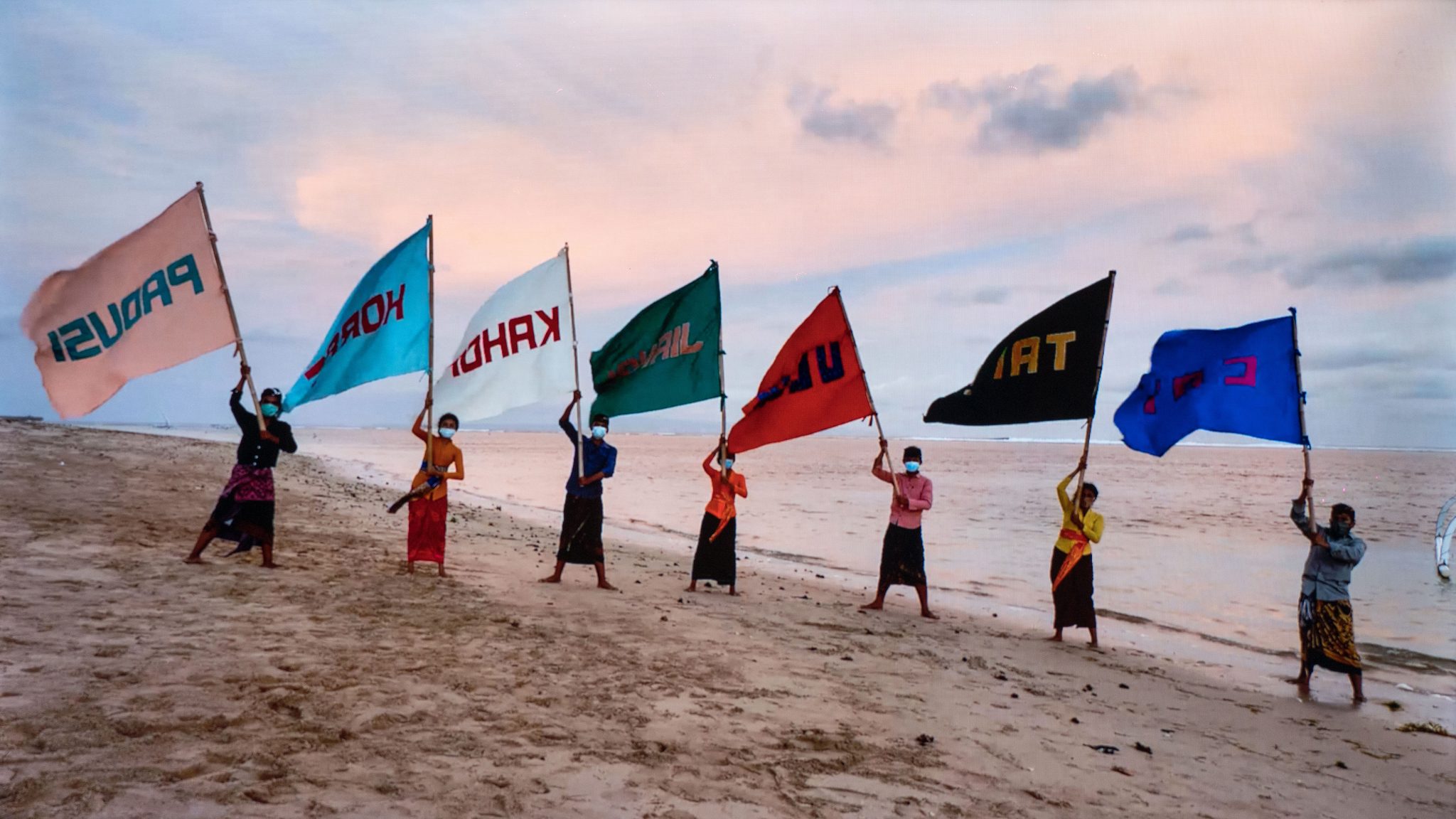
KL Generation is a triennial juried exhibition of very young artists’ work, a flagship project for the Amos Rex and one that is supported in many ways by the fund. It is a hopeful project, where many artists get their first experience of working with an international-class institution. We are expanding its scope beyond the exhibition with the Generation Community, where alumni from the four editions of the exhibition so far can meet, network and keep in contact with us. We try to reflect the visual worlds of young people in our work, and that influences our decision-making in all our artistic work. We define artistic practice broadly and bring a spectrum of creative practices into the museum, trying to reach generations whose cultural lives have been defined by the algorithm.
AR What does successful philanthropy look like?
SB Impact comes in many forms and with many timelines. We think that contributing to society with hope and inspiration is important, but so is the boring, longer-term work that ensures ‘the plumbing’ is maintained. Grass roots have to be nurtured. Helping top talent rise from good to great is essential. A rich ecosystem of different players with different values and agendas is the only guarantee to be successful. Nobody can do it alone. And there is no one right way.
AR Private philanthropy inevitably involves a relatively small group of people making decisions about which cultural activities receive funding and resources. How does the Amos Anderson Fund think about the responsibility – and accountability – that comes with that position?
SB Being a relatively big player in a relatively small pond, we must be careful not to harm anyone. One important way is to broaden the pool of people participating in the evaluation of the prospective grants. There are tens of people with diverse backgrounds involved in our grants processes. Another way is to not always strive after consensus in our own decision-making, but to be prepared to give grants also based on the strong convictions of just one or two experts. A third way is that we separated the administration, evaluation and the decision-making within our grants-handling organisation. In addition, we constantly keep ourselves informed by various studies into different themes in the domains where we are active. Transparence is a given. All grants are on a webpage where you can analyse them and visualise the results in various ways.
AR What do you think are the pressures facing artists and arts organisations today?
SB Personally I am worried about polarisation and the fragmentation of our societies. Especially as technology now enables a lot of noise. How can we continue to hear, respect and understand each other? In Swedish the word for society is samhälle – which translates to something we share, that we have together. This key thought is essential for the future of society as a whole, not only arts and artists.
KL Museums can be machines of depolarisation, not by avoiding difficult questions, but by creating safe spaces for freedom of imagination and expression. There are very few of these spaces left in cities today, and for publicly funded museums there is a certain risk as politics starts to understand its influence over culture and the arts. Private funding, in the right form, may be more independent and ‘free’ than public money – that is a big shift, especially in the Nordic region, which is used to a broad consensus on art’s role in society that no longer exists.
AR What is important for the next generation to inherit?
SB I’m an old-fashioned ‘enlightenment person’, as Amos Anderson was. Let’s keep at least a flickering light on.
KL Young people need to experience how artists and creative people imagine, make and build things. Young people do not need to be ‘educated’ by us, they need to be given the conditions to think new thoughts. That place might look quite unlike a traditional museum, and Amos Rex is lucky to have the freedom and backing to experiment with the implications of that. I hope they will inherit the grittiness and fearlessness of the best contemporary artists.
ArtReview’s October issue is accompanied by Philanthropy Today, a standalone 66-page publication on the evolving nature of philanthropy in the arts, including feature articles on key concerns within the field, case studies on how philanthropy is involved in shaping the public sphere, and interviews with prominent philanthropists. This publication was created with the support of Amos Anderson Fund & Amos Rex