Between crafting ceramics, farming and housebuilding, one man has built a life in art; and he wants others to do the same
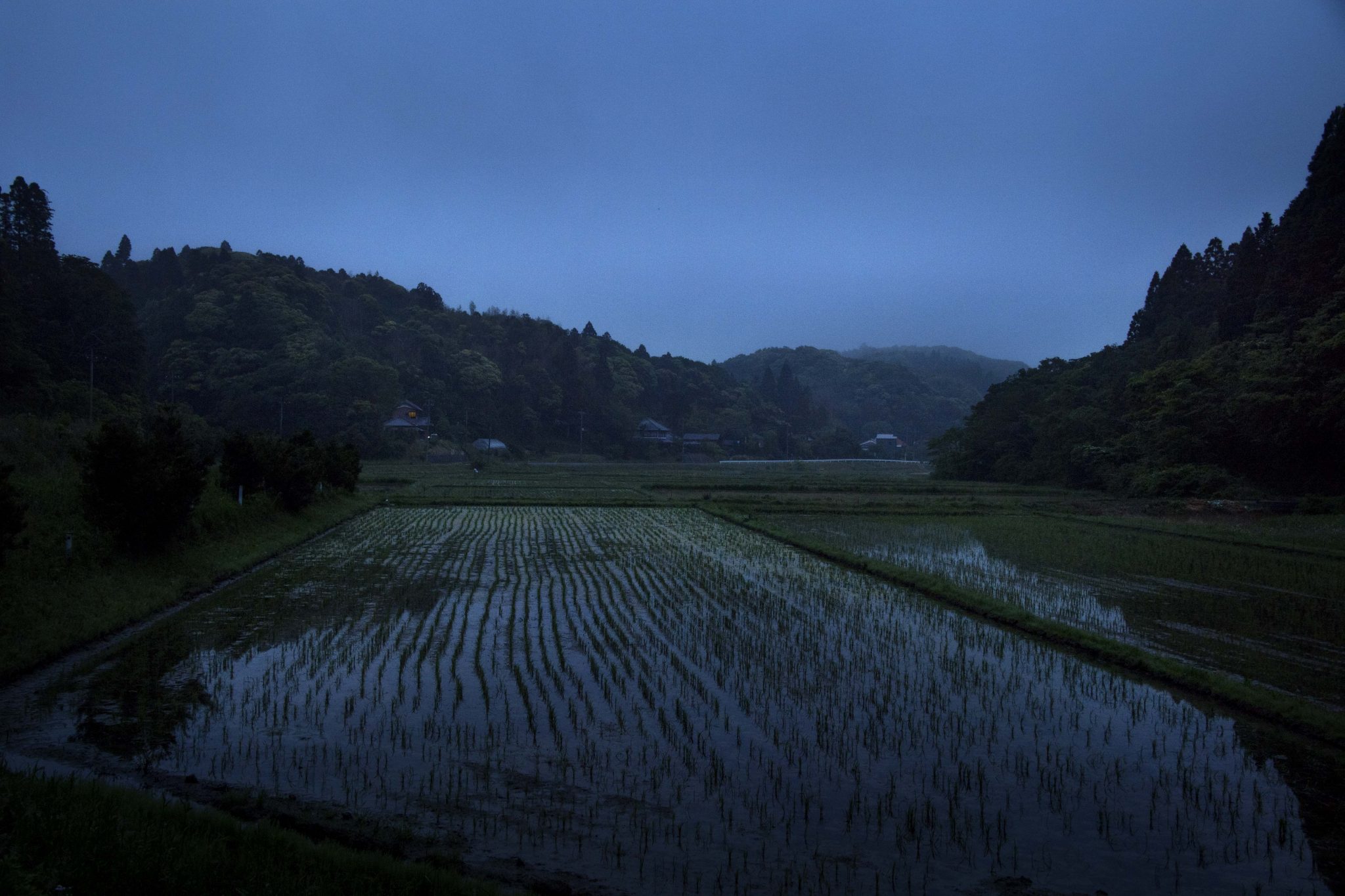
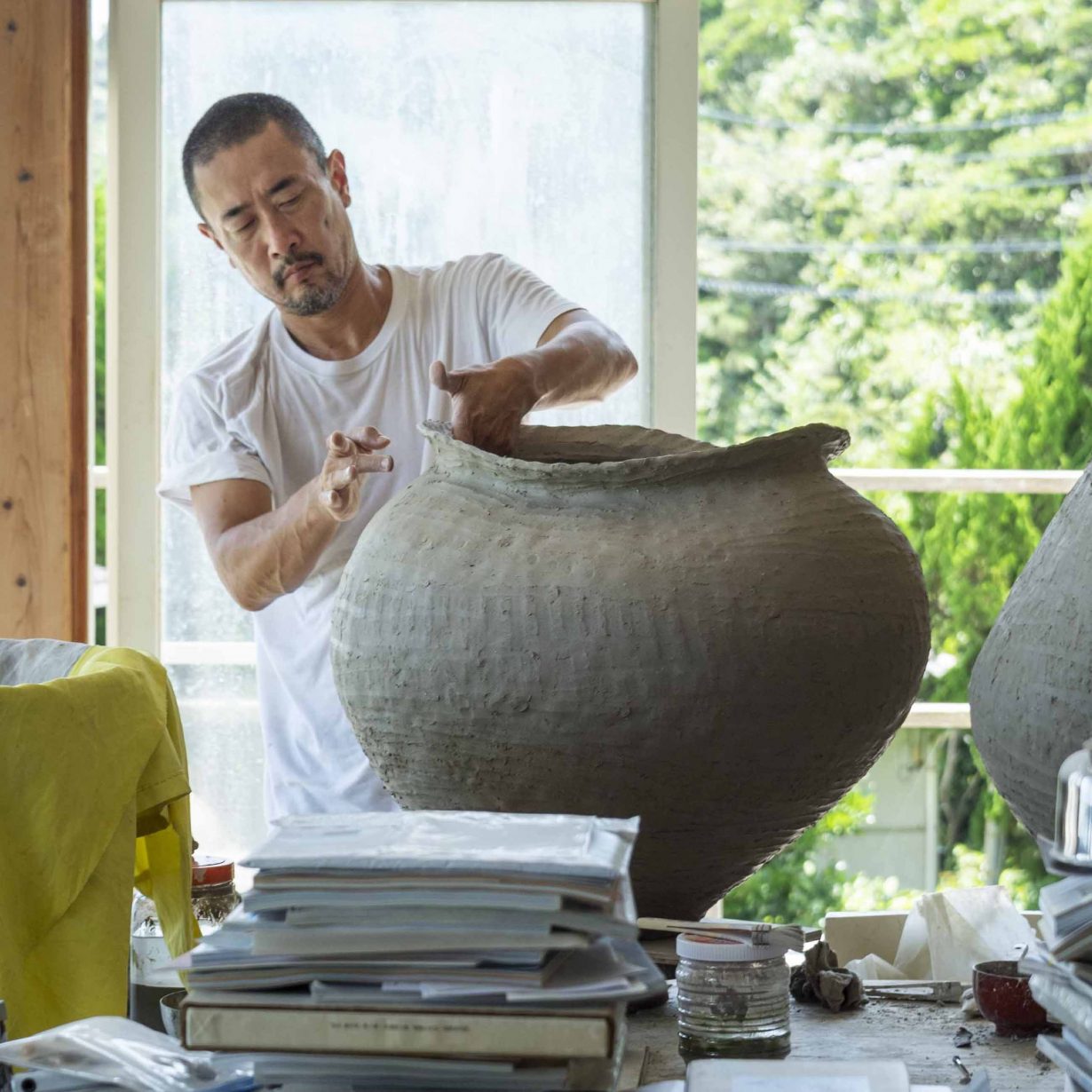
On a slight hill overlooking a set of small fields growing rice and lotus, not far from the sea in rural Chiba, Japan, a cluster of clay pots sits in the grass. Slumped on their sides, they’re bulbous, distended vessels half a metre in diameter, their surfaces in muted reds, browns and yellows, pocked with fingerprints and the occasional swirl of circular brushwork patterning. Japanese artist Kazunori Hamana makes these ceramics, but he emphasises that they sit equally alongside his activities of farming and fixing up abandoned houses in the area; their position outside in the summer sun, flecked with dirt and home to spiders and grasshoppers, seems indicative of his attitude towards them – not quite dismissive, but part of the landscape. A figure who has been planting rice and messing with pots for the past few decades, as if in anticipation of contemporary art’s popular turn to clay and the rural, Hamana came to the designation of artist seemingly reluctantly, only after a series of past lives: graduating from an agriculture high school in 1988 before attending university in San Diego, running a sneaker shop and a restaurant in Tokyo’s Harajuku neighbourhood during the 1990s, then moving to Chiba towards the end of the 2000s, fishing anchovy and later growing rice, while taking up as a self-taught ceramicist.
From his perch on the edge of the Atlantic, the ceramics proved popular enough to establish Hamana as an artist exhibiting internationally during the mid 2010s as part of a wave of ceramics held up as ‘new mingei’ – a contemporary approach to folk craft and ceramics – showing with international galleries such as Blum & Poe (before its closure). What this enabled, in turn, was Hamana’s larger practice, which has the aim of creating a rural space in which artists can live and work.
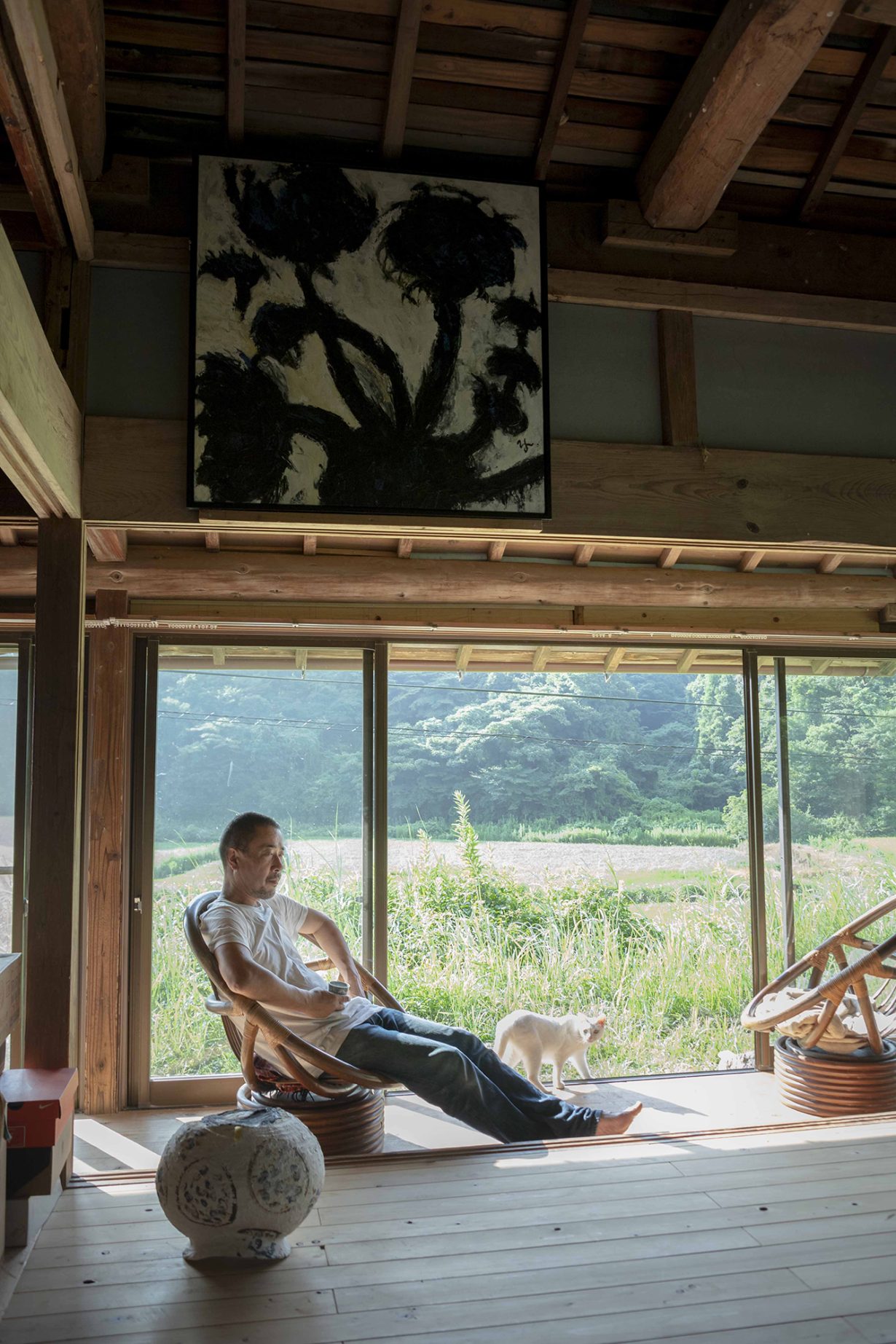
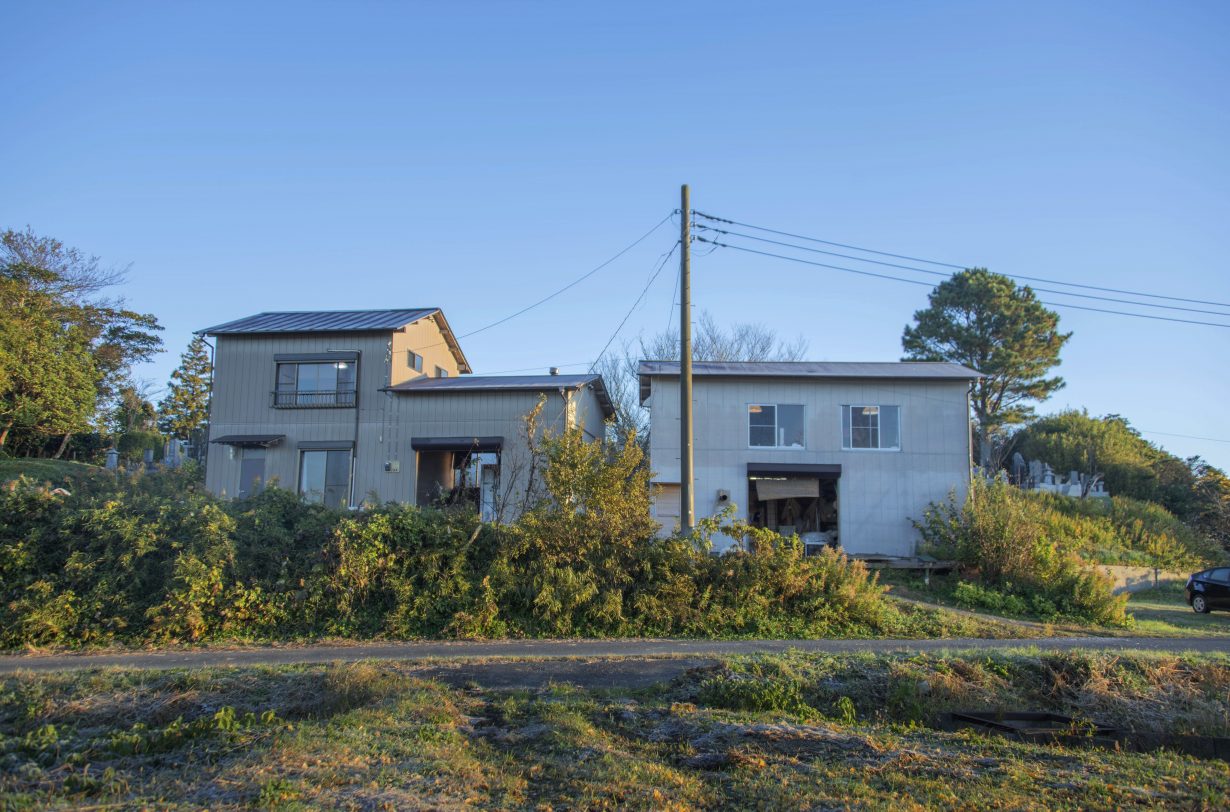
The artist residency Commons/Oppes (‘oppes’ meaning ‘push’ in the local dialect) is an attempt at community creation and a practical response to Japan’s depopulated countrysides, taking advantage of empty buildings that dot the prefecture. It’s also a determinedly independent endeavour, setting it apart from the state-funded regional festivals and biennials that define much of Japan’s contemporary art outside the urban centres. Hosting artists for one to three months at a time, in a set of houses that Hamana and a group of friends and helpers have fixed up, residents get on with their own practices, but also often end up taking part in the rhythms of rural life: helping to plant rice or weed the paddies, chopping down bamboo or picking plums when these come into season. While the residency only officially began this year, it’s been in motion for almost a decade, with friends and residents attending informally in recent years. What struck me when visiting in May this year and again in August was that already several artists and previous residents had relocated to the area, an artist village in the making. A handful of other houses for residents are near completion, while one smaller hut recently finished holds a kitchen designed to host artists and creatives focusing on food. A correlated strand of the residency, Commons/Kuwa, launched in August, with Shizuoka-based artist Takayuki Watanabe devising a series of events over a week, including mochimaking. Sitting in Hamana’s house, among half-finished pots on the floor, overlooking a rice field waiting to be harvested the following week, we spoke about nostalgia, beauty and the end of capitalism.
ArtReview Asia Where did the idea for the residency and countryside community start for you?
Kazunori Hamana My uncle married a farmer’s daughter, and we went to her house when I was three. We still have the photo, it was 1973. We came into a house with a high grass roof and carved wooden beams, I was so shocked. I couldn’t speak, but I thought ‘What is this? What is this beauty, compared to my house?’ At six years old, I told my mother I wanted to build a house like that. And she said, ‘What? You crazy?’ My grandfather was a carpenter and I asked him if we could make a chicken coop. So we built a house together, and he bought a baby chicken too. I was so satisfied, going around outside with the chicken. I was a crazy kid. So I had always the idea of a rural life. Not so much as a farmer as occupation, but a handcrafted life, with nature. It wasn’t taught, my father or mother never told me. It was an intuition.
ARA When did that idea of rural life start to meet with the conception of a creative community?
KH Community came much later. First, it’s an individual question, a presence with nature. I was sick of living in the city. I escaped from my family when I was fifteen years old to a rural area, I stayed with a couple of farmers and went to agriculture school. Then I learned, with the other students, a different kind of sharing and relationship, a new kind of community or family. It wasn’t by design; accidentally, I was with other people in the middle of nature, I could go fishing, skateboarding, cycling and study. It let me come back to myself. Since then I continue to make sure I connect with nature and our ancestors’ handmade culture.
ARA Sounds idyllic, though these ancestors don’t just seem to be Japanese farmers for you; you worked with vintage clothing for a period, and in other interviews you’ve spoken about your appreciation for denim as an ‘American mingei’ or folkcraft in itself. How are these things related for you?
KH In the late 1970s or early 80s I would go shopping with my mother, but I didn’t like anything she chose. Every garment. I hated it all. At that time, it was all nylon and polyester in Japan. Then, when I was eleven years old, I found Converse, canvas shoes made in the USA. It was totally different, better quality. I found Levi’s 501: work clothes, well-crafted, thick material, 100 percent cotton. We didn’t have that kind of clothing here. So I started going to clothes shops by myself, and I started collecting T-shirts and sweatshirts like the Champion reverse-weave. Eighties Japan was terrible. Everything my mother chose was classic of the time, but plastic. The new thing was better. Handcrafting had been forgotten; an aesthetic and an aesthetic intuition had been lost. How can I explain it? We see the ocean, or sunlight, and we think it’s beautiful: this is aesthetic intuition. This kind of aesthetic I found in Levi’s 501s.
ARA Levi’s also based its brand on a rugged cowboy image, and a sort of idealised vision of American countryside. What role does nostalgia play in this return to a rural lifestyle?
KH About every 30 years, we feel nostalgia for a past time. Vintage is a big trend now, but it’s also looking for more story and craftsmanship apart from the mass production of Uniqlo or Zara. It’s not a return to the past, but about looking for a better balance. Of course, I use a smartphone and drive a car. The reality is we are losing physical relationships and the connection to nature. Everything is too industrial; industry is, of course, important, but not too much. It’s the same with capitalism: we need it, but its purpose is just about making more money than other people; about trying to be famous; and just to consume, consume, consume. But that’s not a true purpose, because you’re never satisfied. It’s just like, what’s new? Look at Netflix, TikTok. There are a thousand times more movies today, but they all look the same. We have to hurry, we have to watch more. People get bored anyway in one second, so why spend the time making something better? I don’t think that before the 1950s, or during the nineteenth century, or under feudal society everything was perfect, or everyone back then was a genius, but you had to spend more time and e²ort making something. People were more sensitive because they weren’t as addicted to consumption. For me, it’s all connected, because my purpose is to try to find beauty every day; there is satisfaction in that. Now I collect abandoned houses. But the old farmhouses are similar to 501s. To work hard, you need tough clothes. A house is the same, you know? Handcrafted materials, built physically to be better. You have to cut wood, and do it all analogue. Building up old-style houses each day is an opportunity to try to be better: that’s art for me.

ARA While that work and your farming is situated in the Chiba landscape, your ceramics are exhibited in New York, London, Los Angeles. What is that kind of art for you?
KH For me art is creating. So of course I’m doing exhibitions, art fairs, but it’s not the main purpose for me. It’s nice to share time with the audience and sometimes someone buys something. That’s a wonderful thing, but it’s not my priority. I like making things; someone else might think my creation is art and want to share the piece.
ARA So it’s their choice if they see it as art. How did you come to making ceramics?
KH People appreciate my work like a sculpture, but I would say it’s more a result of my activity of fixing houses, making communities, my respect for handcrafted methods. The pots are not art, they are a leftover from those activities. Twenty-eight years ago I started living in front of the ocean, both to be able to ignore the business mindset and for my own happiness. I started catching fish, I spent three months making a fishing net, for my own satisfaction and intuition. Making the pots was the same, I wanted to make a natural thing. It was a lot of fun and joy. I didn’t have a plan; I was not going to sell them. Later I started growing rice, and the rice is not for sale. It’s similar. As a result of making, some people started buying the ceramics, and I invest that money into the houses. But exhibitions, the market, that’s not my purpose; my main purpose is the day-to-day of challenging myself.
ARA The question of circulation comes to mind; the ceramics circulating enable the community here to circulate, and they kind of orbit each other in a certain way. But usually, for an art career, it’s about awareness of a practice or maker in the first place. There’s lots of self-taught artists who never sell anything, and it’s one thing working here, farming rice and making pots, and then also being featured in The New York Times or Vogue Japan, as you have been. How did the ceramics begin to circulate in that way?
KH I did the ceramics for a long time before I showed people. I first shared these online, on Tumblr in the 2010s, shooting the ceramics on my camera at the beach house in front of the ocean. It was very wild and seemed to touch a subconscious demand in people; the wood, the clay, the basic thing of touching mud.

ARA So it began as an image distributed online?
KH It wasn’t an art context, and clay wasn’t at that point as popular in art: handcrafts weren’t really seen as high art. Many followers started on Tumblr, mostly from New York at the time. Conversations with artists started on DMs, like Takayuki Watanabe, who is doing an event in the kitchen here, and Takashi Murakami, who wanted to show a new Japanese craft movement to a us audience. So it ended up in an art context.
ARA How important is the wild countryside context in the white-walled gallery where these pieces end up sometimes?
KH I made it in context, with the ocean and nature. It’s a remaining trace, the context is carried within the object. Some people have said to me that they see what I’m doing, making rice, building community, as an ideal thing for humans to do. And they feel that, but they cannot do it themselves, so they see my work as omamori – a good luck charm.
ARA How do you feel about being a good luck charm? Is there a sense of performing a kind of ideal countryside for city dwellers?
KH Maybe it’s true. Maybe that’s why people appreciate my life and my work, but that’s also a kind of result. I can’t save people, but I can be an alternative example. Things are also changing; over a decade ago, I started talking about community building and fixing. In the artworld here, the emphasis then was on the concept in an artwork, the art-history context, and the artist producing painting, sculptures, artworks where the idea is in the physical piece. Talking about Commons/Oppes, people told me, “You cannot be an artist if you keep doing this. Why go the long way?” They didn’t understand my goal; they thought I was lazy, wasting opportunities. But I didn’t follow this system. I was spending time making rice, trying to build a new type of community. The art market is just a market. My life as an artist is not focusing on the market or sculpture; it’s challenging everything to be better, to find more beautiful things. This challenge is art. After ten years I’ve done a lot of things I planned for a long time, and now they see. And how people are talking about art is changing, especially after the pandemic. Before it was concept and object, now it’s… how can I explain it? I cannot explain. It’s vibes.
ARA Within that daily process and challenge, where the ceramics are a byproduct, why is it this form of a large vase particularly that you keep returning to?
KH I tried many shapes and, of course, I still want to try different shapes. In Japan you often see the tsubo shape, often smaller, practical vases for seeds or food storage. But at a local museum decades ago I saw an old pot with a beautiful organic line to it, and it was a striking size. I found out it was a funeral pot for children, made to fit the body of the child. I felt something close to the mind of the parents. So for now I’m making this; I don’t know about next year. But this shape is a kind of symbol of a parent’s, a human’s love.
ARA There’s a living-museum aspect to what you’re doing: actively trying out ways of living to see what happens, drawing on the past but mixed in with aspects of the present. In terms of the structures you’re fixing up, it’s not all old farmhouses but a range of eras, older and more recent. Most of the older architecture preserved in Japan is castles and homes of the wealthier parts of society, creating a certain vision of the past. What do you feel you’re building here?
KH I’m trying to rewrite the nostalgia, so it’s not just a rich-person aesthetic. We made a mess from the 1970s to today, the buildings were very ugly, all plastic inside. Now, people just demolish, demolish, demolish. But demolishing 1970s buildings is not the answer. It’s easy to demolish and build. But if you keep building new, do you really have an aesthetic? We have to understand why we are lost. What kind of mistakes did we make? And what shouldn’t we do?
ARA Also, whose aesthetic? I mean, yes, most humans can agree a sunset is beautiful. But then with architecture, or art, it gets a little bit more difficult.
KH The most important thing to me is a connection with nature. I’m not just keeping ugly houses, I’m arranging parts of them to make sure we can connect again to what’s outside and around us. Then if we understand what we should arrange, we learn; then if I design a new house, I can do it better. Staying here working like this, I’m learning every day. We’re building a new type of village, an open village.

ARA It seems to be about reconnecting production and exchange to a locality; smaller circuits of circulation that then can work strategically within larger circuits of circulation, not being everywhere all the time.
KH I think some people now realise convenience and speed are a waste of time. Happiness is making your own world, your own creation, and sharing it with a few people. Some people. Not with everyone. We have to find a balance of size, of cost, of nature. How can you be an artist if your rent is $3,000 a month? You cannot be creative with worry. You have to be free, and you need space. So it could be coming to Chiba for three months, where it accidentally remained old-school countryside and the rent is much lower. Or it could be somewhere like Idaho, or in France. Connect with nature, then you can more easily create something. This is my philosophy. I think for the twenty-first century we need this kind of community. Everybody has to be an artist and challenge oneself. Because it’s already started, you know; we share space, food. It’s a good point now, many people are sick of capitalism. Of course, still, maybe until I die, I will use money. But I try to count on money less and less. I’m lucky to get money from my ceramics; but maybe soon, if people are more artistic, no one will want to buy: we can just share and empathise in making. Our destination is in good vibes, good emotion. This is the future goal, a challenge for the next thousand years. That’s why we should think about global warming and being sustainable. Because for the future – of course we will be dead – but we want our kids and future humans to be happy, we have vibes connected to the future and the past. I want this planet to be beautiful, not just for humans, but animals and plants, for the next century and the next.
Kazunori Hamana is a visiting collaborator in Matthew LutzKinoy’s exhibition The Mud Room at Amant, New York, 17 September – 29 November, and his solo exhibition is at Saatchi Yates, London, from 19 November
From the Autumn 2026 issue of ArtReview Asia – get your copy.


