From experimental instruments to architectural acoustics, the Lebanese artist explores how listening can alter our experience of bodies, spaces and environments
The sound artist and electroacoustic composer Tarek Atoui ushers me through an unmarked wooden door on a Parisian side street, down a gloomy stairwell and into his basement studio. With its massive limestone walls, vaulted ceilings and hopper windows, the sunken space resembles a cross between Edmond Dantès’s prison cell in The Count of Monte Cristo (1846) and an innovative music shop.
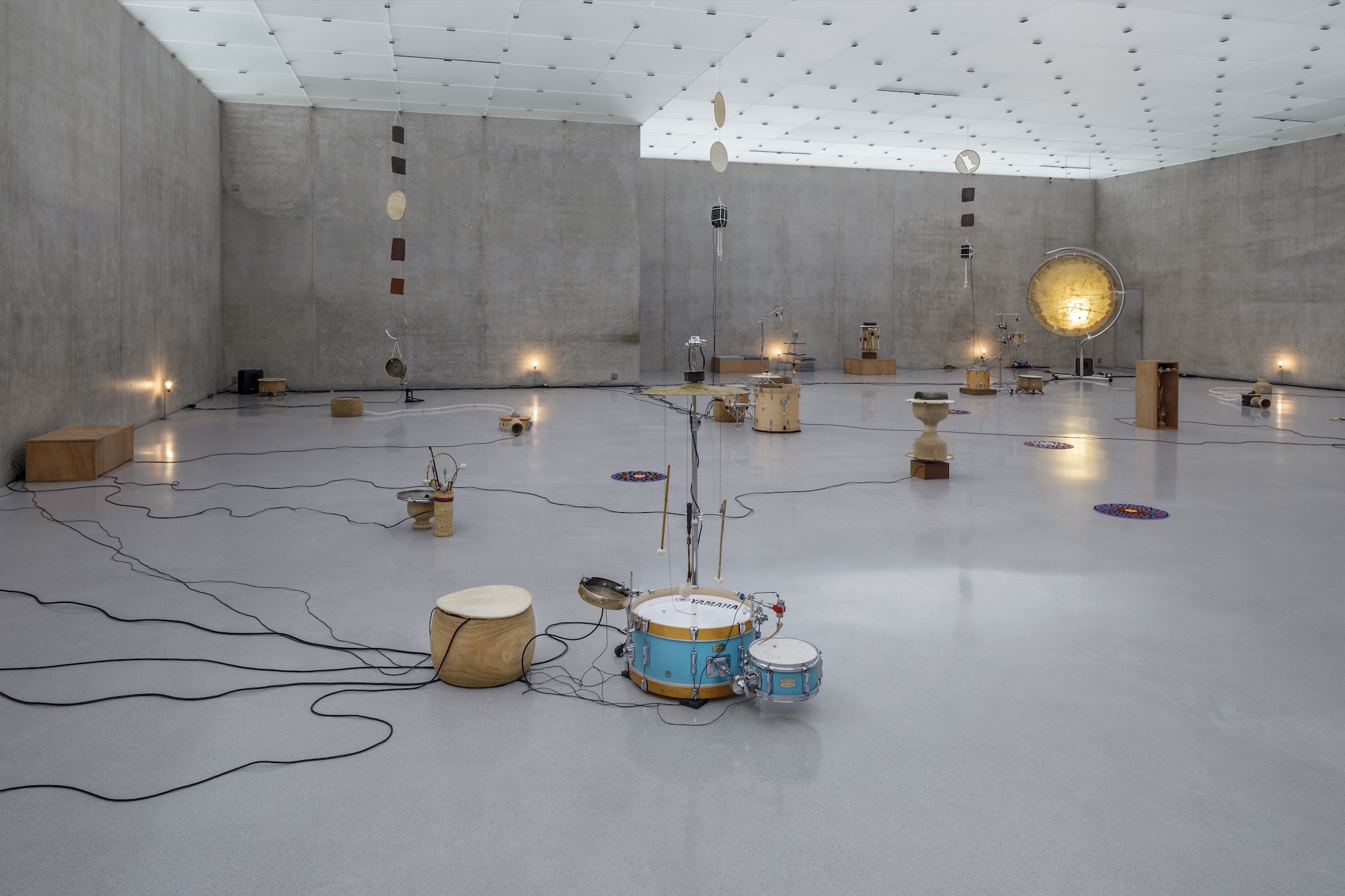
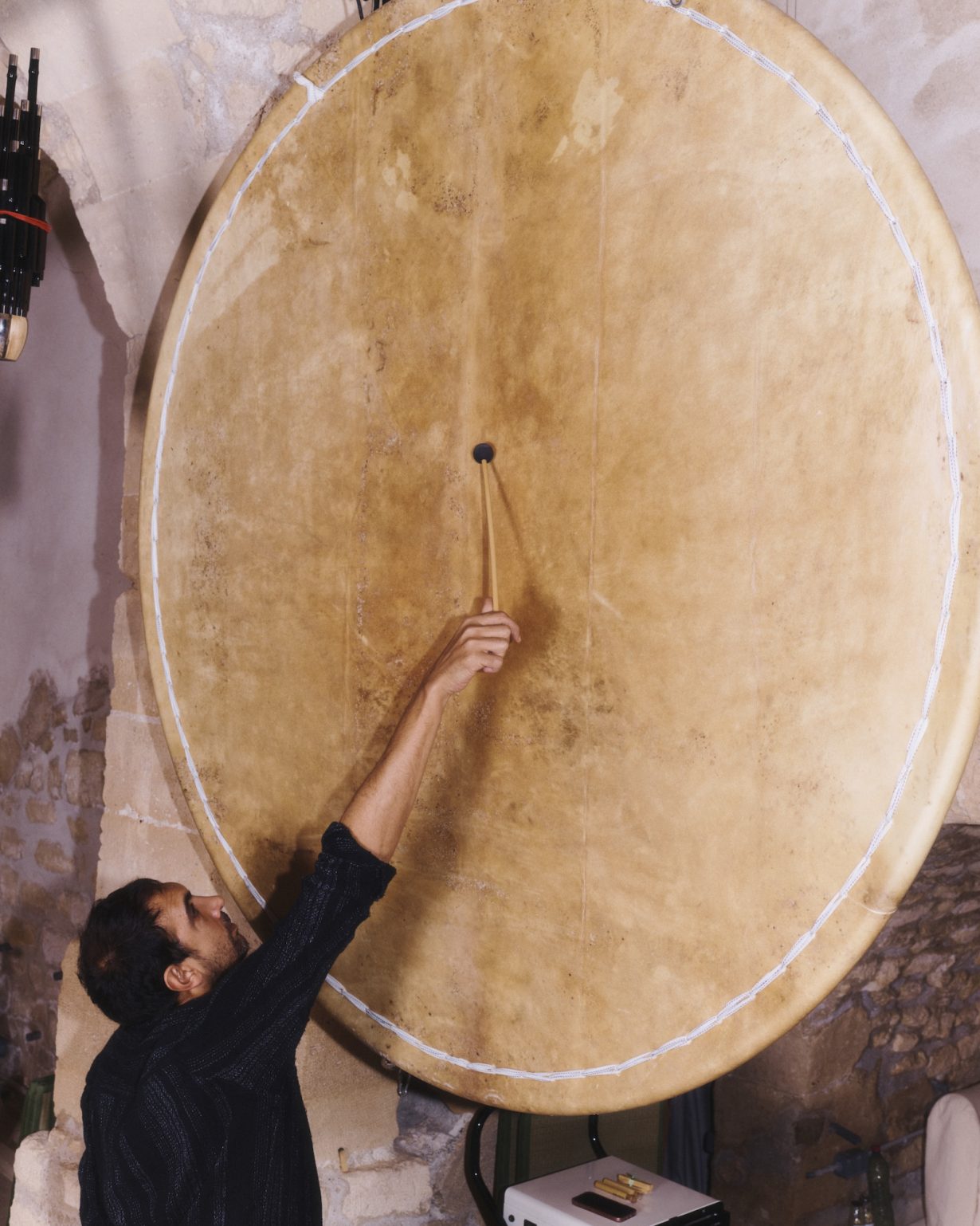
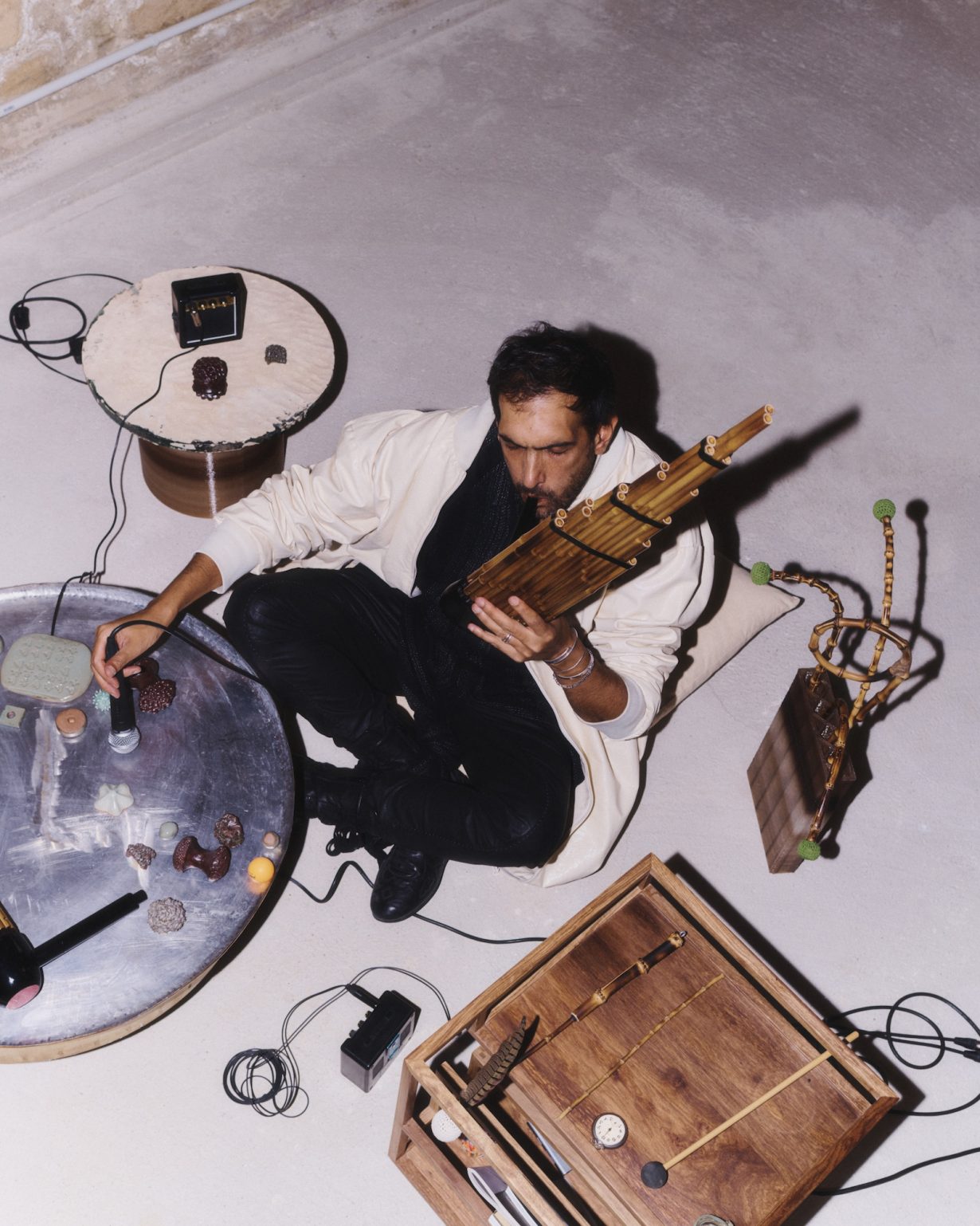
An enormous circular drum, bamboo pipes, brass horns, metal gongs, a double-necked violin and electrical devices are variously suspended from the ceiling and neatly arranged on the floor. It is a fitting metaphor for Atoui’s practice as a whole: a sonic laboratory in which different materials, instruments, digital processes and people are brought together in ephemeral ensembles.
For the past several months, Atoui has been developing his largest work to date, the Hyundai Commission for Tate Modern’s Turbine Hall, due to open this October. It’s a daunting prospect for any artist, but one rich in acoustic potential. As anyone who has visited it knows, the vast steel-and-concrete chamber – its ceiling soars 35 metres overhead – drenches visitors in echo and reverb. Sound has been central to other works produced for the series (Bruce Nauman’s 2004 piece Raw Materials, in which variously spoken, sung, muttered and ranted texts were amplified along the length of the concourse, is a notable example), but Atoui is the first sound artist and composer to take it on.
In recent years, as the fact of this particular commission suggests, sound-based practices have played an increasingly prominent role in contemporary art. They have furnished landmark exhibitions with their organising metaphors, from the ‘minor keys’ of Koyo Kouoh’s Venice Biennale earlier this year to Nicolas Bourriaud’s ‘soundscape for the twenty-first century’ at the 2024 Gwangju Biennale, and offered bracing raw material for individual presentations. Meredith Monk’s 2023–24 retrospective at Amsterdam’s Oude Kerk, which filled the former church with her extraordinary ululating vocalisations, showed how blurring the lines between music and art, artist and composer, and concert hall and gallery – as Atoui does – can open up new ways of thinking about art.
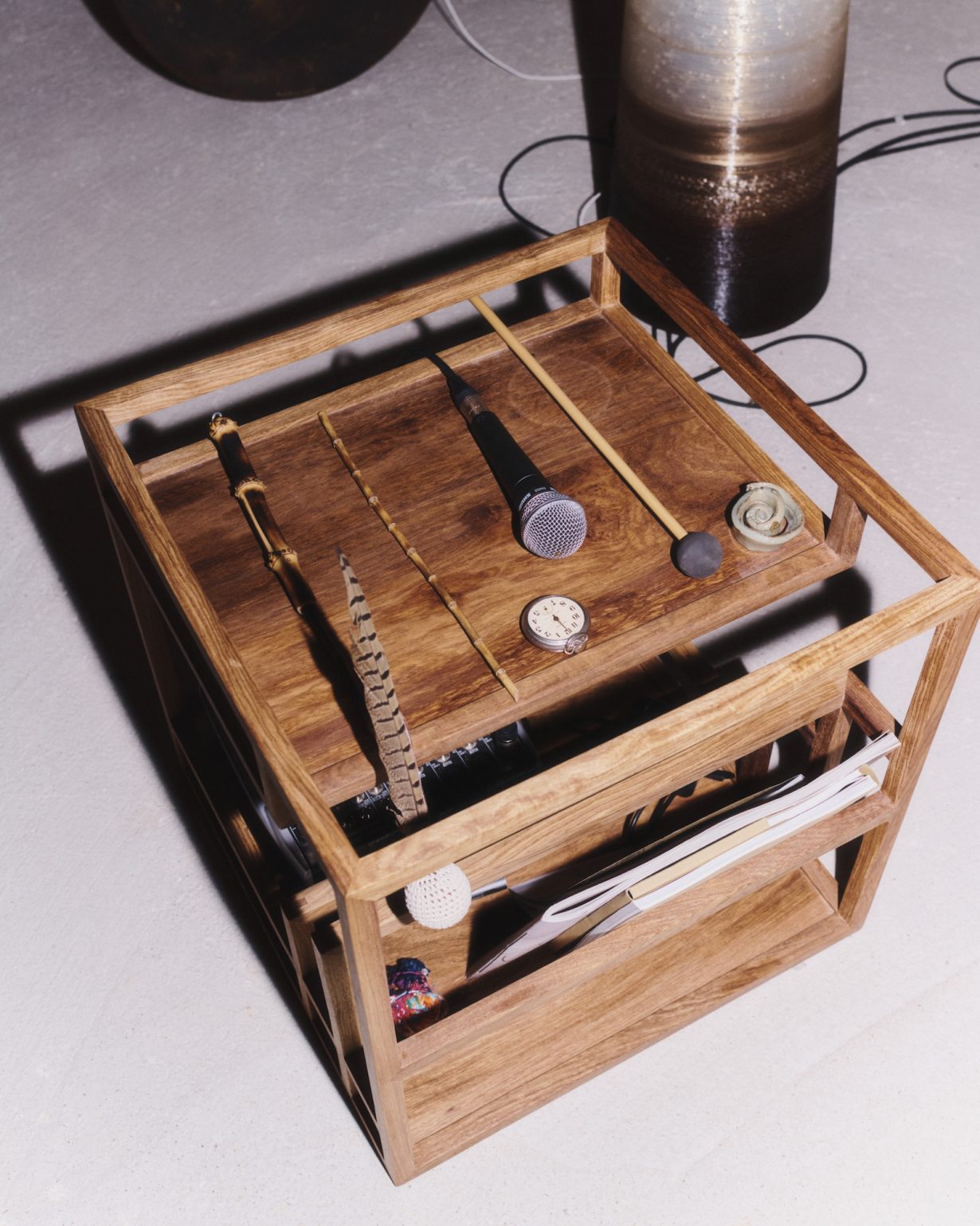
Atoui’s studio feels charged with latent energy, as though musicians might appear at any moment and bring the instruments to life. Indeed, Atoui tells me, that’s often what happens – jam sessions are a part of his practice. He wonders aloud how the recent heatwave, combined with the humidity seeping in from the former marshland beyond the cellar walls, is affecting his instruments and the delicate electrical mechanisms he uses to activate them.
But he sounds less worried than curious. Central to his work is an interest in how external conditions affect not only how musical instruments sound but, more fundamentally, how we listen to them. For Atoui, listening is never a passive phenomenon but is instead a rigorously active process that, if we pay attention, can heighten our understanding of our environments – physical, cultural, historical – and our places within them.
A series of works begun in 2012, collectively titled ‘Within’, encompasses new instruments developed in collaboration with d/Deaf people. A striking example is Organ Within (2022), a sprawling, tentacular creation resembling a cross between a deconstructed church organ and a mechanical octopus. These works help Atoui explore sound from the perspective of those who experience it ‘outside of the ears’.
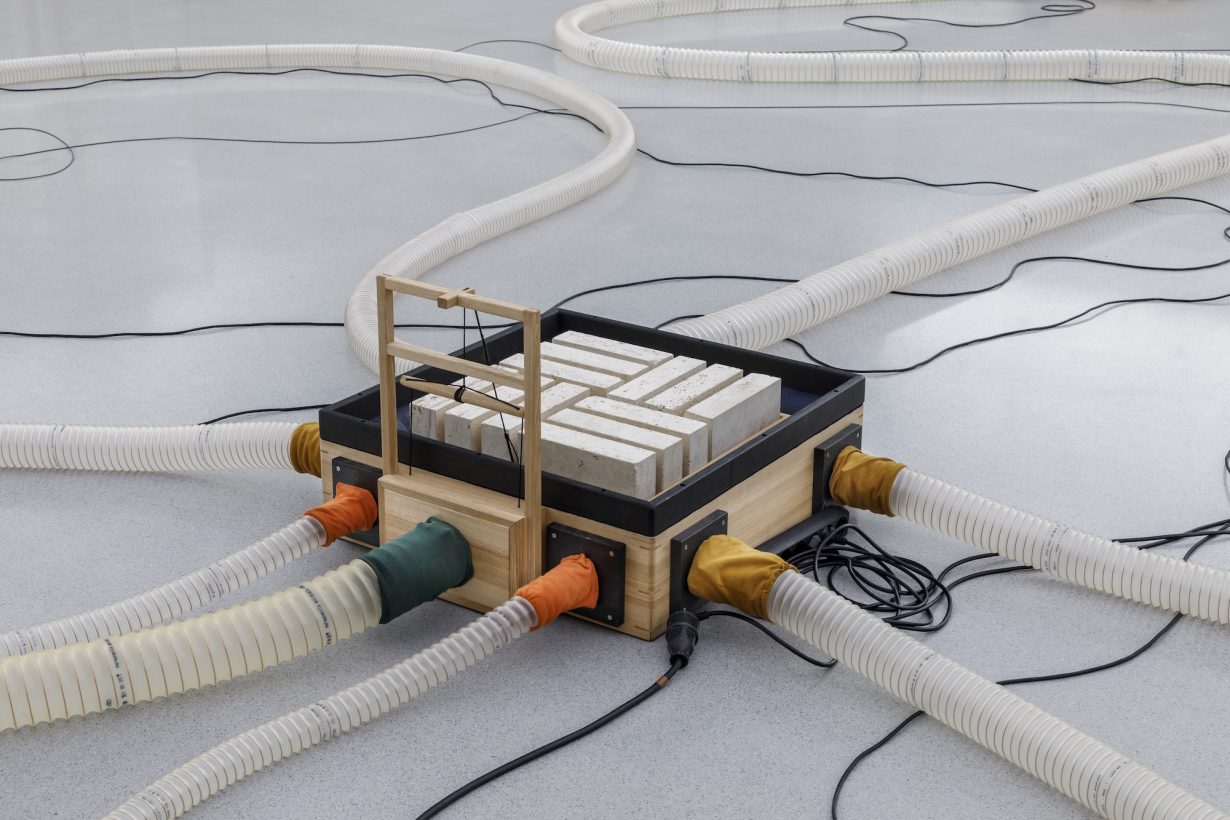
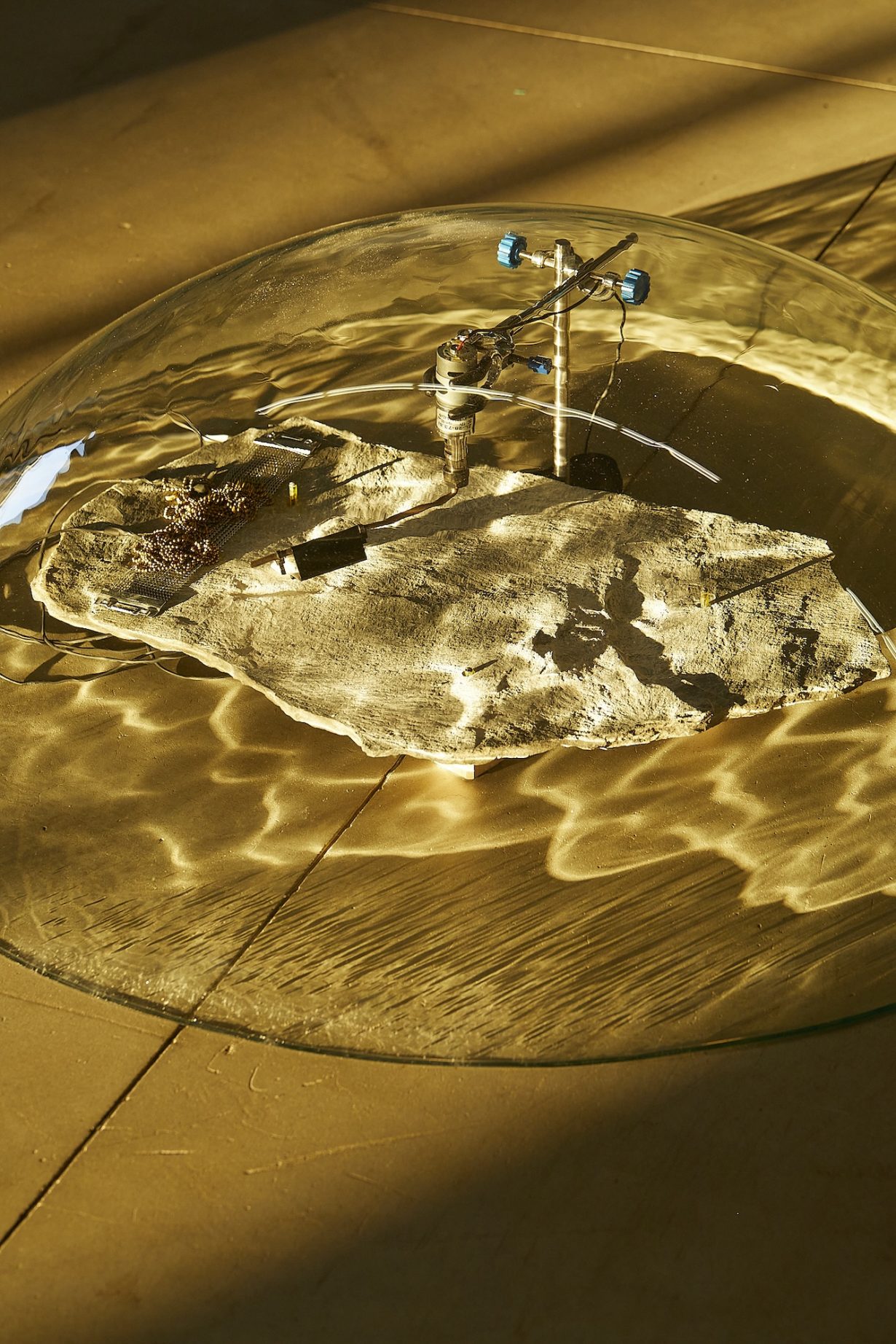
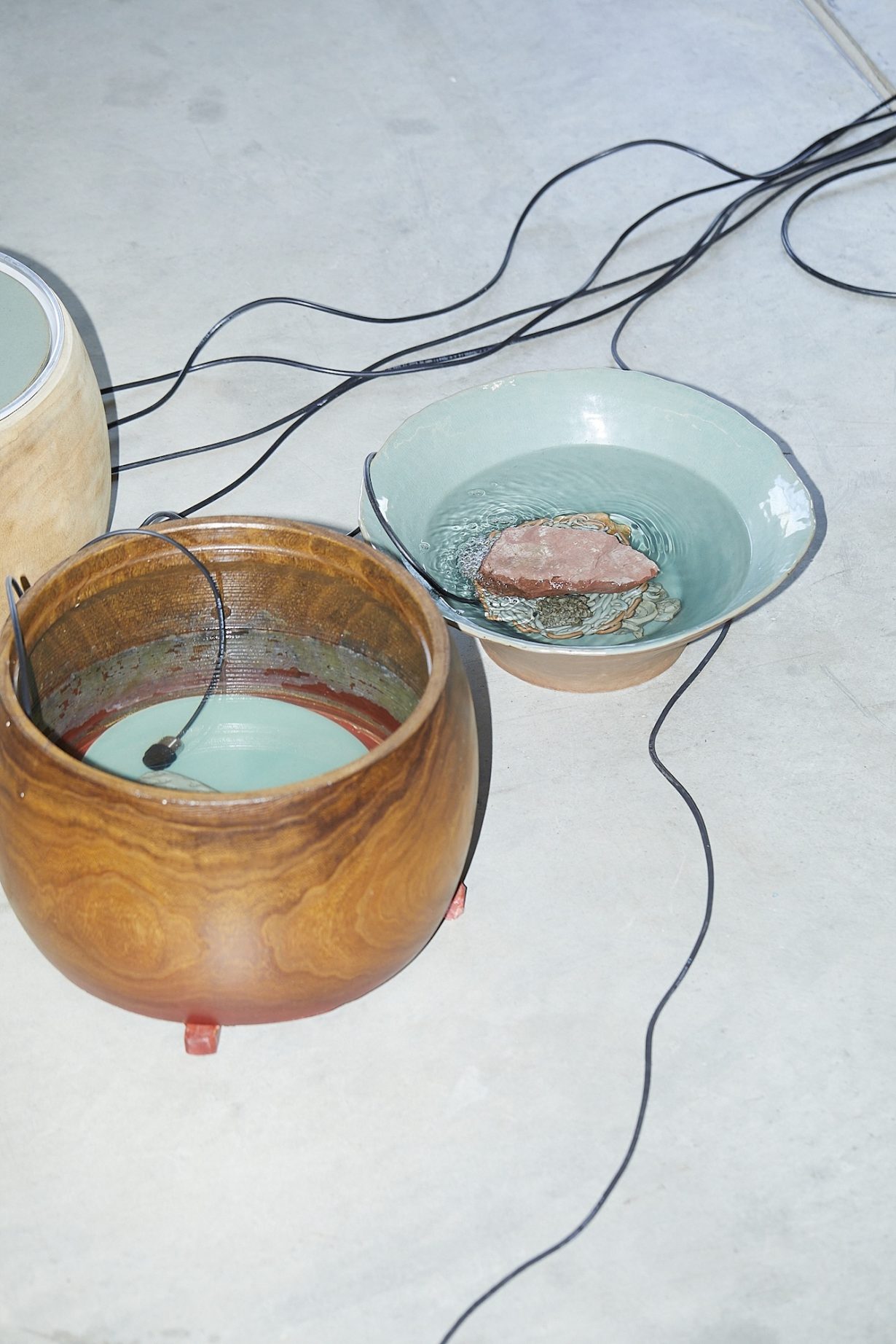
For Below 160, a 2011 workshop at the Sharjah Art Foundation, Atoui invited students of the Al Amal School for the Deaf to interact with bass below the audible range – the kind that resonates in your chest cavity. Since then, he has developed wind instruments so large you can step inside them, stones that vibrate when you sit on them and bowls of water that transmit compositions to the listener when they submerge their hands. Rather than perceive of deafness as a limitation, these instruments frame it as an opportunity to explore vibration as an all-encompassing, tactile phenomenon. I’m reminded of Deaf poet Raymond Antrobus, who in his recent memoir The Quiet Ear (2025) describes how gaps in understanding can be creative, opening a space between ‘the part of me that is wondering if I heard something correctly and the part of me that is wondering if I’ve found a poem to perform’.
After moving to France from his native Beirut in 1998, aged eighteen, without formal musical training but a background as a DJ, Atoui studied electroacoustic composition at the National Conservatory in Reims and later directed the STEIM centre for new musical instruments in Amsterdam, where his friend and composer Michel Waisvisz was director from 1981 until his death in 2008. Since that time – echoing the career trajectory of a key influence, Christian Marclay – Atoui has gravitated away from musical institutions and towards those dedicated to contemporary art. Like another touchstone for the artist, Iannis Xenakis, Atoui is sensitive to the symbiotic, at times even sacred relationship between music and architecture, from bell towers to DJ booths, church organs to museums housed in former power stations.
Improvisation is at the heart of Atoui’s practice, which takes cues from John Cage, free jazz and traditional Lebanese music. Although it is highly spontaneous, improvisation is anything but random. Instead, it operates within established parameters and given limitations – architecture being one. Last year, his exhibition at Milan’s Pirelli Hangar Bicocca, Improvisation in 10 Days, saw him assemble a show by rearranging and rethinking existing pieces over the titular period. That seat-of-the-pants methodology might trigger an anxiety attack in another artist, but Atoui found it “extremely joyful”. The scale and logistical complexity of the Turbine Hall, however, calls for a different approach.
Contrasting the artist’s engagement with the sonic properties of primal materials, a concern that has been with us since our ancestors first clacked two rocks together, is his interest in digital programming. He controls his installations using software that he writes himself, as he demonstrates to me in the studio, hitting ‘play’ on his laptop. At once, the instruments surrounding us come to life. Fans blow compressed air through the bamboo pipes suspended overhead, sending a keening, eerily melodic sound through the space. The inverted horns give off deep, bassy blasts – Hans Zimmer’s soundtracks come to mind – and a padded mallet swings on an automated lever, striking the circular drum. Erratic sounds in the higher registers, like squiggles made audible, are pitch-shifted recordings taken from the room and replayed into it.
It has the sound of experimental music, but also something wilder and harder to grasp – a tropical storm, perhaps. There is something elemental to the way it moves, the air dense with sonic textures that seem to flow, merge and cease of their own accord. That it isn’t always clear which objects are producing which sounds heightens my awareness of my body in relation to the room. I’m reminded of Pauline Oliveros – another influence of Atoui’s, with whom he collaborated during the last two years of her life – who once described how paying close attention to the sound of a bulldozer outside her home in time revealed the ‘whine of my nervous system’.
This emphasis on art as a grounded, somatic experience, which deepens our connection to the world, helps explain why Atoui’s work feels so compelling at a time when our feeds and minds are saturated with images that can dissociate us from our immediate physical environments. This “sphere of growing noise”, as Atoui calls the increasingly fractious, algorithmic and digitised public sphere, alienates us from our bodies, surroundings and one another. How we navigate that noise – how and to whom we listen – strikes me as a political question. But for him, it’s more fundamental even than that: it’s “existential”, he says.
I think he’s right. As I emerge back into the Parisian afternoon, my awareness newly attuned to the music filtering out of open windows, the dull thump of a boy’s football hitting a wall and the surflike noise of traffic, I realise that listening can be a matter of life or death – not least given that I am about to cross the road (even if, in the age of electric cars, such auditory checks feel increasingly redundant). I feel newly alert to the vibrations taking place within and around me. Atoui’s work reminds us that listening is itself a creative act.
Tarek Atoui’s Hyundai Commission at Tate Modern’s Turbine Hall, London, is on view 13 October – 11 April
From the October 2026 issue of ArtReview – get your copy.
Read next What’s the Point of ‘Deep Listening’?