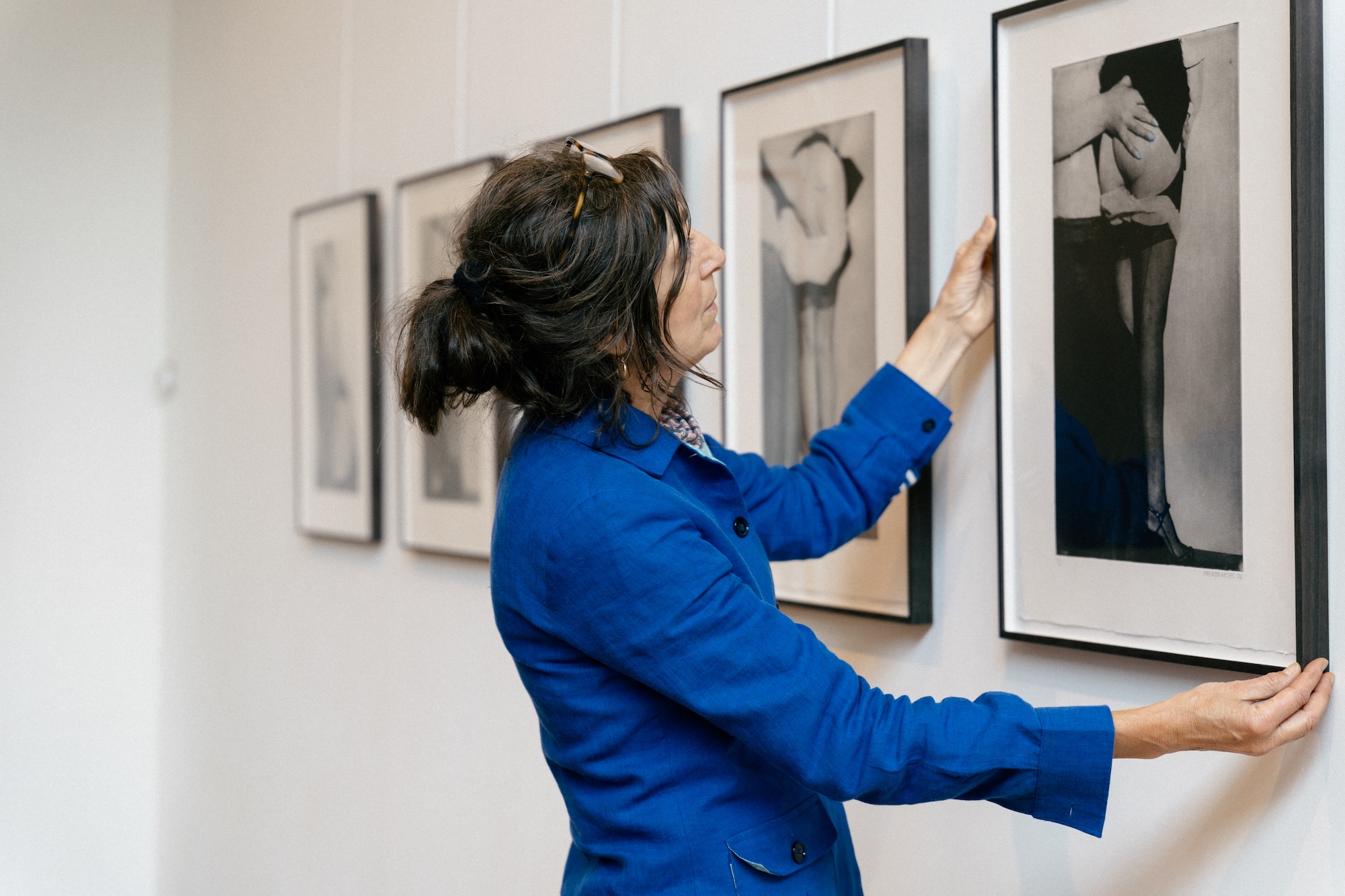
For Mariken Wessels, constructing a character is an exercise in empathy
In the early 1980s, a man named Henry began photographing his wife, Martha, in their suburban American home. Over the next two-and-a-half years, he took some 5,500 photographs of her, mostly naked, photographing her obsessively, almost daily, and carefully cataloguing the images according to poses, gestures and body parts. When Martha discovered the extent of his obsession, she tore the photographs from the walls of his studio, threw them into the street and left him. Henry retrieved the damaged images, cutting and reassembling them into increasingly grotesque collages. After abandoning his home and moving somewhere remote, he turned to clay to recreate her body. Eventually, the story goes, he retreated to an even more isolated, abandoned hut, where he made only traps and snares in order to survive.
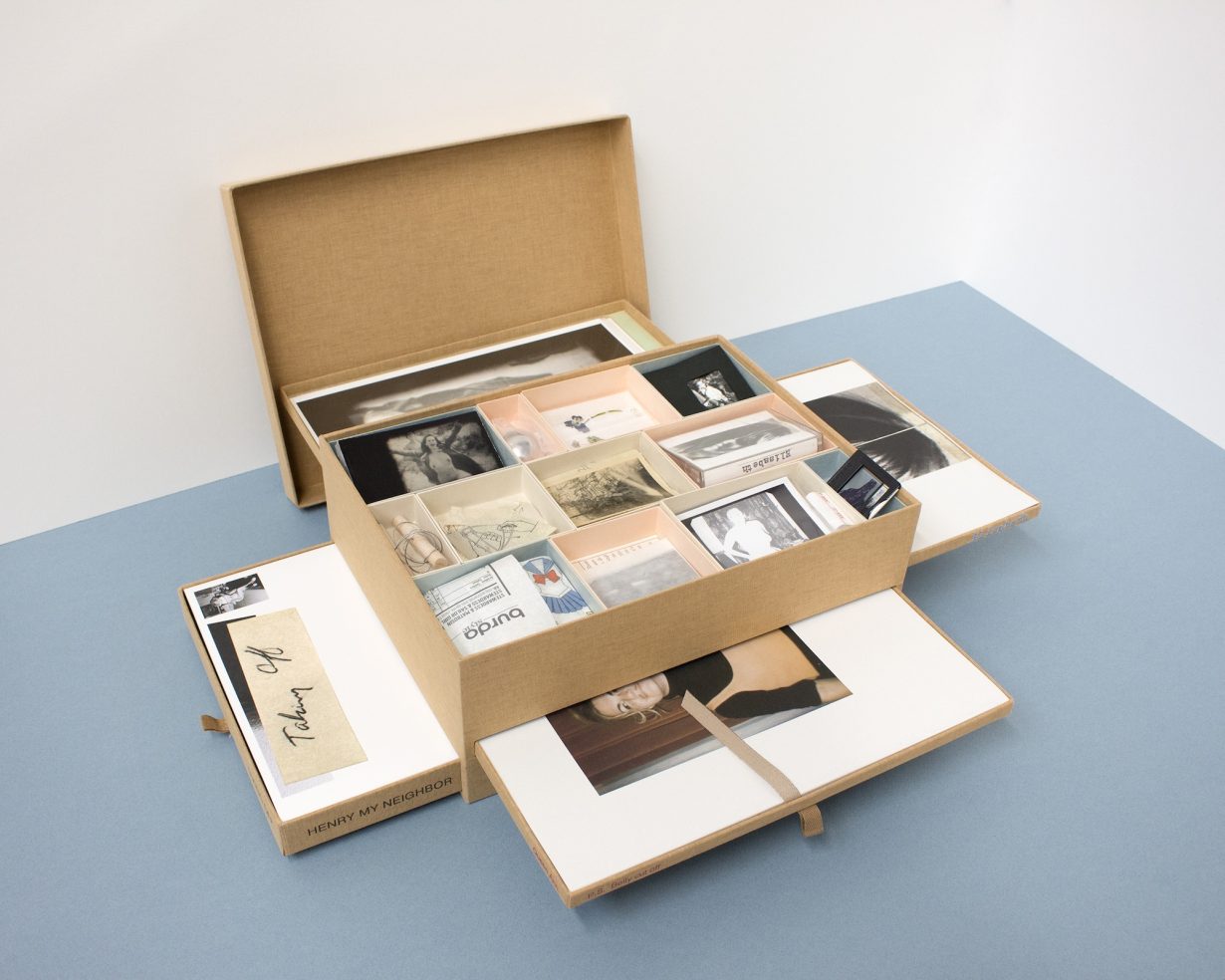
This strange account of a marriage forms the basis of Dutch artist Mariken Wessels’s Taking Off. Henry My Neighbor (2015), a 330-page photobook assembled from the photographs, documents, collages and sculptures Henry left behind. The story is disturbing, occasionally absurd and raises an uncomfortable question: at what point does the desire to possess an image of someone become a desire to possess the person themselves?
When I visit Wessels in her Amsterdam studio, we speak about her fascination with other people’s lives. Before studying at the Gerrit Rietveld Academie, she trained as an actor, working in theatre and television for around a decade. That background remains fundamental to her practice. She approaches her subjects much as an actor might approach a role, researching their circumstances, motivations and relationships, while creating and staging scenes, making objects and constructing narratives around them. And when I ask why she prefers to work through characters rather than directly from her own experiences, she explains that much of her work is indeed personal, but that fiction allows her to give those experiences a more universal dimension.
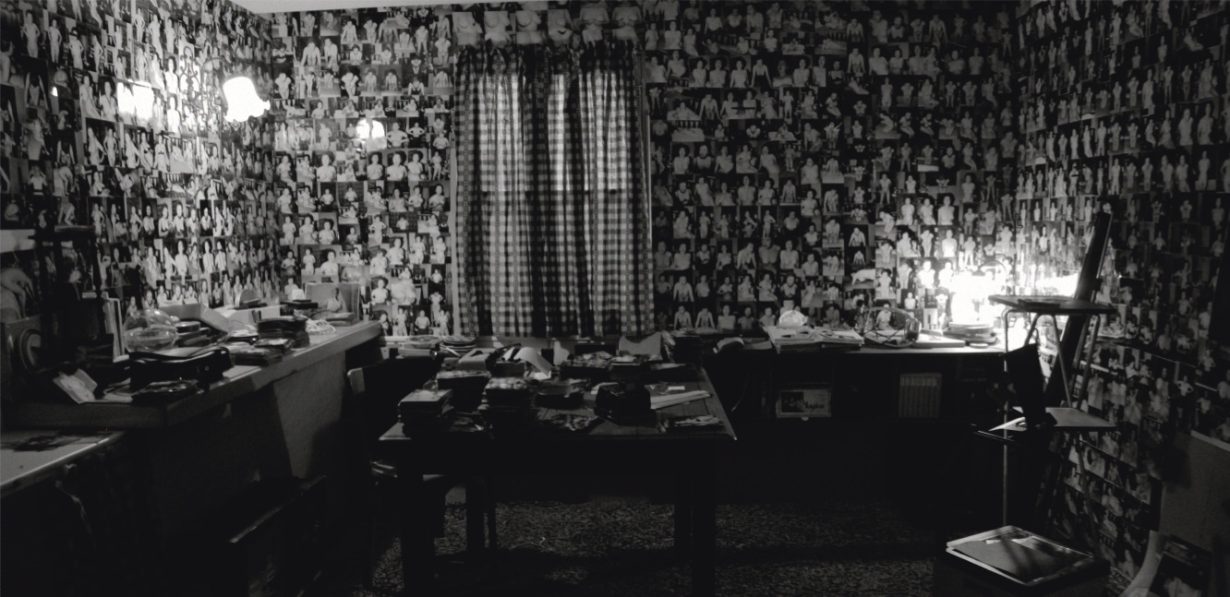
Yet this imaginative identification with others is more complicated than it initially sounds. Wessels’s characters are often people whose identities have been compromised, whether by trauma, loss or the obsessive attention of another. Her work is concerned not simply with representing them, but with the possibility of understanding someone through the fragments they leave behind. I get the sense that Wessels is something of a method actor in this respect; with each character’s construction, she inhabits their body and psyche – or perhaps it is they who begin to inhabit her. At times it is hard to tell.
In Taking Off, those fragments are abundant. Henry’s photographs offer an exhaustive record of Martha’s naked body, yet reveal remarkably little about the woman herself. We see her through his eyes: she is subjected to a system of classification that reduces her to a collection of poses and anatomical details. Wessels’s intervention is to rearrange this material into another narrative, one in which Martha’s departure becomes as important as Henry’s obsession. The title refers both to the repeated removal of her clothes and to her eventual escape. Yet Martha’s departure is not simply an escape from Henry’s obsessive gaze. It is also an assertion of agency: having spent years as the subject of his photographs, she refuses to remain an object of his making.
As I watch Wessels leaf through the pages of this photobook in her studio, which is suffused with natural light, Mary Shelley’s Frankenstein (1818) comes to my mind; this preoccupation with dismemberment and creation, the spark of life. Shelley’s novel imagines a man assembling a living being from dead matter, bypassing the female body altogether. But its central horror is not simply the creature’s construction; it is the creator’s failure to acknowledge his responsibility towards what he has made. In Wessels’s work, too, the question of creation is inseparable from the relationship between maker and subject. Henry attempts to reconstruct Martha after she has left him, as though possessing her image might compensate for the loss of the woman herself. Wessels’s own acts of cutting, modelling and rearranging invite us to consider the difference between making something out of another person’s body and recognising the person to whom that body belongs.
There is, however, a tension in this act of reconstruction. Wessels, too, is selecting, arranging and interpreting Martha’s image, exercising a degree of control over how we understand her. And we, as readers, become participants in the same voyeurism that the book exposes. Its achievement lies partly in refusing to make that position entirely comfortable. We cannot know Martha simply because we have seen her naked thousands of times.
Wessels’s earlier photobooks similarly blur the distinction between documentation and invention. In Elisabeth – I Want to Eat (2008) and Queen Ann. P.S. Belly Cut Off (2010), she constructs psychologically complex characters through a combination of found photographs, staged scenes, writing and materials of her own making. In Who (2012), she takes the opposite approach: confronted with the absence of photographs of a loved one who died, she assembled images found online to create a portrait that could never have existed. Her books have also received international recognition: Elisabeth – I Want to Eat won the Silver Medal Book Award at the 2009 Fotofestival di Roma, while Taking Off. Henry My Neighbor received the Author Book Award at Les Rencontres d’Arles in 2016. Across these projects, a person’s identity emerges not as something fixed within a photograph, but as something pieced together through memory, interpretation and imagination.
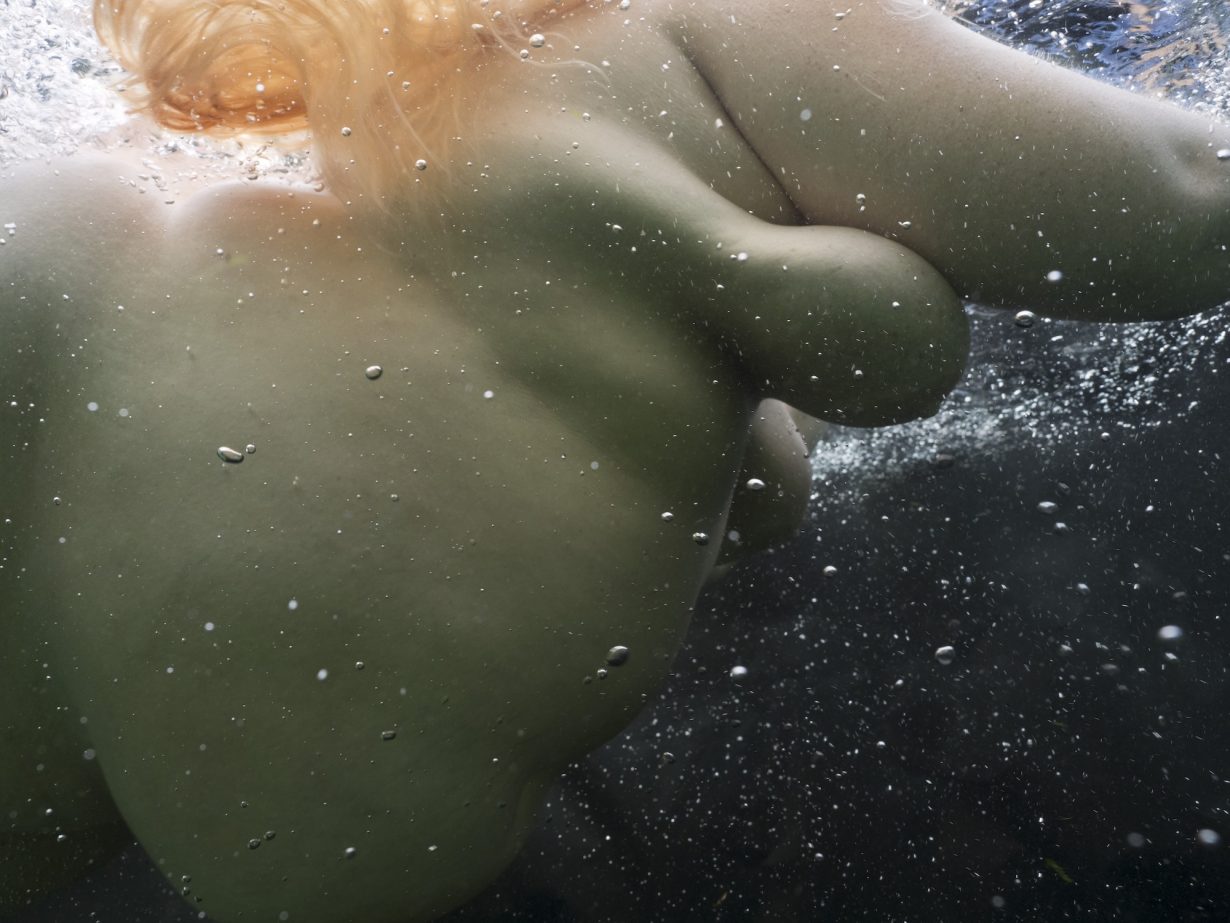
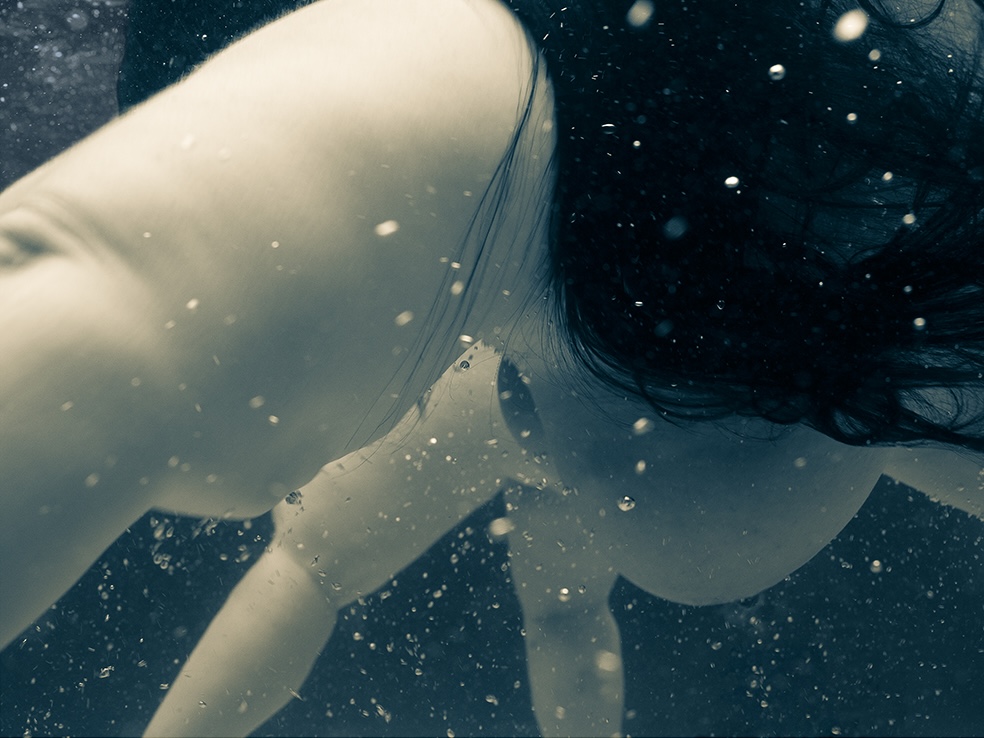
This concern with reconstruction has increasingly assumed a physical form. In Nude – Arising from the Ground – Miss Cox (2020), Wessels revisits Eadweard Muybridge’s nineteenth-century photographs of an overweight woman rising from the ground. Where Muybridge’s camera divided her movements into successive frames for scientific observation, Wessels attempts to restore a sense of the woman’s physical presence through large ceramic sculptures and underwater photographs of female bodies. In Muybridge’s catalogue, male subjects were characterised largely by their professions or activities, while women were classified according to their marital status, age and physical appearance. Wessels challenges this reduction of a woman to her body by imagining a history for Miss Cox, naming her, addressing her in a personal letter, treating her not simply as an object of study but as a person with a life beyond the photograph.

The relationship between creation and objectification becomes more pointed in The Sculptor (2023), a series of collages made from pornographic magazines of the 1970s and 80s. Wessels cuts the female figures out of their original settings, leaving the men stranded in domestic interiors, and introduces irregular blobs of terracotta-coloured clay in their place. The gesture is both an act of liberation and a joke at the expense of male authority: the women have escaped the pictures, leaving behind men whose dominance is made to look ridiculous. Yet the replacement is also unsettling, weighted with history of women’s bodies being treated as malleable material while drawing attention to their absence. Only the artist’s fingerprints remain, pressed into the clay.
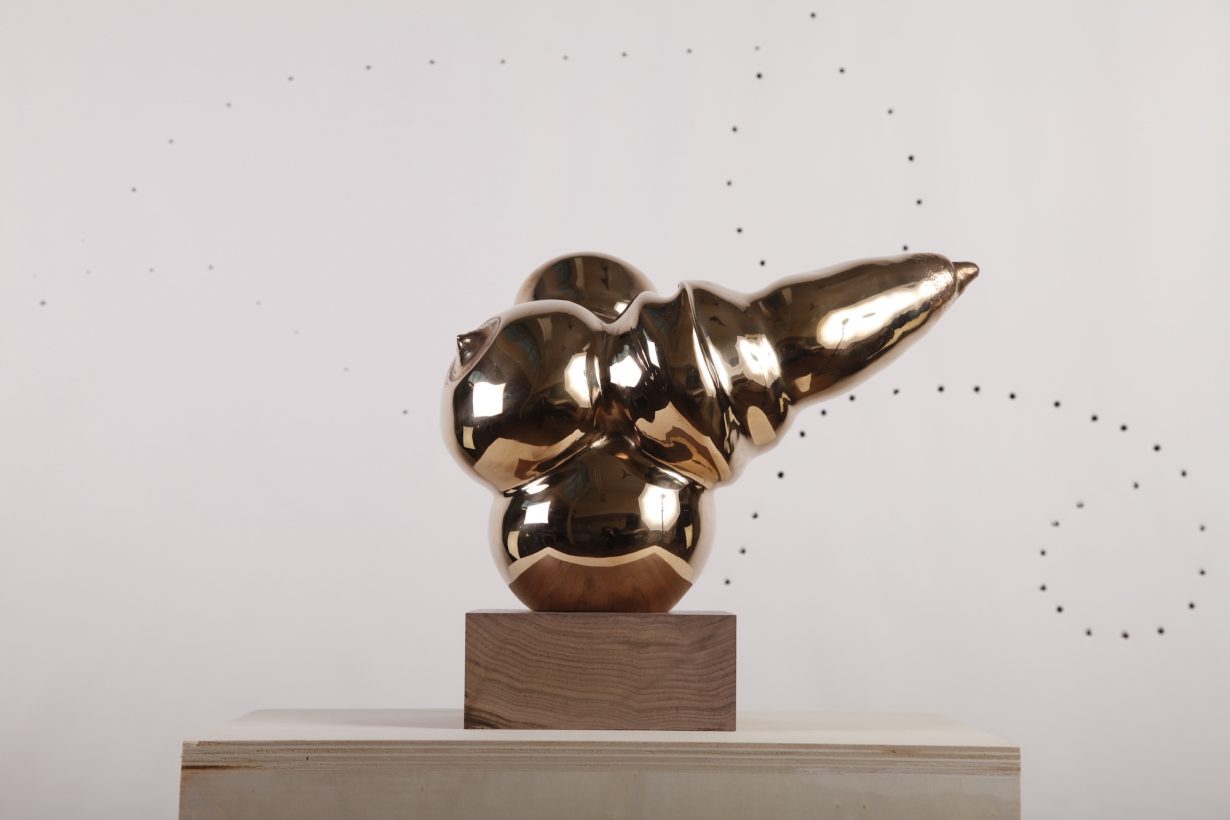
The related Mama sculptures (2022) see breasts, bellies and folds of flesh similarly taken apart and reassembled into strange ceramic forms, recalling prehistoric fertility figurines while resisting any straightforward association between the female body and motherhood.
What’s compelling about Wessels’s practice is the relationship between autobiography and invention. Her own experiences may inform the characters she creates, but she rarely presents them as straightforward expressions of herself. There is something theatrical about this position: she remains behind the scenes, constructing the setting, arranging the fragments and allowing her subjects to take centre stage. Yet the physical traces of her involvement are everywhere: in the cuts and folds of her collages, the fingerprints indented into clay and in the painstaking assembly of her photobooks.
Wessels designs and makes the dummies for these books herself, working out how the story unfolds through the sequence, scale and arrangement of images. She also produces elaborate special-edition boxes to house them, and which include printed ephemera like family photos, postcards and handwritten notes – each box forming a small world of its own. The book, in this sense, is not simply a container for her work but another means of constructing it. Here Wessels the artist-actor becomes the artist-director: she can determine what we see and when, though not what we ultimately make of it. And perhaps that is where the empathy in her practice resides: not in claiming to understand another person’s experience, but in recognising the limits of what can be known about them. However carefully the pieces are assembled, something of the person will always remain beyond our grasp.


