Riffing off Chaplin, Caguiat Delacruz’s new film acts as a proxy for artists mourning the slow demise of radical culture
Whether one gets to see the butoh master is up to the machine. Somewhere on the tape, Japanese choreographer and performer Hiroko Tamano, in bowler hat and baggy Tramp suit, presses a sunflower to her face, eyes closed. This detail only emerges after multiple viewings. Shot digitally, transferred to VHS and left to loop on a Toshiba television monitor, The Tramp (2026) – the central film of artist duo Caguiat Delacruz’s eponymous exhibition here – plays, pauses, glitches and fast-forwards at random intervals, ad infinitum, as viewers watch from inside salvaged scenery flats: overtly artificial, patchy, spackled walls repurposed from the filmset. The idea that repetition pushed past fidelity produces difference is bolted into the hardware here: the tape might be mortal, but no two passes are alike.
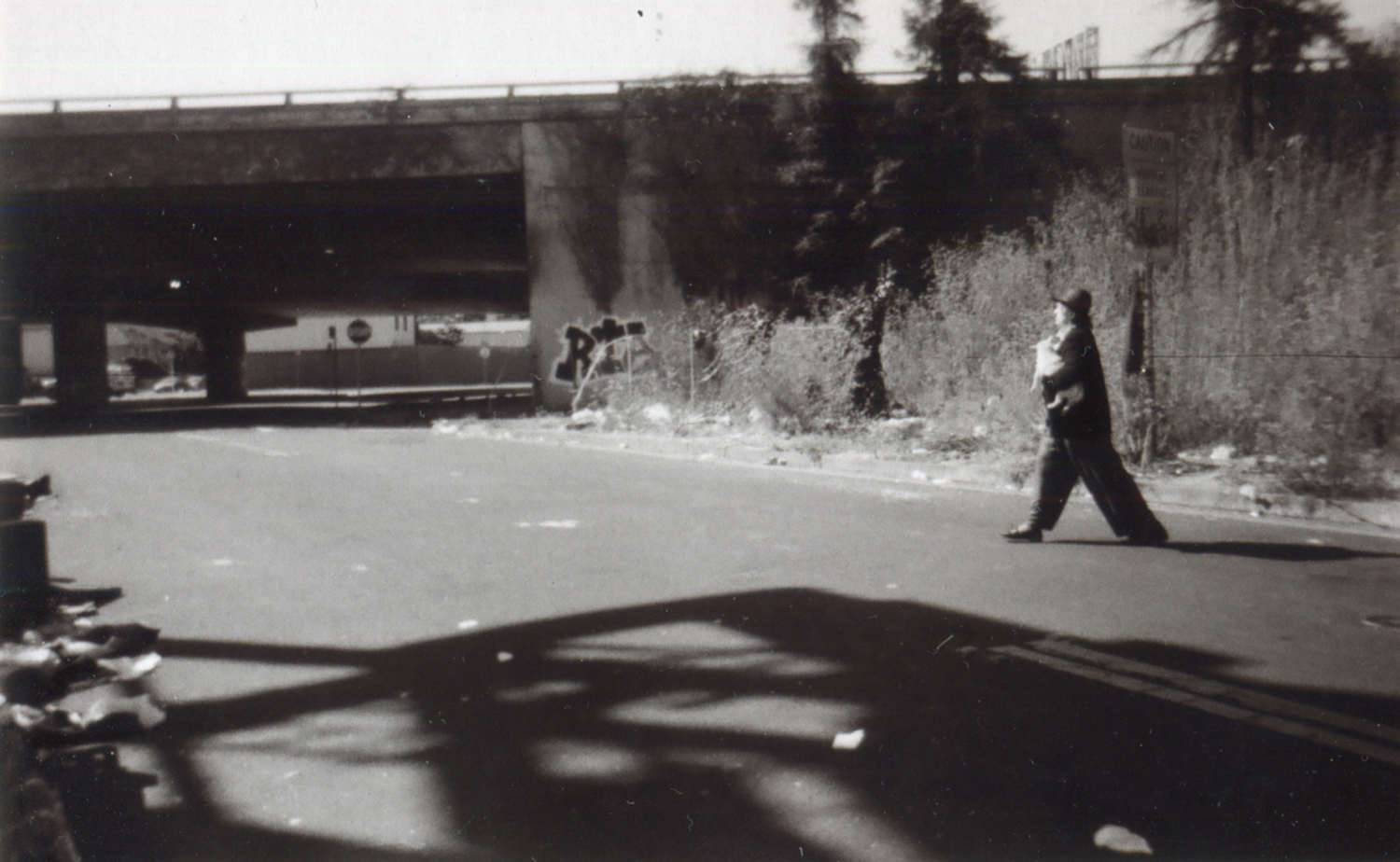
The basic idea behind Justin Caguiat and Rafael Delacruz’s show seems to have been to recast Charlie Chaplin’s ‘Tramp’ figure, who was immortalised in the early decades of the twentieth century at Essanay’s film studio in Fremont, a city once home to the iconic Modern Times (1936) assembly line, now dominated by a Tesla plant. In their remake, Tamano – an elder in the Berkeley butoh community – along with the actor Wesley Hrubes and his dog Chips, pick up trash in Half Moon Bay’s flower fields and drift through Oakland underpasses, past sections on which graffiti has been buffed into grey abstractions. Similar abstract forms appear in sections of Caguiat Delacruz’s paintings, which result from a process that is as analogue as it is collaborative: according to the exhibition pamphlet, canvases are passed between the artists. Authorship dissolves. Much of the fervour of the paintings on view relies on transfer: their mystical symbolism often looks freshly pressed from elsewhere – and the patterned paper etchings in the vitrined installation The Long Walk (2026) are potential blueprints. In Tweaker (2026), new-looking bootprints track across the canvas, sometimes colliding with casual collages made from torn and twisted pages on the surface.
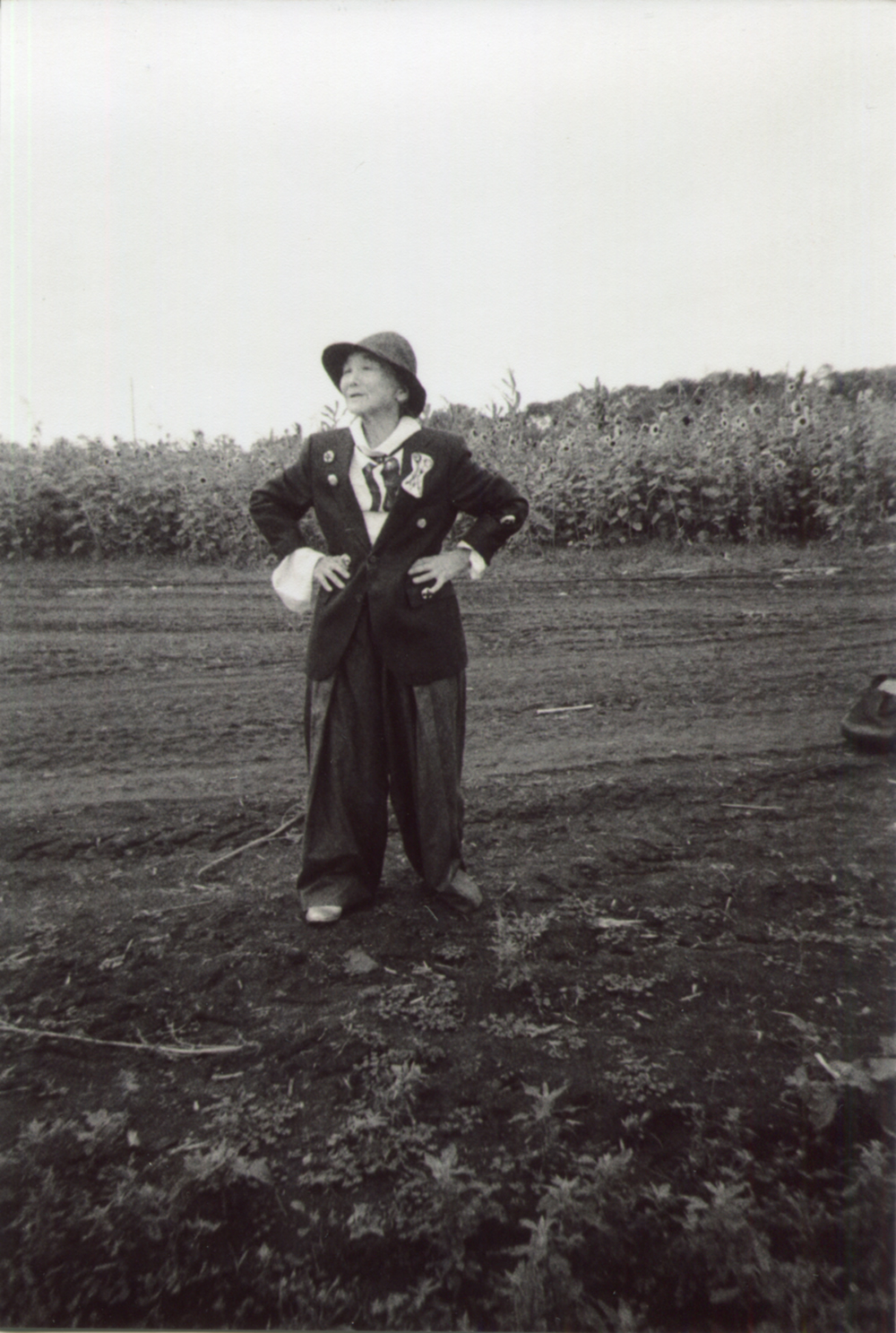
The iconography of death proliferates throughout the exhibition. A suite of acid-green canvases loosely based on black-and-white photographs from the filming process, all titled Tramp 1, 2 and so forth, runs the gamut: Tamano’s silhouette, a wilted sunflower, a skeleton looming over sleeping bodies, a doll – or Tamano in a puppet mask – with a shut-eyed face. A newsprint papier-mâché effigy of Tamano-as-the-Tramp personifies obsolescence, its body assembled from ‘yesterday’s news’ (yet does so with grace, calling to mind the lithe marionettes in some of Justin Caguiat’s paintings, which were shown at Taka Ishii Gallery, Tokyo, in 2021; the gallery’s name even appears, floating reversed and backwards in an untitled 2026 installation at the Wattis). What does it mean to confer the iconicity of the Tramp trope – the everyman alienated under industrial capitalism – on a performer of butoh, a form of art that seeks to liberate the body through training? Tamano, the context suggests, may be a proxy for artists mourning the slow demise of radical culture in the Bay Area.
It wouldn’t be difficult for all the East Asian references – from the butoh to the gampi paper, Chinese kite-flying instruction sheet and photograph of what is likely a Japanese performance or ritual in the pair’s untitled installation – to curdle into fetish. But for Caguiat Delacruz, fixed positions of cultural specificity do not hold. The Tramp was always transpacific: Chaplin visited Shanghai in 1936, where he was received by the modernist, gender-and-genrebending Jingju superstar Mei Lanfang, and that same year the Tramp spoke for the first and last time unintelligible gibberish in Modern Times. The failing of language, or pure glossolalia, borrowed from radical cinema, here feels like a strike against fluency, which is the cheapest thing machines produce.
Caguiat Delacruz: The Tramp is on view at CCA Wattis Institute for Contemporary Arts, San Francisco, through 21 November
From the September 2026 issue of ArtReview – get your copy.