
This group exhibition foregrounds Gen X artists that lived the shift from analogue to digital in real time, reality show-to-influencer pipeline, hypercapitalist austerity and trad-fascism
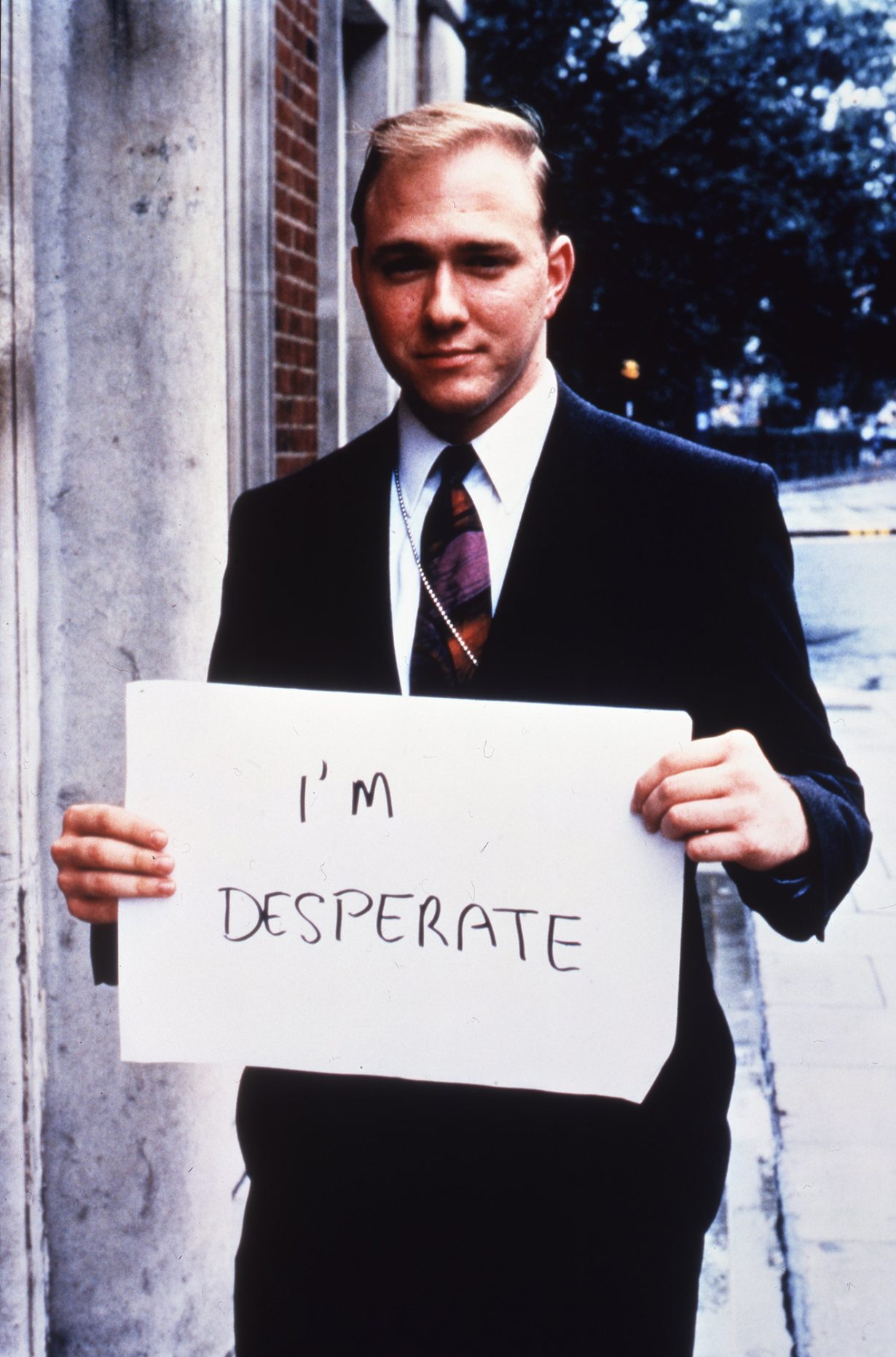
According to Massimiliano Gioni, Calvin Wang and Taeyi Kim, the curators of this group exhibition at Deste Foundation, there’s much to learn from Generation X. The term came to describe people born between the mid-1960s and 1980, following the publication of Canadian writer Douglas Coupland’s 1991 novel Generation X: Tales for an Accelerated Culture, which follows twenty-somethings rebelling against the corporatisation of American life. David Shrigley’s Tomorrow is Cancelled (2012), a black octagon- shaped sign with the work’s title crudely scrawled on it, taps into that capitalist dead- end, as does one line from Richard Linklater’s 1990 film, Slackers, quoted in a wall text for Self-Portrait Deceased (Skull) (1998–2008), a resin skull by Meyer Vaisman: “Every single commodity you produce is a piece of your own death”. In lieu of descriptions, works come with wall texts featuring quotes from Gen X books, movies and songs in order to give texture to the show’s generational and predominantly Western purview. In Shrigley’s case, a quote from Coupland’s novel laments an ‘endless stress of pointless jobs’, a line presaging the ‘bullshit jobs’ Gen X activist David Graeber described in 2013 (not mentioned here), of work so meaningless it diminishes life. Nearby, Gillian Wearing’s c print of an office worker holding a sign reading ‘I’m desperate’, from Signs that Say What You Want Them to Say and Not Signs that Say What Someone Else Wants You to Say (1992–93), epitomises the era in which Gen X came of age, as postwar boom(er) times gave way to recession, political unrest and war. Wall text for the work quoting Run-DMC’s iconic 1984 track It’s like that functions as a witness account, describing record unemployment and “people born to die”.
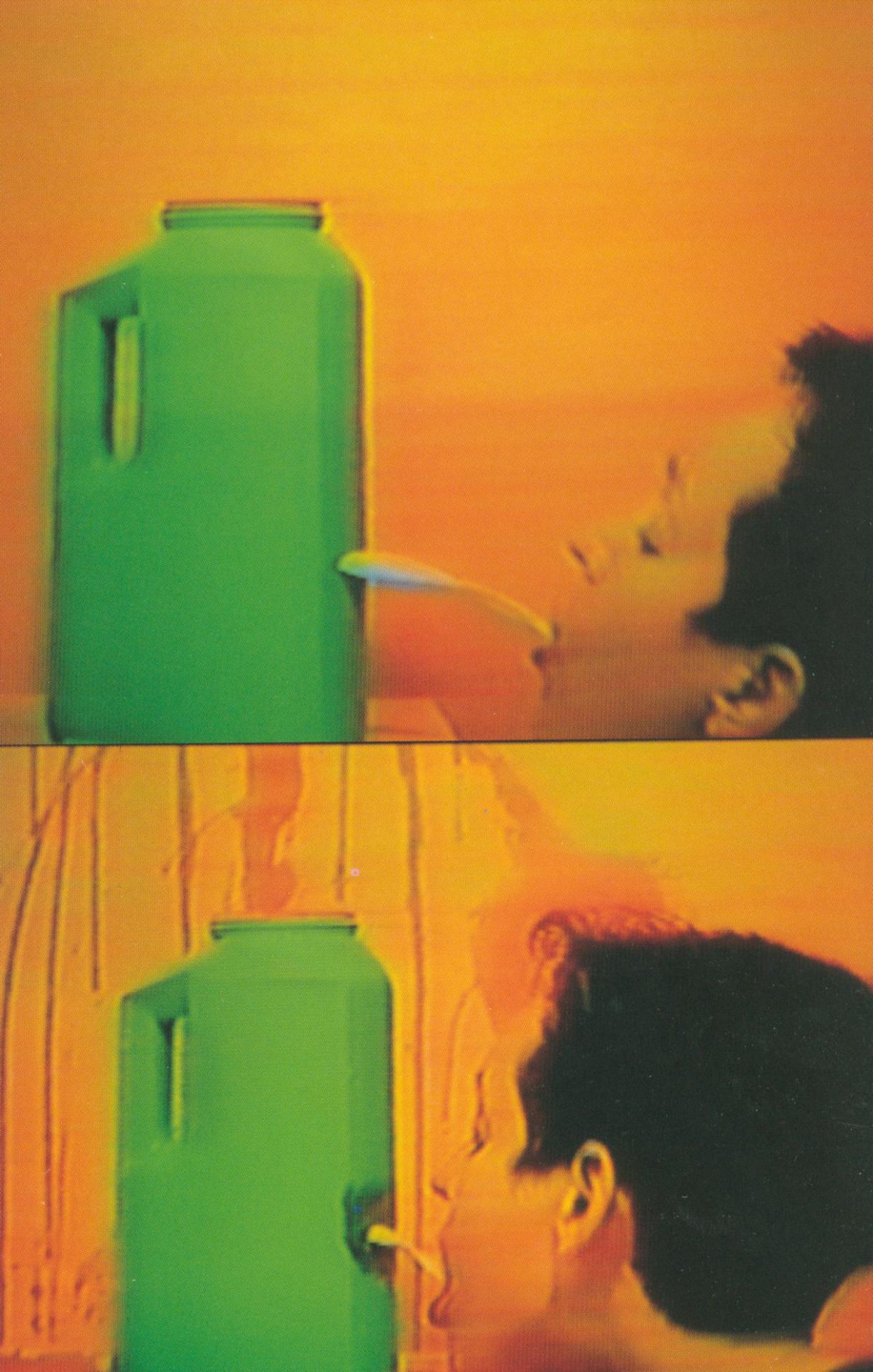
It all sounds familiar, given the effects of historical capitalism – racism, nationalism and colonialism – that have intensified in the twenty-first century. These conditions explain why, per the curatorial statement, artists associated with Gen X have been foregrounded in this show, as a group that lived the shift from analogue to digital in real time, heralding the twenty-four-hour news cycle, reality show-to-influencer pipeline, hypercapitalist austerity and trad-fascism. Soundtracked by A Good Idea, a 1992 alt-rock murder ballad about a man who drowns a woman who “didn’t seem to mind”, Cheryl Donegan’s lo-fi video HEAD (Versions 1 & 2) (1993) – showing the artist drinking milk spurting from a green bottle – is a reminder of the casual trickle-down entitlement governing women’s bodies and the generational struggles against it, given Sonic Youth’s call for liberation from “male white corporate oppression” in their 1990 track Kool Thing that appears in its accom- panying wall text. Elsewhere, Andra Ursuța’s Commerce Exterieur Mondial Sentimental (2017) – a pink marble statue based on a 2011 photograph of a Roma woman awaiting deportation from France – is paired with a quote by riot grrrl Kathleen Hanna: ‘When the world only treats you like a dot on a marketing scheme, you can learn to treat yourself and other people like that.’ Visualising that schema on an expanded geopolitical plane is Tom Sachs’s Two Boeing 767s (2001), a bricolage sculpture of two planes invoking 9/11, and Paul Chan’s charcoal-on-paper drawing of an unkempt Saddam Hussein around the time of his capture, The End (2012), which appears on the cover of On Democracy, a book published in 2012 by Chan’s imprint Badlands Unlimited, of three speeches Hussein delivered before becoming Iraq’s president, framing democracy as patriotic allegiance to a state in revolution. The excerpt accompanying Chan’s drawing, from Jean Baudrillard’s 1991 essay ‘The Gulf War Did Not Take Place’, feels sharply contemporary, given US Secretary of War Pete Hegseth’s Clavicular-level interest in his soldiers’ looks, not to mention his own, as the United States and Israel continue their illegal incursions into Iran and Palestine: ‘The war,’ Baudrillard writes, ‘along with the fake and presumptive warriors, generals, experts and television presenters we see speculating about it all through the day, watches itself in a mirror: am I pretty enough…?’
At times, the exhibition feels like a greatest hits of Deste shows, whether at the foundation’s Athens HQ or its Slaughterhouse project space on Hydra, in homage to founder Dakis Joannou’s longstanding curatorial ethos of doing what he wants albeit with an open invitation. Take Chan’s drawings, which followed the artist’s monthlong stay in Baghdad at the turn of 2003, and appeared in Animal Spirits, a 2012 group show at the Slaughterhouse organised, at the height of the Greek economic crisis, around British economist John Maynard Keynes’s description of ‘animal spirits’ shaping economic life. This was among Deste’s most overtly political interventions into the Greek political condition, until its vital Slaughterhouse installation by Nari Ward, Until That Day, opened in June 2026 with a performance featuring Afro-Greek trailblazer MC Yinka, connecting Afro-Greek musical traditions with Rebetiko, a migrant genre. Gestures like these position Deste on the flipside of the wall text for Huma Bhabha’s What Should It Be (2024), a painted and patinated bronze figure resting on a concrete pedestal, which quotes British author Zadie Smith’s 2023 essay ‘The Instrumentalist’, describing the Gen X ‘art monster’ whose talent justifies abuse. ‘What’s wrong with these people is that they are going to die, and for the first time in their lives, they really know that,’ Smith writes. ‘In the curious case of Gen X, we seem to be taking this shocking revelation both personally and collectively, maybe because the end of our time and the end of time itself have become somewhat muddled in our minds. Our backs hurt, the kids don’t like Bach anymore – and the seas are rising!’
Smith questions who’s to blame ‘for this terrible collision of the apocalypse and our own cultural and physical obsolescence’. Is it the millennials or Gen Z? she asks – and it’s here that this show’s argument unravels, given the lack of space to consider the ethical contradictions that shape any group. In a 2024 essay not referenced here, Smith drew a false equivalence between calls for Palestinian solidarity and slogans for mass destruction, echoing talking points designed to obscure the realities of apartheid, ethnic cleansing and genocide in Palestine: a position that ultimately legitimises political indifference as a moral stance. A similar position was expressed by Douglas Gordon – whose slow pan of a couple kissing, titled Monument for X (1998), opens the show – in 2011, when he called the artist boycott of the Biennale of Sydney – over its chairman Luca Belgiorno-Nettis’s role as managing director of longtime biennale sponsor Transfield Holdings, a contractor for Australia’s notorious immigration detention centres – ‘irresponsible’, telling The Guardian, ‘I don’t see any significant change that would have happened if we had all boycotted.’ Seeing as sustained pressure eventually ousted Belgiorno-Nettis and pushed the biennale to cut ties with Transfield, Gordon’s take has aged so badly that it negates this exhibition’s idea that millennials, Gen Z and Gen Alpha could learn from Gen X as they navigate the ethical demands of the moment – especially given the place Gordon’s work has in introducing this exhibition’s entire gambit. Lessons run both ways, after all.
Gen X: Tales from the Forgotten Generation at Deste Foundation, Athens 18 June – 26 November
From the October 2026 issue of ArtReview – get your copy.


