“Coming from a small art scene, the echo of Venice is bigger”
ArtReview sent a questionnaire to artists and curators exhibiting in and curating the various national pavilions of the 2026 Venice Biennale, the responses to which will be published daily in the leadup to and during the Venice Biennale, which runs from 9 May through 22 November.
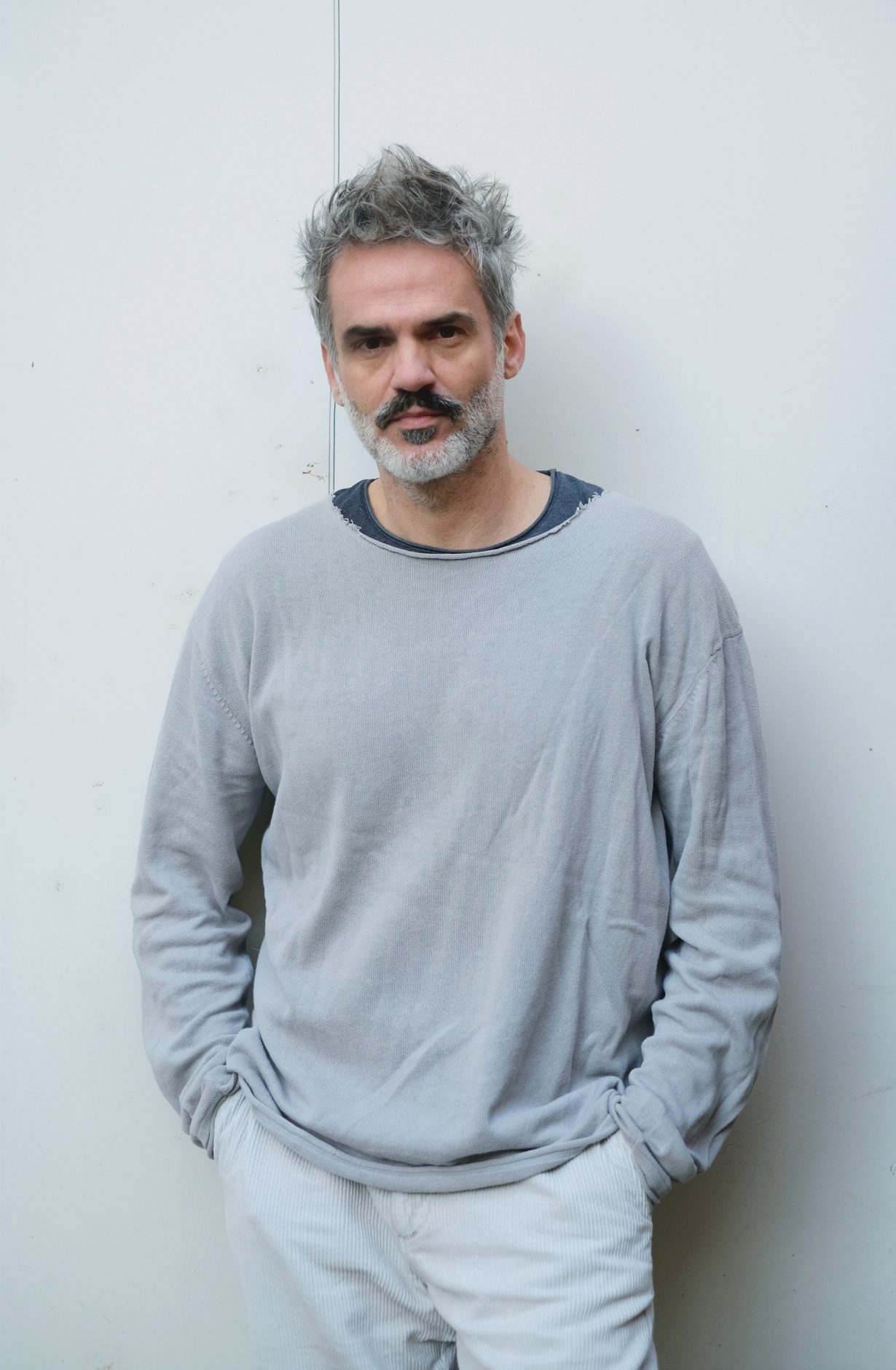
Genti Korini is representing Albania; the pavilion is in the Arsenale.
Celebrating Visions. Versace partners with ArtReview to share stories from the 2026 Venice Biennale.
ArtReview Tell ArtReview what you plan to exhibit in Venice. What has influenced or inspired you?
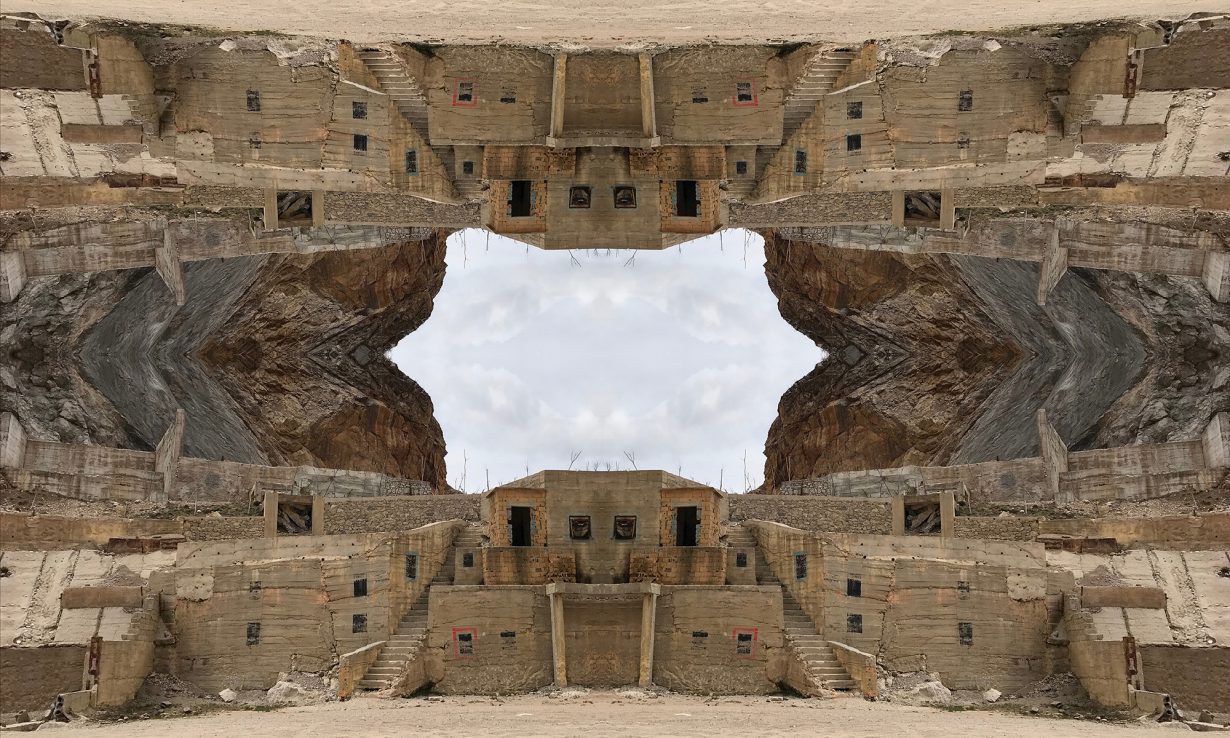
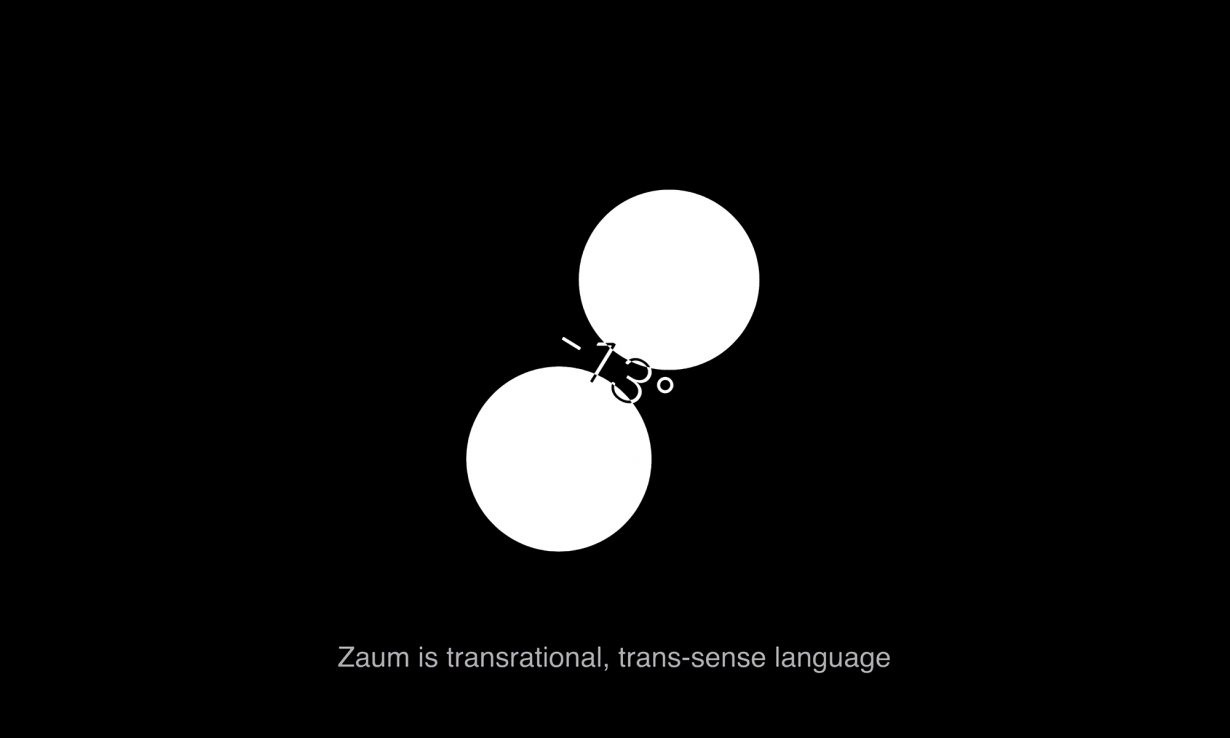
Genti Korini For the Venice Biennale, I am presenting a new work titled A Place in the Sun, a moving-image installation curated by Polish curator and art critic Małgorzata Ludwisiak.
One of the central ideas is an exploration of ‘Zaum’ – a transrational experimental language developed by Russian Futurist poets in the early twentieth century to disrupt established social order. Created as a ‘pure language’, its inherent irrationality pushes the limits of communication and opens up a space to imagine new meanings. Here, I’m using Zaum in a video installation with performance, puppetry, animation and an original score to form a fictional theatre. A Place in the Sun will, I hope, be a speculative stage where history, fantasy and ideology overlap.
In this work, I am also reflecting on Albania as a ‘somewhere place’ often shaped by external perceptions, and by extension invisible cultures, minor languages and the ‘unknown’ at large. Since the early twentieth century, Albania has been portrayed through exotic and orientalist lenses where different fantasies can play out. I try to connect the anxieties and uncertainties of today with the unsettled dreams of a century ago, when borders, languages and identities were similarly in flux.
AR In what ways (if at all) does your work relate to the theme of the Biennale exhibition, In Minor Keys?
GK The work I am presenting in Venice resonates a lot with the spirit of In Minor Keys, even though it comes from a totally different personal place. Through its attention to what exists at the margins of certain dominant linguistic, cultural and historical narratives, the project reflects on Albania as a place often spoken about through projections rather than through its own voice, a condition that connects with the main exhibition’s focus on peripheral, marginal and nondominant forms of narratives.
I work with Zaum, both as a method and a metaphor, a language that resists clarity, hierarchy and fixed meaning. Its fragmented, transrational nature reflects this idea of ‘minor’ expression, voices that do not operate within established systems but instead open space for alternative ways of sensing the world.
In this sense, A Place in the Sun moves in a minor key, not through grand declarations but through dissonance, uncertainty and poetic displacement, creating space for quieter, different forms of belonging and expression.
AR Why is the Venice Biennale still important, if at all?
GK There is certain mythology about artists that make it to Venice, which I find personally still very relevant, or at least this is how I am experiencing it. Coming from a small art scene, the echo of Venice is bigger.
AR What role does a national pavilion play at a time of increasing confrontational nationalisms? Is it about expressing difference or commonality?
GK If I were to continue the metaphor of minor keys and the ‘marginal’, I see this as a chance to be both seen and heard, while also questioning the very notion of national representation, and new rising nationalisms. I aim to critically reflect on the exoticising and selfexoticising lens through which Albania is perceived, both externally and internally.
AR Who, for you, is the most important artist (in any discipline) that your country has produced?
GK My intellectual and emotional affinity with an artist, but also on a human level, is very much connected to the work of Anri Sala.
AR What is something you want people to know about your nation that they might not know already?
GK I would put it this way: an Albanian can understand an Italian joke, a Greek joke, a Turkish joke and a Slavic joke. An Italian, however, may find it harder to understand a Turkish or a Slavic joke, or a Greek an Italian one, and for each to eachother too. So maybe this, in a way, explains our nation ☺
AR Given that you are exhibiting in a national pavilion, is there something (a quality or an issue or attitude) that distinguishes the art of that nation from that of others? That makes it particular? Are there specific contexts that it responds to? Or do you think that art is a universal language that goes beyond social, political or geographic boundaries?
GK The Albanian contemporary art scene as I mentioned, is very small and, one could say, peripheral. Yet, curiously, it has consistently produced internationally acclaimed artists with highly original voices and positions. Sometimes, I believe that being lateral, marginal, can offer a sharpened perspective on how to view and create art, especially in conditions that are often hostile within a rapidly changing country. In such an environment, artists must cultivate endurance and resilience in order to sustain their practice.
The social, political and geography are all embedded in the DNA of Albanian contemporary art, yet the diversity of visual languages employed makes it universal. Ours is a migratory generation; each of us has left the country at some point, and this, I would say, explains the richness and diversity of artistic positions that emerge from our context.
AR What, other than art, are you looking forward to seeing – or doing – while you are in Venice?
GK I have made some great friends in Venice when I was shortly living there, so I would love to spend time with them. Maybe with a good Prosecco.
AR Could you give us a brief overview of your average working day while creating your presentation for Venice?
GK To be honest, from day one I have been fully engaged with this project – it is the first thing I think about in the morning and the last in the evening.
AR Can art really change the world?
GK I believe art creates worlds of its own – and by doing so, we find our perceptions and assumptions unsettled and rearranged. In that shift, however subtle or seismic, we are changed; and through us, the world is too. So yes, I believe it can.
The 61st Venice Biennale runs 9 May through 22 November 2026


