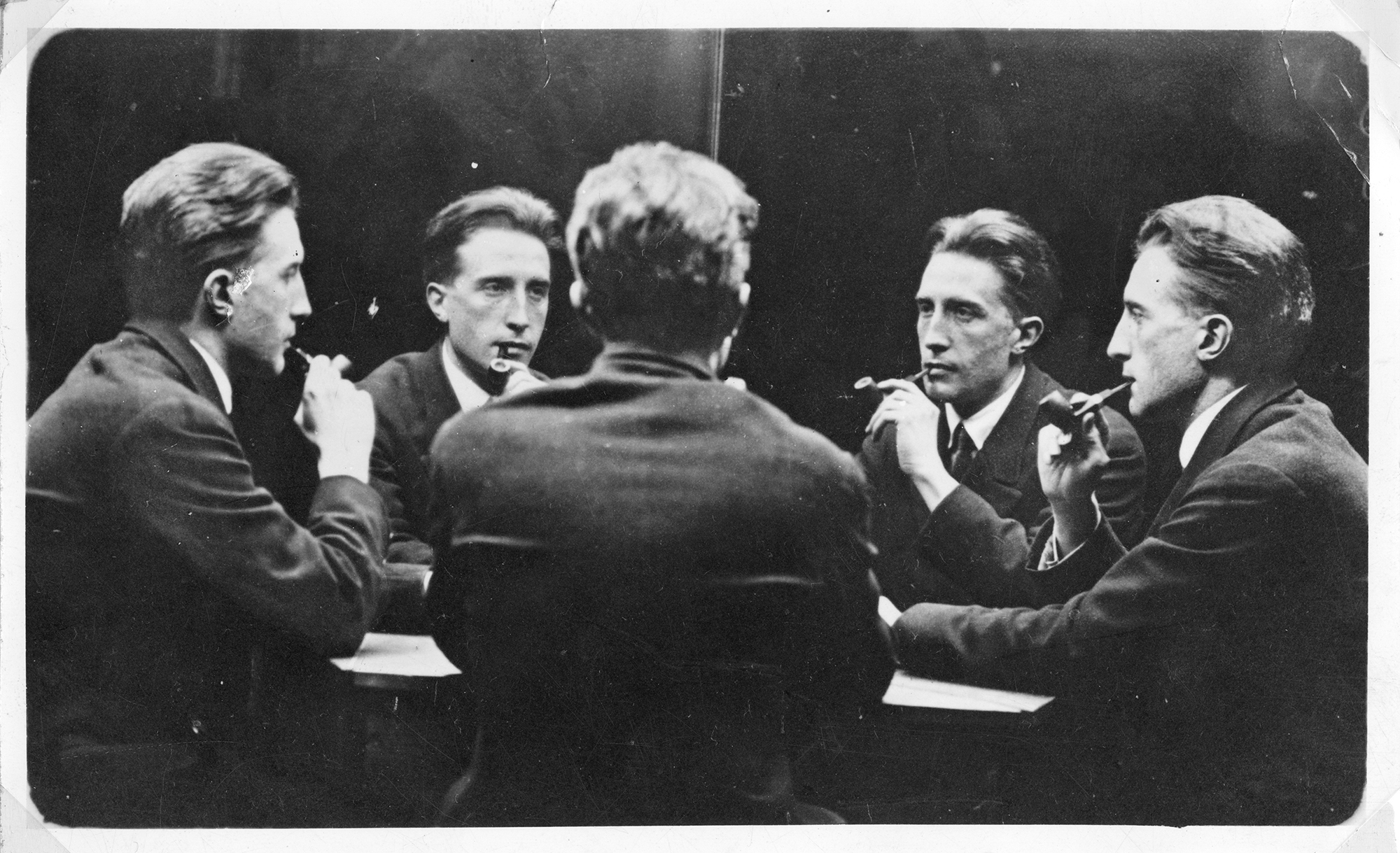
For an artist who treated the material status of his works with striking nonchalance, Duchamp in his afterlife seems rather preoccupied with asserting control over the material world
During a roundtable discussion in 1957, Marcel Duchamp argued that art emerges from its maker ‘in a raw state’, that it must be refined by the spectator, ‘as pure sugar from molasses’. In the same talk, he coined the term ‘art coefficient’ to describe the gap between what an artist intends and what is realised. His professed acceptance of contingency, his rejection of the notion of artistic genius, became the attitude for which he is remembered. The reputation suits him, seeing as he had a penchant for delegating aspects of the ‘creative act’ to spectators and collaborators alike. In 1916 he wrote his sister Suzanne from New York, asking her to locate and sign his name on a bottle rack in his Paris studio, so that he could turn it into a readymade ‘from a distance’. While such episodes suggest an artist willing to relinquish control, Duchamp’s longer, more convoluted writings on the display and interpretation of his work suggest otherwise.
He left, for instance, a four-ring binder of notes, photographs and diagrammes detailing how his secretly constructed sculptural environment Étant donnés (Given: 1. The Waterfall, 2. The Illuminating Gas) (1946–66) – a painted plaster nude supine on a patch of grass before an image of a forest and waterfall, visible through peepholes in a wooden farmhouse door – should be transferred from his New York studio to an alcove off the Arensberg Collection galleries at the Philadelphia Museum of Art. This manual is on view in the Museum of Modern Art’s current exhibition Marcel Duchamp. In the end, everything from the architectural dimensions to the wattage of the frosted lightbulb that was to illuminate the tableau was specified for those carrying out the reinstallation: primarily his widow Alexina ‘Teeny’ Duchamp, his stepson Paul Matisse and PMA curator Anne d’Harnoncourt. Documents dated after Duchamp’s death in 1968 reveal an administrative whirlwind – including a dock strike that delayed a shipment of bricks that were to surround the wooden door. For roughly a year, the group carried out Duchamp’s posthumous instructions as if executing a last will and testament, while the artwork remained suspended in a state of indeterminacy.
Duchamp himself seemed to delight in arts administration, despite or because it involves both control and the loss thereof (anyone who’s curated exhibitions or organised public programming knows how quickly contingency crops up in even the best-laid plans). Early in his career, the French-American artist cofounded the New York-based Société Anonyme, Inc. (1920–50), an organisation that called itself a ‘museum of modern art’ nearly a decade before MoMA existed. Duchamp headed its exhibitions committee and designed the space for its inaugural group show featuring himself, fellow cofounder Man Ray, Constantin Brâncuși and other European modernists, adding oilcloth to the walls and ribbed rubber mats to the floors. He later selected Louis Eilshemius for the organisation’s first solo presentation, even though the New York painter’s romantic, nymph-filled landscapes couldn’t be further from Duchamp’s own artistic sensibility at the time. Alternately making his mark and ceding the floor to others, Duchamp remained involved with the Société Anonyme throughout its 30-year run, working closely with its principal founder (and financier) Katherine Dreier, despite their differing views on modern art (Dreier’s vision was more spiritual than his; she’d also, unwittingly, rejected Fountain from the 1917 Society of Independent Artists exhibition when it was submitted under the pseudonym ‘R. Mutt’).
It seemed, too, that Duchamp was interested in curating the posthumous reception of his work. MoMA’s exhibition is largely framed around the ways the artist entrenched himself socially and discursively – and with a good dose of irony – within a circuit of museums and institutions that were defining the twentieth-century avant-garde, so as to ultimately cement his own legacy. From the 1910s onward, he had a hand in the loaning, display, replication and dispersal of his oeuvre and liaised regularly between his collectors – including Dreier, as well as Walter and Louise Arensberg, who put him up in New York and commissioned one of his best-known works, The Bride Stripped Bare by Her Bachelors, Even (The Large Glass) (1915–23) – and institutions including MoMA and the PMA, which received the Arensbergs’ collection in 1950.
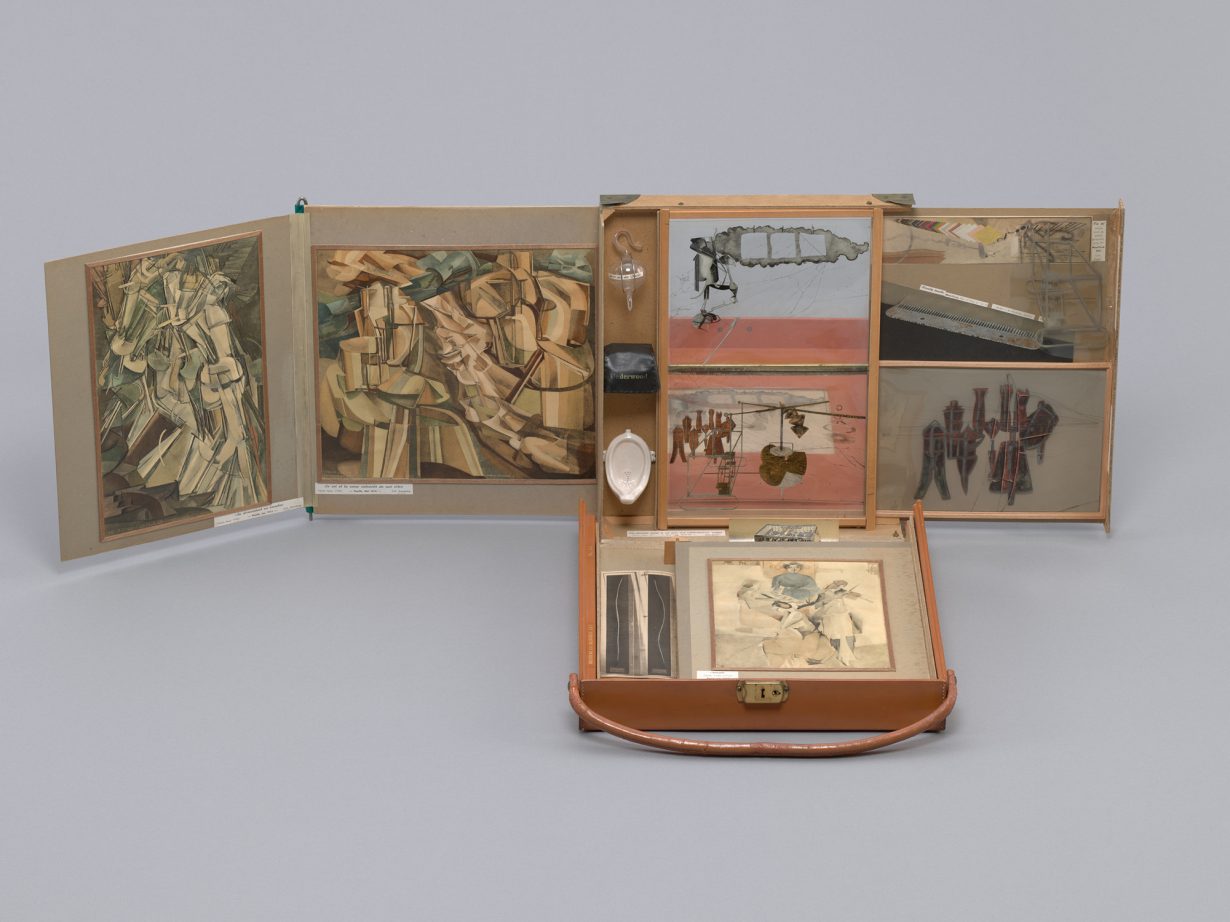
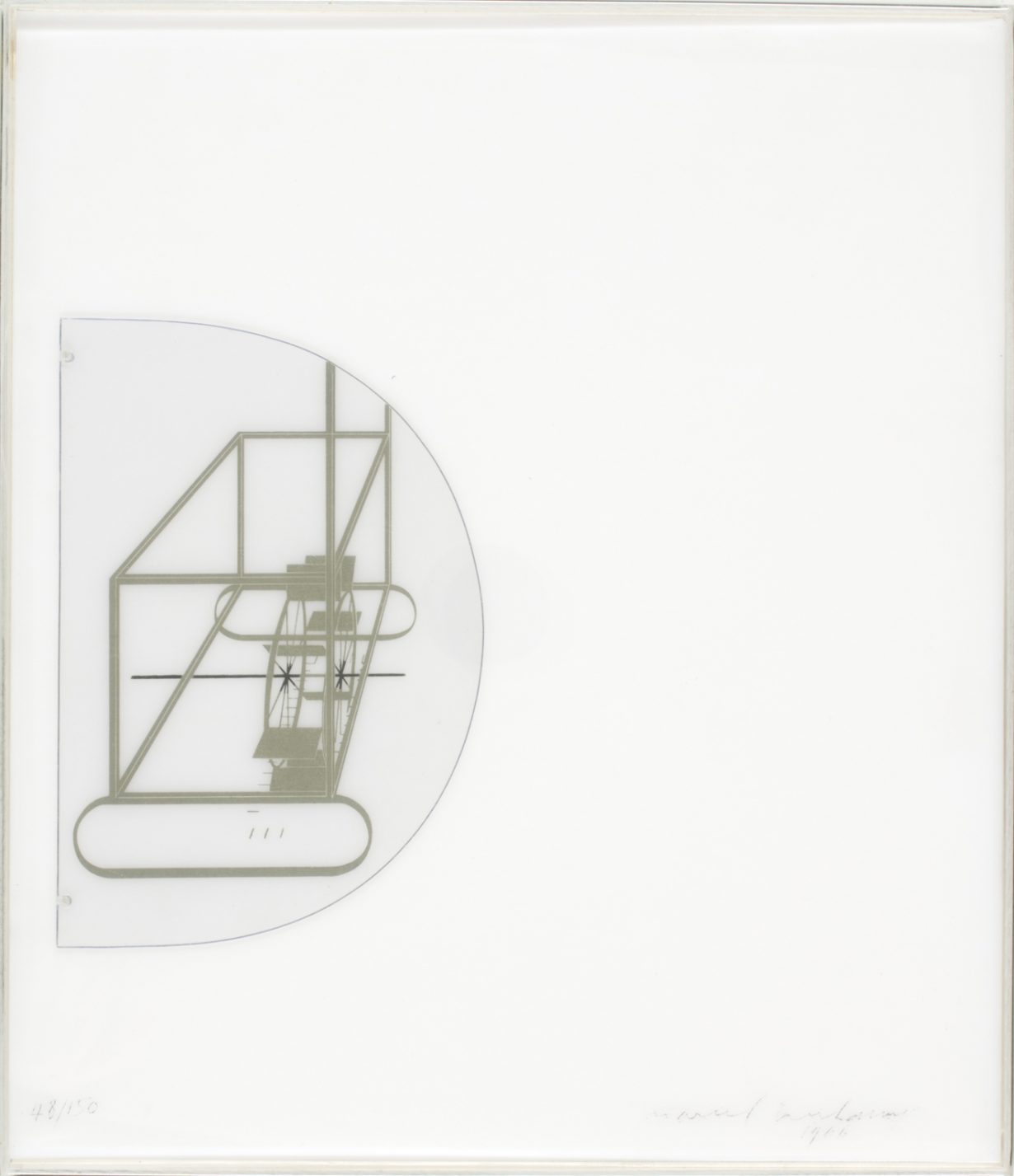
Box in a Valise (From or by Marcel Duchamp or Rrose Sélavy) (1935–41), which appears in the central gallery of the MoMA exhibition, can be read as a curious example of Duchampian estate management. Here, leather suitcases are filled with dozens of miniature reproductions of works the artist made between 1910 and 1936. This method of display was first prototyped when Duchamp, nearing fifty, was living in Paris at the onset of World War II. The suitcases were produced in seven series between 1941 and 1971 in collaboration with various assistants, including Joseph Cornell, and publishers such as the Milan gallerist Arturo Schwarz. When Duchamp relocated to the US in 1942, his ‘primary mission’, as MoMA’s catalogue puts it, was to assemble and sell editions of these ‘portable museums’. These, like the many replicas of his readymades that he authorised Schwarz to make during the late 1950s and ’60s, were commercial products. However, if we take to heart Theodor Adorno’s comparison of the museum to the mausoleum in the German theorist’s 1955 essay ‘Valéry Proust Museum’, another way to read the rows of waist-high vitrines – filled with miniature paintings, doll-size cages and urinals and polished maquettes of The Large Glass no bigger than airplane windows – opens up. Miniatures appear in art throughout history and across cultures; in particular, miniature portraits, such as those made with watercolour on ivory in eighteenth- and nineteenth-century America, were used to commemorate the dead. In a sense, Duchamp’s recursive representations of his past works, his premature mausoleums, resemble such trinkets, and the Box in a Valise mourns the artist himself.
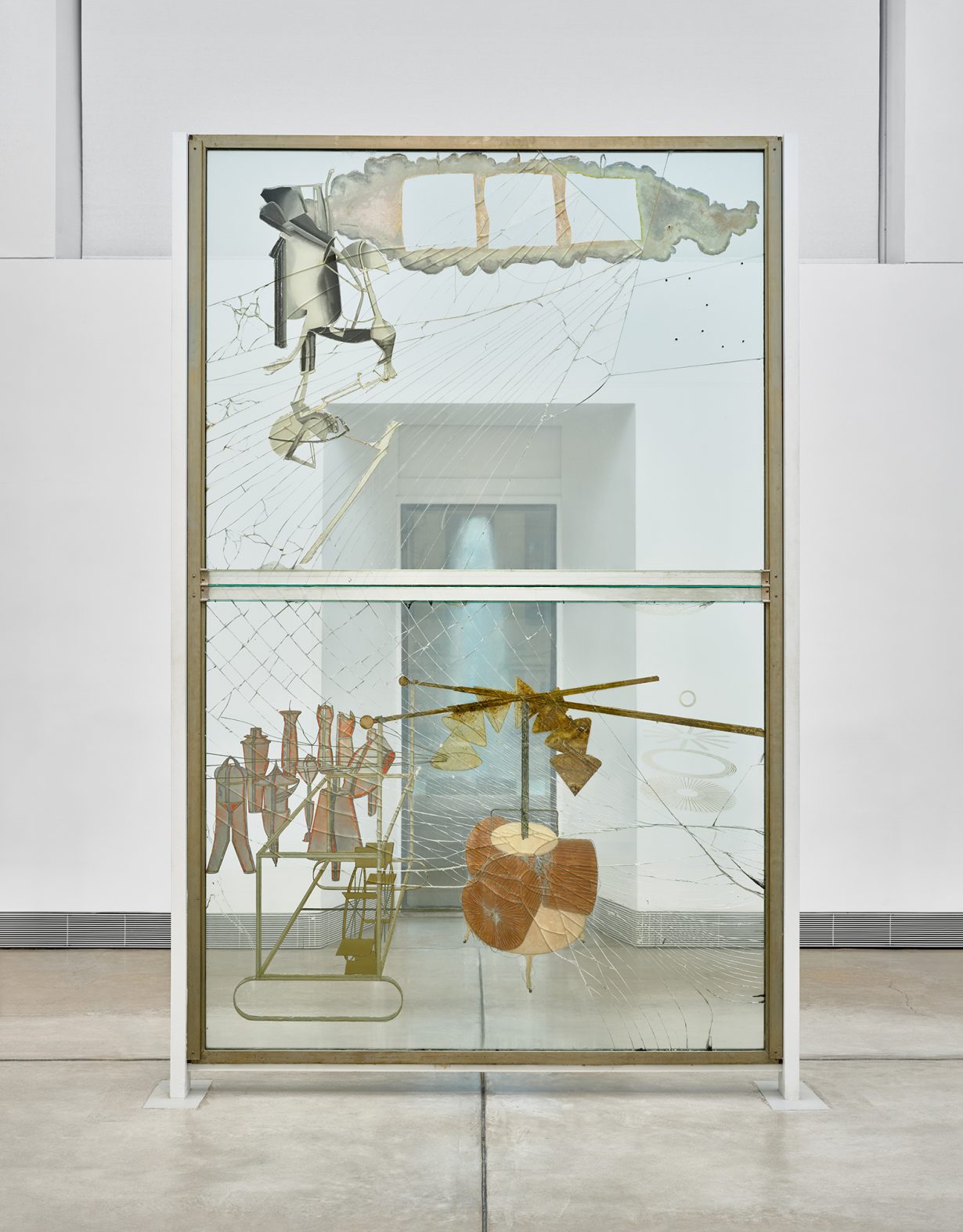
It is surprising and somewhat contradictory to think that Duchamp, who, in his letters, reacted elegantly when his works were lost or damaged – and this occurred not infrequently to the likes of Bicycle Wheel (1913) and its subsequent replicas; Fountain (1917), shortly after Alfred Stieglitz took the photo of it that became its defining image; and The Large Glass, which cracked in 1926, en route from an exhibition at the Brooklyn Museum to Dreier’s home in Connecticut – was meanwhile persistently recreating his works in miniature, as if to stave off the impermanence of the world. For an artist whose output consisted more of writing, correspondences, instructions and ideas than of so-called retinal or plastic art, who treated the material status of his works with striking nonchalance, abandoning works like The Large Glass unfinished, Duchamp seems, when it came to the Box in a Valise, rather preoccupied with asserting control over the material world in microcosm.
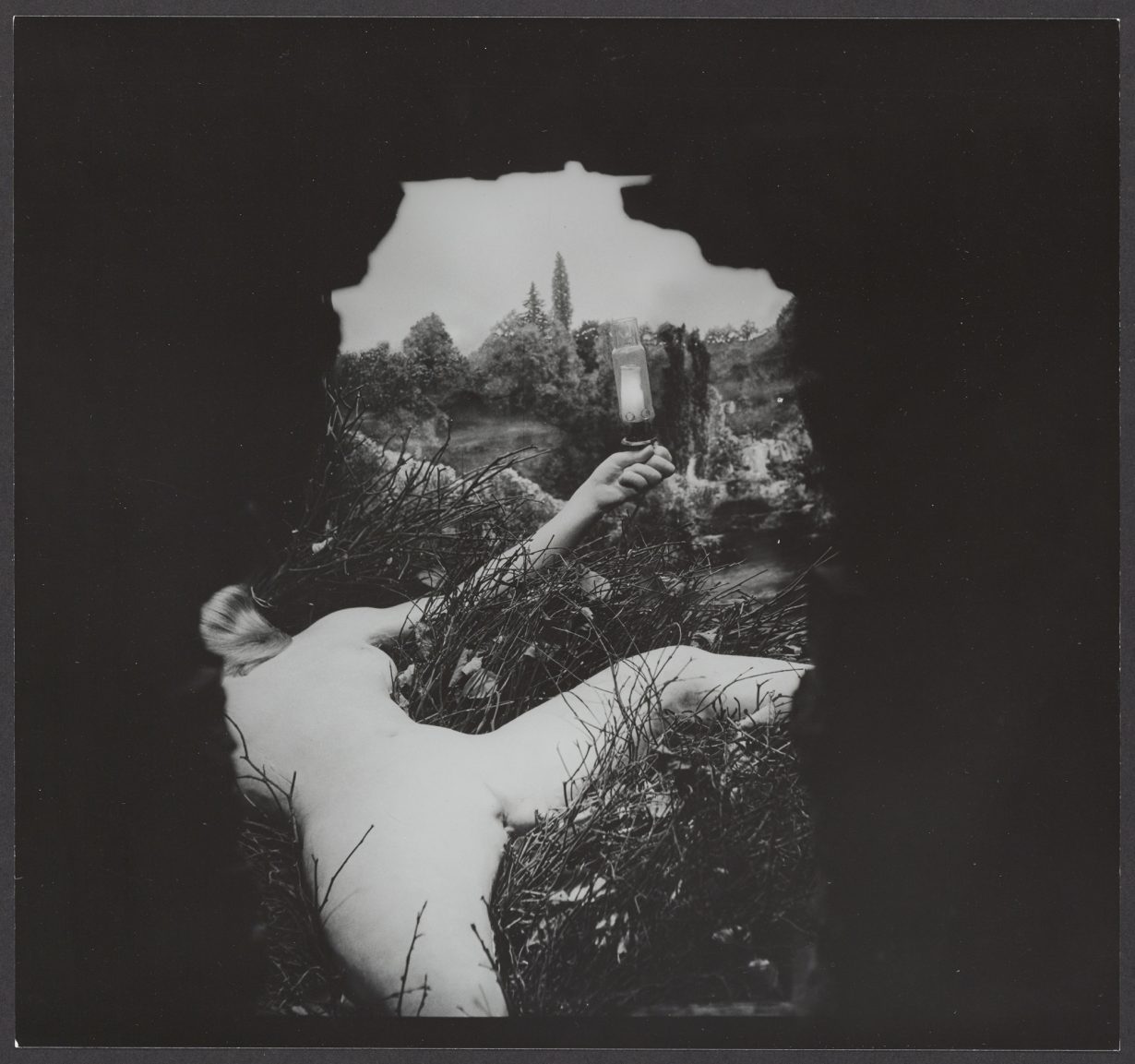
He did not shy away from the idea of mortality. Even a seemingly lighthearted work like Sculpture-morte (1959) – a mound of marzipan shaped to resemble a pile of cauliflower, tomatoes and potatoes – is a vanitas. It is crawling with fake flies, as is the sculpture Torture-morte (1959), a painted plaster cast of his foot. Denise Browne Hare’s black-and-white photographs of Étant donnés, also in the MoMA exhibition, reveal how utterly lifeless the splayed female body looks without the pastel hues of the artificially lit landscape. In a 2008 article titled ‘Hanging the Work of Art: Love and Death in the Duchampian Readymades’, art historian Sheldon Nodelman reads the image of the suspended form in Duchamp’s oeuvre – such as the Bride in The Large Glass, who hovers above her helpless suitors – as a figure of death. Suspension, Nodelman observes, is ‘a device of display’ as well as ‘a form of execution’. But there is at play here another form of suspension, a temporal one: the delay between signal and reception, between intention and realisation. What emerges from this gap is something less finite than death. Speaking to his spectators by way of his manuals and maquettes, Duchamp seems to urge us to approach his works as sites of shared labour, intervals of uncertainty in which artistic intent is continually refined and suspended between this world and the next.
Marcel Duchamp is on view at the Museum of Modern Art, New York, through 22 August
From the Summer 2026 issue of ArtReview – get your copy.
Read next L.S. Lowry: ‘I’m Fed Up With Painting’