The novel follows a Palestinian refugee living in a camp near Ramallah
Nur Mahdi al-Shahdi isn’t quite sure who he is. When we first meet him, he’s a Palestinian refugee living in a camp near Ramallah. His mother died giving birth to him and his father barely speaks. His best friend Murad has been held ‘in the depths of Zionist detention centres’ for the past decade, accused of attacking Occupation soldiers (this novel’s author, Bassem Khandaqji, a Palestinian, was himself imprisoned, for his political activities, for over 20 years, during which time he wrote this novel). Nur is a little unmoored. But he is researching ‘Roman Palestine in the days of Jesus’ in order to write a novel that will reclaim the ‘true story’ of Mary Magdalene from Dan Brown and his ‘revolting’ novel The Da Vinci Code (2003). Although it’s sometimes unclear as to whether or not Brown, who appears as a constant chorus to Nur’s adventures as recorded here, is as much an inspiration as a motivation. Nur records voice memos documenting his progress for Murad; Murad updates Nur, by smuggled messages, on his own research into the tactics of ‘Zionist colonialism’. This is a novel in which identities are constantly being stripped down and reconstructed. Particularly when, by accident, Nur, who speaks Hebrew and can physically pass as an Ashkenazi Jew, comes across an Israeli ID card and starts working in Jerusalem, first as a tour guide, then as an archaeologist, under the name Or Shapira. Or is confident, able to do anything he wants to do; Nur is more apprehensive, constantly made to feel shame about who he is and afraid of being caught or found guilty of something (‘he wished his memory was stored on his cell phone so that he could easily delete it,’ we learn at one point). As Nur/Or’s internal conflicts grow they increasingly parallel the evidence of the world around him. The question that Khandaqji eloquently poses is whether or not Nur can be more himself as an Israeli (because restrictions on what he can do are relaxed) or as who he really is. Whether or not belonging is a matter of choice or necessity. And, of course, why there should even be a question about this in the first place. The result is a searing, heartbreaking study of a world that confronts us all, even beyond the borders of Palestine, today.
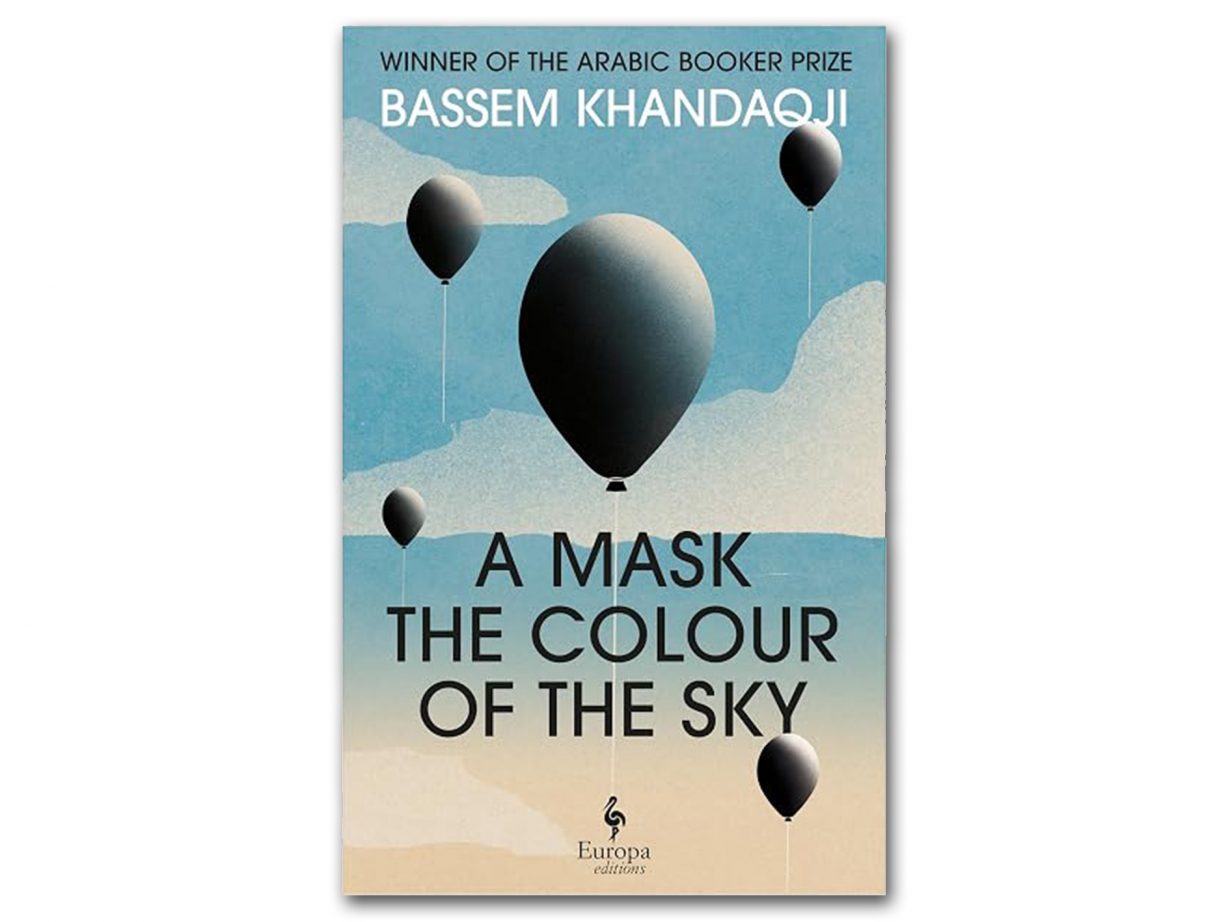
A Mask the Colour of the Sky by Bassem Khandaqji, translated by Addie Leak. Europa Editions, £10.99 (paperback)