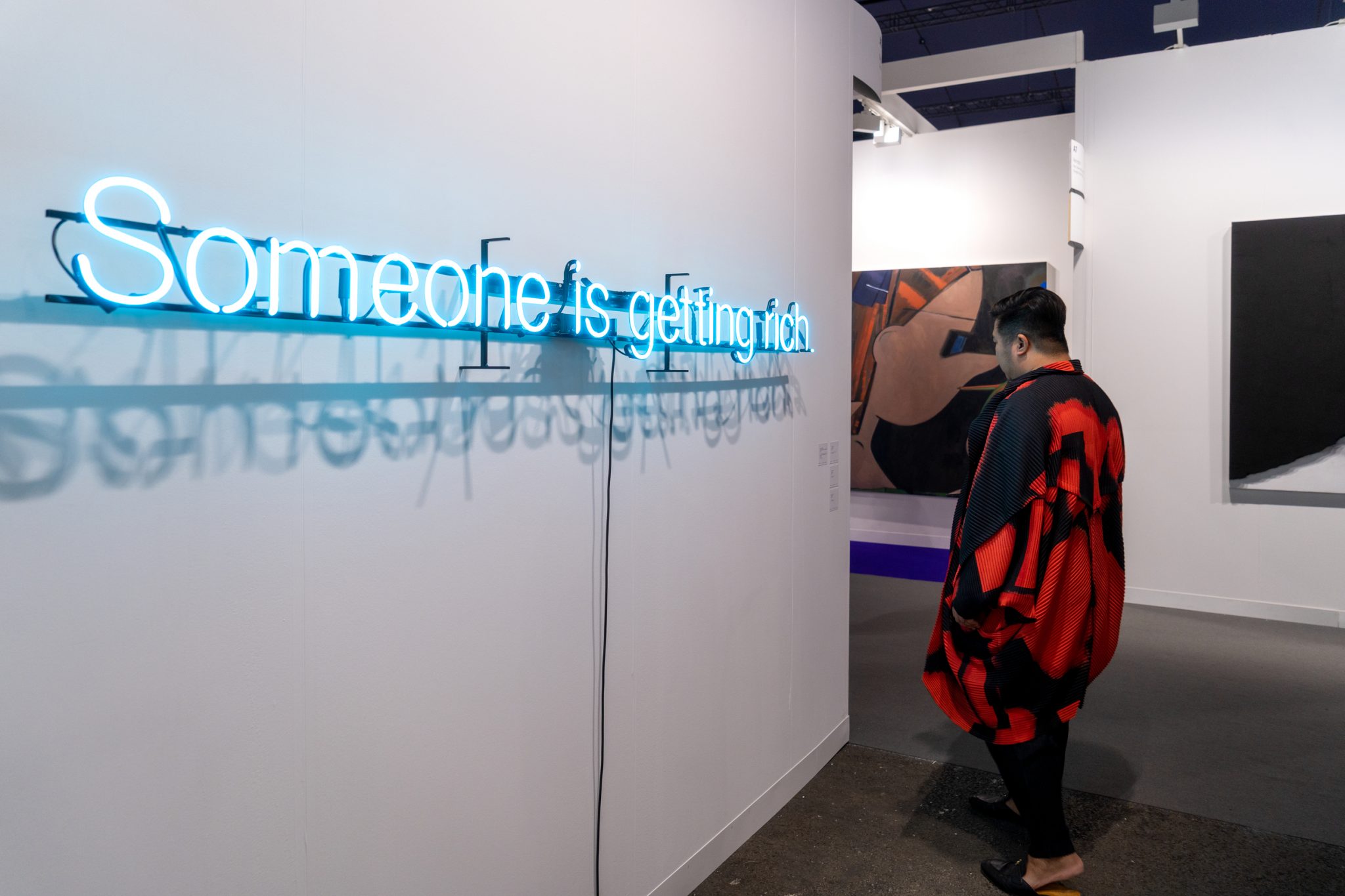
Against the cultural economy’s demand for constant productivity, a group of works by Chicago-based conceptual artists invites viewers to slow down
Three unopened ‘gifts’ addressed to the late Pope.L sit overhead on wooden shelves, slightly out of reach. The first, Package Received But Never Opened #75 (2015), a brown-paper-and-plastic-wrapped box, teeters at the edge, beside Iñigo Manglano-Ovalle’s hand-carved ash-wood Chair for poet (2025). Both works remain tentative, awaiting an addressee. The eight younger conceptualists in this exhibition maintain a brand of deadpan criticality oft associated with their former artist-professors Pope.L and Manglano-Ovalle, showing little interest in adding objects to a world quite full of them. In an accompanying exhibition text, curators ‘D.R.A.W’ expound on a brand of ‘slacker conceptualism’ rising out of Chicago, a city whose artists have gained a reputation for being technically sound, self-effacing cognitive workers shifting labour out of the art institution and into the streets. The text ruminates on a widespread antipathy towards labour and on inflated coastal real-estate markets (Josh Kline’s viral October essay is in the water here, too), landing on the assertion that Chicago is the place to be for ‘better, more thoughtful i.e., leisurely art’.
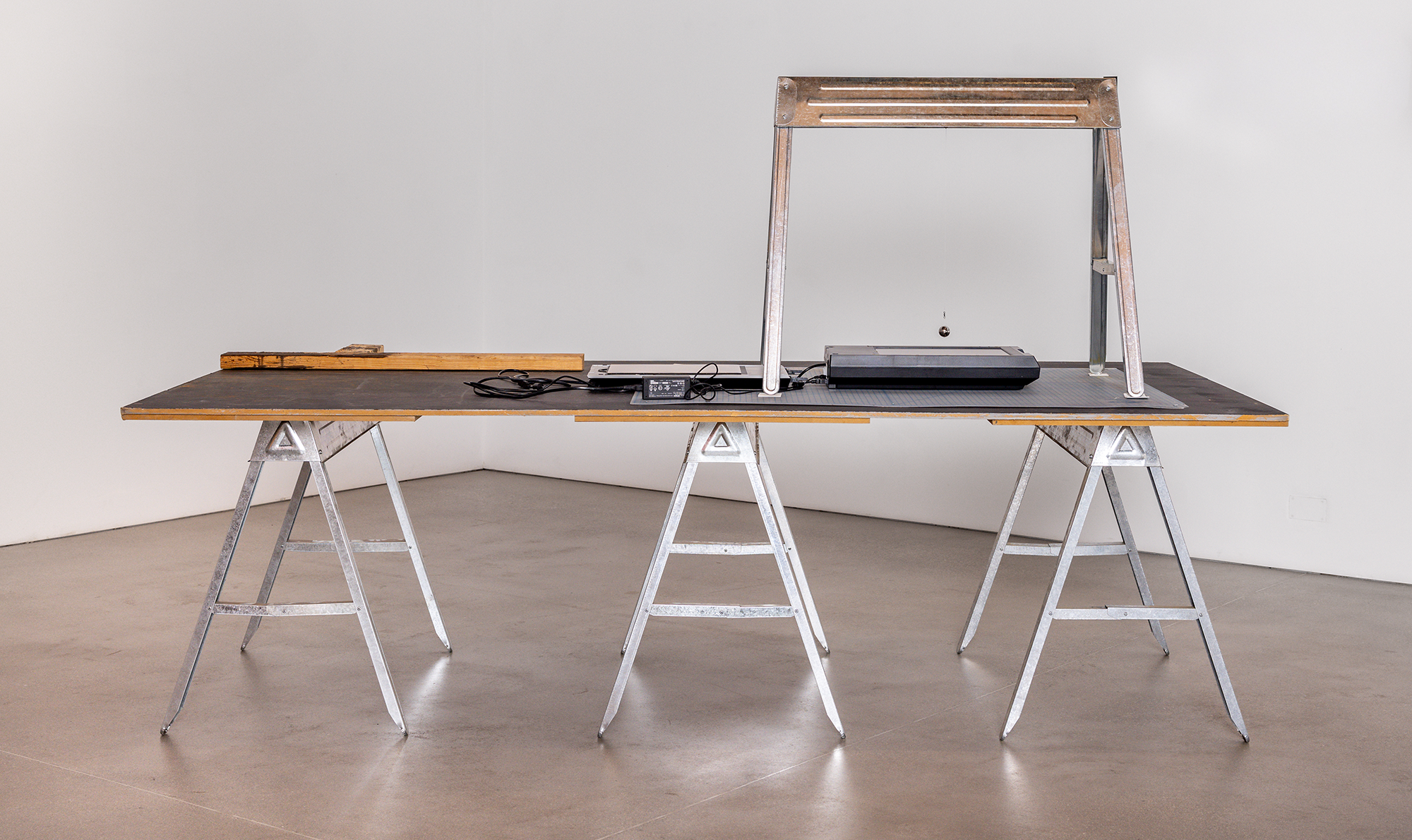
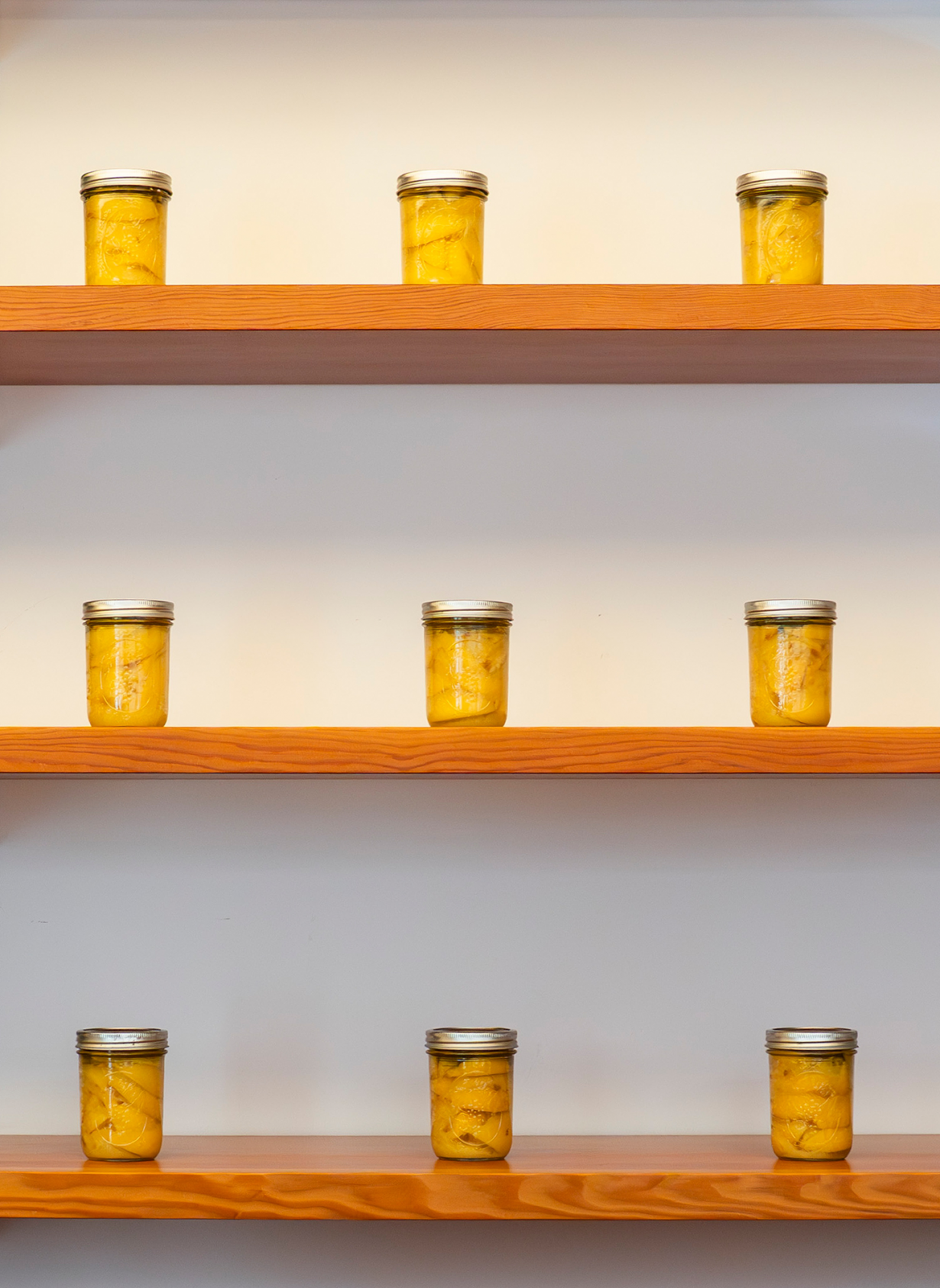
A quality particular to the Midwest – that of attending to materials and conditions with no desire to manipulate or control them – appears in this straightforward presentation of works, but artists Alex Chitty, Shir Ende, Max Guy, Jinn Bronwen Lee, Dave Lloyd, Devin T. Mays, Nick Raffel and Miao Wang are anything but slack. Instead, they maintain a playful antagonism towards the cultural economy’s demand for constant productivity by making the viewer wait. Chitty’s nine jars of preserved lemon, The time it takes (2026), are raffled as they cure, as if ‘making it’ in the artworld were an odyssey of deferral. In Matrix #2 (to Every House Has a Door) (2026), an iteration of Guy’s work-table comprises four balancing steel sawhorses with two open-faced Epson scanners. Dressed as a horned devil on the show’s opening night, holding one end of a fishline tied precariously to a steel ball, Guy released the timekeeper as he began an anecdote about a train conductor on death row. Ende’s opening-night performance, Constructions for GRAY (2026), only became perceptible after a period of waiting, after which four performers, following choreography that corresponded to the gallery’s architectural elements, joined hands, arms outstretched, bending from the hips.
As most Chicago artists live and work near one another within a finite pool of pedagogical influences, their oeuvres demonstrate what the curators call a ‘love for… the social magic of an artist’s life’. Often appearing in each other’s works and studios, building skills and shared resources, Chicago artists call into question whether it is necessary to distinguish art from life. Refusing to separate painting from the heroism of the ordinary, Lloyd presents a prefab kitchen alongside three large abstract paintings. An ‘accidental leak’ from GRAY’s saw-tooth ceiling slowly splashes into a clogged steel sink, where a blue-green abstraction patiently serves as a splashguard. Rumour has it, a clandestine painting lives behind a lanky handleless cabinet door. Across the way, Wang’s monochrome diptychs, made with layers of watercolour and the artist’s defrosted breast milk, and taped to the wall, are portraits of a day centred on anticipation and responsiveness. Wind from Raffel’s wood-carved Floor fan (2026) catches the red, yellow and white sail on Chitty’s Blip (2026), a 1982 Sunfish sitting on a trailer as if waiting to embark on her first sea-journey . At present, when viewers’ capacity for waiting may be waning, these reclusive, bodily and marginally active works remind us to stay present until our perception shifts.
IT’S ABOUT TIME: Counterproductive Conceptualisms in Chicago, Gray, Chicago 10 July – 22 August
From the September 2026 issue of ArtReview – get your copy.