“Only mass collectivity can really change the world”
ArtReview sent a questionnaire to artists and curators exhibiting in and curating the various national pavilions of the 2026 Venice Biennale, the responses to which will be published daily in the leadup to and during the Venice Biennale, which runs from 9 May through 22 November.
Khaled Sabsabi is representing Australia; the pavilion is in the Giardini.
Celebrating Visions. Versace partners with ArtReview to share stories from the 2026 Venice Biennale.
ArtReview Tell ArtReview what you plan to exhibit in Venice. What has influenced or inspired you?
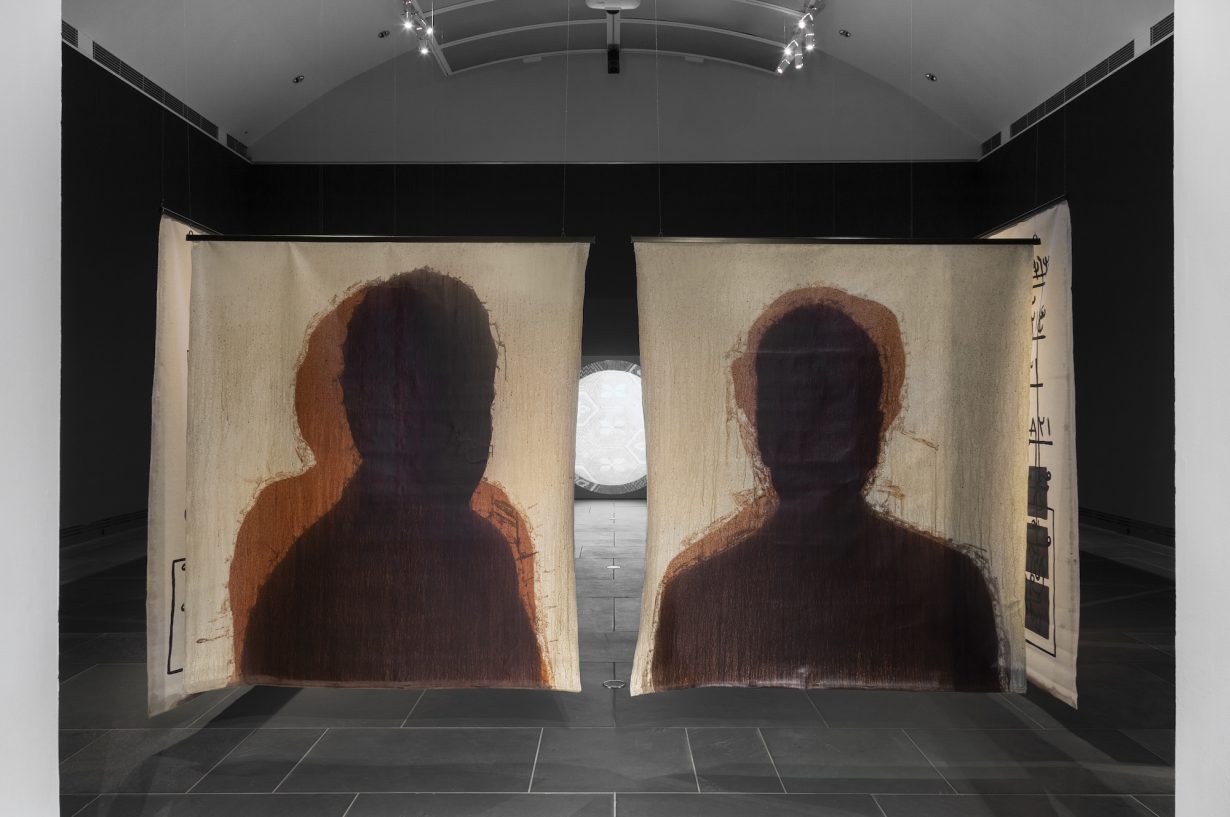
Khaled Sabsabi This year, I will be exhibiting work both in the Australia Pavilion as well as in La Biennale di Venezia’s main exhibition, In Minor Keys. Both works will explore spirituality, migration and the beauty and complexity of shared humanity. These guiding philosophies draw upon Tasawwuf (Sufi) sensibilities, which represent the relationship between the ‘inner self’, the ‘outer self’ and the universal. I want to present these concepts inclusively, inviting all visitors to contemplate their own relationships, both with others and themselves. I hope the work can be an invitation to audiences to move through the space at their own pace, encountering shifts in ambiance, rhythm and perception that encourage pause, listening and reflection.
AR In what ways (if at all) does your work relate to the theme of the Biennale exhibition, In Minor Keys?
KS I am honoured to be the first Australian artist to have work in the Biennale exhibition and the Australia Pavilion in the same year. Both of these works will be thematically connected. I’m very interested in the inimitable Koyo Kouoh’s curatorial vision and the imperative she set forth before her passing for humanity to truly listen. My work rejects absolute outcomes or fixed forms within the physical realm. Instead, it embraces flux: everything flows, nothing remains static. Existing as interconnected passages, processes and conditions, everything is contained within the all-encompassing circle of wholeness.
AR Why is the Venice Biennale still important, if at all?
KS From personal experience and observations, I have come to believe that all forms of exhibitions are important. They are important as platforms to bring people together, to have diverse conversations, to find inspirations, reflections and instances of individual and shared enlightenment.
AR What role does a national pavilion play at a time of increasing confrontational nationalisms? Is it about expressing difference or commonality?
KS I can only speak through the lens of my experience and what role I hope this specific iteration of the pavilion can play, rather than national pavilions in general. The works I will be exhibiting continue my poetic inquiry into spiritual and mundane journeys that involve both commonality and difference. The role I hope this pavilion can play is an invitation, calling for moving towards a transformation where collective emotions and experiences may meet.
AR Who, for you, is the most important artist (in any discipline) that your country has produced?
KS That, as you can imagine, is an extremely difficult question. There are so many incredible Australian artists. I would say, though, most of my favourites are First Nations artists. Their work is often so personal yet so rooted in their communities and their histories, and I find their complex relationship to place and material very inspiring.
AR What is something you want people to know about your nation that they might not know already?
KS I hope people approach learning about Australia in a similar way that I hope they approach learning about my work: I would like them to find their own journeys and paths, and to form their own personal narratives and connections. My own deeply personal and spiritual experience with Australia first started when I was a child-migrant fleeing there with my family in the 1970s due to the civil war in my birth country of Lebanon. In my works in Venice, there are symbolic references to Australia’s multicultural and multi-faith identity and to its modern history, which has always been connected to global migration histories.
AR Given that you are exhibiting in a national pavilion, is there something (a quality or an issue or attitude) that distinguishes the art of that nation from that of others? That makes it particular? Are there specific contexts that it responds to? Or do you think that art is a universal language that goes beyond social, political or geographic boundaries?
KS For me personally, as I developed these works in this particular time and space, I thought about how ideas of humanity and philosophies can engage with universal mysticism and the yet-to-be-imagined, the ideas of becoming that shift between and interconnect with learning and unlearning. These sentiments align with my practice, exploring points of intersection that are not immediately obvious and that only emerge when a viewer brings their perspective into the works. For me, it’s not necessarily about engaging in art as a universal language but rather creating work that invites the psyche to consider the continuum of the human condition.
AR What, other than art, are you looking forward to seeing – or doing – while you are in Venice?
KS I am looking forward to spending time with family, friends and fellow artists. It will also be very rewarding to experience how visitors engage with the works, and to meet some of them too.
AR Could you give us a brief overview of your average working day while creating your presentation in Venice?
KS The average day involves a lot of work onsite and in the studio. At the time of writing these answers, I’m working hard towards finalising the pieces for public viewing. I am excited to see how they work in Venice. I do try to take a bit of time out of every day to imagine how visitors will interact with them, as that’s an important part of this process for me.
AR Can art really change the world?
KS When striving for utopia, only mass collectivity can really change the world. But art is an important ingredient that informs the change we want as a group. Art gives us a chance to imagine, and in many cases to practice, a new kind of world. Without creativity, a harmonious change will not be possible.
The 61st Venice Biennale runs 9 May through 22 November 2026