A new film gets Kate Moss wrong, says Philippa Snow, but perhaps trying to get her ‘right’ misses the point entirely
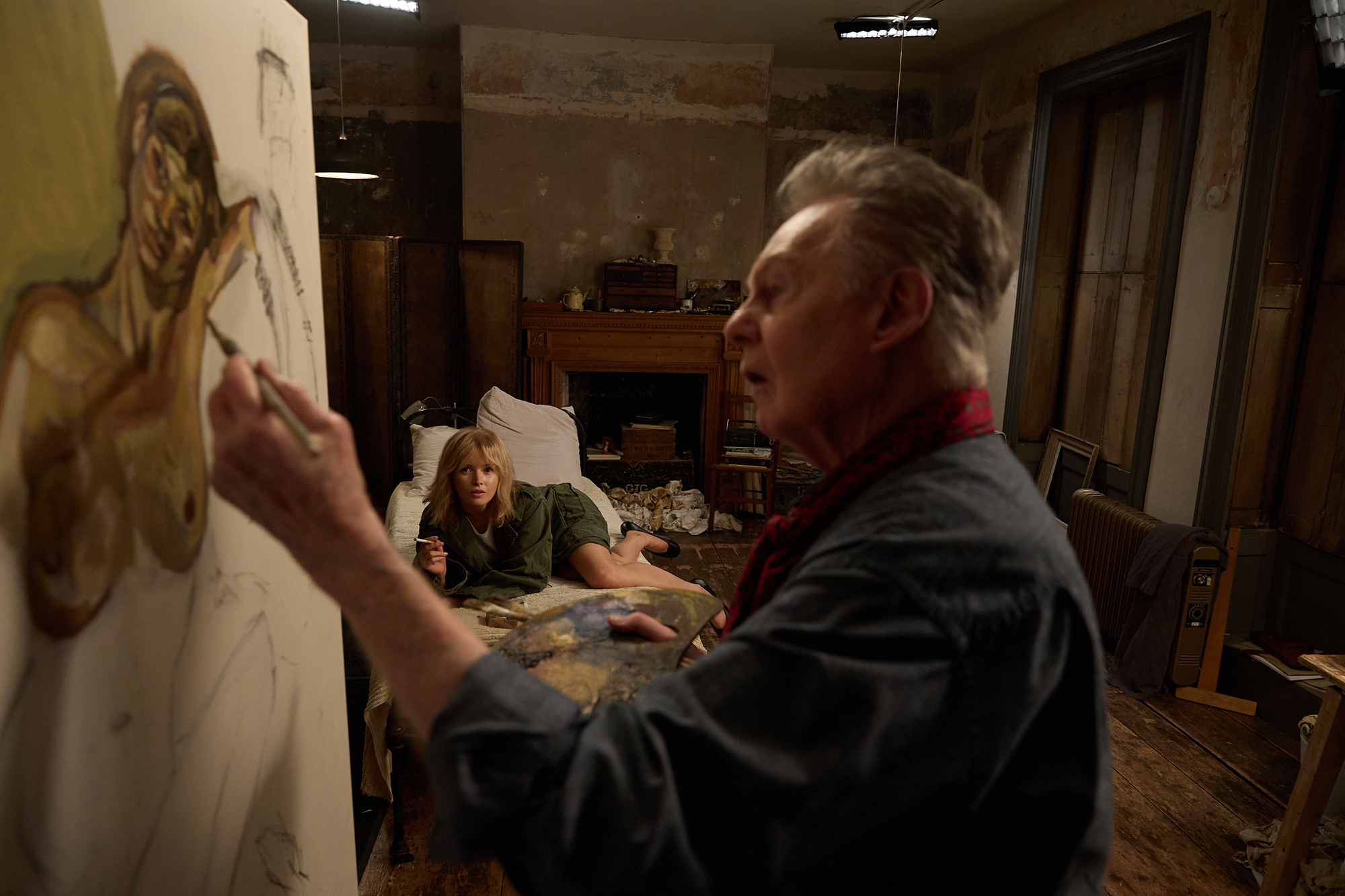
“My desire is to get to the core of the being,” the painter Lucian Freud (Derek Jacobi) remarks to the model Kate Moss (Ellie Bamber), as the two of them stand before Titian’s Diana and Actaeon (1556-9) in the National Gallery, in the opening scenes of a strange new biopic of the two. How interested the public are in getting to the core of a high fashion model – one of the most staggeringly beautiful women in the world, no less – is debatable: her status as a logolike image has, in some ways, worked to mutual advantage, allowing Moss herself to maintain some level of privacy in spite of her worldwide fame, and permitting fans and collaborators alike to project their own ideas onto her delicate frame. I have always imagined that her lifelong reluctance to give interviews, in addition to offering her a measure of protection, has something to do with the incongruousness sweetness of her voice, which has a fluting, girlish quality suggestive of a certain naiveté and innocence – one clearly at odds with the speaker’s appearance, taste and lifestyle, all of which imply worldliness, womanliness, sexiness, and that rarest of qualities, cool. Moss is also a genius businesswoman; she is canny enough to know that mystery is a valuable asset for a model, and an even more valuable one for an icon. It is fitting that her long-time mantra ‘never complain, never explain’ is said to have originated with Queen Elizabeth II, since Kate Moss herself is a modern kind of British figurehead – a metonym for nineties and noughties London cool, just as our monarch is supposedly one for the nation itself.
At any rate, director James Lucas’s Moss & Freud, which fictionalises the creation of the latter’s 2002 painting of the former, Naked Portrait, cuts nowhere close to the core of the enigmatic star at its centre. Its Kate Moss is frivolous and a little airheaded, a hedonist not for the sake of pure pleasure, but because she has been thoroughly corrupted by her past. Here, one sees beneath her surface, and then cannot help but wonder if this is all there is – an impossibility, surely, given the crackling electricity present in all of the actual Kate Moss’s photographic work, and the obvious selfawareness she displays on those very rare occasions when she chooses to commune with her public. Can I say for certain that this fictional depiction is nothing like the ‘real’ Kate Moss? I can say that it does not much resemble the impression I have formed of her over the last twenty years, based on the flashbulb glimpses she affords us. Then again, this impression is not founded in much. I know that she was born in Croydon; that she has described her mother, Linda, as ‘glamorous’, and that maybe this is where her own magnetism comes from; that she has a famous ‘dirty laugh’; that she is, almost unfailingly, one of the best dressers of our age; that she was once candidly snapped with her then-beau Pete Doherty hanging upside down out of a window to smoke, and that the resulting image did more to make smoking seem sexy and romantic than any work of art since Casablanca (1942); that in 1999, on the cusp of a brand-new millennium, she was interviewed in Dazed & Confused magazine, and generously gave hard-partying women everywhere a new mantra. ‘My mum used to say to me, “you can’t have fun all the time,”’ she revealed, slyly, ‘and I used to say “why not? Why the fuck can’t I have fun all the time?”’
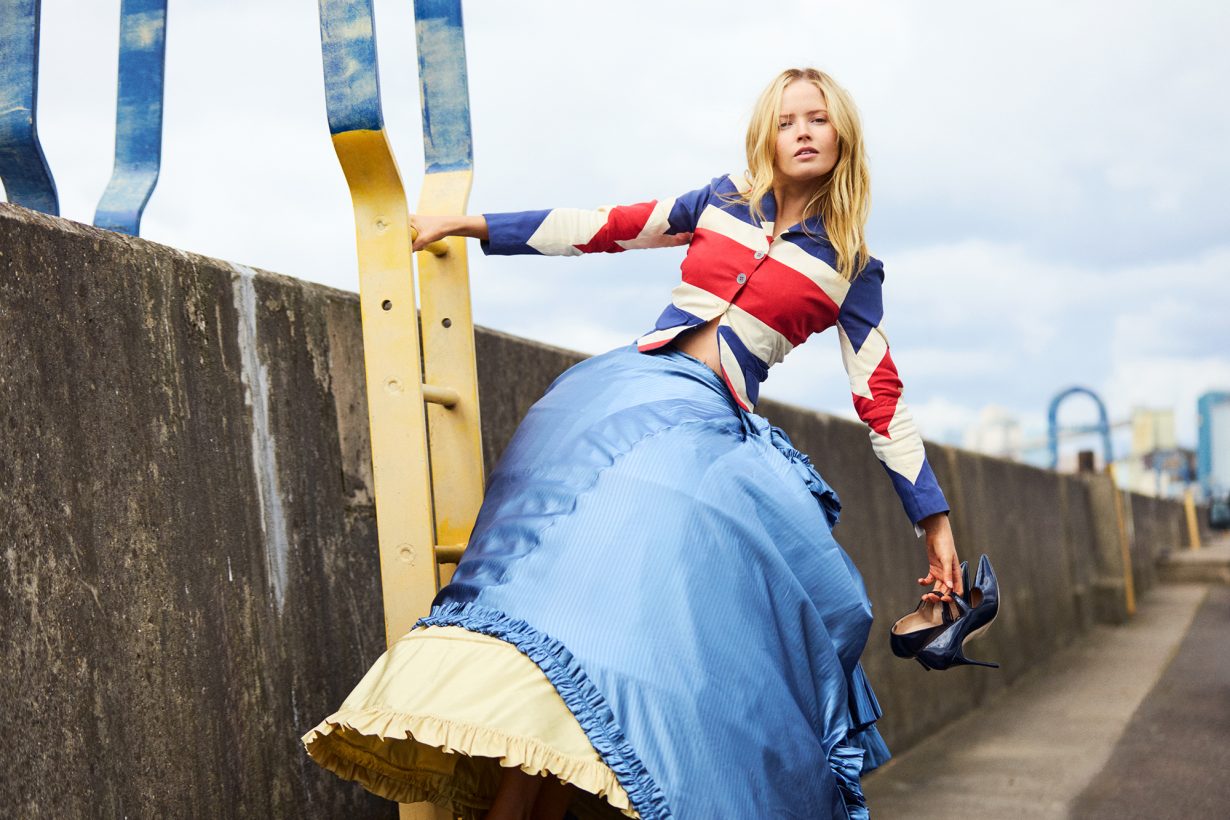
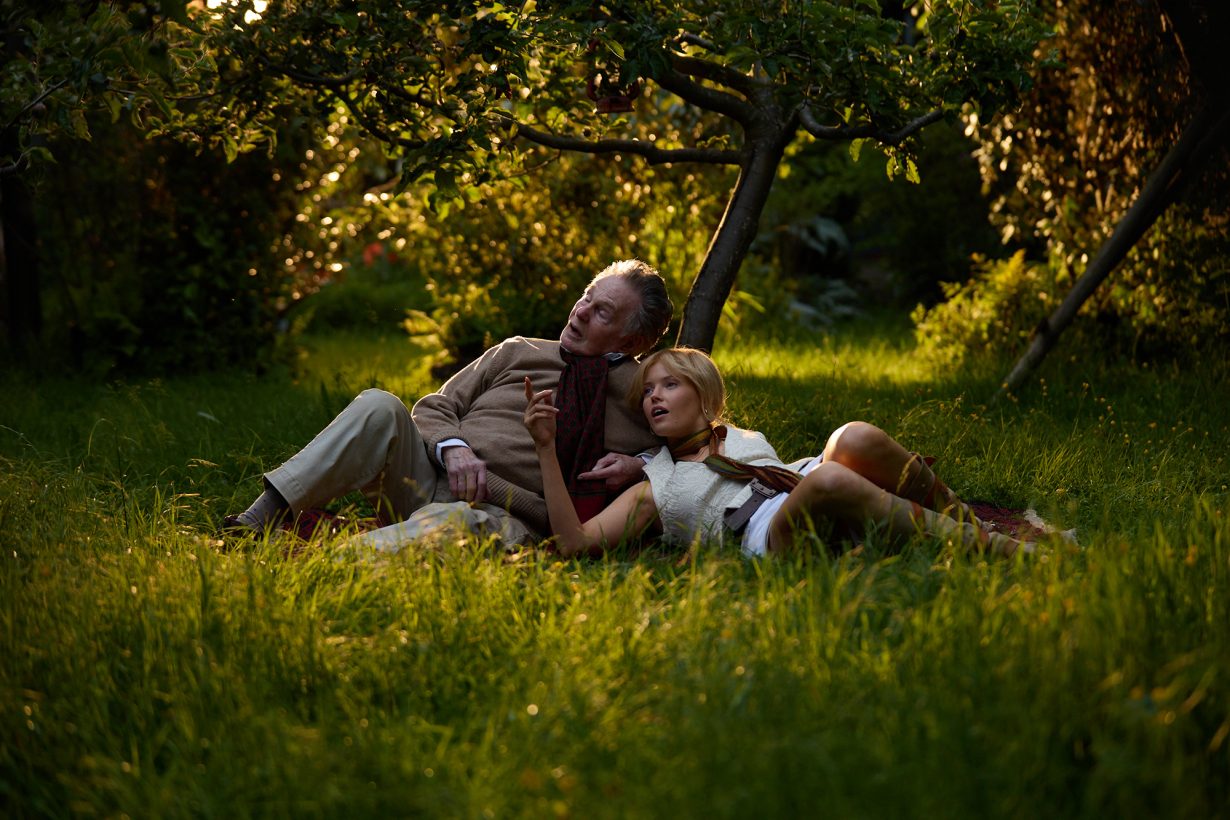
Per Moss & Freud, which recreates this interview onscreen, the desire to have fun all the time is problematic because it is a possible symptom of trauma. The film opens with Moss at the peak of her hedonism, at what we are led to presume is the start of the noughties. Dates, as well as certain details, are fudged for the sake of creating a streamlined narrative about personal growth and recovery: the messy, druggy girl who is haunted by memories of on-set sexual harassment becomes, under the stewardship of a wise old painter, a woman of substance. Because Moss conceives with her then-boyfriend Jefferson Hack during the long span of sitting for the portrait, she is also seen to become that most saintly of archetypes, a first-time mother. She and Freud, over the course of nine months, spend many evenings together in his studio, and in spite of his major reputation as a lover of women – at the time of his death, he was rumoured to have fathered as many as thirty children – their dynamic is primarily wholesome, faintly familial, and occasionally tooth-achingly sweet. Watching this odd couple cosily enrich each other’s lives, I thought how interesting a film which permitted a more transgressive glimpse of this false daddy-daughter dynamic might be: one which played up the blurring of lines between artist and model, father and daughter, pervert and sex-symbol, as befitting the family name Freud. Instead, we are treated to scenes such as one in which the painter solemnly and tenderly describes his experience of living in Germany under the Nazis as a young Jewish boy, and Moss hits back with a cartoonish “you wot?”Funny, Kate – I was thinking the very same thing.
In its eagerness to suggest that her friendship with Freud spurred on her rejection of her old, reckless lifestyle, Moss & Freud also stops shy in 2002, with the exclusion of a brief 2011 coda. Absent is Moss’s 2005 cancellation in the tabloids for being photographed doing cocaine, earning her, briefly, the nationwide nickname ‘Cocaine Kate’. Absent, too, is the way that she swiftly and cannily clawed her way back to the top, earning eighteen lucrative contracts for the Autumn-Winter 2006 season alone. (In 2022, she went on to become the Creative Director of Diet Coke: ‘I’ve always loved Coke,’ she purred at the press conference announcing her appointment, proving once again that she is smarter by far than Moss & Freud would have you think.) Flashy scenes of her hard-partying days are interrupted, as if by the sudden stab of a headache, by black-and-white visions of two formative shoots from her teens: her famous ‘Summer of Love’ editorial for The Face, for which her friend Corine Day convinced the tearful sixteen-year-old Moss to take off her top, and her Calvin Klein ad with ‘Marky’ Mark Wahlberg the following year, at which she reports being groped by the actor. In life, she has made no secret of finding these two incidents troubling, and one has to imagine they affected her formative impression of the industry. Nevertheless, the idea that they broke her completely, given her success and her indomitability, seems dubious., and if some of her drinking and drugging was linked to her dissatisfaction with her job, far more of it always seemed to spring from her joyful, full-throttle love of sensation and pleasure. And as Moss herself would say: why the fuck not?
Moss & Freud, in other words, both complains and explains on Kate Moss’s behalf. It performs the classic biopic trick of attempting to launder its subject’s image, turning them into a wide-eyed victim of circumstance instead of an interesting, complicated person. In this respect, it vaguely recalls a film about another female star of the noughties, 2024’s Back to Black, which positioned Amy Winehouse as a baby-crazed, lovesick babe in the woods, as opposed to depicting her as what she really was, i.e. a wild, brilliant artist with an artist’s lust for life and experience – one which curdled, eventually, into an obliterating longing for death. Moss’s story was never that dark, and her 2005 scandal – over daring to do what almost everyone did in fashion and the arts circa 2005 – was both cruel and overblown. I assumed this was a truth universally acknowledged, but if not, this may explain Moss’s involvement in this squeaky-clean film as an Executive Producer. In October of this year a show at Tate Britain entitled The 90s: Art and Fashion is set to use Moss as its poster-girl; it remains to be seen whether this will present another nostalgically defanged view of the icon and her era.
Feminist revisionism vis-à-vis pop culture always seems to require the wronged woman to react to being wronged in exactly the right way. In fact, Kate Moss’s mutifacetedness is part of her eternal appeal: she is a sex goddess and a professional caner and a mother and a soft-voiced girl from Croydon, an artist and a muse. Her art form is the image – her own, and those which others have created with and of her. Famously, Lucian Freud painted very few celebrities. It is not terribly surprising that such an inveterate womaniser would want to paint a woman like Kate Moss, and yet there must be more to it. It is possible that, like so many of her fans, what he desired was the solve the mystery of her: to discover the real Kate. At the end of Moss & Freud, the piece is unveiled in Freud’s studio, and Moss, used to seeing herself in a more flattering light, does not care for it. “The painting is your truth,” he tells her, “and it is my truth.” Moss & Freud is, when it comes to Moss, not my truth. Well, perhaps it is hers. One only needs to see photographs of her shifting from look to look, from woman to woman, to realise that the nature of the ‘real’ Kate Moss – like that of beauty, or of art – is entirely subjective.
Read next We’ve Hit Peak ‘Female Slacker’