What, on the 50th anniversary of MoMA PS1, are we actually celebrating?
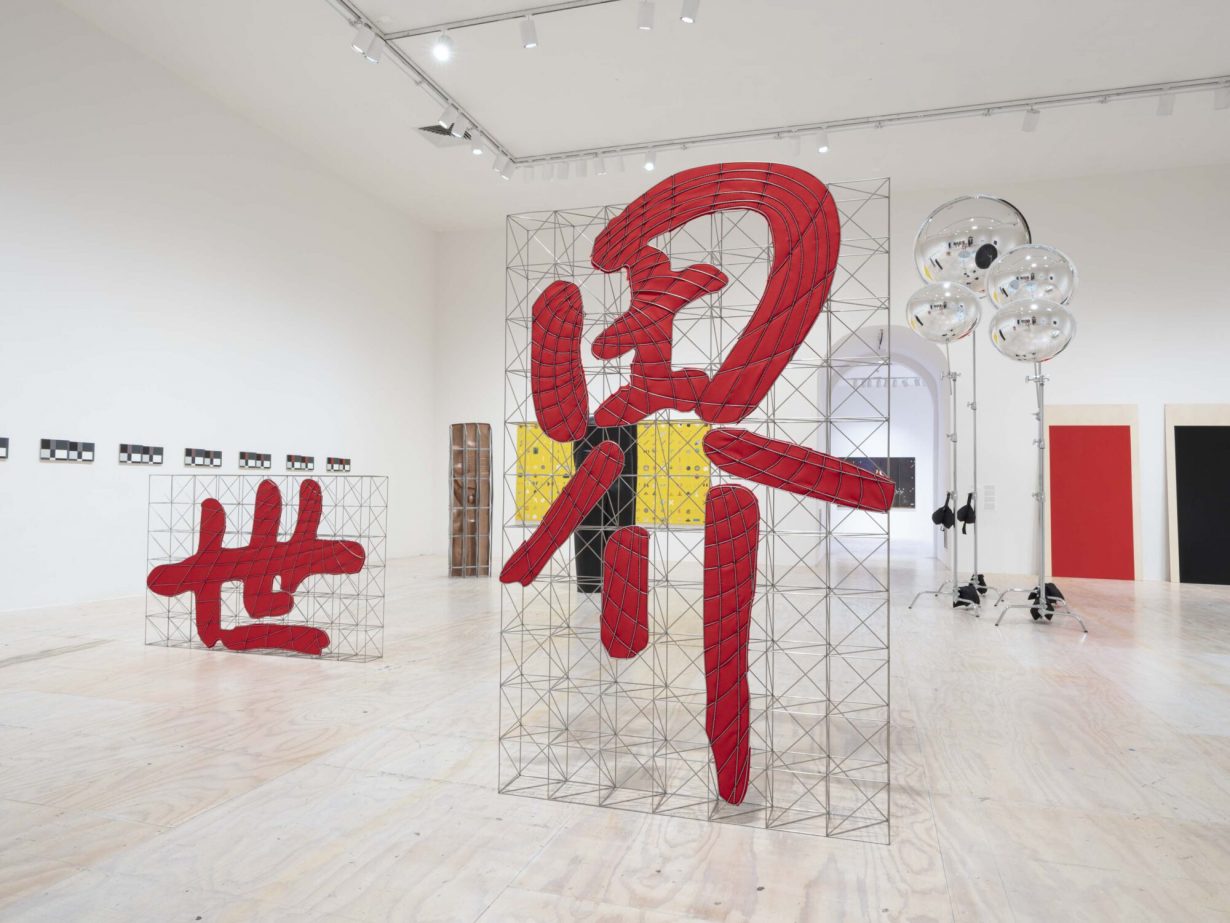
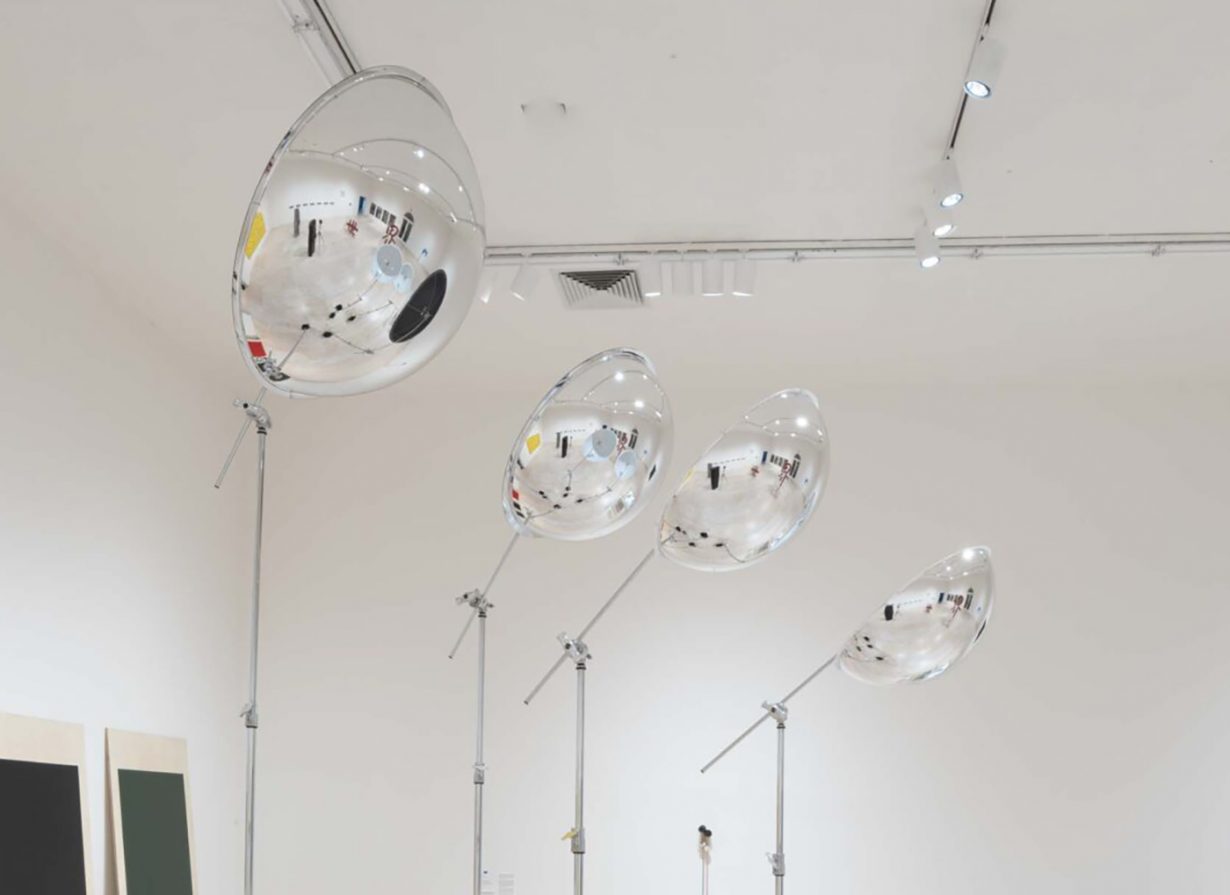
In a spacious third-floor gallery in MoMA PS1, Covey Gong’s sculptures Shi (2026) and Jie (2026) – red fabric cut and stretched over stainless-steel scaffolds, in the shape of the Chinese characters for ‘world’ – were reflected in Win McCarthy’s Philosophy of Mind (2026), four security mirrors mounted on metal C-stands. Miniaturised and multiplied in these convex surfaces, the words appeared to annotate the room, one of about two dozen devoted to Greater New York 2026, the sixth edition of the institution’s geographically focused contemporary art quinquennial. McCarthy’s mirrors, like the one in John Ashbery’s best-known poem, about the Renaissance painter Parmigianino gazing at himself in a domed glass, distort images to the point of estrangement – ‘This otherness, this / “Not-being-us” is all there is to look at / In the mirror’, Ashbery writes. The themeless 53-artist survey in a sense resembles a hall of distorted reflections. Take, for instance, Mekko Harjo’s I have eaten and made friends (The Devouring Hill) (2026), a Potemkin karaoke bar strewn with confetti and squeaky-clean empties, or Sophie Friedman-Pappas’s Department 4 (2026), a to-scale recreation of a vintage kiln, and “Meet you in hell!” (2026), an assortment of objects from an artist studio including wooden benches and a paint-splattered easel holding a monitor playing a stop-motion video of drawings dancing on a cluttered tabletop, as if to simulate an artist’s working process without showing any work-in-progress.
The staging of Friedman-Pappas’s studio objects recalled MoMA PS1’s – formerly P.S.1 Contemporary Art Center – inaugural exhibition, Rooms (1976). For that, around 80 artists were invited to set up studios in the art centre, which occupied a decommissioned Long Island City school (exhibitors included Marjorie Strider, who poured latex foam down the building’s facade, and Gordon Matta-Clark, who cut holes in three floors). Perhaps the echo was intentional: Greater New York 2026 coincides with P.S.1’s 50th anniversary and is being used, alongside a block party and gala, to mark the occasion in lieu of a commemorative exhibition like FORTY (2016). Founded by curator Alanna Heiss under the Institute for Art and Urban Resources, a nonprofit that had, per a 2008 press release, ‘the mission of transforming underutilized and abandoned spaces across New York City into accessible artists’ studios and exhibition venues’ at the height of a financial crisis that nearly bankrupted the city, P.S.1 became the poster child for the alternative space movement of the 1970s, alongside organisations like The Kitchen, Artists Space and 112 Greene Street (now White Columns), that sought, as historian Cristelle Terroni puts it, ‘to emancipate art from the institutional and commercial pressures of the art world’. Unlike the Heiss-curated FORTY, which brought back 28 now-canonised names from Rooms, Greater New York 2026 features emerging and midcareer – and mostly millennial – artists for whom inclusion in the survey represented hard-earned entry into the professional artworld rather than any kind of freedom from it.
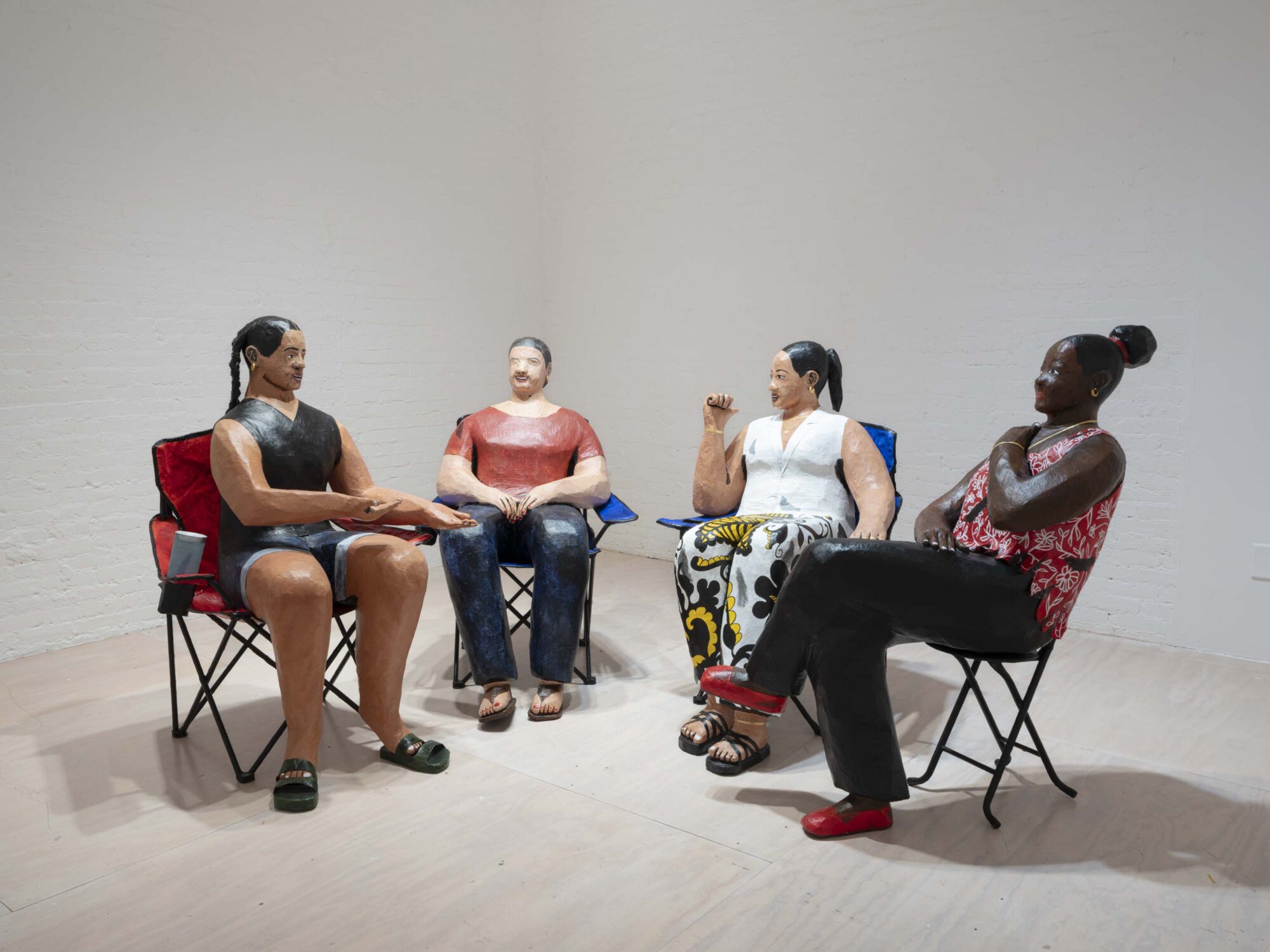
Only on paper was Greater New York 2026 as ‘noisy’, ‘messy’ and ‘gritty’ as nostalgic early reviews declared. In the galleries, perusing Women’s History Museum’s factory-fire diorama and Arlan Huang’s hermetically sealed specimens of organic matter, one encountered a show as streamlined and starchy as any commercial or institutional endeavour, if not more. The beaded-seat-cover carpet that formed part of Kenneth Tam’s video installation I’M STAYING HOPEFUL AND STRONG (For Bilal and Salah) (2026) was not to be touched or trod on as it was in The Medallion, Tam’s 2025 gallery show at Bridget Donahue (now Hoffman Donahue). Signage at the museum read ‘Please maintain distance from artwork’, and the guards said the same in fewer words. It is by now a truism that the alternative arts organisation – the ‘crummy space’, as P.S.1 was dubbed in a 1976 review– tends to survive by assimilating into the artworld; that MoMA PS1 resembles the space depicted in old photographs in its archives only as much as Piero Penizzotto’s lifesize papier-mâché aunties, The Council of las Tías (Mary, Milagros, Cynthia, Nereyda) (2026), recall the body casts of the artist’s mentor John Ahearn (unlike Ahearn’s expressive life-casts, Penizzotto’s sculptures, their faces masklike and limbs stiff, looked like they were modelled after people in New Yorker cartoons or Lego sets); and that the contact high from the 1970s’ radical experimentation has long since faded.
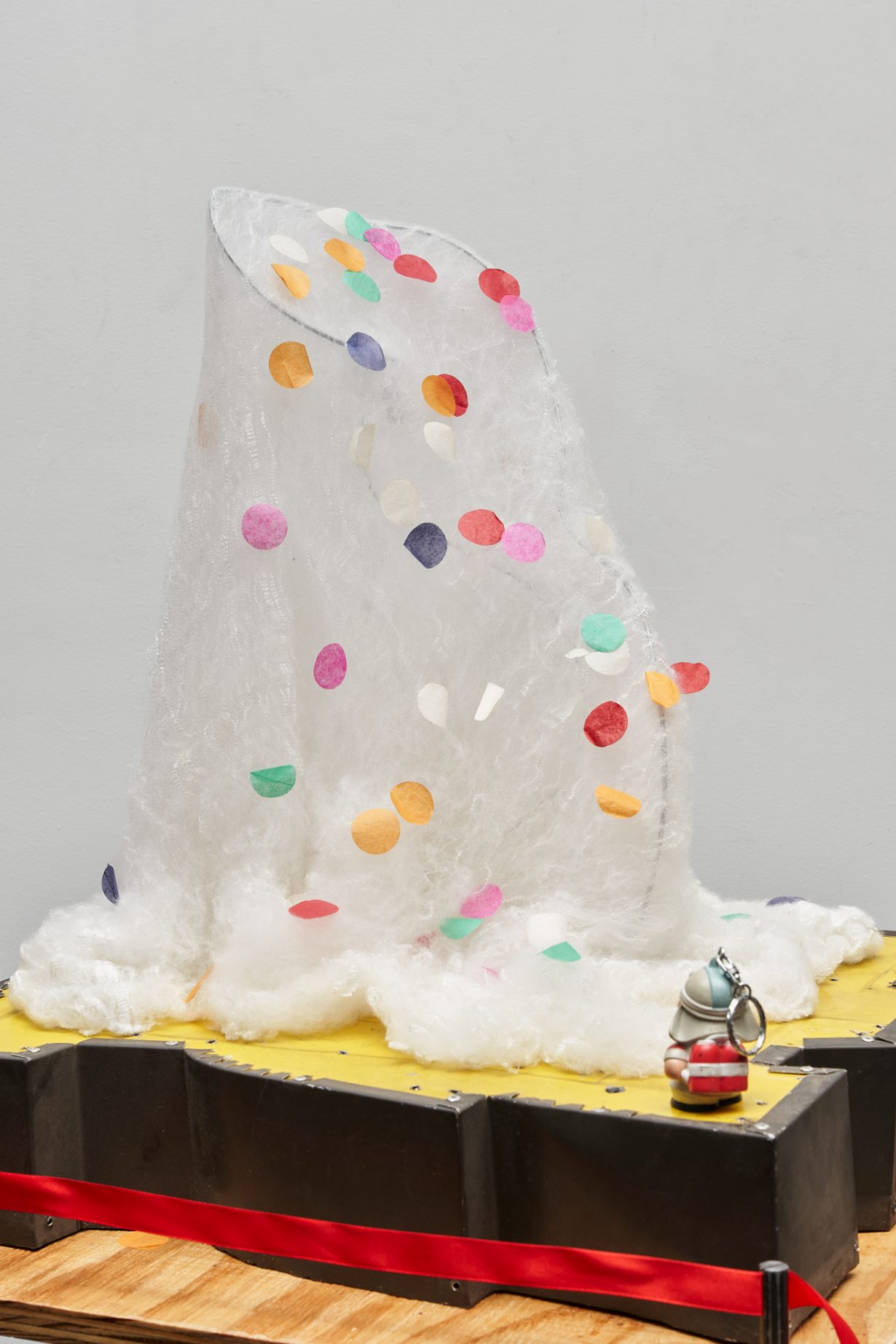
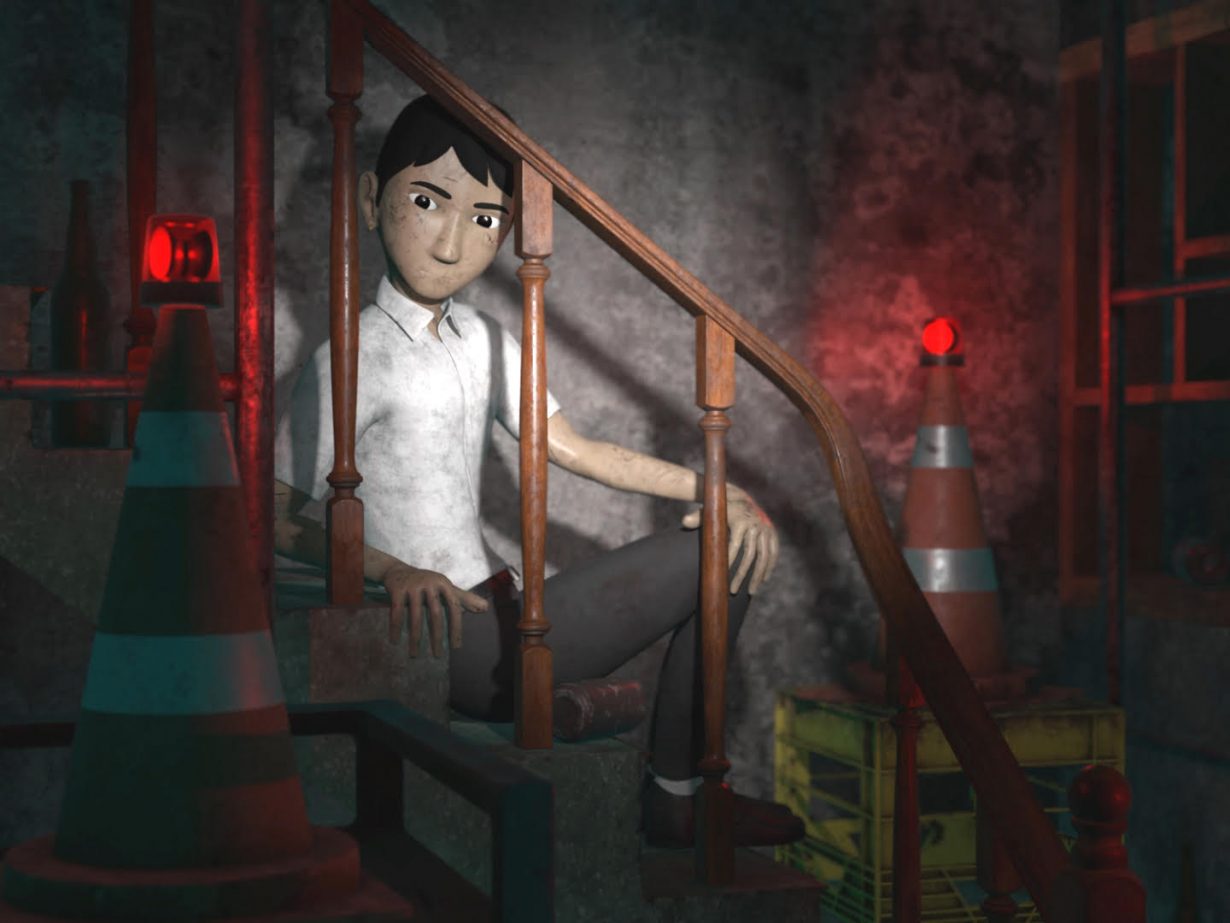
Some artists grapple with the contradictions, staleness and affectation of our contemporary moment more overtly. Louis Osmosis’s junky, toy-covered mixed-media sculptures Variations on Public Affairs & Their Subsequent Invigilators (2026) stood ecstatically amid another half-hearted scattering of disc-shaped confetti – or so it seemed: each piece was in fact accounted for, with a number chalked on the floor beside it. Poyen Wang’s two-channel video installation Night Stroll (2024–25), strobing in the basement next to the boiler room, staged a similar scene of false disorder. Onscreen, a boyish marionette, his body soiled and scuffed, lounged in contorted positions in a grimy abandoned building, monologuing, sometimes singing. Taking the marionette on his word, one might have considered his body a symbolic receptacle of queer and immigrant stigma. But his skin suggested otherwise, smooth and spotless as it was beneath soft brushes of grey that resembled makeup more than soot, as if uncleanliness were a style and dereliction a pose.
What, on the 50th anniversary of what is now MoMA PS1, are we actually celebrating? On one hand, it’s Heiss’s talent for finding and securing affordable spaces for artistic experimentation and her organisation’s storied reputation for fostering that work. On the other hand, it’s institutional survival over multiple generations, achieved by integrating the ‘alternative’ into systems it opposes. For those invested in the health of alternative art communities today, the high-profile success of MoMA PS1’s strategic pursuit of institutional visibility and longevity – from its scrappy beginnings to its $8.5m renovation during the late 1990s to its formal affiliation with the Museum of Modern Art at the start of the millennium (described by a 1999 New York Times article as ‘a marriage between resources and innovation’) – traces an unsettling arc of a seemingly compulsory assimilation that ultimately stymies contemporary imagination.
No sooner had I asked myself what other paths an alternative organisation can take did I come across a show in a defunct WeWork in Brooklyn organised by a recently formed artist-run curatorial platform that turns ‘vacant former office spaces’ – per a statement on their website – into ‘temporary clearings in which art can unfold outside the usual pressure of profit, branding, and institutional expansion’. Around 40 artists, tasked to fill in the former coworking quarters, threw projections on surfaces scrawled with past meeting notes (Cato Ouyang, The Attack, 2026), installed sculptures on desks, light switches and door handles, and nestled videoworks in ventilation shafts (Gregory Kalliche, Slow to disappear, 2026). For a second in this new ‘crummy space’, the irreal image of assimilated radicality snapped back into something resembling coherence, though marinating that vision may require a sprinkle of amnesia and a dash of hope.