“I was quite aware of the fact that it’s, in actuality, very difficult to understand what is happening when you look at whatever you see around you”
Amar Kanwar brings poetry, activism and a documentary impulse to films and multimedia installations that explore power and conflict. His subject matter ranges widely, from religious and sexual violence in India, to the crushing of Myanmar’s democracy movement by a military junta. His best-known work, The Sovereign Forest (2012), is a multimedia installation with a film, The Scene of Crime (2011), at its centre. The last focuses on the collusion between government and corporate interests in the eastern Indian state of Odisha in stripping land of its traditional uses, and on the resistance put up by those who have depended on this land for their existences. Approaching issues of social justice, ecology and violence in an often indirect and open-ended manner, Kanwar’s work can be experienced as conversational – made apparent in his multiscreen presentations – part of a long discussion or a process of cohering meaning and comprehension out of forms that are, by design, elusive and may never be fully identified.
A participant in four straight editions of Documenta, from 2002 to 2017, as well as a member of the committee that selected the Indonesian collective ruangrupa to direct the 15th edition, in 2022, the New Delhi-based artist is influential in amplifying South and Southeast Asian viewpoints and experiences. Exhibitions include solo shows at The Metropolitan Museum of Art, New York, in 2022, and the Museo Nacional Thyssen-Bornemisza, Madrid, in 2019; and group shows such as the Sharjah Biennial, in 2011, 2013 and 2023, and the Kochi-Muziris Biennale in 2022. Kanwar was a curator of the 2022 Istanbul Biennial.
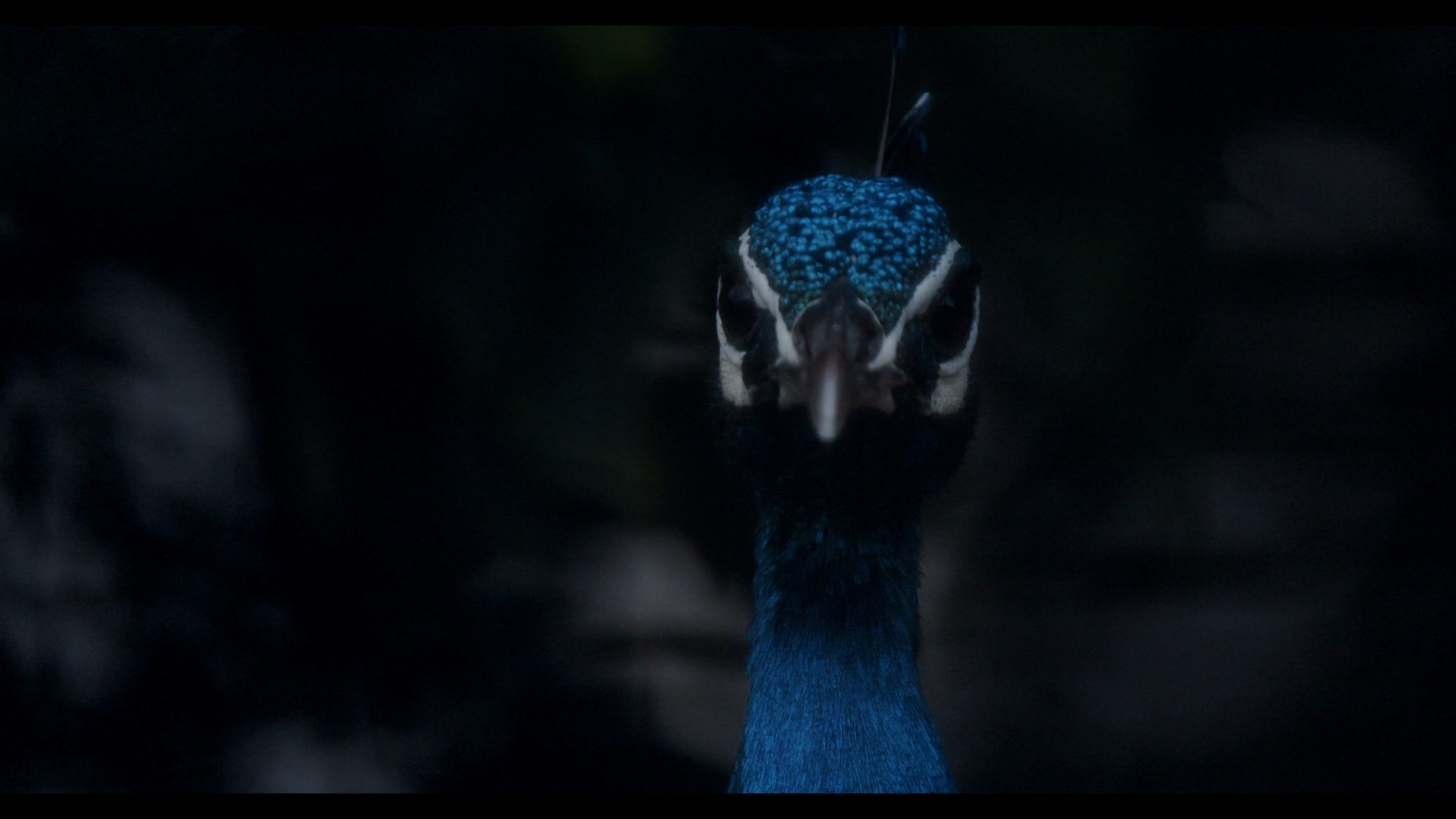
Kanwar’s most recent work, The Peacock’s Graveyard (2023), is a seven-channel film installation in which five fablelike stories are told in brief onscreen texts interspersed with moving and still images of a moon, a storm, wind in the trees, decaying flowers, reflections on water. There are silences and ambient sounds – of rainfall, a distant passing jet – recorded with the images, but the dominant accompaniment is a forceful and propulsive raga track. This work is currently paired at the Palazzo Grassi in Venice, under the heading Co-Travellers, with Kanwar’s The Torn First Pages (2004–08), a three-part film installation across 19 screens. That work, a reference to a Burmese bookseller who removed statements (‘Oppose those relying on external elements, acting as stooges, holding negative views’) issued by the country’s ruling dictatorship and printed by legal requirement at the front of all publications sold in the country, attempts to encompass the complexity of a people’s experience of a brutalising regime across times and geographies, including in exile in the American Midwest. ArtReview caught up with the artist shortly after the opening of the Venice exhibition to discuss the process through which he creates his works.
The Power of Inadequacy
ArtReview You began your career making documentary films. What happened after that?
Amar Kanwar I made a couple of documentaries and then I felt that this was not the right profession for me as it was too expensive to make anything. I decided to quit and joined a group of much older engineers who had left their jobs and were working independently with different rural communities. With them I learned to research and travel, and became an occupational health researcher in a coal mining region in central India. After a few years I was broke, needed to earn a living and the only work that I knew was: how to film; how to edit. So I returned to making documentaries, but trying to make what I felt like, rather than what I was told to make or what I was expected to make to be able to survive. It’s pretty difficult to actually not conform, and I don’t mean just ideologically, but also in subjects and methods of making. There were certain templates that were considered acceptable, and you’re expected to function within them, and soon you also start making within those templates.
I found that offensive and very tedious. I just kept looking for a way to make in the way I wanted to. I almost quit many times, and then some good opportunities came my way just by pure luck. Otherwise I probably would have become a school teacher.
AR You work with expanded and fragmented films and installations, as well as longer single-screen films. When do you know what shape each work will take?
AK It usually comes from a feeling of inadequacy. I start feeling that I need to find different ways of making sense of it, of comprehending it. Around 90 percent of the time, I don’t decide the shape or form. I have consciously planned an installation method only for one work, where I’ve decided to test something in a certain way, but otherwise the form forces itself out from what I’m trying to resolve. I start to feel that perhaps I will be able to open up another sense if I were to do it in this way, if I were to work with space or work with multiplicities of time. Of course, there’s almost nothing that you can’t do inside a single screen in a film. There are many worlds that you can explore, but sometimes I feel the need, for instance, to be able to see what happened in 1948 and 1971 simultaneously. So then it’s a question of what happens if I’m able to simultaneously see something? And sometimes I need to be able to look back and look forward, and I want to be able to look back and look forward not sequentially, but in another way. An experience of shifting between looking backwards and looking forwards. To move from one way to another way, and it’s actually the experience of that shift which seems to be something that could be valuable. Then that creates a need to present it in a particular way.
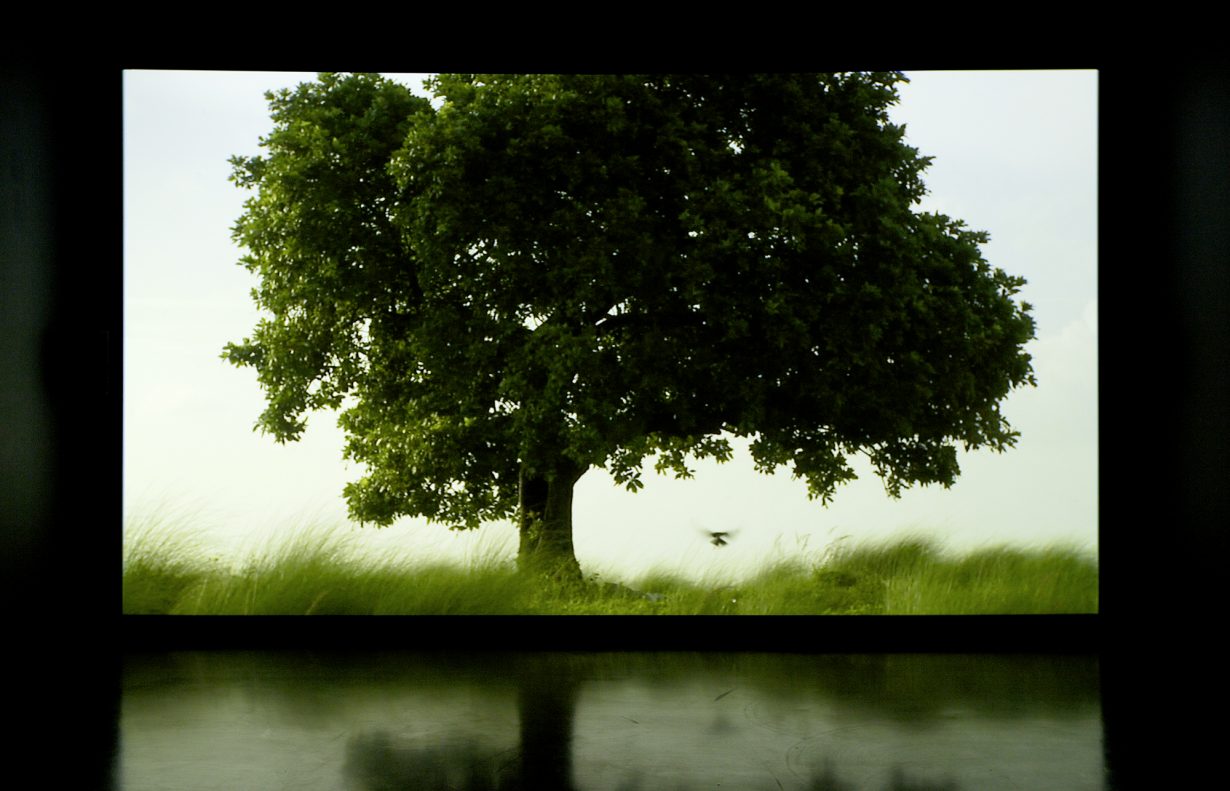
Sometimes there is a question or a proposition, like in the film The Scene of Crime [2011, a work focusing on resistance by local communities to state and corporate acquisition of land for conversion to industrial uses in Odisha, India]. The attempt to answer that question, with multiple answers in varied forms and registers, accumulates over time around the central film to create an installation with many films, texts, objects. So, The Scene of Crime as a single film creates The Sovereign Forest [2012], with multiple routes of entry into it. This installation therefore doesn’t have a closure, and can keep growing. Every insight demands another kind of insight.
AR You’ve said in the past that you’ve been making the same work for 30 years. What do you mean by that?
AK There are different ways to answer that, but the first answer is that I have often found that when I’ve made an installation or a film, I soon become quite acutely aware of what I’ve been unable to do. Of what I’ve been unable to sense or ‘get’. There are many times when I am able to understand what is happening, but not necessarily able to actually bring it out. So it’s, again, a sense of inadequacy. Also, I interact with people: I talk to people, all types of people, all the time. Not just people seeing my work, but anybody on the street. So I understand the limitations of my work.
It’s not that I do this consciously, but when I look back, I find over the years that it’s the same terrain that I’m trying to find a way to understand, trying to find different ways of comprehending, and different ways of sharing that comprehension. Exactly the same thing that I was doing five years ago, ten years ago, but finding another route, trying to get deeper. Not just in terms of the subject, but also in terms of how I comprehend it, how I share the comprehension of it, the language that I use, the motivation that I have, the way I feel and my instincts. All of these, I feel, I keep trying.
Waiting for Something to Say
AR But doesn’t your experience of making multiple projects mean that, now, with each new project you embark on, you already know where you’re headed?
AK Actually quite often I feel like I don’t have anything left to say. I do not know how to speak anymore. And until, and unless, I find something meaningful to say, I have to wait for a while or as long as it takes and find a way to understand myself and find my voice again. To begin to feel that it could be worthwhile to speak and to share it or even attempt to share it, even if it is a failure or success. It’s not that I know exactly what I want to say, it’s that I feel I’ve thought enough, I’ve read enough, I’ve spoken to enough people, I’ve stayed silent for long enough, and then I know what I want to try and say. And that takes time; it can take a year or two.
AR In this process, how then do you know a work is done, meaning a discrete individual project?
AK There’s always more than one answer to a question, but partly it’s my instinct, it’s my gut that tells me. Also, I always keep asking for help. I’m fortunate to have young and older friends and colleagues who do give me their opinion, in a critical way. Those responses are direct, strong and deeply thoughtful, and so this also helps me to decide how to proceed, when to conclude and feel that perhaps I’ve been able to say it in the best way that I can at this point.
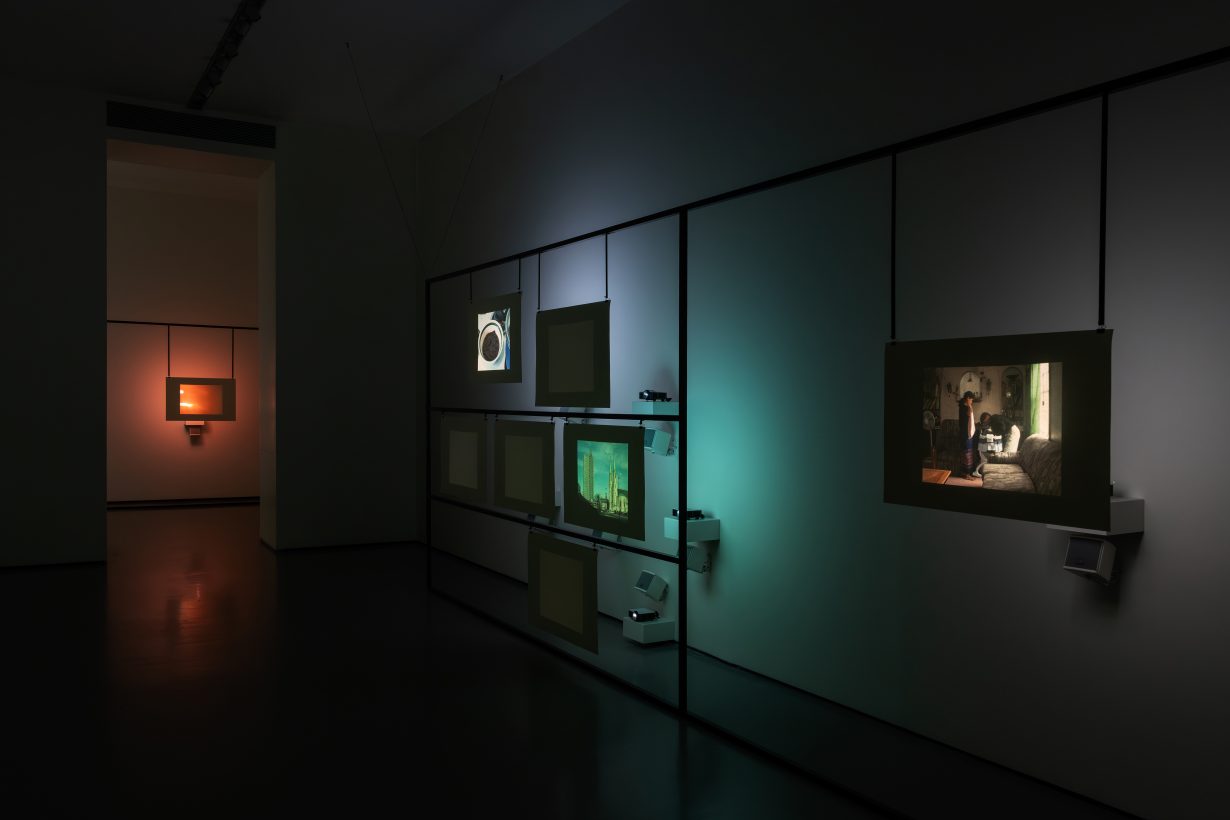
AR In a project like The Torn First Pages, three installations created over a period of four years, did you know how one work would lead to the next?
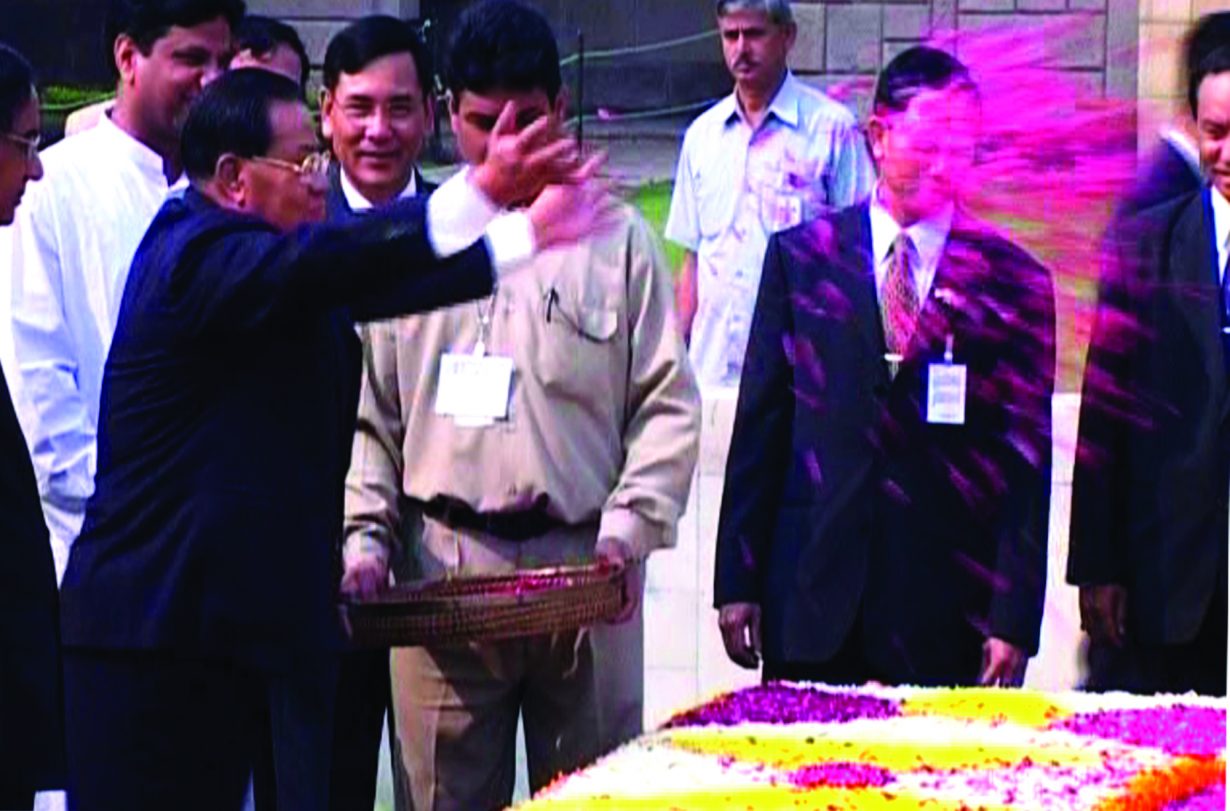
AK Not at all, I didn’t even know there was the second film coming after the first one. I didn’t know at that point that I was going to make another one and then another one, definitely not part two and definitely not part three. I knew a friend, a remarkable lawyer who was working with Burmese students in exile, and through her I got to know a few students and I did some work with them. I helped them out with some things, but slowly I got to know a lot more about the incredible student movement, the democracy movement. Four or five generations of continuous resistance. I was a pretty active, aware young person through my years in university and even after that, but I was quite ignorant of something that was also happening quite close to where I stayed. I learned more, though obviously there was nothing that I could do. It is too colossal a tragedy. So when I heard that the supreme leader, the head of the Burmese military [General Than Shwe] was invited formally as a head of state to come [to India in 2004], I decided that whatever it is, I’m going to do something. I just have to find a way to respond to this man coming here. That’s how it started.
Slow Time, Real Time, Accelerated Time
AR You’ve mentioned the multiplicity of time in your installations as well as in the single-screen films. There seems to be an exceptional multiplicity of times in The Torn First Pages. Could you talk about the various times that are expressed and experienced by the people in that work?
AK It’s not just with the democracy movement in Burma, but with a lot of other social movements and processes that I have been involved with or associated with over the years.
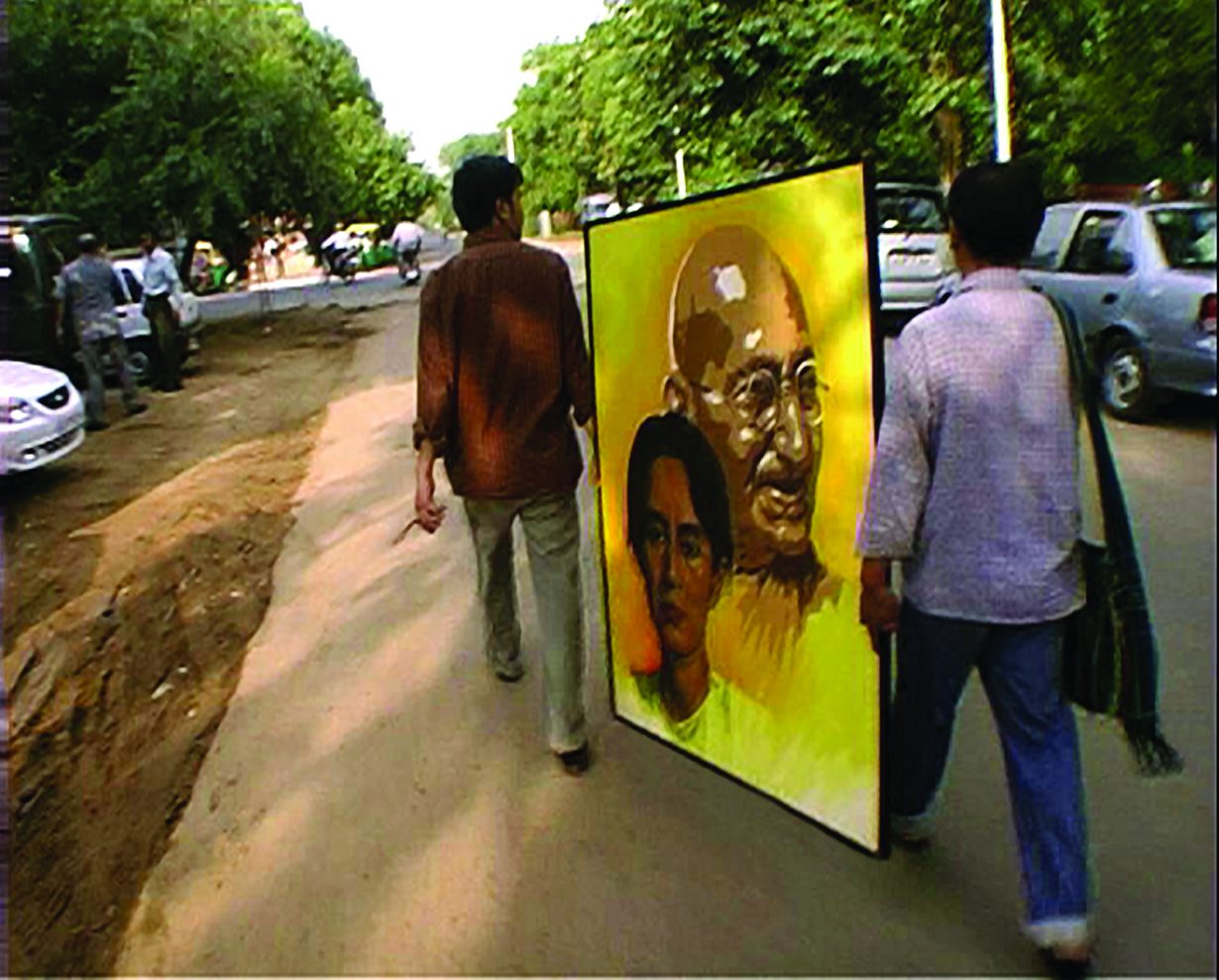
I was quite aware of the fact that it’s, in actuality, very difficult to understand what is happening when you look at whatever you see around you. There may be a dominant narrative or an easily understandable explanation, but there is a lot else that is also happening within individual lives and many other things. There’s always that sense of inadequacy, when making work. I know what is happening, but there’s no way that I know how to say what is happening. I will come to this question of time, but if you look at Burma, for instance, Burma is not just Burma, Burma is many ethnic nationalities, there are actually many republics, there are many trajectories, there are many generations. Everybody wants that one wrapped-up understanding of what is happening, one story that is relatable, emotionally and politically, and easy to package, easy to show. But you just can’t tell this story, it’s too complicated. When I can see the most brutal man perhaps at this point in time at the cremation site of one of the most incredible activists of peace, how do I say what I’m feeling? [General Shwe visited Gandhi’s memorial site in Raj Ghat, Delhi, in 2004.] I just started to go more into it and I started to work on another film, and they progressed pretty organically. I didn’t plan it out, but I realised – once I had finished The Bodhi Tree [in part one of The Torn First Pages], which was presented in real time, where it started to rain when the painter was painting, so they were covering everything with plastic – I realised that in a way, I was entering into this terrain. Another sense opened when I juxtaposed accelerated footage with, you know, extremely slow time, or time that came from the past into the present, or real time or exile time. And when I put these things together, I found that I got a better sense of what was happening from my body and my mind and my heart, rather than me describing what it is. There was also the question of how everything becomes archival instantly. Today, every moment becomes archivable, so I wanted to, in a way, retrieve the so-called immediate, the now moment becoming the past at the same time, every instant.
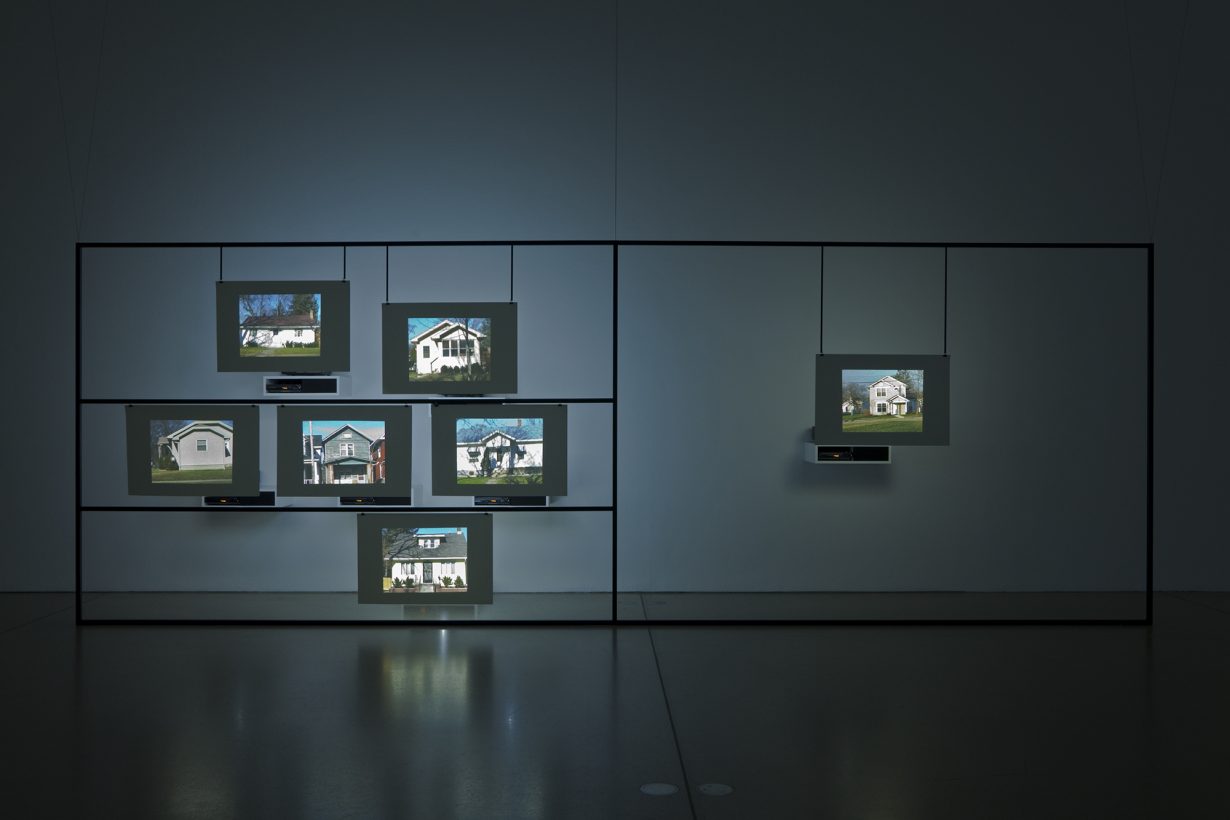
Part two [of The Torn First Pages] was shot entirely in the United States, in Fort Wayne, where several democracy activists and also famous Burmese singers, painters or musicians are living in forced exile and working for instance in a Mitsubishi plant as assembly workers. These are people working in the day and at night operating a radio station; people I met who had not spoken to their parents for 25 years. I, again, felt that the strength and the pain of this whole experience of resistance is too difficult for me to tell. There were multiple times existing there: there was a famous activist who, just because he looked a certain way got a job as a chef in a Japanese restaurant. It’s a double identity, and he’s living in two and three times in the restaurant, at night, at home, in exile and so on. It’s a huge saga actually, and you have to get a sense of the multiplicity of this saga over decades, and you have to also relate to what is ungraspable, untellable. There have to be spaces and empty spaces and gaps in the whole thing. Every fragment, every absence gives you a sense of the whole. Sometimes it comes together, sometimes it doesn’t. That’s when I started to understand a little bit more about the experience of the multiplicity of time, and how that actually alters your perceptions and your understandings and your instincts. How can you retrieve it if you don’t even know that it’s gone, or what it is?
Sometimes It Works, Sometimes It Doesn’t
AR You’ve made works about issues such as Indigenous rights, gender inequality and religious fundamentalism. Have you seen any progress on these issues since you began your career? And what do you think art can do in relation to them?
AK What we are facing at this point in time, regardless of which country you are in, is a devastating situation in terms of the acceptability of aggression, of violence, the need for vengeance, the acceptability of destruction and authoritarianism. Even though it does seem like everything is getting worse, I still keep meeting more and more people who are extremely enlightened, who have great courage, strength and clarity of mind, with generosity and kindness. All over, whether it’s in England or India or any other part of the world. We are facing a very peculiar situation, the hyper digital-algorithm situation that we are in – and it’s very difficult to address this but still there are people who are resisting it. So I would say that, yes, it’s getting worse, but it’s also getting better. As far as art is concerned, all I know is that if you find meaning and you share your meaning, then there are always people who come who connect with that meaning, you can see it. And I can see that response and that’s enough for me.
AR Your work will be shown against the backdrop of the Venice Biennale. Do you think the Biennale is important to our times, or just a relic of times past?
AK I have cocurated one biennale; after exhibiting as an artist in so many biennales, I thought I should also see what happens on the inside and how it works. I’m quite aware of the structural limitations and contradictions of the biennale format. I’m extremely aware of how it may be co-opted or begin to serve the hidden interests of a few, but I’m also aware of the fact that it does create space for interactions with audiences, with people. There is no one assessment for every biennale. There can be a biennale that you may feel is very sterile and is working only within the professional industry circuit, but over time you see students and teachers and many people who also come regardless, and they talk, share their ideas and relate. I’ve also been in biennales where I felt this is not the right place for me to be in, but ten years later, you meet somebody who has actually been there, and it’s been very interesting to see the meaning and implications of that interaction. There is a lot more that we could discuss too on this subject, for instance the possible methods to subvert, disintegrate, reformulate and push rigid structures towards fluidity and processes.
AR You’ve spoken about how the people you meet shape your work. What else inspires you on your artistic journey?
AK I’m quite useless with that question, because it’s very easy to inspire me. Of course, the people that I meet and have met, no doubt about it. But I listen to a lot of music of all kinds from all over. Very often I find something that actually just makes me want to live, be it Western classical piano or classical Hindustani, I get absolutely mesmerised by the beauty, the complexity and the ability. So it’s nonstop, just with anything.
Amar Kanwar: Co-Travellers is on view at the Palazzo Grassi, Venice, through 10 January
From the April & May 2026 issue of ArtReview – get your copy.