“It’s very administrative to be a parent, but the babies always outperform the administration. This kind of mirrors my participation in the Japan Pavilion”
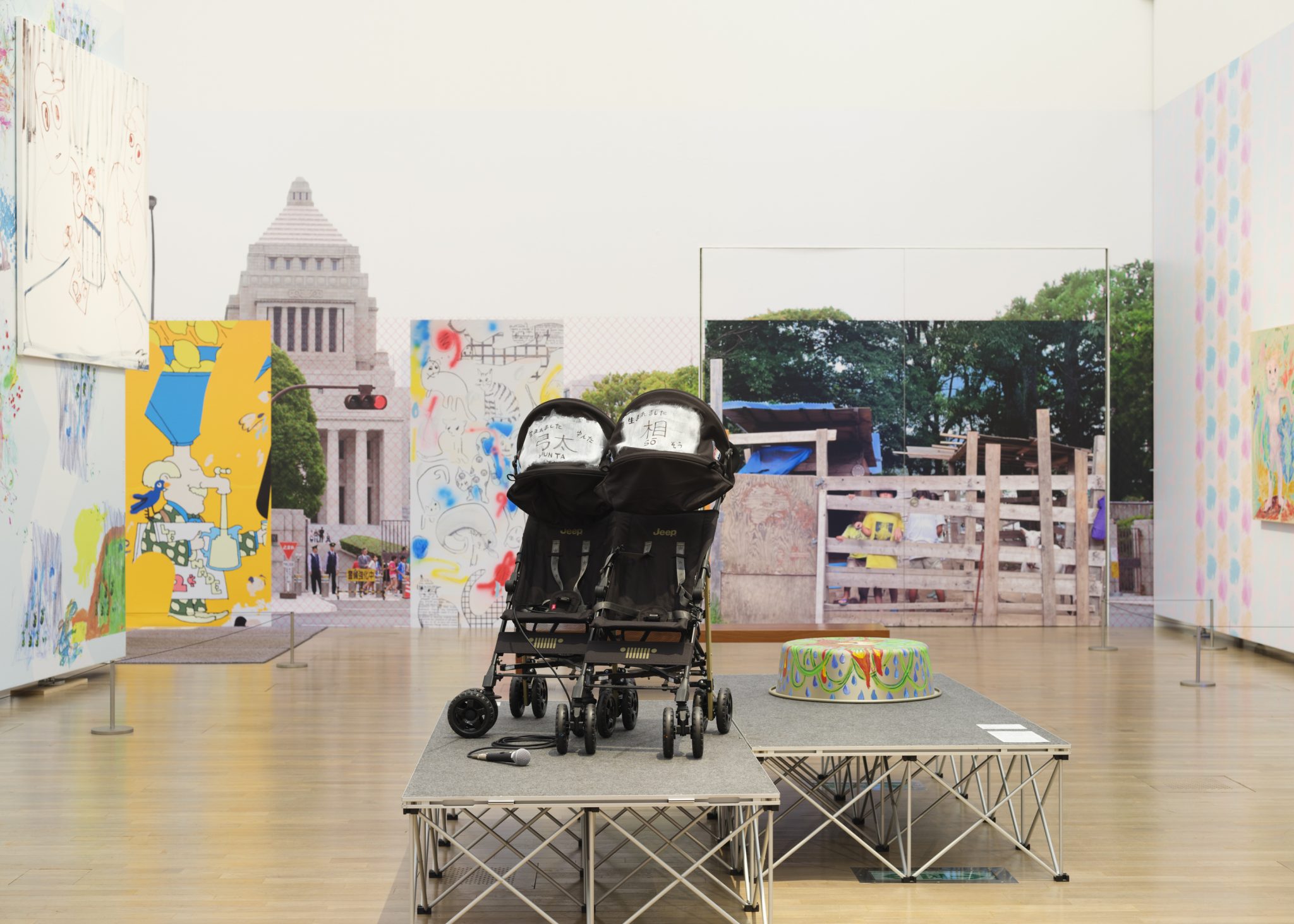
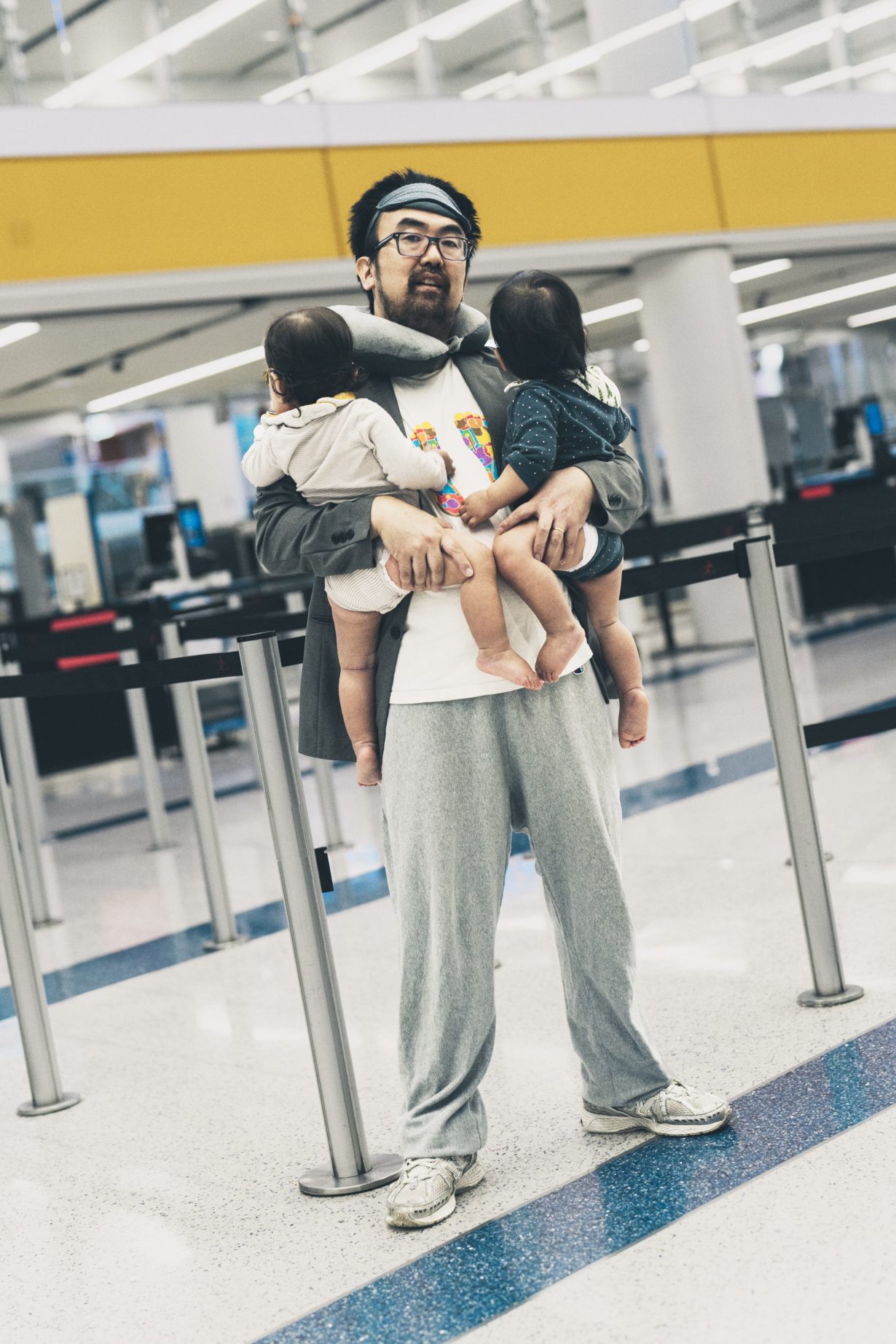
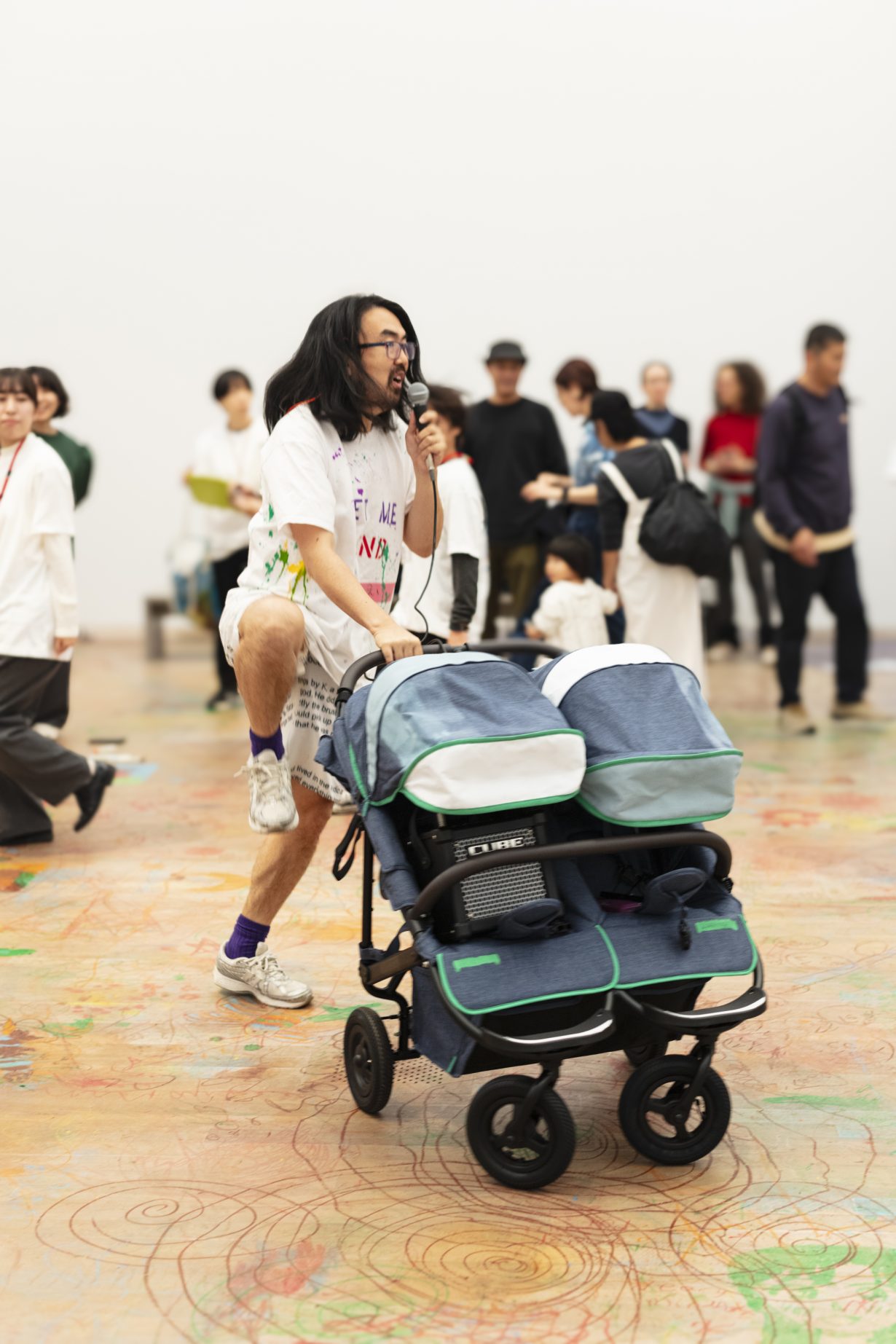
Ei Arakawa-Nash’s first solo museum-exhibition Paintings Are Popstars, held at Tokyo’s National Art Center in 2024, was also the center’s first solo exhibition devoted to a performance artist. Deftly intertwining humour, history and politics to challenge artworld and Japanese proprieties, the show included the works of over 50 artists as well as weekly performances by Arakawa-Nash. Fewer than six months later, he was selected to represent Japan at the 61st Venice Biennale. Originally Japanese, but now Japanese American, he will be the first non-Japanese national to do so in a solo presentation. Between those two major events, he also became a parent, with his husband, to twins. Known for his humorous and playful research-based and collaborative performance works, he will address themes of care and reparation, using babies as a central motif in Grass Babies, Moon Babies, his presentation at the Japan Pavilion cocurated by Lisa Horikawa and Takahashi Mizuki.
ArtReview caught up with the artist to discuss some aspects of his upcoming exhibition, such as astrology, babies in sunglasses, diapers and Japan’s colonialist past.
ArtReview How has your life changed since becoming an American national?
Ei Arakawa-Nash I became American in 2019, kind of out of necessity. Before COVID, I was outside the USA nearly 180 days a year. And if you’re holding a green card you have to stay inside the US at least six months out of the year. I was afraid that I might lose my rights to stay in the USA, where I’d spent more than two decades. So that was one of the practical reasons for becoming naturalised. I gave up my Japanese nationality, but I hesitated a little bit. I was wondering what it’d be like not to have Japanese nationality.
AR And what was it like?
EAN It was… strange. It was strange because I was born in Fukushima, so my sense of belonging to Japan was based on my birthplace. But then that legality of national identity actually isn’t what makes me Japanese – through the naturalisation process, I became more aware that nationality is a construct. It relates to gay marriage as well, because Japan doesn’t recognise my same-sex married status; it turns out that my status in relation to that depends on which government I’m associated with.
AR Does that make you feel stateless in some ways?
EAN It doesn’t make me stateless; it means I have more freedom to think outside of a single national framework.
AR Was representing Japan at Venice something you had thought about before? Especially given your complicated relationship to national identity?
EAN I was excited to get the invitation. It made sense to me after my show at the National Art Center in 2024. The national framework – whether it’s the national pavilion or the national museum – is very rigid structurally, very bureaucratic. And because national institutions are very rigid, there are many possibilities for performance artists to intervene or insert our flexibility within an institution, even if temporarily. As a performance artist working since the early 2000s, I’ve seen how museums adapt themselves to performance art. Over time, museums have learned how to regulate the medium, but there is a limit to what the institution can make us do.
AR Previously, in your statement on your selection for the Japan Pavilion, you used kazaana, a phrase in Japanese meaning ‘making a hole to create a draft’, which we think is a really nice metaphor for the kind of intervention that you’re trying to stage at both national institutions. What will be your most important intervention at Venice?
EAN The show will have multiple elements and I’d say that they are all important. The installation involves baby dolls that carry 57 different historical dates, which was very sensitive to make. Many people have to approve of how I say it. The artist choosing curators, as I’ve done for the Biennale, is quite unique. We’ve been able to implement a number of new small and medium-sized structural arrangements that the Japan Pavilion hasn’t done before – one is that there is a collaboration with the Korean Pavilion [which is located next door to the Japan Pavilion in Venice’s Giardini]. We’re trying to improve the way the Japan Pavilion is organised for the future.
AR Can you tell us a little bit more about the collaboration with the Korean Pavilion?
EAN So, in the 30 years since the Korean Pavilion was built, the two pavilions have never collaborated. One of the cocurators I’m working with on the Japan Pavilion, Takahashi Mizuki, proposed a collaboration with the Korean Pavilion in 2015, but it didn’t work out. [In 2024] Sook-Kyung Lee [a UK-based Korean] curated the Japan Pavilion. So there was this recurring pattern. Binna Choi, the curator of the Korean Pavilion at this edition of the Biennale, is someone I’ve worked with several times in the past, so there was a chance to do something together. Our preexisting connections matched with historical momentum. Initially, it was more about administrative elements, like doing a reception together. But through the conversations that developed between the Japanese cocurators, Binna, two Korean artists and myself, I began to think about how to make amends in terms of national, social and personal history in my work in Venice. One section of my Grass Babies, Moon Babies involves the Japanese violence committed in the Asia-Pacific region during the Second World War. I’m also interested in the Korean resistance in the early twentieth century, and in the zainichi or Korean-Japanese and the other diaspora communities in Japan, including the Taiwanese, the Chinese and others.
AR You’re using this platform and opportunity to try to address historical violence and make amends.
EAN For the Korean Pavilion, the starting point of their exhibition is the three years from 1945 to 1948, and it’s called Liberation Space: Fortress/Nest. That period is the beginning of Korea’s liberation from Japanese colonisation. There’s a shared interest between both pavilions for historical repair, and it made sense to have some kind of permeation instead of setting up a boundary. To make that permeation happen, we will do an exchange – I invited one of the Korean artists, Goen Choi, to exhibit her artworks inside of the Japan Pavilion. And Hyeree Ro will take one of my baby sculptures and do a daily performance in the Korean Pavilion.
AR Have there been any issues with you addressing Japanese colonialism in this official national context?
EAN The Japan Pavilion commissioner is the Japan Foundation, which exists under the Ministry of Foreign Affairs. So it’s very diplomatic, and we are trying to be very careful of how to word this collaboration; I hope things will unfold as planned. I’m the first non-Japanese national to do a solo show in the Japan Pavilion, but during my research, I found out that Jae-Eun Choi, a Korean artist living in Japan since the 1970s, had participated in the Japan Pavilion in a group show in 1995. And that’s the year when the Korean Pavilion was built. So there was a historical desire to collaborate from both sides. I think Nam June Paik also represented Germany in 1993.
AR Your work often involves this relationship or dialogue with a historical work or event. Can you speak to the importance of this dialoguing in your practice?
EAN One important part is that I didn’t want to make myself central. Not just by inviting others to collaborate, but also by finding historical evidence to understand that we collectively desire certain things – and through that, to somehow externalise my own subjectivity. When I researched Japanese performance art history, I wanted to somehow imagine what this community’s context was, so that the work doesn’t come exclusively from my own position. And that makes it more emancipated from the confinement of singularity.
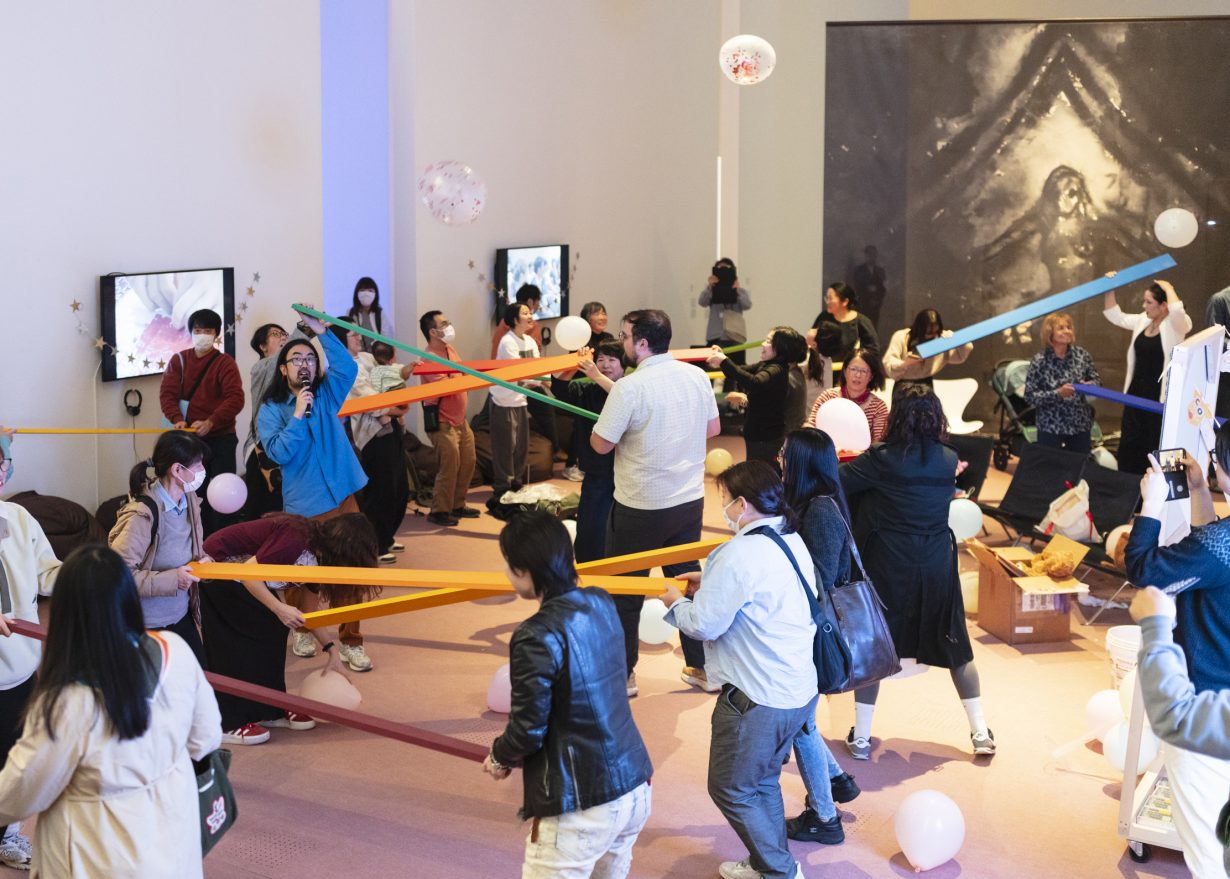
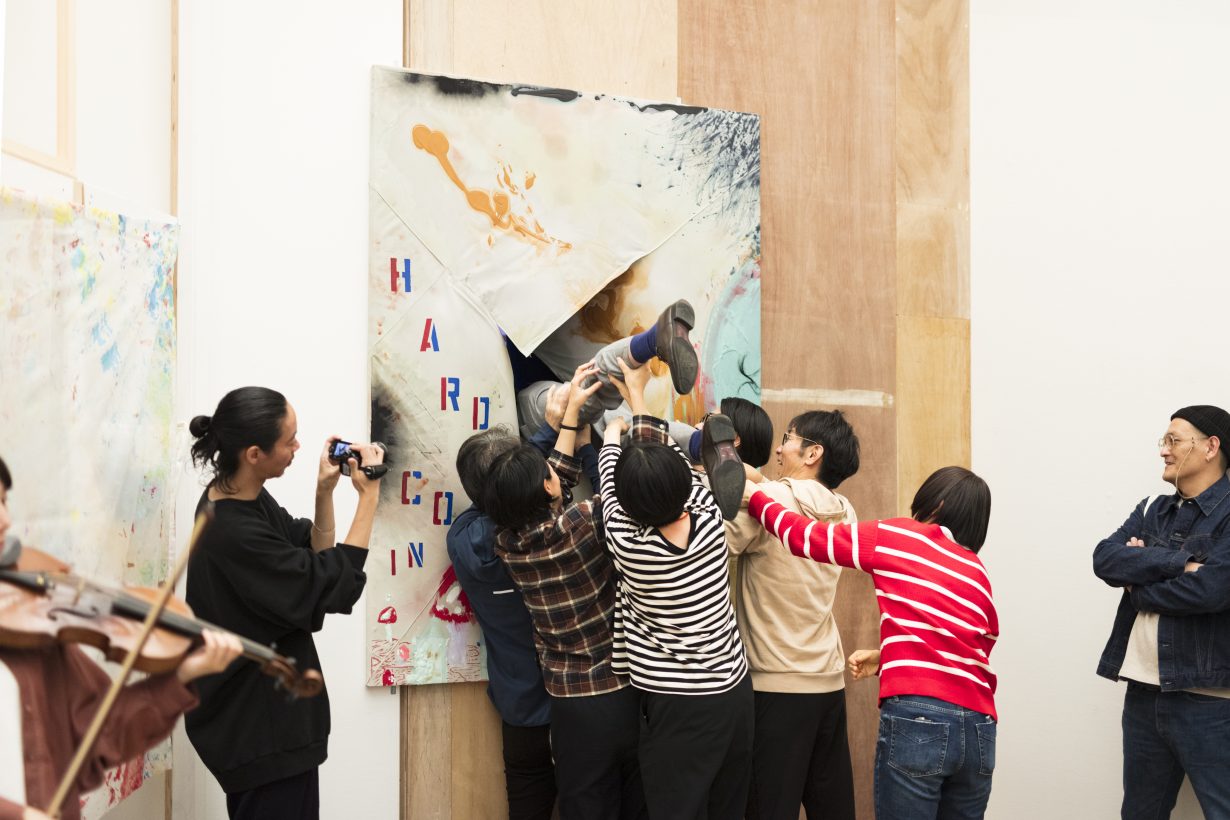
AR This de-centring of yourself and your authority as an artist is also something that recurs through your work. Do you have expectations of the visitor-participants at the pavilion?
EAN There is this attitude of making amends with the past, recognising past mistakes to make a better future. That’s where the 200 baby dolls come in.
AR How do they relate to the better future and the past mistakes?
EAN In order to raise children, I wanted to internalise different pasts and mistakes. I didn’t want to just celebrate the future generation; I thought I needed to examine how I deal with the past. The list of 57 historical dates, the collaboration with the Korean Pavilion and also a participatory performance, in which visitors are invited to carry and care for the baby doll, are all connected to it. Before talking about the future optimistically, I thought I needed to do some homework.
AR It seems permeability between personal and geopolitical histories is a through line. How will the visitors engage with the baby dolls?
When I was a kid during the 1980s and early 90s, I didn’t learn much about Japanese colonisation in Asia and the Pacific, for instance. Researching and selecting the 57 historical dates was a response to that absence. These are the dates I want to hand to my twins, rather than hiding them. So I selected dates relating to the history of nationalism and wars, but also, the history of women’s reproductive rights, queer history and labour politics in Japan. The dates come from Europe, the US and across Asia, including Southeast Asia. Those dates are assigned as birthdays to the baby dolls. And I asked Ishii Yukari, an influential and respected astrologer, to make a celebratory poem for the babies. I wanted to suggest that these babies’ lighthearted presence is connected to a heavier and more serious historical past.
EAN There will be 200 baby dolls in the pavilion, each in different baby clothes, and mirrored sunglasses. It’s very humorous, I think. The Japan Pavilion, which was designed by Takamasa Yoshizaka, is a mid-century national pavilion with a marble floor. And you’ll be greeted by a bunch of baby dolls. 57 of the dolls will be available for visitors to carry. Importantly, they weigh about five to six kilograms. They’re kind of heavy. It’s the weight my body remembers of the babies around four months. The audience is turned into caregivers – who have historically been women; there’s the care aspect, but also the labour.
AR Where did the dolls come from? Or were they made for the project?
EAN They’re ready-made by a company in Florida, but we had to customise them. They were originally too small to be four months old, but also already had teeth. We had to remove their teeth in order to make them more realistic.
AR Why are they wearing mirrored sunglasses?
EAN Mainly because I wanted the sunglasses to reflect the visitor and their surroundings when they’re holding the baby. They make us recognise, through the baby’s gaze, ourselves in the landscape. The babies are watching the adults.
AR That makes me think of your past talk, in which you mentioned Dan Graham as one of your influences. His work explores the dynamics of seeing and being seen through mirrors and spatial structures.
EAN Yes. I’m thinking of some of the artworks from the 1960s that used mirrors to break the fourth wall. For example, Yayoi Kusama – in her 1966 guerrilla performance in Venice, she sold mirror balls to the audience, and each buyer would see themselves reflected in the ball within their surrounding environment. In my case, I wanted to create a situation in which multiple gazes from the baby dolls are directed toward the adults, almost as if examining them. Some babies will be positioned higher up, on the rooftop of the pavilion – looking down at us and challenging the adults.
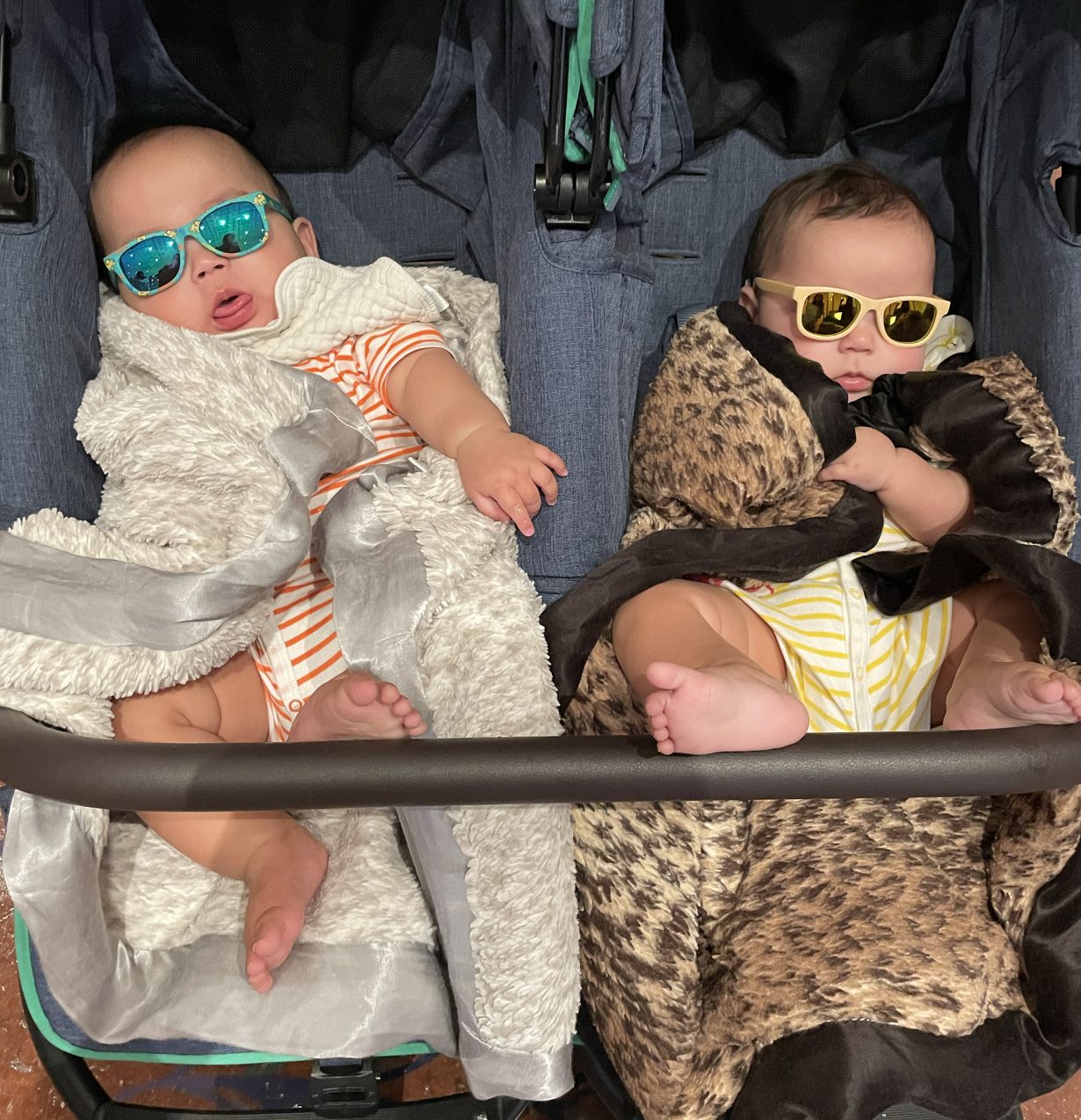
AR Surveilling the adults. It’s like Lacan’s mirror stage, but you’re also in California, where we heard that the highway police officers wear mirrored sunglasses to intimidate, because you can’t read their expression.
EAN In this case, when you don’t see the doll’s eyes, it actually allows the visitor to empathise more. The reasons for the sunglasses are multiple; they’re also protecting the babies’ eyes from UV rays. Anonymity is also important in terms of babies’ rights. The Venice Biennale entails a lot of press exposure, like this interview. I wanted to hide the babies’ faces. It’s a form of care.
AR It seems that you have to take care not only of your baby, but also of any baby.
EAN Any baby?
AR The visitors have the choice to pick up and care for a baby while at the pavilion, but it’s not their baby, per se; it’s a nice idea to take care out of the constraints of the nuclear family.
EAN True: like, collective care and kinship. I’m kind of speculating, because it’s only April, but this weight of the baby and its vulnerability will induce empathy in visitors, hopefully. Babies are vulnerable, but also very open. They are in a state of becoming.
AR I watched a film this morning that you referenced, Watashi wa nisai [Being Two Isn’t Easy, 1962], which centres on a child becoming two years old.
EAN At the film’s start, there’s an imagined first-person voiceover of the child’s internal monologue – like, the child’s observations of adults. That kind of perspectival shift is one of the motifs of this installation.
AR I was also interested in that voiceover, because it seems like a kind of wishful thinking, like if the child could just tell you, things would be so much easier.
EAN We don’t know what babies are thinking, and as parents we always try to decipher their messages. I wanted to call one of the main elements of the work ‘diaper poems’ because that’s how parents know the health condition of the baby – how they poop and how much they pee.
AR It reminds me of Mary Kelly’s Post-Partum Document (1973–79), but it was also something I had to record daily when my child was going to a Japanese nursery.
EAN It’s very administrative to be a parent, but the babies always outperform the administration. This mirrors my participation in the Japan Pavilion. In the Japan Pavilion I could be diplomatic, but in a way my art is much more radicalised than what I showed at the National Art Center. I mean, I understand that both of these institutions wanted to present themselves as liberal and woke. Therefore, maybe they wanted to work with an artist who is queer or has a diasporic context. I understand what they want, but I also negotiate the terms.
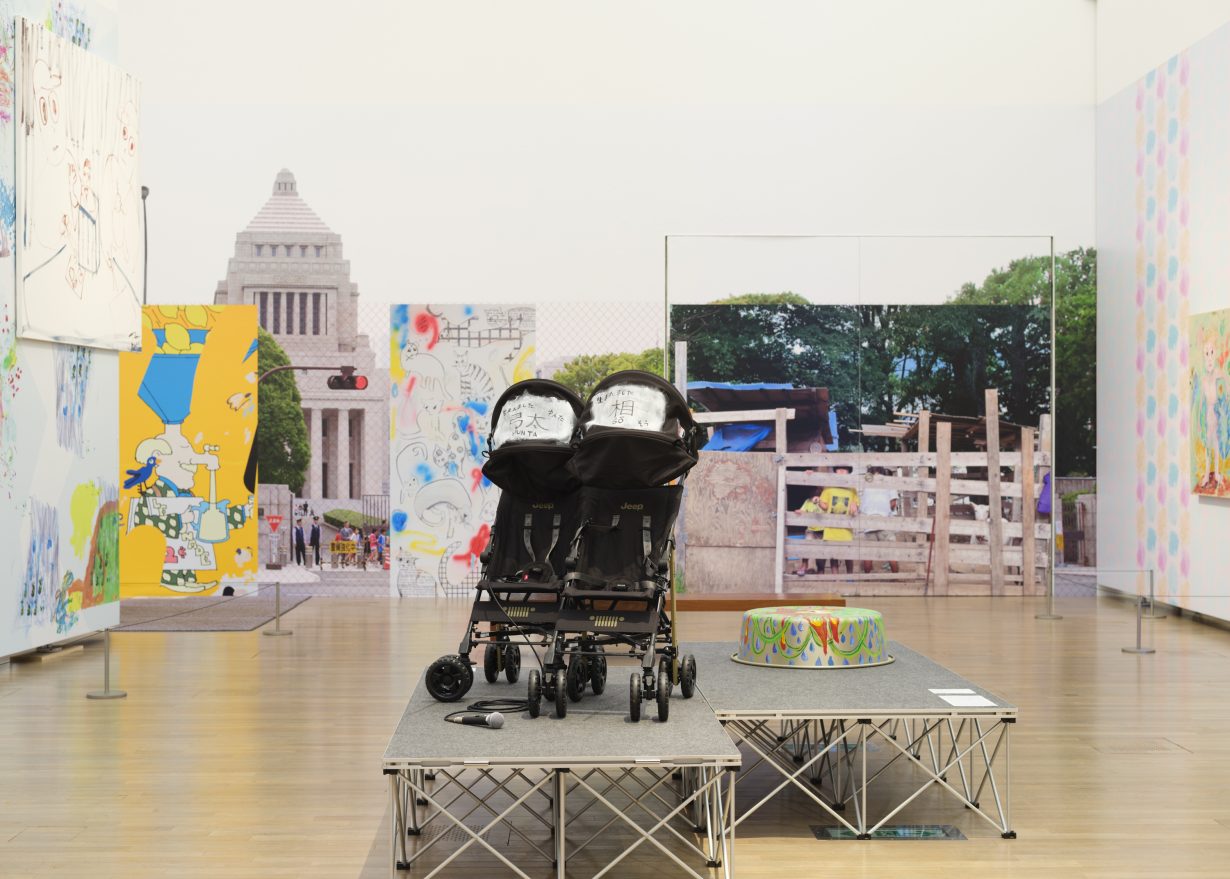
AR I think when we spoke before around your National Art Center, Tokyo show, you said something about testing the limits of the institution.
EAN My collaborators, coming from outside Japan, don’t know how bureaucratic and conservative Japan can be. Still, when they bring in their contexts or issues, I think that creates a very productive space that we can generate with all those differences. That’s an interesting part of Yoshizaka’s architectural concept called ‘discontinuous unity’. I’m not an architectural historian, but what I fantasise about is that there’s a lot of differences within this one architecture or one institution. And they’re all interacting and moving together to archive something.
I visited Yoshizaka’s Inter-University Seminar House in Hachioji [in the Western part of Tokyo]. And it was built on the mountain. He was a very serious mountain climber and his philosophy was that the natural landscape should not be drastically modified. So, at both Seminar House and Japan Pavilion, he uses high and low spaces, creating changes in perspective. His concept was to encourage free circulation in and out of space for users. I thought this could be very interesting for performance.
I just realised, as I was talking, that in a way the babies looking down at adults from a higher position also echoes this idea of circulation. You know, Grass Babies, Moon Babies are not always on the ground.
Ei Arakawa-Nash’s project for the Japan Pavilion, Grass Babies, Moon Babies, is on view as part of the 61st Venice Biennale, 9 May – 22 November
From the April & May 2026 issue of ArtReview – get your copy.