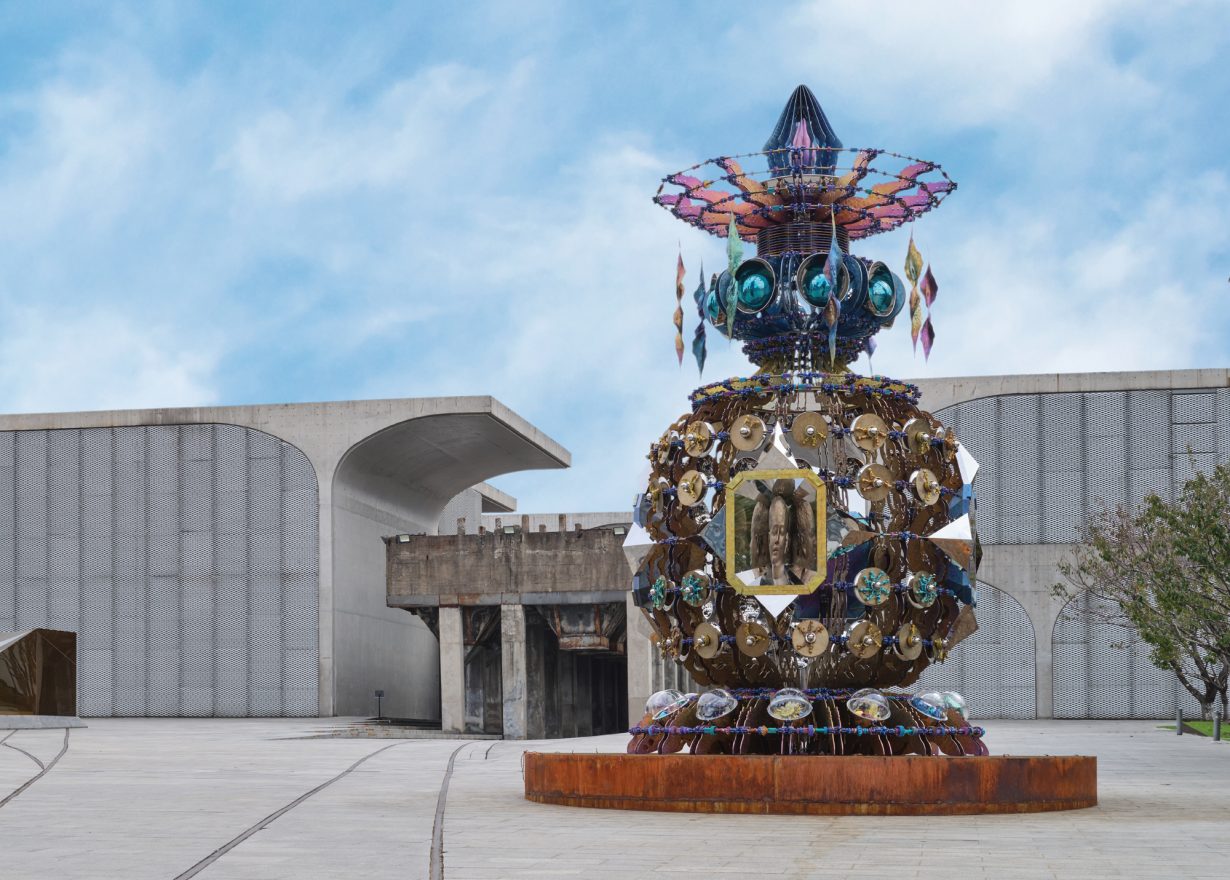
To coincide with the 61st International Art Exhibition of La Biennale di Venezia, Wallace Chan returns to Venice for the fourth time with Vessels of Other Worlds, a two-city exhibition unfolding between the Chapel of Santa Maria della Pietà and the Long Museum West Bund in Shanghai. Fully supported by the Long Museum, the project opens in Venice on 8 May 2026 before continuing in Shanghai from 18 July, aligning with the artist’s 70th birthday. Curated by James Putnam, it centres on a new body of large-scale titanium sculptures that extend Chan’s long-running engagement with material transformation, perception and metaphysical space.
Born in 1956 and based in Hong Kong, Chan has developed his practice largely outside conventional academic and institutional pathways. He began carving at the age of 16 and has consistently framed his education as one grounded in material rather than theory: a process of learning through making, technical experimentation and sustained observation. His visual language draws on both Chinese cultural traditions and Western sculptural histories, including the marble funerary monuments he studied in Christian cemeteries. Over time, that foundation has expanded into a multidisciplinary practice encompassing jewellery, sculpture and technical invention.
A decisive shift came in the early 2000s, following a period of spiritual retreat during which Chan gave up his possessions. Returning to artistic production, he began working with industrial materials such as concrete, copper and stainless steel, before eventually turning to titanium. First explored in jewellery for its strength, lightness and unusual chromatic potential, titanium became central to his sculptural practice as a material capable of sustaining structural complexity at a monumental scale. Chan’s work now appears in institutional collections including the Victoria and Albert Museum in London, the Museum of Fine Arts in Boston, the British Museum, the Capital Museum in Beijing and the Shanghai Museum.
At the Pietà Chapel, three titanium vessels form the core of the installation. Drawing on the symbolism of the Olea Sancta — the sacred oils used in Catholic rites — they are organised around the interlinked themes of birth, growth and rebirth. Their forms sit between organism and mechanism, combining vegetal, mechanical and architectural associations without resolving fully into any one of them. Although expansive in scale, the sculptures retain the tactile logic of carving: surfaces tighten around edges and contours, while internal structures appear to press outward, as if the works were being held in a state of continual formation.
Rather than functioning simply as autonomous objects, the sculptures are positioned as spatial propositions. Chan’s interest lies not only in what sculpture looks like, but in how it conditions movement, attention and bodily orientation. In Venice, this is amplified by a live connection to Shanghai: a triptych of screens incorporated into the Chapel’s altar links the two sites in real time, framing the exhibition not as a sequence of presentations but as a continuous exchange between distinct architectural and cultural settings.
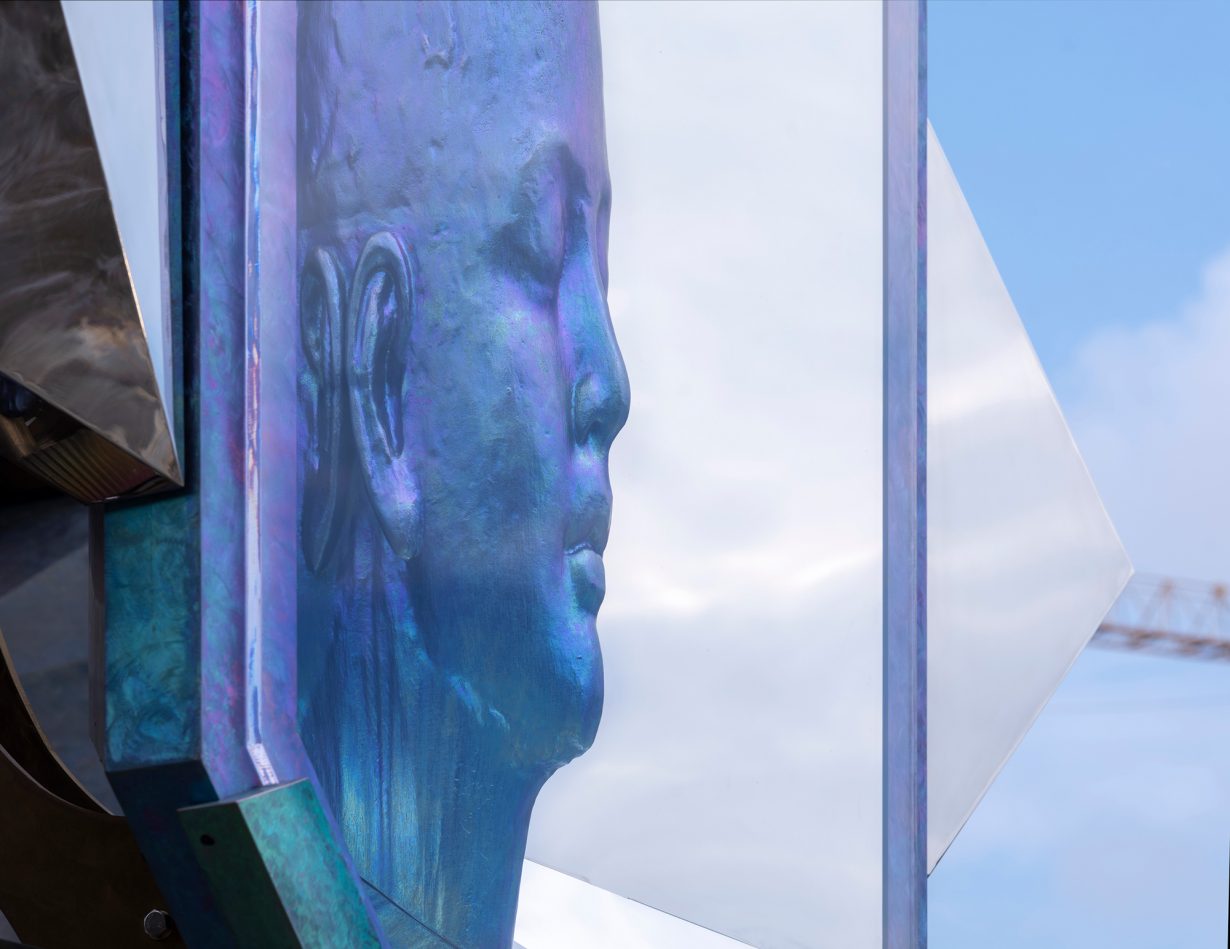
That dialogue develops further at the Long Museum, where the sculpture Growth becomes an inhabitable structure. Visitors enter a mirrored interior that generates a shifting field of reflections, extending Chan’s earlier gemstone innovation, the Wallace Cut, into spatial form. What began as a technique for manipulating light within carved stones is here translated into an immersive environment, one in which reflection becomes both optical effect and organising principle.
Vessels of Other Worlds continues Chan’s sustained engagement with Venice, following Titans (2021) and Totem (2022) at Fondaco Marcello, and Transcendence (2024) at the Pietà Chapel. If those earlier exhibitions established a recurring presence in the city, this latest project broadens the scale of that ambition, testing how sculpture might operate across materials, geographies and systems of belief.
Find out more Wallace Chan here, and about Long Museum here.