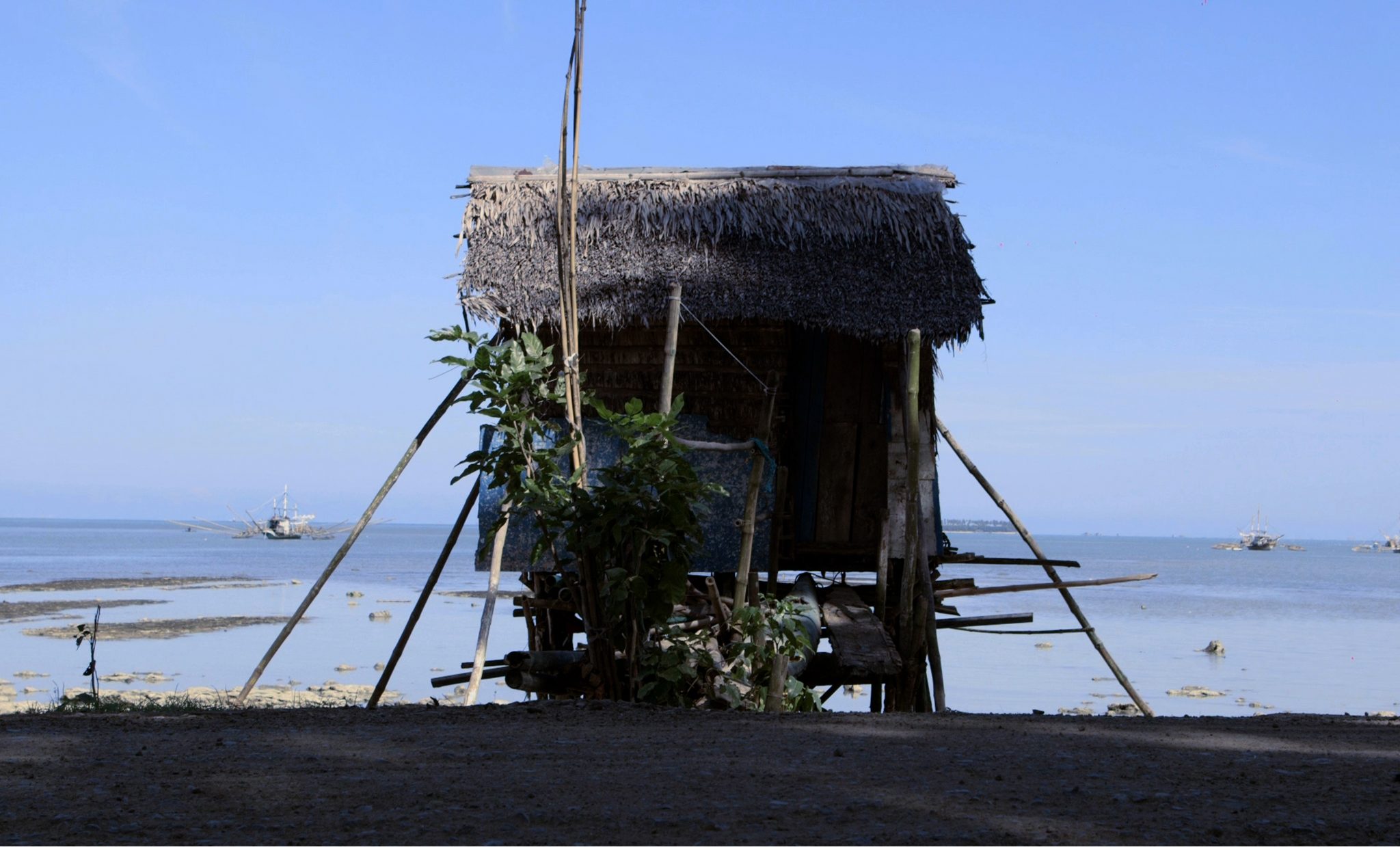
“We are looking forward to slowing down a bit and simply watching the sea again”
ArtReview sent a questionnaire to artists and curators exhibiting in and curating the various national pavilions of the 2026 Venice Biennale, the responses to which will be published daily in the leadup to and during the Venice Biennale, which runs from 9 May through 22 November.
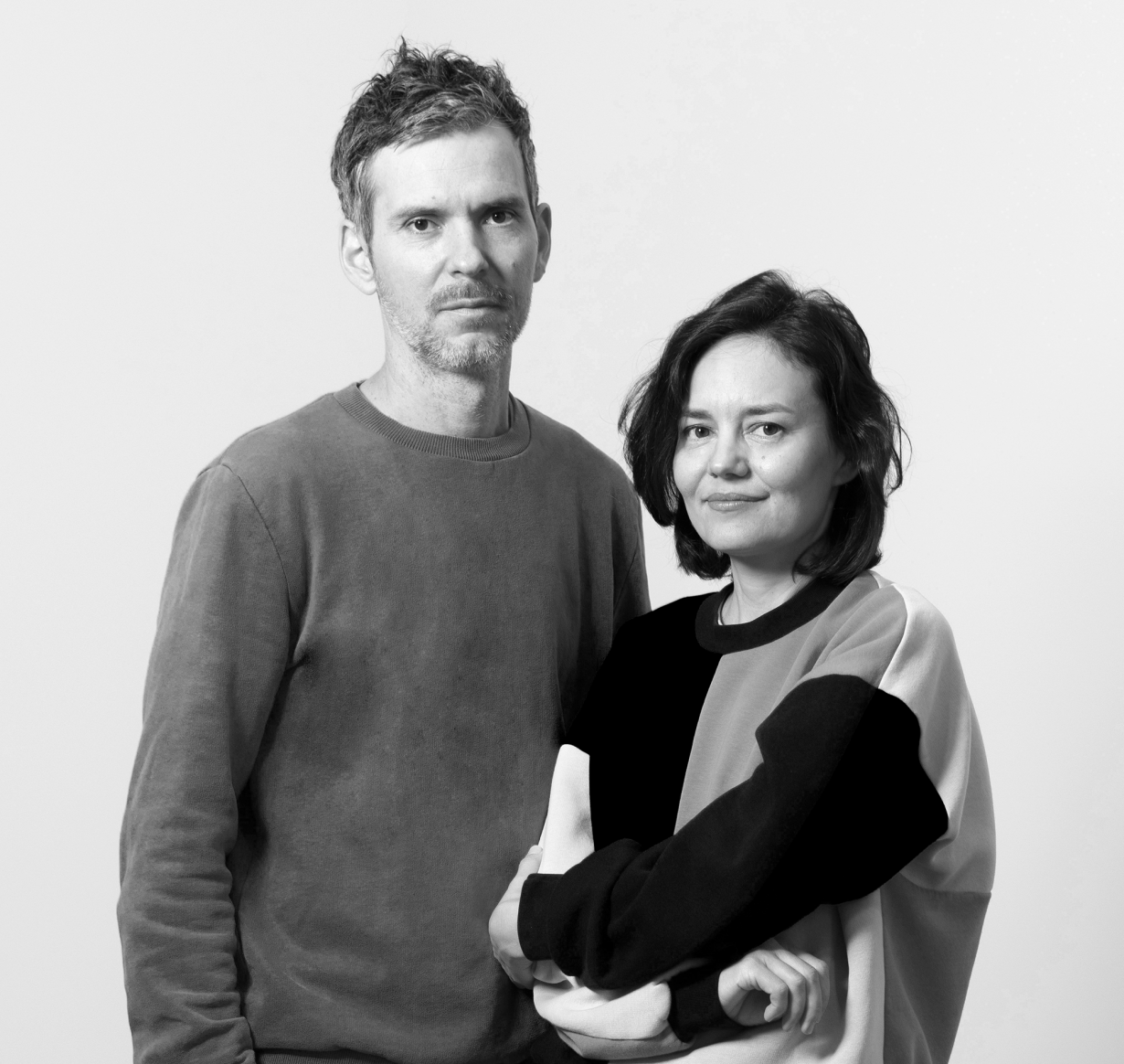
Anca Benera and Arnold Estefán are representing Romania; the pavilion is in the Giardini.
Celebrating Visions. Versace partners with ArtReview to share stories from the 2026 Venice Biennale.
ArtReview Tell ArtReview what you plan to exhibit in Venice. What has influenced or inspired you?
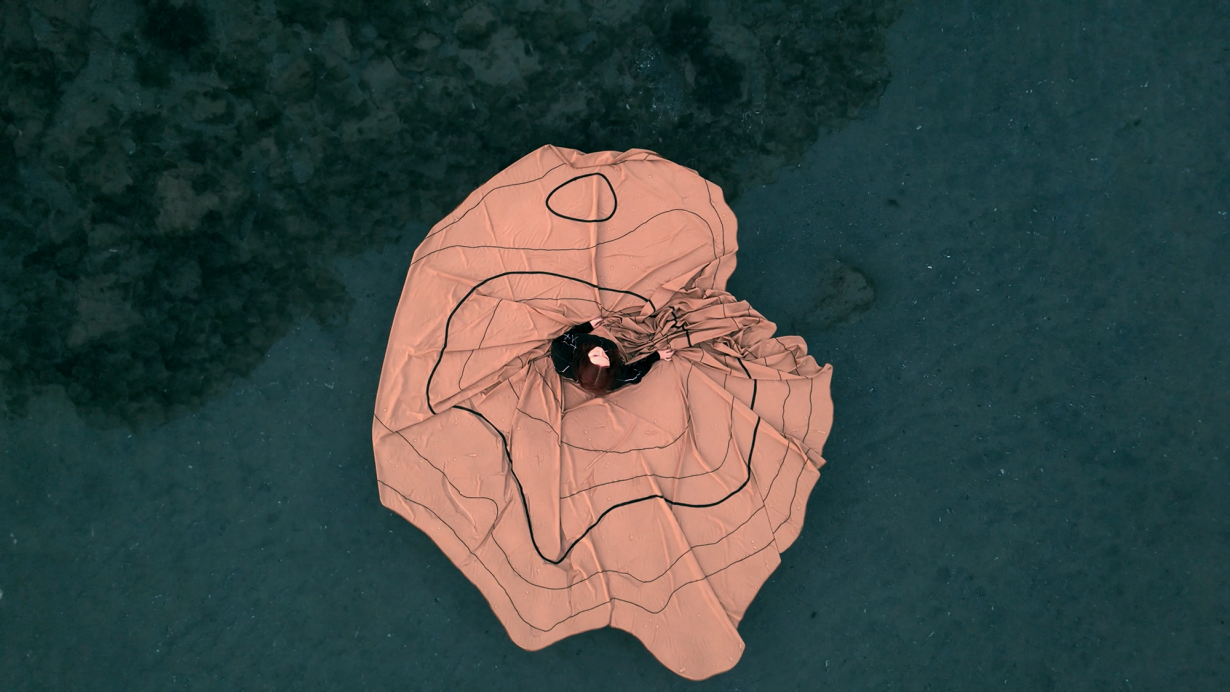
Anca Benera & Arnold Estefán One of us grew up by the shores of the Black Sea, often watching its restless waters – waves gathering energy, colliding, dispersing and forming again in continuous motion. That early fascination with the sea’s shifting rhythms became one of the starting points for our project in Venice. At a time when multiple wars and crises are unfolding across the world, including in the Black Sea region, the energy of those troubled waters resonates differently. Black Seas — Scores for the Sonic Eye reflects on the parallels between oceanic turbulence and political instability: collisions of forces, shifting balances and moments when control slips away. The installation combines a two-channel video work with sound and sculptural elements, exploring how ecological vulnerability and geopolitical tensions shape one another. We collected floating buoys from different seas and transformed them into sculptural musical instruments – objects that measure the sea but are also shaped by it.
AR In what ways (if at all) does your work relate to the theme of the Biennale exhibition, In Minor Keys?
AB&AE The theme of the Biennale resonates strongly with our project because it suggests a shift away from spectacle towards poetry and subtle signals often lost in the noise of global crises. We approach the sea as something that can be read and heard, listening for fragile ecological signals and the quiet solidarities linking distant shores. In the video installation, a performer plays one of the buoys, attempting to translate the sea’s oscillations into sound, as if reading the water like a musical score. We often describe our work as research-based, attentive to the invisible patterns shaping historical, social and geopolitical narratives. In this sense, the turbulent waters of the Black Sea become a kind of instrument through which we reflect on the wider condition of the world.
AR Why is the Venice Biennale still important, if at all?
AB&AE Maybe the real question today is not its importance but its relevance. The Venice Biennale has more than 130 years of history and remains a meeting point for artistic voices from across the world. At the same time, its structure also raises questions. The national pavilion system comes from a historical moment when nation-states were emerging from declining empires and culture was largely framed through national identity. Today, at a time when nationalism is resurging in many parts of the world – echoing the political climate in which many of these pavilions, including the Romanian Pavilion, were originally built during the rise of fascism in the twentieth century – this framework can feel increasingly difficult to navigate. There have been gestures that point to the rigidity of the system: in 2013, for example, the German and French pavilions exchanged locations, and in 2022 the Netherlands temporarily gave its pavilion in the Giardini to Estonia, a country without a permanent pavilion there. But these were in many ways symbolic, as the overall structure of the Biennale has largely remained unchanged. Perhaps the real challenge today is how this structure can still be critically reimagined from within.
AR What role does a national pavilion play at a time of increasing confrontational nationalisms? Is it about expressing difference or commonality?
AB&AE We believe a pavilion can become a space to question identities and the very idea of representation. Although our project is presented within a national pavilion, it speaks about something much broader. The Black Sea is a specific geography, but it also connects to other seas and geopolitical realities. In recent years this became particularly visible during the blockade of Ukrainian ports, when the movement of grain through the Black Sea suddenly became a global political and economic crisis. These are shared ecological and political conditions that transcend national borders and seashores. Seen this way, the pavilion becomes less about expressing a fixed national identity and more about opening a conversation about interconnected worlds.
These issues have also shaped our earlier work. One of us comes from the Székely community in Transylvania, a region where questions of language, identity and historical narrative remain sensitive. Our earliest performance works addressed precisely these tensions through simultaneous readings in Hungarian and Romanian of chapters from our school history textbooks. Although they described the same historical events, they offered contradictory versions of the ethnic conflicts in Transylvania. We returned to similar subjects in another work where national flags were slowly unraveled over several months, both in public and domestic spaces, until the threads were reconfigured into two small spheres. The flags lost their recognisable forms; their colours blended and identities dissolved, leaving two compact balls of yarn – different, yet almost indistinguishable. The gesture was not violent, but a careful deconstruction of symbols often mobilised in the name of national identity.
AR Who, for you, is the most important artist (in any discipline) that your country has produced?
AB&AE Do countries really ‘produce’ artists? Artists emerge from complex constellations of influences – places, languages, communities and encounters – that rarely stop at national borders. While a country may shape certain conditions, artistic practice usually develops within a much wider cultural and historical landscape. In the case of Romania, it is difficult to single out one figure, but it would be hard not to mention Constantin Brâncuși. His approach fundamentally transformed the language of modern sculpture, while deeply connected to Romanian vernacular traditions and spiritual symbolism. Like many major cultural figures, his legacy has been appropriated in nationalist propaganda, which dulls the complexity and openness of his work. Coincidentally, 2026 marks 150 years since Brâncuși’s birth and has been declared the ‘Year of Brâncuși” in Romania.
AR What is something you want people to know about your nation that they might not know already?
AB&AE Romania is not something many people immediately associate with the wider Black Sea world. Yet historically the Black Sea has been a major crossroads connecting Europe with the Caucasus and the Middle East. Since antiquity it linked Greek colonies, later Venetian and Genoese trade networks, Ottoman routes, and paths extending toward the Silk Road. For centuries it functioned both as a meeting point and as a frontier of empires, a place where different worlds encountered one another. This layered complexity is something we wanted to reflect in our work – an aspect of the region that often remains overlooked.
AR Given that you are exhibiting in a national pavilion, is there something (a quality or an issue or attitude) that distinguishes the art of that nation from that of others? That makes it particular? Are there specific contexts that it responds to? Or do you think that art is a universal language that goes beyond social, political or geographic boundaries?
AB&AE We are not sure that art today can be easily defined through national characteristics. While artistic practices often emerge from specific contexts, they also move across borders and cultural frameworks. At the same time, we would hesitate to describe art as ‘universal’ if that implies neutrality. Every way of seeing the world is shaped by a particular position and context, while still remaining connected to wider planetary conditions. It emerges from a place, a history and a set of experiences without being limited to them. In that sense, knowledge and artistic practice can be understood as situated rather than universal. Even if the issues we address, such as environmental instability, militarisation, and interconnected ecosystems, are not confined to a single country or region.
AR What, other than art, are you looking forward to seeing – or doing – while you are in Venice?
AB&AE Honestly, we are looking forward to slowing down a bit and simply watching the sea again.
AR Could you give us a brief overview of your average working day while creating your presentation in Venice?
AB&AE It may sound glamorous from the outside, but the reality of preparing a project like this is quite intense. In Romania, the competition for the Pavilion was organised in November 2025, and the final results were announced around mid-January 2026. That means we have roughly three months to develop a completely new project in all its complexity and realise it across two different venues: the Romanian Pavilion in the Giardini della Biennale and the Romanian Cultural Institute for Humanistic Research in Cannaregio. No day is typical. Our time moves between research, production, technical discussions, rehearsals and constant problem-solving. Because the installation brings together filmed performance, sound and sculptural elements, many components have to be developed simultaneously. It is demanding, and at times exhausting, but we are fortunate to be working with an exceptionally generous team.
AR Can art really change the world?
AB&AE Art may not change the world, but it can change how we understand it. And that’s where real change begins.
The 61st Venice Biennale runs 9 May through 22 November 2026