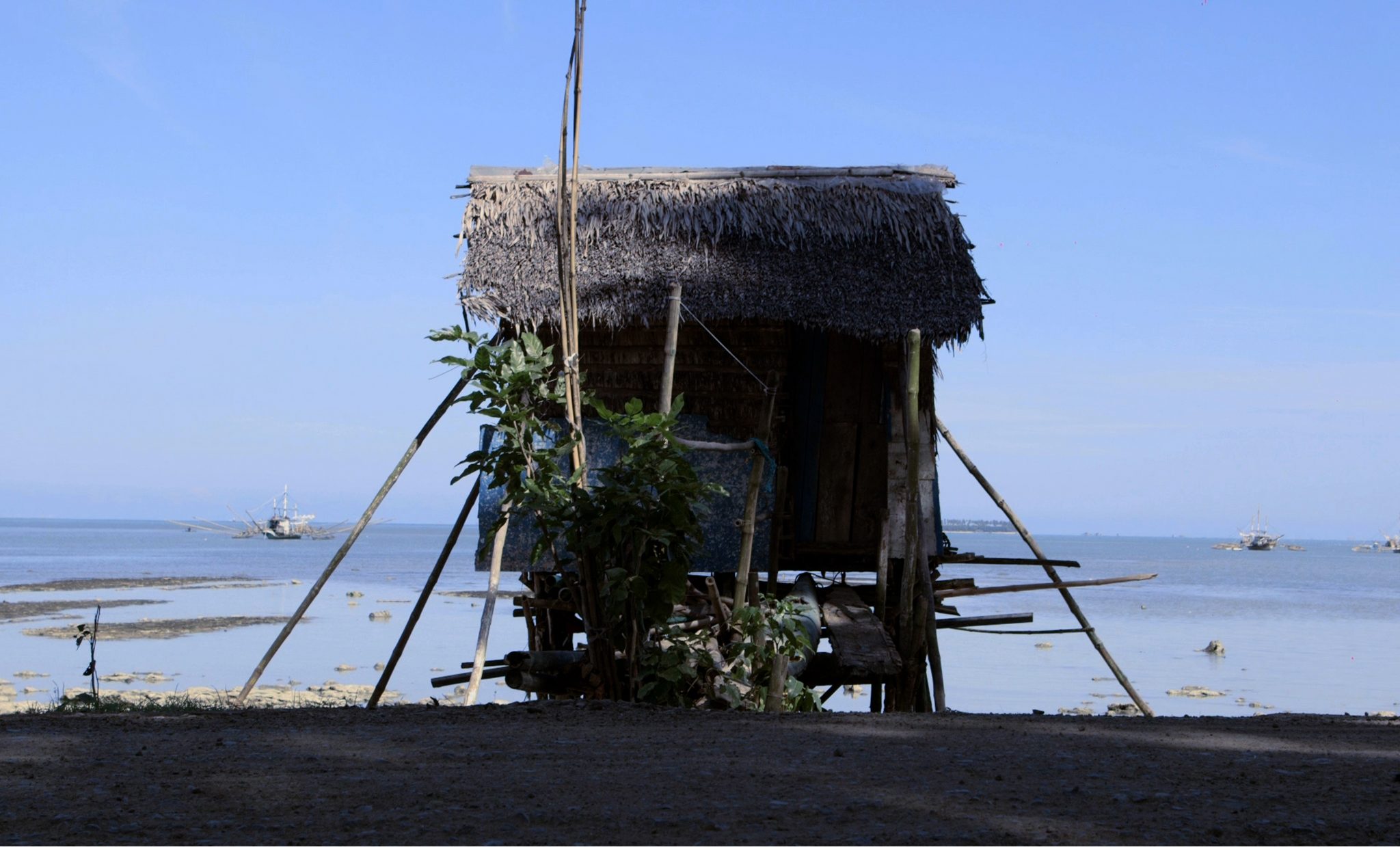
“In a world bombarded by sensory overload, I hope to reawaken a sense of wonder even in the most ordinary moments of daily life”
ArtReview sent a questionnaire to artists and curators exhibiting in and curating the various national pavilions of the 2026 Venice Biennale, the responses to which will be published daily in the leadup to and during the Venice Biennale, which runs from 9 May through 22 November.
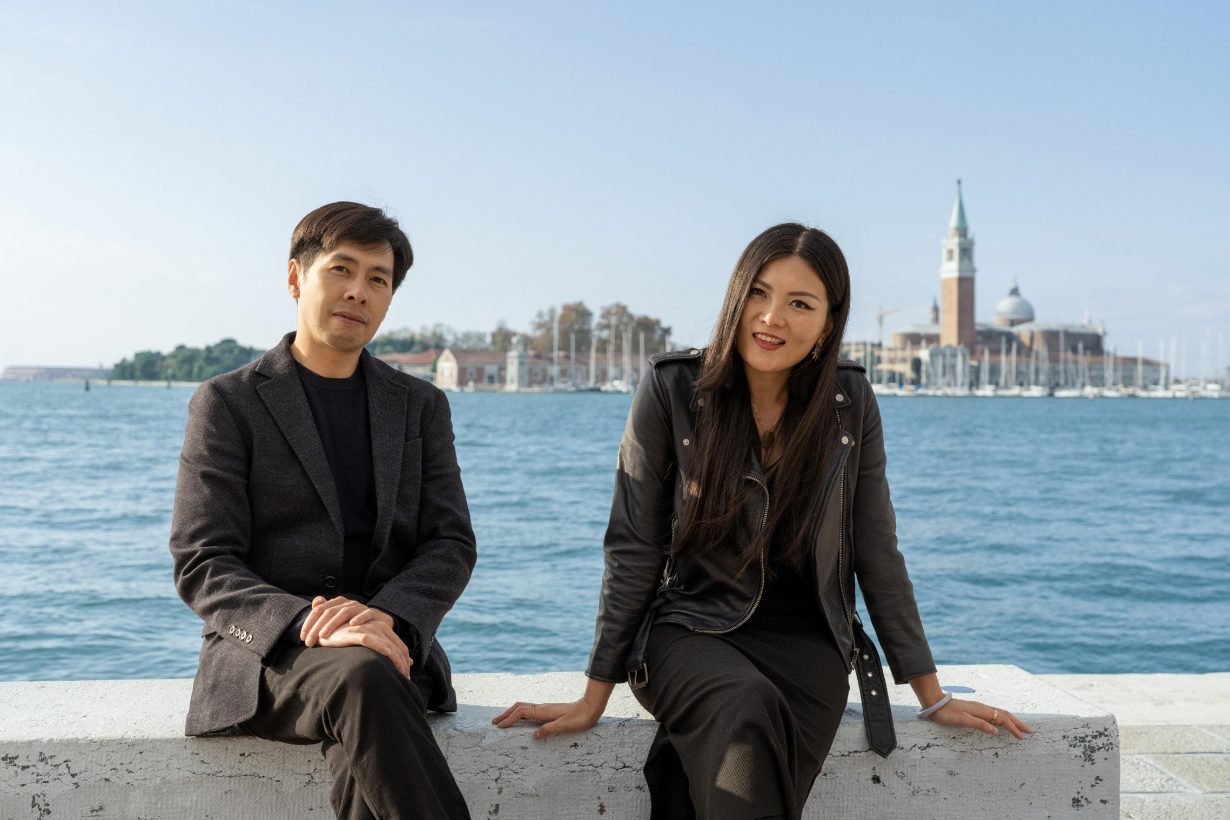
Angel Hui and Kingsley Ng are representing Hong Kong. The pavilion is located in the Arsenale.
Celebrating Visions. Versace partners with ArtReview to share stories from the 2026 Venice Biennale.
ArtReview Tell ArtReview what you plan to exhibit in Venice. What has influenced or inspired you?
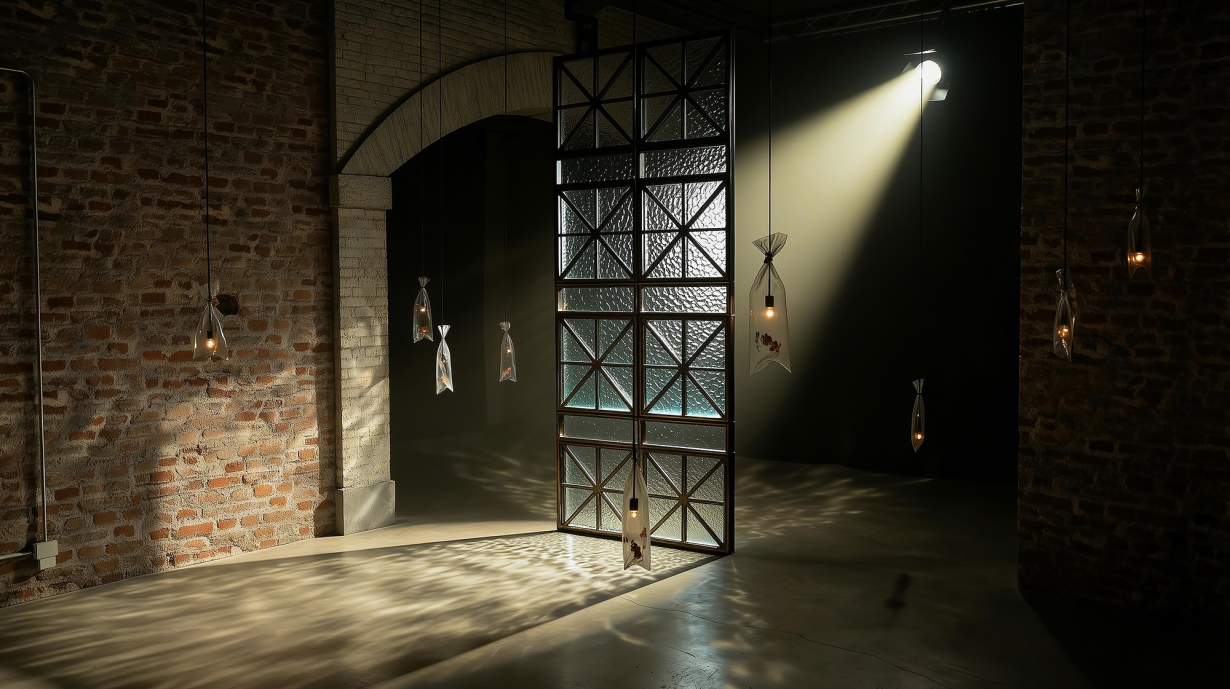
Angel Hui I am trying to present a site-specific work made with everyday Hong Kong objects, traditional craft, and light and shadow, inspired by the quiet beauty I often find in ordinary things people usually overlook.
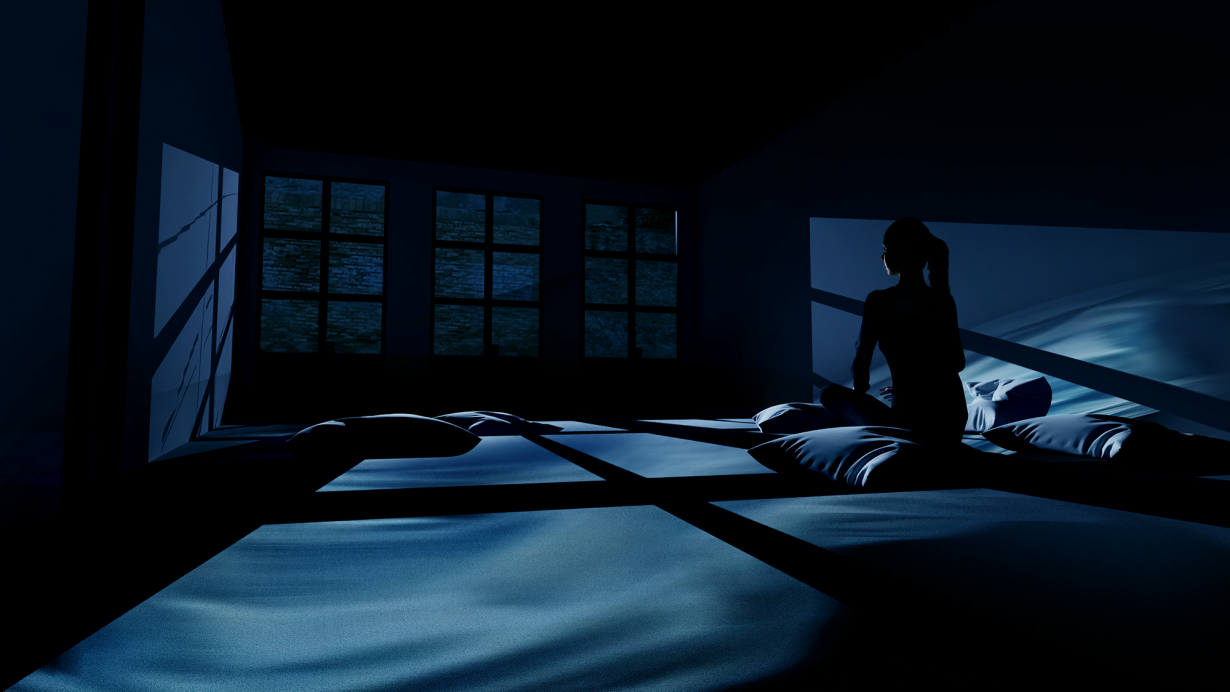
Kingsley Ng My practice often gravitates towards the intangible: I seek to create conditions for discovery, for resensitising. In a world bombarded by sensory overload, I hope to reawaken a sense of wonder even in the most ordinary moments of daily life. In Venice I will show a set of three works conceived specifically for this encounter between Hong Kong and Venice, two seemingly distant yet surprisingly kindred cities. Two new kinetic installations, drawing reference to features in the two cities’ urban fabrics, invite the audience to pause for a contemplative moment. An immersive projection, simulating moonlight entering through the space’s actual windows, is accompanied by a soundtrack capturing nighttime sounds from Hong Kong. It literally conjures ‘the other side’ of the world – in a different time zone, thousands of miles away – and most importantly the contributions of unsung heroes who take care of a city after dark, preparing it for the next day, oblivious to those soundly asleep.
AR In what ways (if at all) does your work relate to the theme of the Biennale exhibition, In Minor Keys?
AH I feel very close to In Minor Keys, because my work also speaks softly, through small gestures, slow rhythms and the hidden poetry of daily life.
KN The point on ‘listening to’ rather than ‘speaking for’, in the curatorial statement by the late Koyo Kouoh, resonates deeply with me. Creating spaces for listening has always been at the core of my practice. When I work with intangible media like light and sound, the absence of material subjects goes hand in hand with a preference for not approaching art as an amplifier for personal statements, but as an open environment for tuning in to the unsung and holding space for a less fixed, more receptive state of mind.
This also calls to mind what John Berger says in Bento’s Sketchbook (2011). He thinks there are two distinctive categories of storytelling: one that exposes and reveals, and one that deals with the invisible and the hidden. Berger asks which of the two is more adapted to, more trenchant about, the state of the world today. He believes it is the latter ‘because its stories remain unfinished. Because they involve sharing. Because in their telling a body refers as much to a body of people as to an individual. Because for them mystery is not something to be solved but to be carried. Because, although they may deal with sudden violence or loss or anger, they are long-sighted. And, above all, because their protagonists are not performers but survivors.’
AR Why is the Venice Biennale still important, if at all?
AH The Venice Biennale is still important to me because it gives artists from different places a chance to meet, exchange ideas and let local stories become part of a bigger conversation.
KN ‘Still’ is an interesting qualifier. Perhaps not a comment on the Venice Biennale as an institution in general, but just on this edition: I am very curious about how artists from around the world will respond to the curatorial concept and address our present day cacophonies not with another deafening blast, but perhaps with whispers that could be even more resounding.
AR What role does a national pavilion play at a time of increasing confrontational nationalisms? Is it about expressing difference or commonality?
Hui and Ng did not answer.
AR Who, for you, is the most important artist (in any discipline) that your country has produced?
AH It’s hard to choose only one; all its artists capture the spirit of Hong Kong in such a poetic and open way.
KN My late grandfather used to associate art with all aspects of life. When I was a little boy, he would share stories whose simplicity belied their depth, including the enduring axiom ‘life is a white sheet of paper’. He would also say, ‘this is the art of driving’, ‘this is the art of using chopsticks’… So as much as I am inspired by my fellow professional artists, who are all important in different ways, I am always intrigued by those who tend to everyday life with exceptional rigour and an almost artistic sensibility. Like those who curate colours so meticulously on their laundry lines, those who stick functional duct tapes so neatly that they almost look like a drawing… These little actions, usually unnoticed, shape the city as a repository of vernacular aesthetics.
AR What is something you want people to know about your nation that they might not know already?
AH I want people to know that Hong Kong is not only fast and busy, but also full of quiet traditions, delicate craftsmanship and a lot of tenderness.
KN What keeps a city of 7.5 million people running is often a lot more than what is publicised. For instance, most people, even those in Hong Kong, know little about the alchemy of our massively spectacular sewage plant that calmly processes a huge amount of wastewater round the clock. There is also the magic of overnight mail delivery, Formula-1-like rotations of printers running for the next day’s newspapers, dim sum steamed before sunrise for early risers, etc. My research for this work has opened windows for me to these indispensable workings of our city. Through the audio rendition, I hope people can open their ears to this lively nocturne.
AR Given that you are exhibiting in a national pavilion, is there something (a quality or an issue or attitude) that distinguishes the art of that nation from that of others? That makes it particular? Are there specific contexts that it responds to? Or do you think that art is a universal language that goes beyond social, political or geographic boundaries?
AH Hong Kong art often comes from a very specific city life, but I believe it can still speak across borders because honest feelings are always universal.
KN I like what Marcel Proust says about the limitless worlds of art: as there are so many artists, there are so many worlds. It is difficult and overgeneralising to pin down Hong Kong art to anything singular. As to whether art is a universal language that goes beyond boundaries, I think it also depends on the specifics, but art certainly has that potential.
AR What, other than art, are you looking forward to seeing – or doing – while you are in Venice?
AH Walking slowly through Venice, absorbing its light, water, and atmosphere, and letting the city itself telling stories to me.
KN I am very grateful that I am not alone in my practice. This time in Venice, I will be joined by my decade-long partners with whom I have gone through one rollercoaster project after another. We look forward to a nice celebration of our years of collaboration and friendship. Something quiet, like beer and pizza by the shimmering lagoon.
AR Could you give us a brief overview of your average working day while creating your presentation in Venice?
AH It will probably be spent checking the installation, adjusting details with the team and walking around the city to stay connected to the space and its vibe.
KN Waking up thinking about the works, working on them while juggling other work, spending the night either with the mock-ups or on the computation and programming. My cat meows all the time so giving her attention is a much needed distraction.
AR Can art really change the world?
AH I don’t think art changes the world suddenly, but I do believe it can change the way people see things, and that can lead to real change.
KN Art resensitises. A lot starts from there.