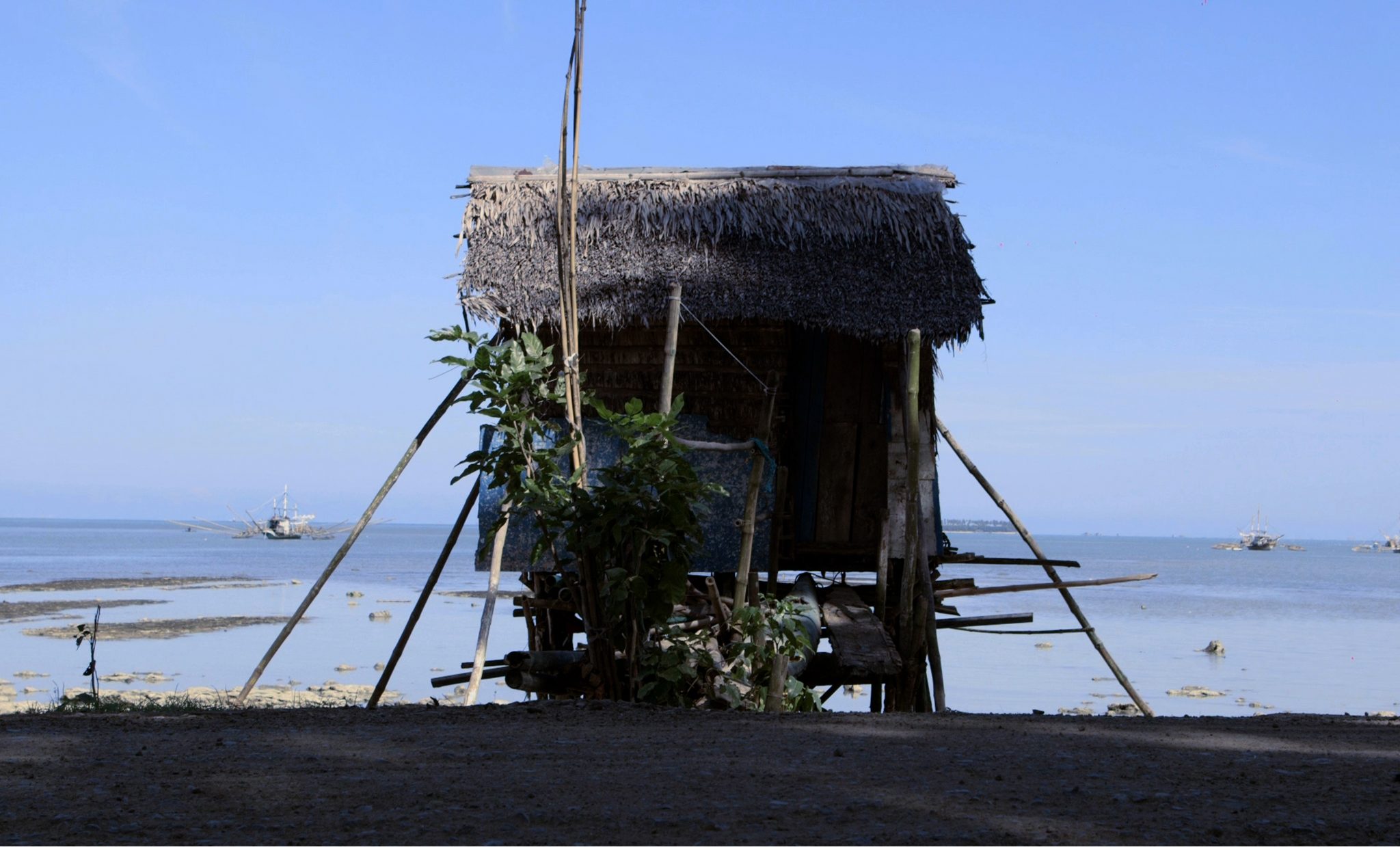
“Per capita, the Bahamas has one of the highest concentrations of working artist studios in the world”
ArtReview sent a questionnaire to artists and curators exhibiting in and curating the various national pavilions of the 2026 Venice Biennale, the responses to which will be published daily in the leadup to and during the Venice Biennale, which runs from 9 May through 22 November.
Lavar Munroe and the late John Beadle are representing the Bahamas; the pavilion is in San Trovaso Art Space.
Celebrating Visions. Versace partners with ArtReview to share stories from the 2026 Venice Biennale.
ArtReview Tell ArtReview what you plan to exhibit in Venice. What has influenced or inspired you?
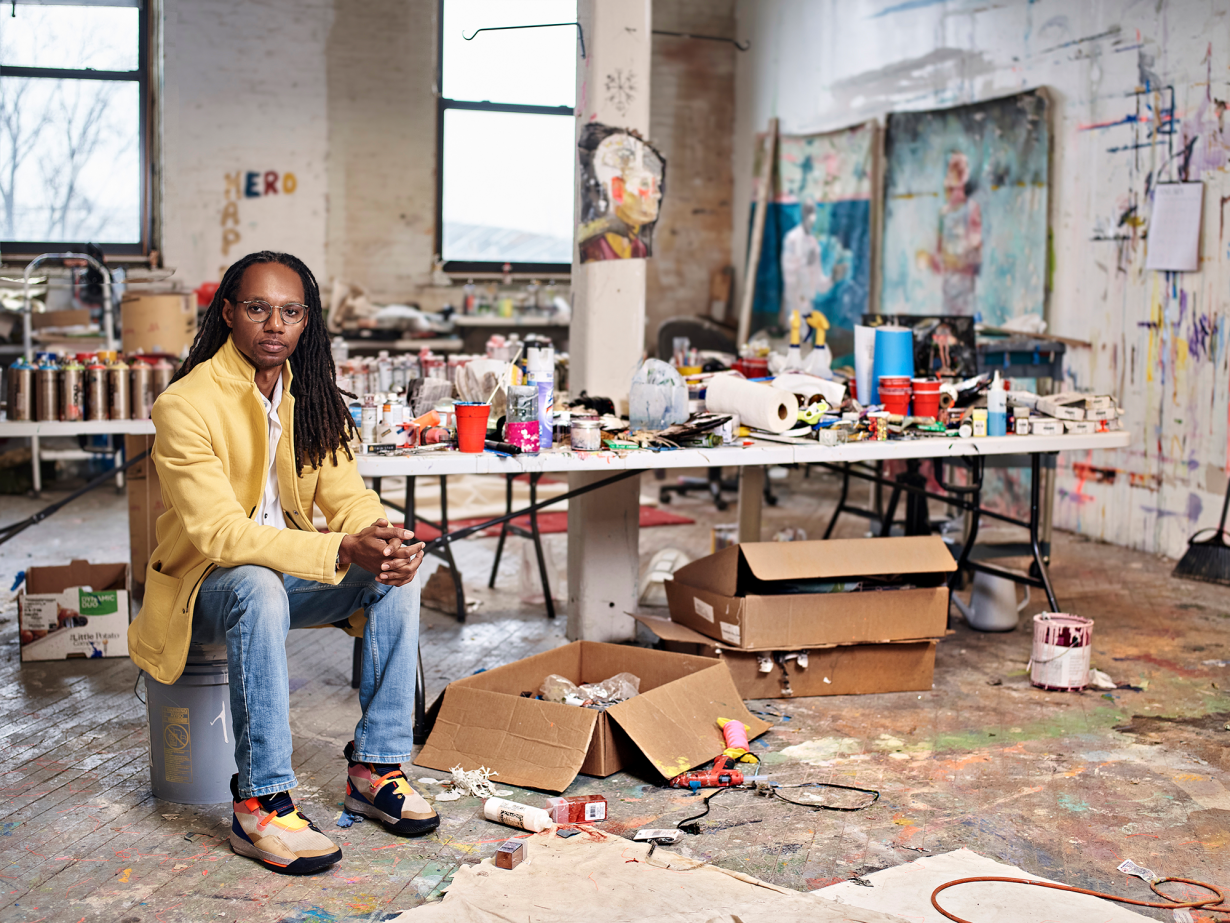
Lavar Munroe In Venice, I will present three interrelated bodies of work that explore ritual, ancestry, spirituality and communion.
The earliest of the three emerges from a long-term research project in Zimbabwe, where I spent three years investigating and responding to Kurova Guva, a Shona ceremony used to ‘call home’ the spirit of the dead. Drawing from anthropology and immersive research, the work examines belief systems, spiritual continuity and ancestral communion. This process also became a lens through which I reflected on my own spiritual upbringing in the Bahamas, allowing parallels to surface between Zimbabwean ritual practices and Bahamian understandings of death and spirituality.
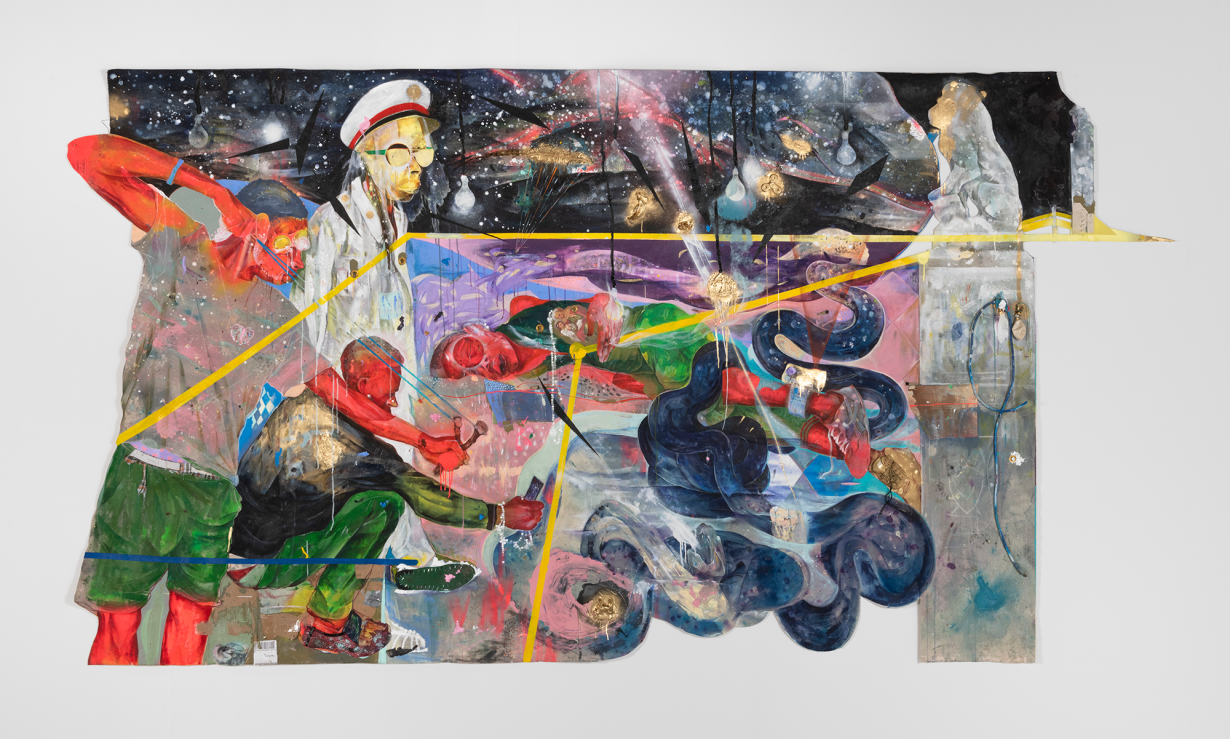
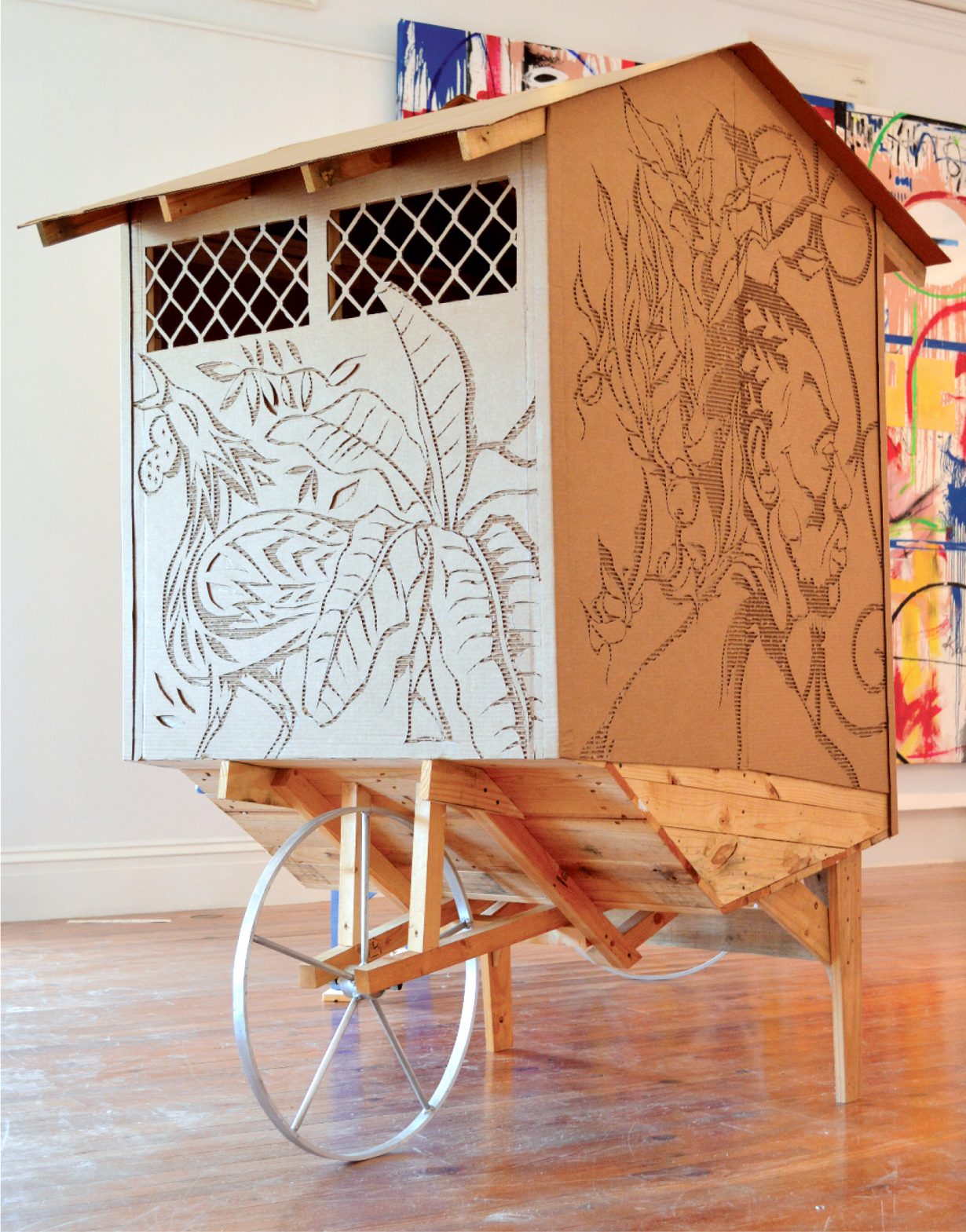
The second body of work, No Matter How Dreary and Gray, We People of Flesh and Blood Would Rather Live Here, Than in Another Man’s Yard (2026), is an eleven-panel painting. Inspired by the Bahamian Junkanoo Wake – a ceremonial sending-off of the spirit of the dead – the work functions as both homage and invocation, dedicated to my late collaborator John Beadle. The panels depict a solemn yet musical procession led by a young girl carrying a red One Family Junkanoo Organization flag, referencing Beadle’s Junkanoo group. Her presence merges leadership, rhythm, celebration and mourning, while the procession itself becomes a metaphor for collective memory, migration (physical and spiritual) and resilience. This work is also littered with other signifiers to Beadle, such as the newspaper article announcing his death, references to his mobile house and oar sculptures, logos and materials such as cardboard, which was prominent in his work.
The final work, However Long the Night, the Dawn Will Break (2026), will be a site-specific sculptural installation and posthumous collaboration with Beadle. I will reimagine unrealised sketches from Beadle’s sketchbooks. A key component of this work will be the repurposing of Junkanoo costumes from the most recent Boxing Day and New Year’s Day parades. These costumes, created through the collective labor of Bahamian communities, will be shipped from Nassau to Venice. This process not only reflects the transformation of cultural material into fine art but also embodies the many Bahamian hands, bodies and spirits that have engaged with these objects – drawing, pasting, performing, sweating and bleeding into them. Through this material invocation, I aim to summon the presence of John Beadle and create a work that resonates with memory, collaboration and national identity.
AR In what ways (if at all) does your work relate to the theme of the Biennale exhibition, In Minor Keys?
LM My work foregrounds subtle emotional frequencies such as memory, breath, grief, mourning and music as meditation. Rather than asserting meaning didactically, the work invites slow engagement and meditative attention, allowing viewers to visually listen, feel and linger within the work.
In my work, sound and rhythm function as metaphor, allegory and acts of remembrance. In No Matter How Dreary and Gray…, a rain-soaked, somber atmosphere frames each panel. I attend closely to the visual translation of sound: the song of breath; the rattle of a cart full of pigeons on a lonely dirt road; footsteps in movement; mourning and crying; humming, the ringing of chinaware bells; the sound of rain drops on various surfaces and the quiet noise of a vast ocean set against that of a sublime mountaintop are a few visual clues that play on the idea of minor keys.
Materially, the work is grounded in inheritance and offering. Objects inherited from my late grandmothers – Sadie Curtis, a celebrated Bahamian educator, and Cynthia Hanna, a revered baker and fruit dealer – appear in the works and function as offerings to the ancestors. Hand-fringed Bahamian national newspapers appear not as documentation alone but as sites of mourning, public memory and collective witnessing. Together, these elements hold beauty and grief simultaneously, affirming art’s capacity to connect us to deeper emotional and sensory worlds.
AR Why is the Venice Biennale still important, if at all?
LM I have had the privilege of participating in both registers of the Biennale. My first participation was in 2015, when Okwui Enwezor included my work in the 56th International Art Exhibition, All the World’s Futures. This time, I return to the Biennale representing my country in only its second National Pavilion, alongside the late John Beadle which is a profound honor and a source of immense pride.
AR What role does a national pavilion play at a time of increasing confrontational nationalisms? Is it about expressing difference or commonality?
LM When I think about our pavilion title,In Another Man’s Yard, I am drawn immediately to the vulnerability and disposability of human life that is unfolding globally today – particularly in the United States, where immigrants are being targeted, inhumanely detained and where protesters are met with violence by masked agents sanctioned by the US government. While these conditions are not isolated to the US alone, the examples set by so-called global leaders often do more harm than good in shaping humane responses to migration and displacement worldwide.
In this context, the national pavilion becomes less about nationalist assertion and more about ethical reckoning. It is not simply a space to perform difference, nor is it about flattening distinction into sameness. Rather, it is a site where difference can be articulated through shared human stakes – precarity, movement, loss and survival – allowing commonality to emerge without erasure.
AR Who, for you, is the most important artist (in any discipline) that your country has produced?
LM For me, as an artist working on the global circuit, one of the most significant is Tavares Strachan. His importance lies not only in the rigor and ambition of his multidisciplinary practice, but also in his role in expanding the international visibility of Bahamian art. In 2013, Strachan initiated and became the first artist to present the Bahamas National Pavilion at the Venice Biennale, marking a pivotal moment in the country’s cultural history. That gesture fundamentally shifted what was imaginable for Bahamian artists on the world stage.
AR What is something you want people to know about your nation that they might not know already?
LM Per capita, the Bahamas has one of the highest concentrations of working artist studios in the world. We call them Junkanoo shacks or simply shacks. Within these spaces, elaborate ideas are brought to life using the most modest of materials – cardboard – transformed through labor, imagination and skill into objects of alchemy.
Often modest and overlooked from the outside, the shacks function as intense creative incubators – breeding grounds for visual artists, dancers, musicians, composers, colorists, researchers and intellectuals alike. They are spaces where disciplines intersect, overlap and inform one another through shared purpose and sustained effort.
Collaboration is foundational within the shacks. Time management, discipline, improvisation and camaraderie are constantly in motion, shaped by collective labor and shared responsibility. Ideas are tested, refined, discarded and rebuilt through rigorous dialogue and hands-on making. Skills are sharpened through repetition, and knowledge is passed laterally across generations.
AR Given that you are exhibiting in a national pavilion, is there something (a quality or an issue or attitude) that distinguishes the art of that nation from that of others? That makes it particular? Are there specific contexts that the work responds to? Or do you think that art is a universal language that goes beyond social, political or geographic boundaries?
LM Materiality, storytelling, symbolism and a deep attentiveness to objecthood are central qualities that distinguish the art of both Beadle and myself. We often work with materials that carry lived histories. These include tools such as machetes and sails used on Haitian sloops; environmental materials like fish bones native to the islands of the Bahamas; and ritual or inherited objects such as full chicken hides, family jewelry, soil, fabrics, mirrors and dried flowers.
We also engage materials and techniques drawn from our shared cultural lineage, including cardboard construction and newspaper-fringing processes rooted in Junkanoo. These materials are not treated as neutral or illustrative. Instead, they are activated as vessels of memory, labor, history, time and spirit – objects capable of carrying layered meanings across time and context.
The works invite viewers to encounter material as narrative, symbol and presence, allowing local histories and embodied knowledge to enter into broader international and critical conversations.
The work responds directly to non-Western spiritual frameworks, belief systems and practices of honoring ancestors. Central to this is Junkanoo – both as a contemporary practice in the Bahamas and as a cultural form rooted in African traditions, shaped through the historical realities and enduring residues of the transatlantic slave trade.
There is also a strong sensitivity to objecthood: the belief that objects can hold memory, spirit, and intention. Materials are not neutral; they are activated as carriers of history and as participants in broader conversations. Through this activation, objects function as sites of remembrance, ritual and transmission, allowing the work to move between the spiritual, the historical and the material worlds.
AR What, other than art, are you looking forward to seeing – or doing – while you are in Venice?
LM I look forward to intentionally slowing down – allowing time to wander beyond the tourist pathways and to engage more deeply with the everyday life of the small islands outside of Venice proper. I am especially looking forward to seeking out local, non-touristic eateries and restaurants, and to experiencing Venice in a more lived-in, intimate way.
AR Could you give us a brief overview of your average working day while creating your presentation in Venice?
LM I wake up between 5:30 and 6am every morning. I begin the day with either stretching or a full work out. Then I do admin work which consists of emailing and a text-message briefing with my lead studio assistant regarding the day’s work. I then shift into ‘dad mode’ and begin getting my three-year-old ready for daycare – cooking breakfast and lunch for us both, choosing his clothes, getting him ready, then getting myself ready before dropping him off.
I arrive at the studio around 10–10:30am. By that time, multiple paintings are already in progress with my assistants. I work for about thirty minutes, then pause for breakfast/brunch, which is always the same: Greek yogurt, a rotation of fruits, granola and seeds. After that, I put on my painting scrubs and, often by impulse, choose a single painting to focus on intensely for the rest of the day. I then break again around 2pm for lunch.
My studio assistants leave at 3pm. From that point on, I work alone for several hours. This solitary time is where the most critical decisions and conceptual shifts tend to happen in the work. I usually leave once I feel satisfied with the day’s progress and repeat the process the following day.
I typically do not work on weekends, but for this project I often worked during the evenings into nights on weekends. I found that time especially fulfilling – particularly on occasions when my 17-year-old daughter, an aspiring painter, joined me to help with the paintings.
AR Can art really change the world?
LM Art is a powerful signifier of histories, cultures and specific moments in time. At its best, it has the ability to capture attention in ways many other forms of communication cannot. Art can function as a mirror – reflecting truths back to us when the right visual, emotional and contextual conditions align.
While art may not change the world in a sweeping or immediate way, it has a unique capacity to provoke emotion, spark conversation and linger in the mind long after the initial encounter. These moments of reflection can encourage subtle but meaningful shifts in personal behavior, awareness and perspective.
Change often begins in small, quiet ways – within individuals, communities and conversations. In this sense, art holds the potential to affect the world incrementally, by shaping how people see, feel, and respond to the realities around them. Collectively, these shifts can accumulate into deeper forms of social and cultural transformation.
That said, changing the world outright may be a long shot. What art can do – reliably and powerfully – is shift mindsets, both individually and collectively. And often, that is where meaningful change truly begins.
The 61st Venice Biennale runs 9 May through 22 November 2026