The shroud of apparent sincerity over the banal evils of technology is rapidly unravelling. What’s art got to do with it? Jenny Wu goes for a walk
We live in antisocial times. A diagnosis: among encoded longings, apostrophic confessions and smuggled aesthetic surplus, we find acts of banal evil with saccharine centres; the era in which banal evils of technology (eg the attention mining enabled by our twittering devices, the objectification and surveillance of private individuals, and infrastructure-based neocolonialism) are shrouded in apparent sincerity is rapidly unravelling. Maybe that’s just history.
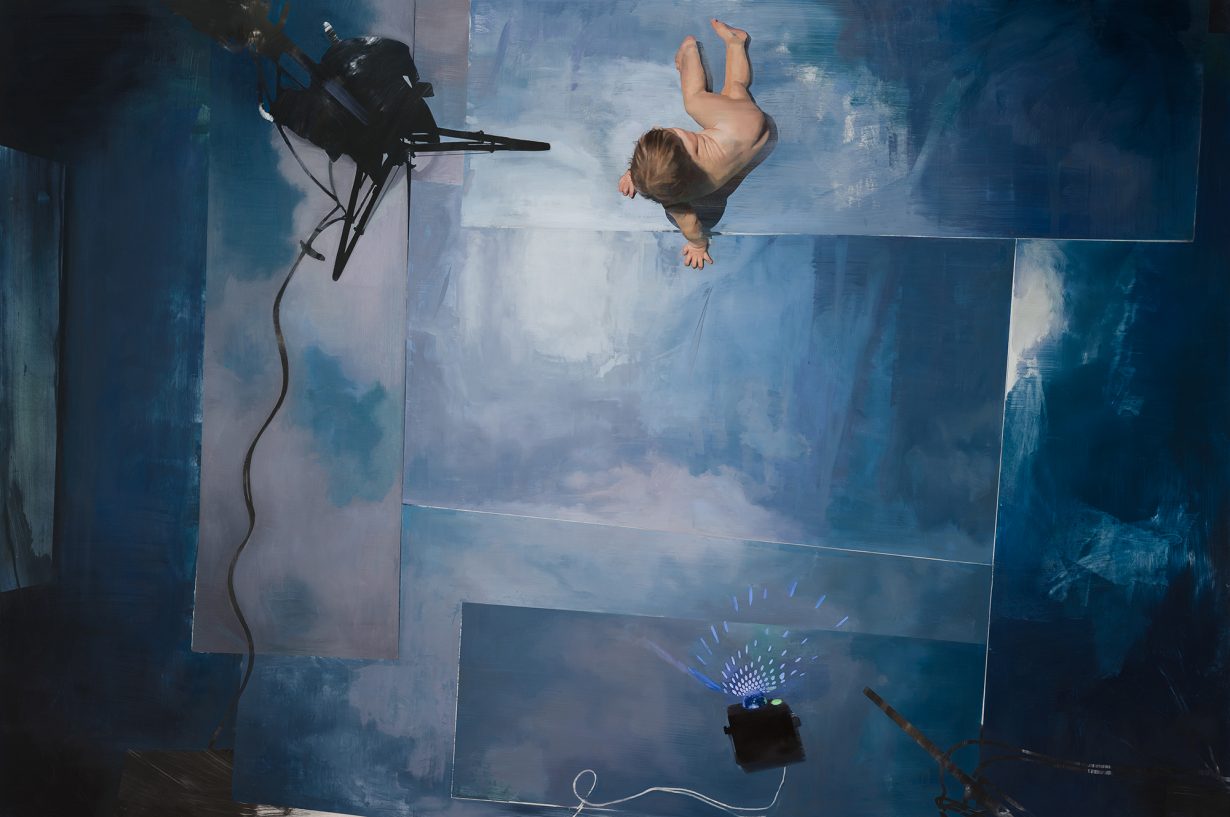
Wading through the morass of openings this month, one catches art and the artworld attempting to mask its alienation in party lights and gemstones. Take, for instance, the oil-on-aluminium paintings by Kelsey Isaacs that went on view at Theta down in Tribeca: works like Cloud Editor 1 and 2 (both 2026) peer vertiginously onto a naked baby sitting alone on a floor made of what seems to be overlapping sheets of plywood painted blue and white – perhaps the abandoned set of a content shoot for which it was meant to pose as a cherub in the sky. A small black projector throws a bevy of twinkling colours at the kid. A spotlight, whose legs are visible on the edges of the paintings, heats the scene from above. The exhibition’s title, Baby Mozart’s Kiss, echoes the phrase ‘Judas kiss’: someone is being sold out.
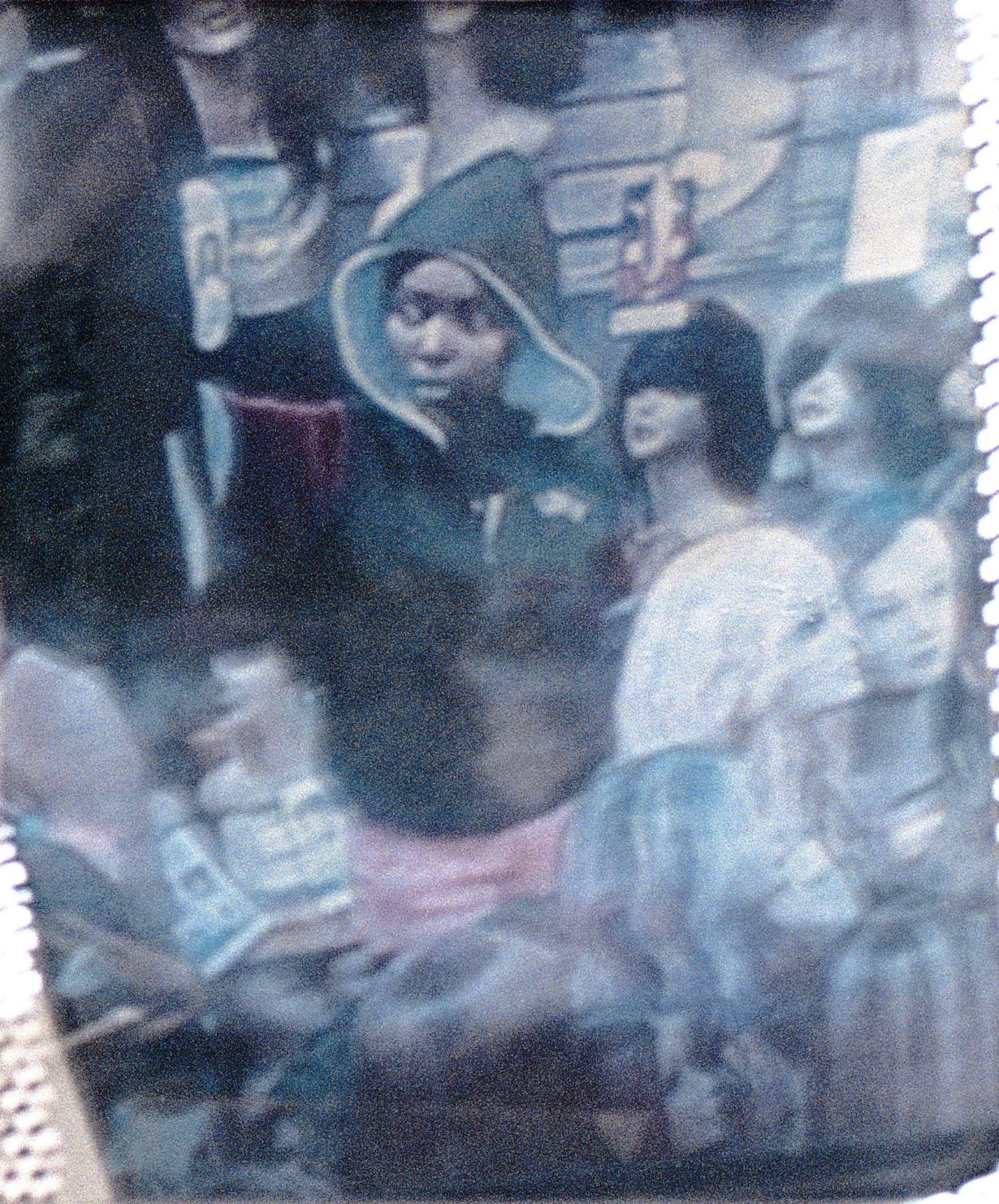
A similar high-angle perspective dominates Deana Lawson’s Edge Control (2023–), a series of silver halide prints on view in one of Gagosian’s Chelsea galleries, of imagery appropriated from found surveillance stills. In one, a Black woman in a white bodysuit and trainers saunters into a beauty supply store on a rainy day; the door hangs ajar behind her, an open umbrella lies upturned on the sidewalk outside. In another, a subject in a low-cut top and distressed jeans power-walks through an aisle; over her face, Lawson has, in a rather absurd fashion, superimposed the portrait of a hardhat-wearing Donald Trump. Nevertheless, the subject looks exposed, sold out to an unfeeling machine eye.
Another alienated, screen-mediated dynamic crops up nearby on the same street, in a group show at the Hill Art Foundation. Titled Thucydides Fever Dream, the show proposes that we sublimate the longstanding adversity between the US and China into more complex and chaotic social forms. In Wu Ziyang’s two-channel videowork New Silk Frequencies (2026), we encounter a 3D-animated retro-futuristic universe where TV stands for ‘Totemic Vessel’, and movies are known as ‘Parallel Realities’. We hear audio derived from fragments of a real-life documentary about a satellite project that, beginning in 2015, saw China attempting to close the digital divide in Africa by installing solar-powered television infrastructure across the continent. One interviewee, a villager and widow whose animated avatar (the artist’s interpretation of her) wears gold rings and bracelets, small gold satellite dishes on her head and pastel-coloured wires like goggles around her eyes, reports finding security and comfort in TV: her kids don’t “run around anymore” now that they wear metal viewing devices around their heads. Another villager reports feeling invisible to the world, and yet another, a bespectacled office worker, says, “It’s only StarTimes” – the Chinese media company – “that is seeing us.”
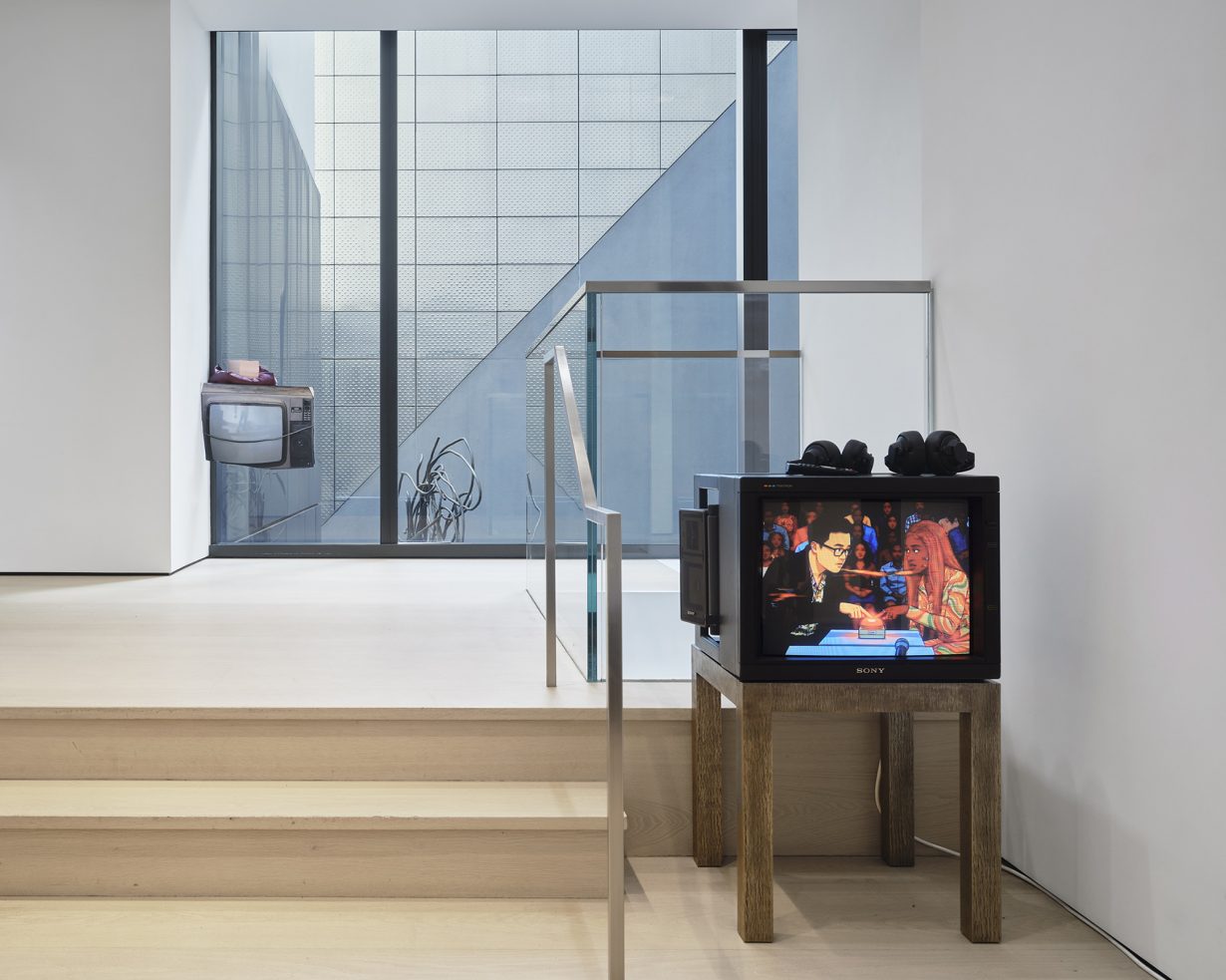
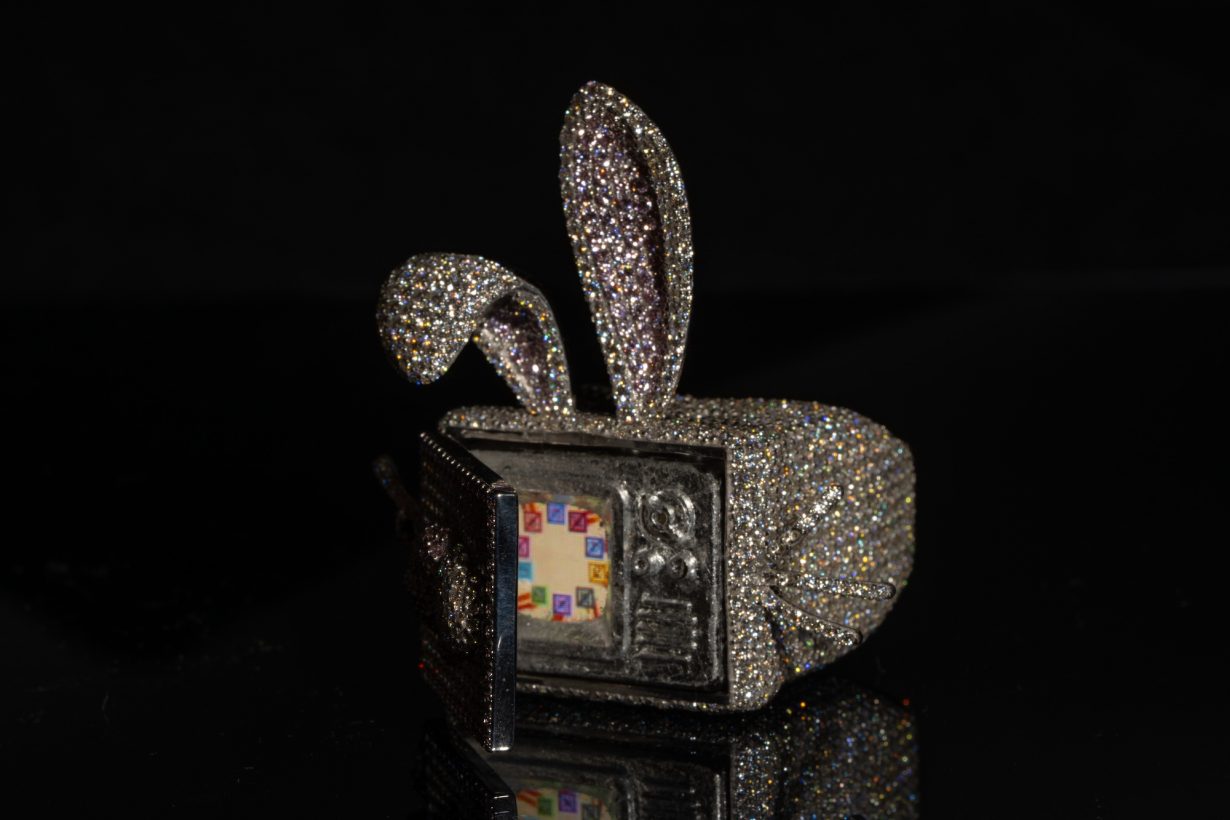
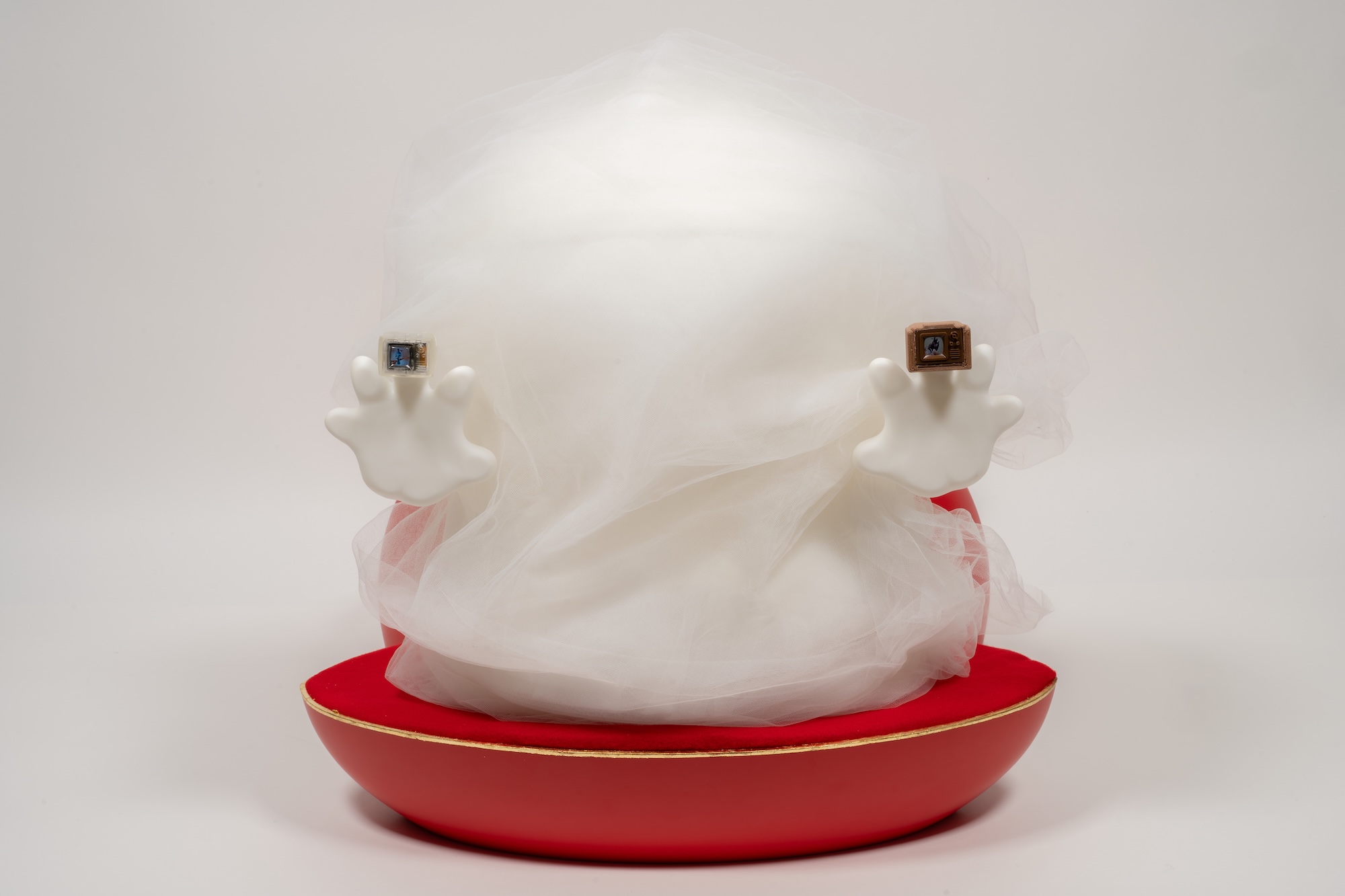
The baroque headgear that Wu’s villagers wear to watch – and be watched by – TV look strikingly similar to Marc Kokopeli’s ring sculptures, on display at Gladstone’s Upper East Side gallery. Incidentally, these open and close like lockets and hold miniature LED screens for easy-access entertainment. The Hare (2026), a moissanite-encrusted signet ring with protruding bunny ears, plays lo-fi animations: cartoon eyes, hands, dialogue boxes. Zero (2026), a sterling silver ellipsoid patterned with a swirl of white and black gemstones, plays footage of a walk down a tree-lined suburban sidewalk, the daytime scene saturated with night-vision green. The Holy Ghost of TV (2026), a tulle-covered resin sculpture shaped like the artist’s South Park dummies in Greater New York, wears two rings bearing illuminated imagery of an eagle and a bluejay, respectively. The room is abuzz with sped-up voices and sound effects coming from the rings, a mind-numbing – and decidedly middlebrow – score that visitors can silence only by ejecting themselves from the premises.
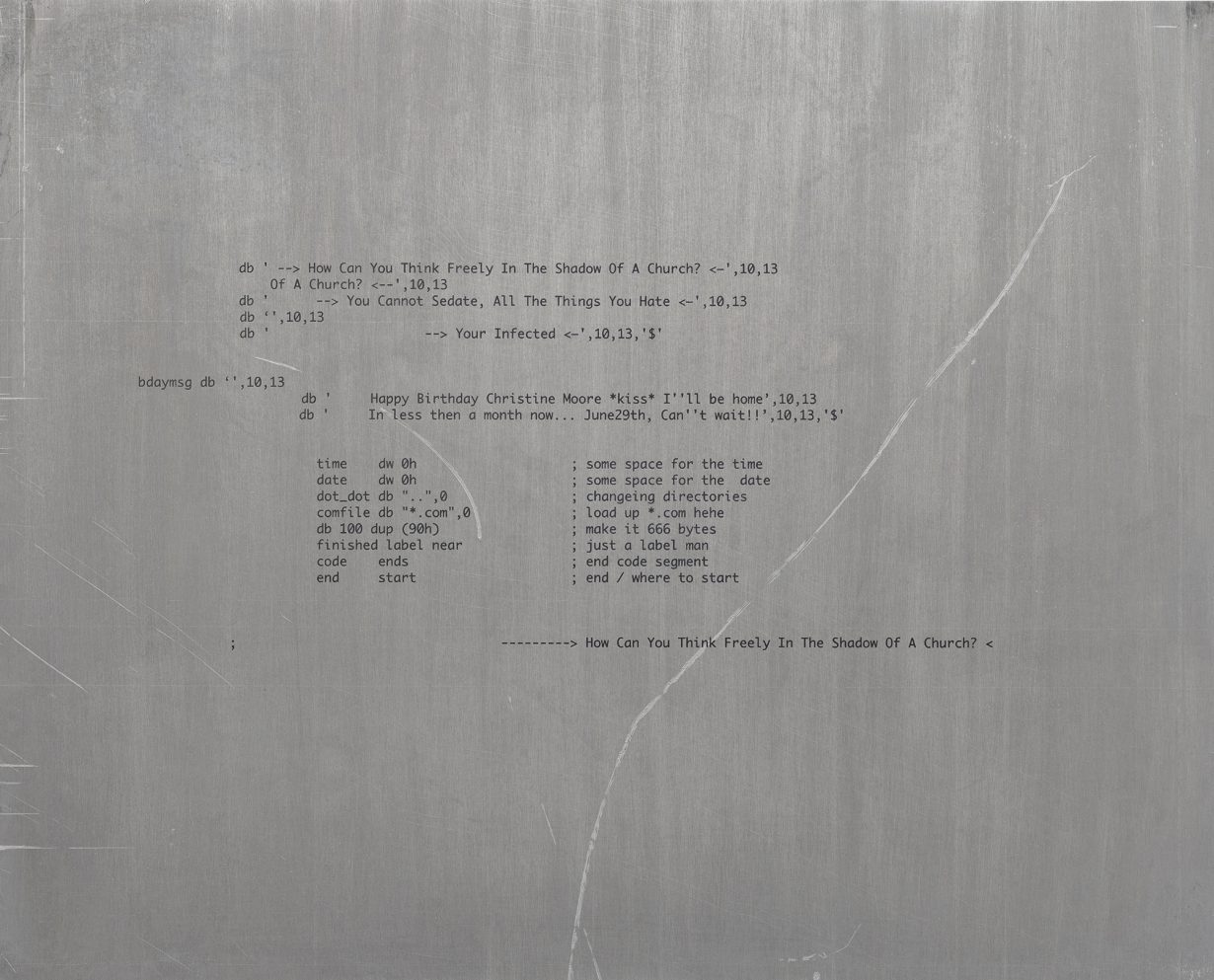
A professor of mine used to say that art does not coerce. But it can, I would argue, aptly describe and enact the gentle coercions that transpire between certain humans – and between humans and certain types of technology. These coercions are epitomised by the computer virus, as seen in Kristian Kragelund’s stripped-down, thermal-marked aluminium plates at Island in Chinatown. To the extent that they attempt to communicate something, the lines of malicious code on these plates – which, per the press release, Kragelund culled from the forums and archives of DIY hackers and, one sees in the gallery, contain elicit messages, diary entries and emotional tributes to deceased friends – are as antisocial as it gets. And yet, the texts entice. On one plate, CABANAS (2026), a eulogy: ‘Gonzalo Cabanas used to be a daydream believer. We shared several thingz in common, heard some R.E.M music style, wore the same ragged blue jeanz, and behaved like kidz everywhere we went together… I know this virus wont return him back to life, nor “will do him justice”.’ On another, Acurev (2026), an existential plea: ‘db’–>” How Can You Think Freely In The Shadow Of A Church?’ The exhibition’s title, Strum und Drang, appears in Strm (2026) as the name for a program. Its purpose, and, in these times, perhaps that of contemporary art: to emit a loud noise before destroying the host computer.
Read next The Digital Jungle: On Datacentres and Slaughterhouses