Recent exhibitions want to address conflicts past and ongoing, but what, from a safe distance, might they hope to achieve?
In the midst of May’s fairs, auctions and galas I stopped by the opening of Distortion / Memory / Resilience, a pop-up exhibition in an Upper East Side penthouse. Walking in, I was reminded of the final lines of a poem written by Ilya Kaminsky during the opening months of the first Trump administration: ‘In the sixth month / of a disastrous reign in the house of money / in the street of money in the city of money in the country of money, / […] we (forgive us) / lived happily during the war’. Giles Duley, the artist whose exhibition I was now inside, had lost three limbs to a bomb in Afghanistan while working as a photographer in the US army in 2011. In front of floor-to-ceiling windows overlooking Queens, the East River and Roosevelt Island, a crowd gathered to hear his remarks. “I don’t think we should kill children,” Duley said earnestly. “I don’t think we should bomb schools.” Listeners nodded along while wine glasses and serveware clinked in the background.
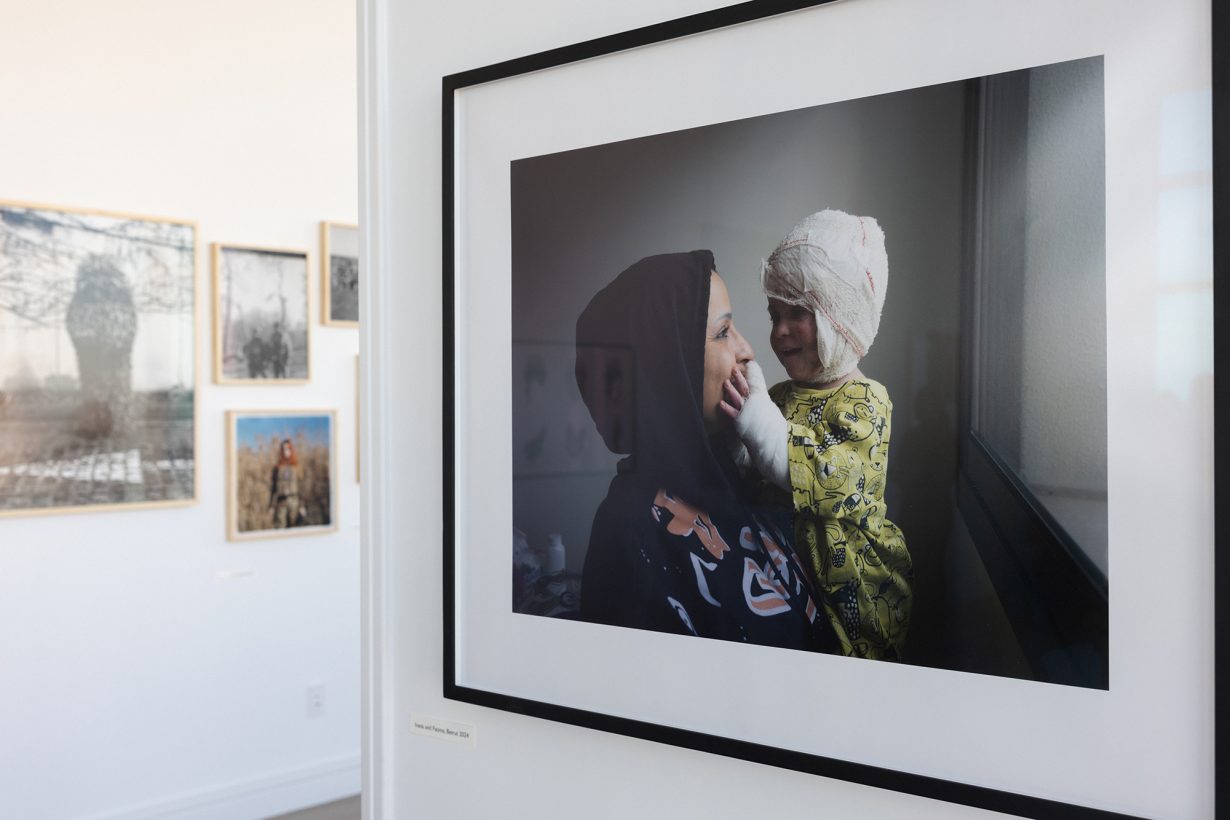
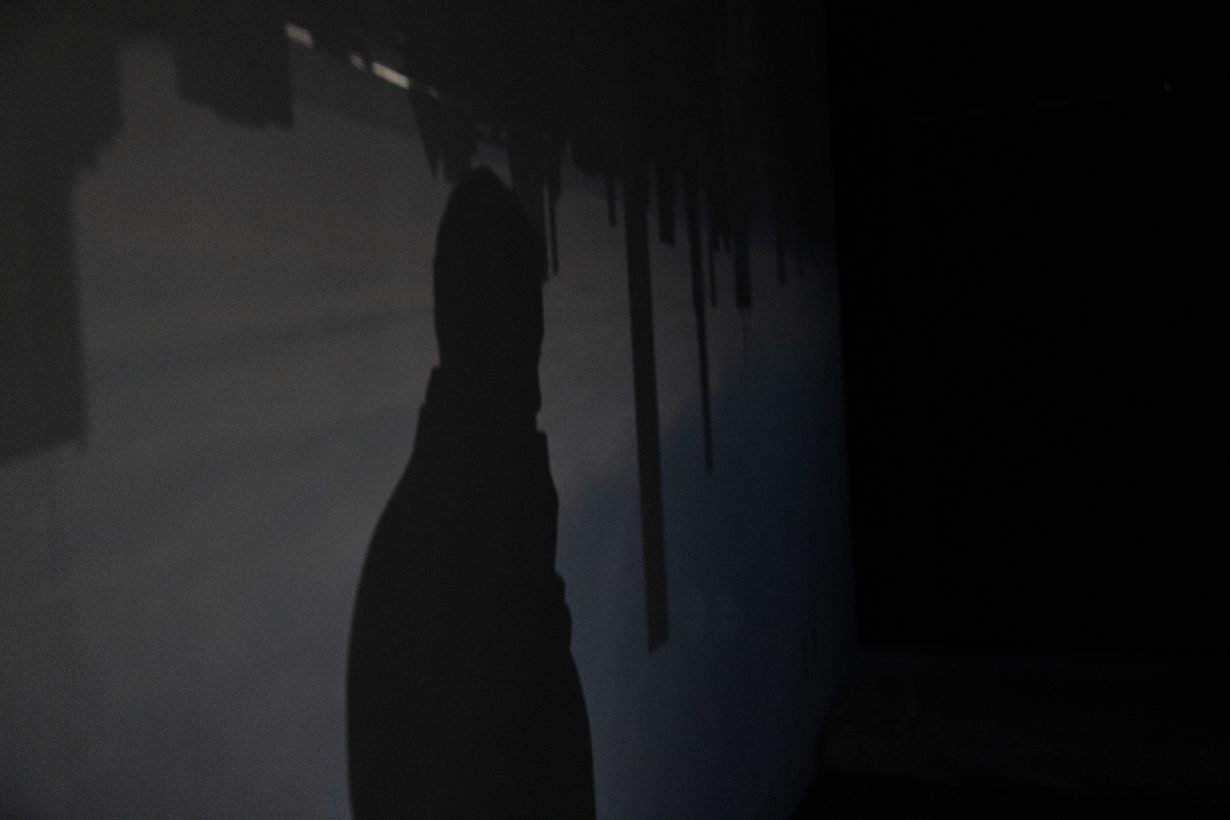
I slipped away, into other parts of the exhibition, where I found myself alone. One of the penthouse’s bedrooms had been turned into a ‘school’ with two wooden desks covered in drawings made by Ukrainian children suffering from PTSD. In the hall were portraits of people identified in the exhibition handout as former UNITA child soldiers from Angola; in the next room was, among other documents of war-related violence, a framed photo taken only weeks prior, of a three-year-old in a Beirut hospital. I entered a third bedroom. The lights were off, and the windows were blacked out save for a small hole that let in a beam of light. On the floor was a mattress, some thin sheets. A siren, synced to a real Ukrainian air-alert app, whined quietly in the room, cutting across the recording of a scared voice narrating the experience of hiding during a bombardment. When my eyes adjusted, I saw the inverted image of the skyline outside projected on the wall. The view had been made, via this camera-obscura trick, into a literal representation of a world turned upside-down and somehow even more of a spectacle than it was unmediated in the picture windows. Nothing suggested this was a critique of the artworld viewer’s subject position, the building’s owners and developers, or the perspective of someone who might live up there, seventy stories off the ground. Instead, the spectacle, devoid of human figures, insinuated the extent to which artworld signatories to what theorist Ariella Aïsha Azoulay calls the ‘civil contract of photography’ – the relationship between photographed subjects, photographers and viewers that ‘enables the injured parties to present their grievances’ and seek redress – all but require a rider of awe-inducing accoutrements to remind them (per the press release) ‘how close the distorting reality of war is’ – and to incentivise their political participation.
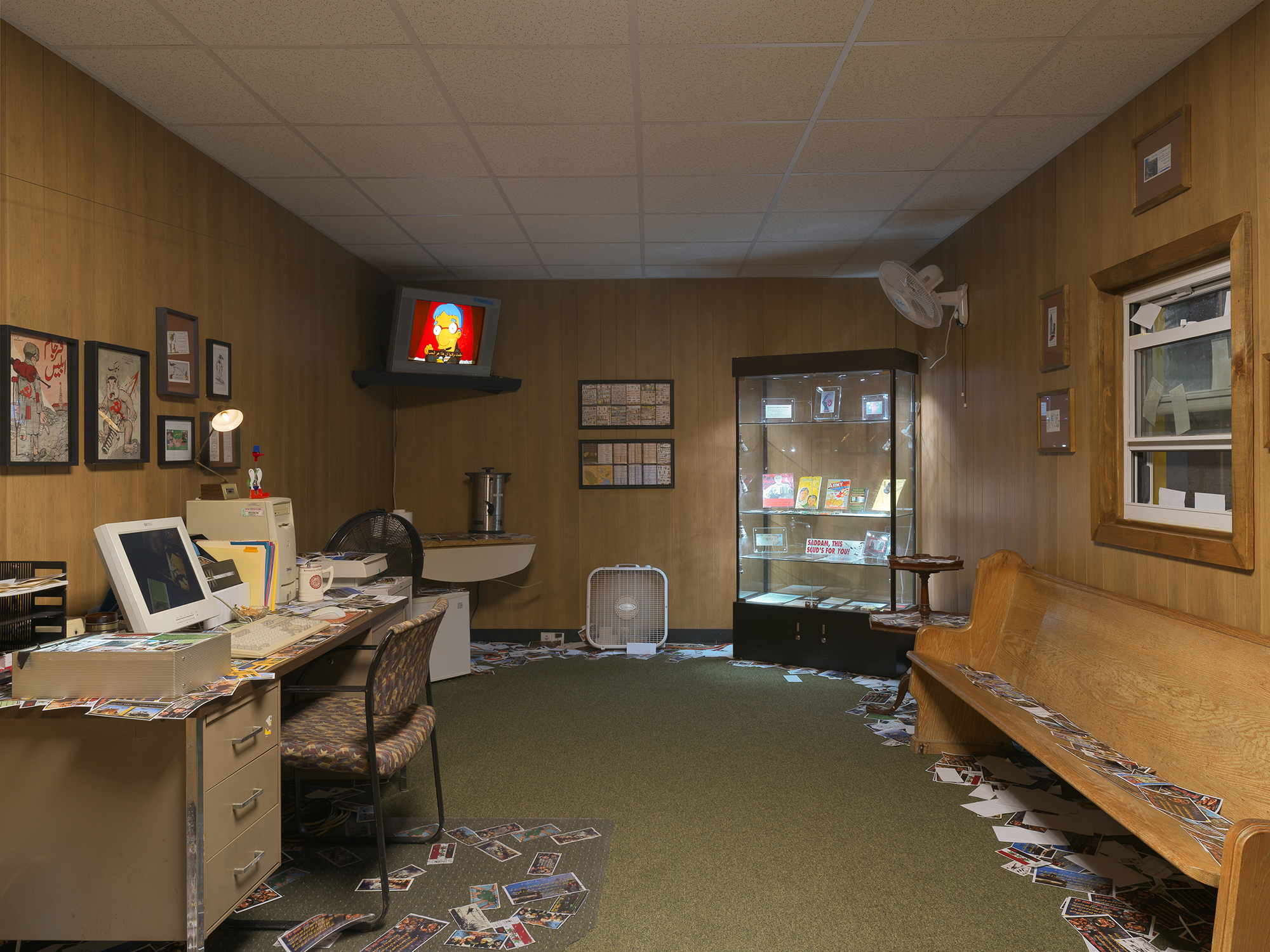
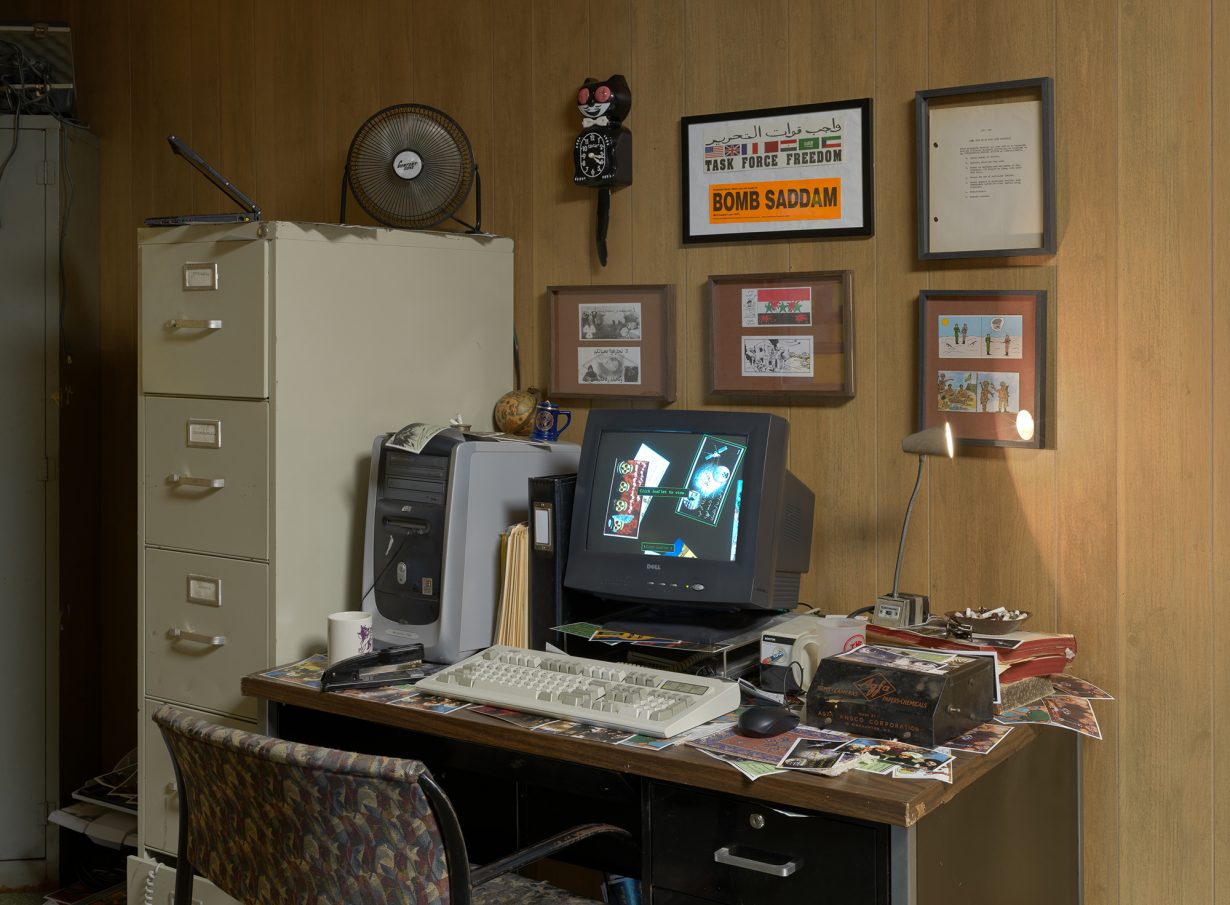
Elsewhere, at Pioneer Works, the New York-based archive and publishing platform Khajistan was presenting Office of War Information (O.W.I.), an exhibition featuring another room-sized installation. The ‘office’ here was modelled after that of an eponymous former US government agency responsible for disseminating news about US military activities during the Second World War (and abolished by the end of it). Inside the installation, sheets of paper – copies of US military and CIA pamphlets once air-dropped into Afghanistan, Iraq and Libya – were strewn on the floor and piled on desks and tables. Leaflet 265 depicted a pair of fear-stricken eyes in close-up, with lines of text written in Arabic underneath. In its digital file, I found an English translation – ‘No matter where you run, no matter where you hide, Coalition Special Operations Forces will find you and bring you to justice’ – and was informed that this type of ‘manhunt intimidation’ document had been created to target America’s opponents in the Iraq War. Leaflet 257 warned Iraqi children not to throw stones at American vehicles. Leaflet 168 urged Afghanistan’s many tribes and ethnic groups to unite under the banner of one nation. A grey RCA TV in the corner played war- and law-enforcement-related episodes of American comedy shows. The lightspeed (because simulated) research process became addicting, and before I knew it, I’d consumed a heap of propaganda, an episode of The Simpsons and an episode of Everybody Loves Raymond and felt sick.
At Mister Fahrenheit, a project space in the basement of a West Village townhouse, Jill Magid presented Pooler Room, a show premised on the fact that the basement had been a swimming pool used by its previous owner – Robert Muller, a Vietnam veteran – for physical therapy. A row of blue tiles were installed along the walls of the exhibition space marking what once was the waterline; an excerpt from the transcript of an anti-war speech Muller gave to students at Columbia University in 1971 – ‘[Mr. Muller spoke from a wheelchair, the result of a crippling injury sustained in Vietnam]’ – was printed on a wall. The show, in a loose chain of associative leaps and references, then gestured to former US president Franklin D. Roosevelt’s West Wing therapy pool (FDR had polio) and the press room that was built on top of it during the Nixon administration. A small Bluetooth speaker pumped C-SPAN into the room; during my visit, I had the displeasure of hearing Trump prattling on about Iran.
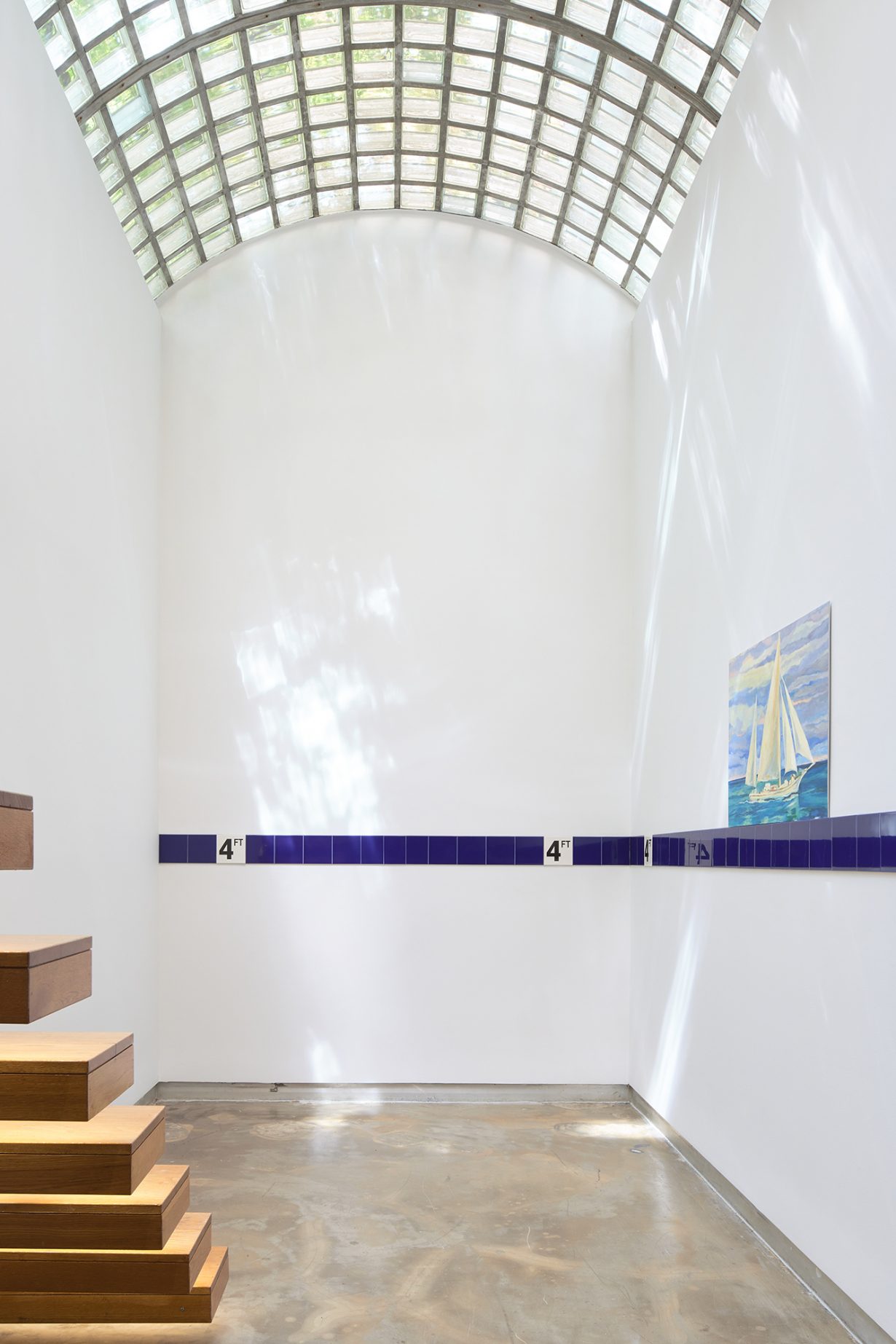
In Muller’s speech, the publicly accessible transcript of which I read in one breath on my phone, the first-lieutenant-turned-peace-activist admitted repeatedly to fanaticism and bloodlust: ‘I wanted to kill’. With this voice in my head, Magid’s show began working on me: by standing on the coordinates of Muller’s pool, I was able to imagine myself in the water – as Muller, hatred, resentment, regret and all. And with my eyes closed I could imagine myself in yet another room, where voices were asking a bevy of canned questions to stroke Trump’s ego. I found this position strange and refreshing, more so than the one I occupied in Khajistan’s installation – the smart investigator and gutsy interloper in the room of power – or in Duley’s exhibition – the conscientious witness and potential do-gooder.
I ran into Magid herself during a clarinet performance by instrumentalist and composer Stuart Bogie in the exhibition space, and later she and I spoke about transparency and obfuscation and the fine line between the two. “I’ve always found it facile,” she said, “the cat-and-mouse game where the artist is the subversive good guy, and those systems of power are the bad guy.” Perhaps it would be a useful thought experiment for viewers – particularly those who identify as citizens of a country that, in recent memory, captured a sovereign nation’s president and began exerting control over that country’s oil sales; that launched an attack on another country that resulted in the blockade of a waterway through which roughly a third of all seaborne global oil trade passes per day; and carries out extrajudicial killings of now over 200 people on boats in the Eastern Pacific Ocean and Caribbean Sea as well as the transfer of arms to another, genocidal regime – to try and picture themselves as the perpetrator for once, lest power be obfuscated by the twin spectacles of beauty and horror.