ArtReview Asia spoke with the Experimenter founders about the ideas behind the programme and how it has evolved
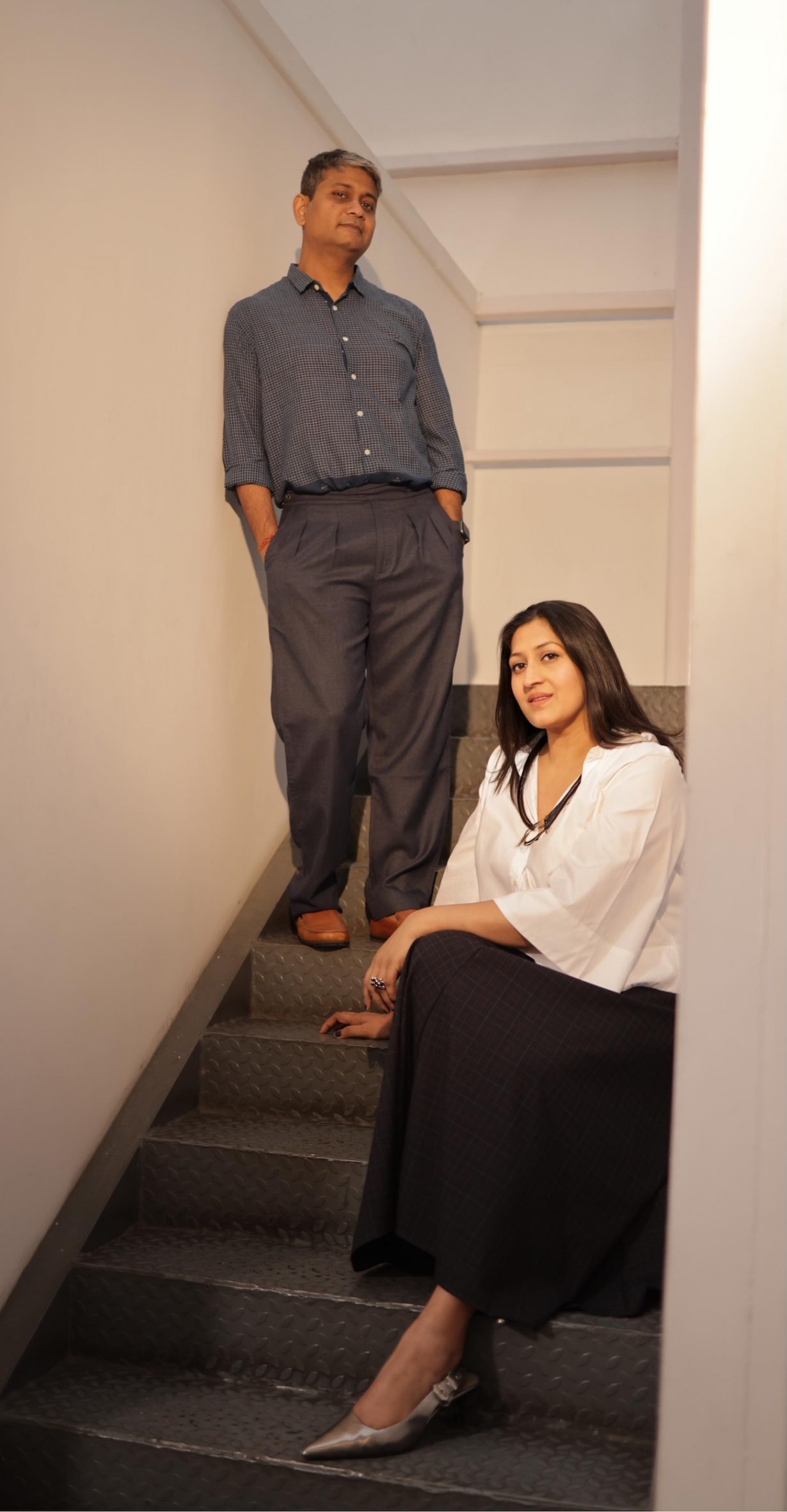
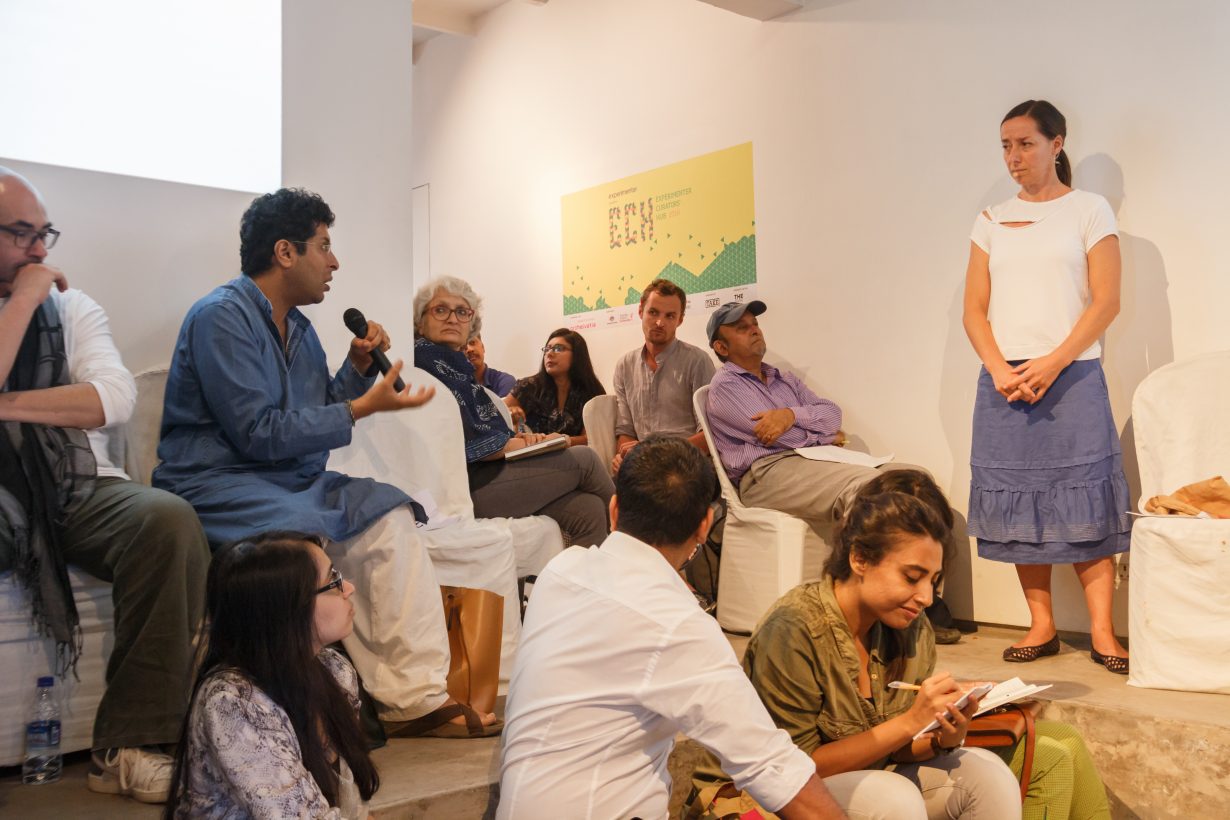
Experimenter was founded by Prateek and Priyanka Raja in Kolkata in 2009. In 2011, the gallery started Experimenter Curators’ Hub as a space for curators, artists and audiences to meet and discuss curatorial practice. The Hub brings together curators from India and abroad to speak about their work, recent exhibitions and the conditions in which they operate. This year’s edition focuses on curating as a collective practice, shaped by conversation and collaboration. As the Hub enters its fifteenth year, ArtReview Asia spoke with Prateek and Priyanka Raja about the ideas behind the programme and how it has evolved.
ArtReview Asia Why does a commercial gallery organise a platform for curators (many of whom operate outside of the commercial sphere)?
Priyanka Raja and Prateek Raja Experimenter Curators’ Hub began at the very outset of the gallery’s life. The first Hub was organised in 2011 when the gallery was just a couple of years old. Very early into our journey, we realised that our audiences in India had very limited access to curators and thinkers who were shaping the wider art world. Owing to our travels and our artists being globally spread out, we at Experimenter were establishing productive relationships and friendships with curators across a range of practices all over the world. We felt Kolkata, our home, and Experimenter’s base, needed access to this matrixed model of thinking. The genesis of the Hub was set in that foundational interest following a conversation between us.
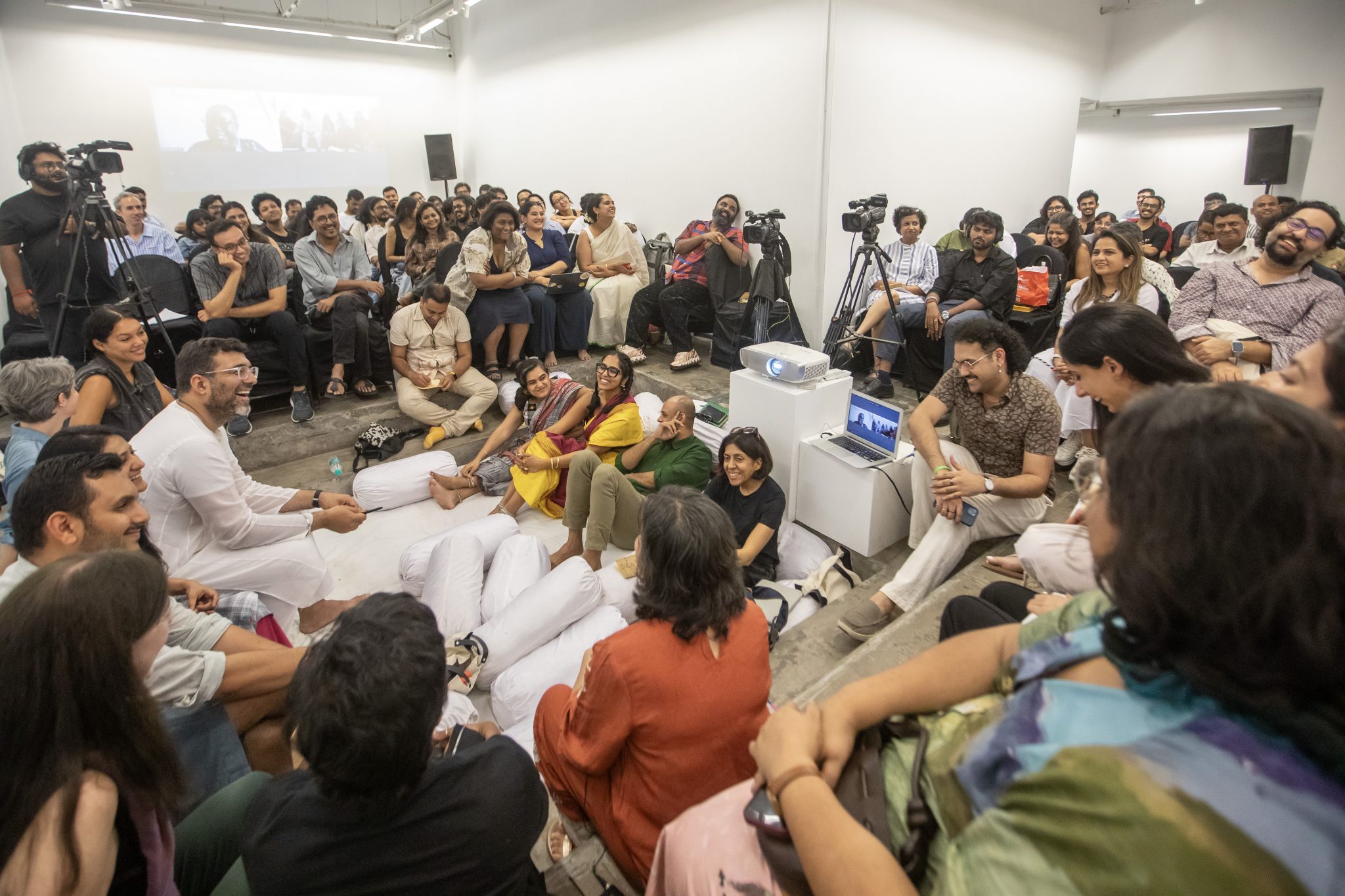
We felt it was urgent to create a platform for gathering together with some of the finest minds in curatorship to pause and reflect. We also quickly realised that there was no government or public support for these infrastructural set-ups (there still isn’t after 15 years) and decided to take it up ourselves. The Hub quickly grew into a productive, safe and intellectually charged gathering of some of the finest minds from all over the world, brought together by our own interests in organising non-hierarchical structures of gathering and a space for dialogue, free thinking and a caring environment. As a result, the Hub is free of cost and always available to register only on a first-come, first-served basis.
ARA How are the convenors and participants selected?
PR & PR The process of selecting the convenor is a crucial, long-term decision, since they hold a continued presence at the Hub. They really hold the pulse and are its central nervous system – echoing our voice, our politics and our vision for this platform. The convenor is our co-conspirator, building a critical and comprehensive view of global entanglements in the artworld. By tracing important connections and reflections of the curators’ respective trajectories, the convenor underscores ever-shifting dynamics within the industry, thus shaping the Hub over an arc of time. We’ve been lucky to have incredible voices hold that fort – Aveek Sen for the first three, then Natasha Ginwala, who held the role for ten years, and Rattanamol Singh Johal, who has carried the baton since last year.
In the case of the participants, that too is a highly deliberated process of selection, as the Hub is never meant to be a thematic set of presentations but rather a deep dive into the practices of some of the important curators in the industry. Each year, we look for a balance across stages of career, kinds of institution and geographic regions, while still matching the roles and visions of the individuals we bring together. Their contexts, institutions, nationalities and the structures and sites they work around and activate might all be completely different from one another. Yet there are fundamental and formal ideas that bind them together, and the Hub allows for that confluence of knowledge-making. This year’s nine participants – Arnika Ahldag, Gabi Ngcobo, Gridthiya Gaweewong, Nikhil Chopra, Sabih Ahmed, Sepake Angiama, Shabbir Hussain Mustafa, Tarini Malik and Zoe Butt – reflect this balance. Their positions and geographical contexts differ widely, yet their practices speak to one another.
ARA How would you describe the role of the curator and why it is vital to the art ecosystem?
PR & PR The role of the curator is absolutely fundamental to the art ecosystem simply because the space that the curator and artist share is the most powerful yet immensely fragile and deeply personal. It is also, in our opinion, one of the most beautiful relationships within the system wherein both the curator and the artist place their trust and care in each other. To see these relationships unfold and grow over the years is a lesson in understanding the role of time within practice. To curate, in literal terms, also means to take care, so there is a certain sense of responsibility towards the practices that curators work with. Moreover, curators make us think of new, uncharted directions, reveal unseen artistic practices, and rediscover under-exposed artists that the world has missed out on. They help us to make sense of the artworld and they form a crucial voice of the artist’s practice. To us, curatorial work is very demanding and we need to pause and hear them about their thoughts, challenges and strategies.
ARA Who are the curators (living or dead) you look up to or reference?
PR & PR There are several curators across myriad contexts to think about while responding to this question. On top of our minds are Okwui Enwezor, Adam Szymczyk, Koyo Kouoh, Bisi Silva, Geeta Kapur, Naomi Beckwith, Eungie Joo, Christine Tohmé, Hoor Al-Qasimi, Thelma Golden, Simon Njami, among many, many others. Then there are amazing artist-curators who we look up to. Some of these incredible people we have had the honour of welcoming to the Hub, and a few of them left us too early. Koyo was to come to the Hub last year, for example. It’s truly not possible for us to make an exhaustive list by any means.
ARA Is the practice of curating different in the Global South compared to in the Global North? Or are such descriptions irrelevant?
PR & PR It is very important to set the context that the curators are working out of. There are great discrepancies and inequalities geographically and resource-wise. Curators who work within the Global South are often restricted with regard to means of support, working with very little or no infrastructure under constant political and systemic threat, while being heavily dependent on private benefactors, whose support is crucial. It is an entirely different ball game to curate in the Global South as opposed to the Global North. It is definitely not the same across the world.
ARA The Hub seeks to bring together practitioners who are working ‘outside mainstream institutional narratives’, yet a number of those attending very much work in the context of mainstream institutions (say SAM, Melly or the RA), how do these apparent contradictions resolve themselves? And aren’t institutions necessarily part of a mainstream narrative (even when they purport to be covering art from outside the mainstream)?
PR & PR The artworld, like any other sphere, is full of contradictions and embracing them is the only way that can progressively go ahead. Any institution, by the fact that it is an institution, has to operate in the mainstream – although the term ‘mainstream’ really is subject to conversation. What the curators are doing within these organisations is the aspect we are interested in. How are they taking these institutions and making them relevant to the margins? How are they bringing in the voices of the ‘other’? What contexts are they setting for their audiences and how are they introducing, re-engaging and revising global histories in a more balanced, non-skewed manner? These are some of the questions that highlight the work of practitioners who work within the systems yet challenge them. We are interested in these folds of possibilities.
ARA What have been the biggest changes in the field of curating in general and the way the Hub works in particular over the past 15 years?
PR & PR There are several challenges – organisational, economical and conceptual – but we are able to build our own solutions and overcome them over time each year with the amazing collaborative thinking and working structure we have at Experimenter.
ARA How does the Hub relate to Experimenter’s broader Learning Program?
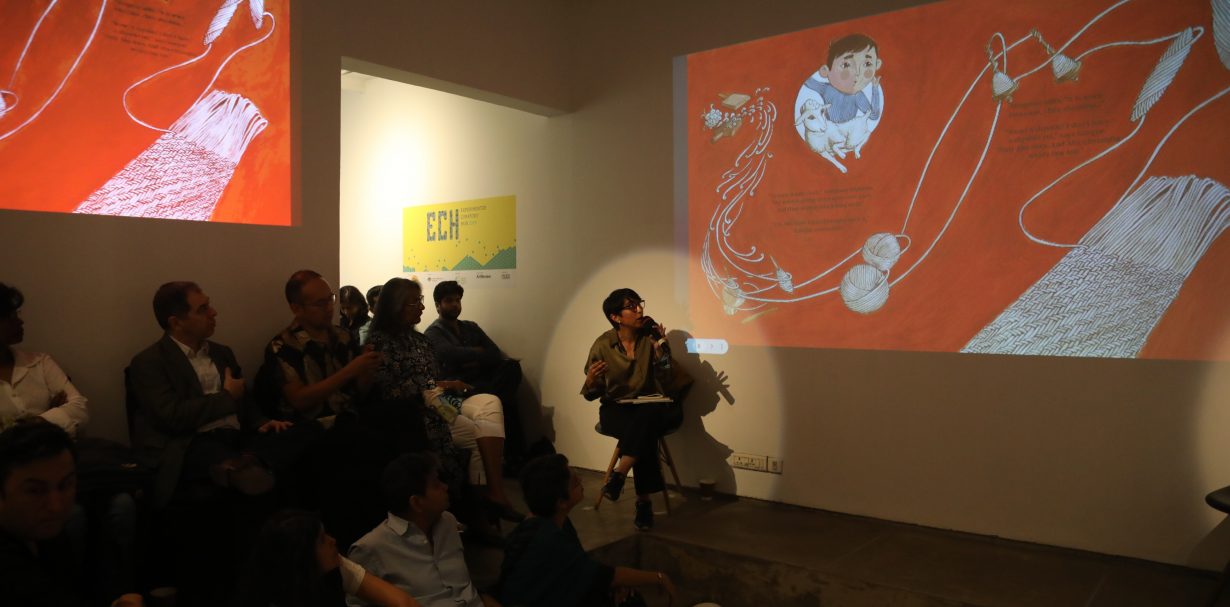
PR & PR The Experimenter Learning Program is a wider umbrella of multifaceted learning and education, of which the Experimenter Curators’ Hub is a cornerstone. We have always been interested in making our spaces active spaces of learning as opposed to passive spaces of viewing. The Learning Program runs iterative learning modules throughout the year, offering capsules of opportunity in knowledge-building, some of which are related to our exhibitions and some that are not.
ARA This year the Hub promises to foreground curating as a ‘collective practice’, what does that mean? Obviously, artists make art; curators curate – but how does that become collective? Or do you mean this in reference to cocurating?
PR & PR Curating is not a singular practice – a mind stooped over ideas and books, quietly organising exhibitions – but a fundamentally collaborative one, its fertile core given shape only through the arms and legs of a much wider network of people. As Director of Kunstinstituut Melly, Rotterdam, Gabi Ngcobo brings her distinct curatorial formula of decolonisation through self-organisation and collectivity to the institution, embracing improvisation as an ongoing conceptual approach. Sabih Ahmed’s work at Ishara Art Foundation focuses on building cross-cultural dialogue between Eastern and Western Asia through interdisciplinary formations of modern and contemporary art. Gridthiya Gaweewong, who was one of the founders of Project 304 – a former vital alternative space in Bangkok, Thailand, that championed experimental and time-based works without relying on institutions or government – will talk about the collective mode of thinking and working in a very different context. Nikhil Chopra, who curated the most recent edition of the Kochi-Muziris Biennale, will also tell us about HH Art Spaces, which is a collaborative space in Goa. Thinking and working collaboratively is a productive way to build outcomes, and we have seen it within our own structure at Experimenter.
ARA What outcomes do you hope for from the Hub?
PR & PR More collaborations, more friendships, newer partnerships, and most importantly, a productive, energising conversation and a fearless exchange of ideas and possibilities.