This iteration of Marco Scotini’s Disobedience Archive focuses on the significance of human gathering
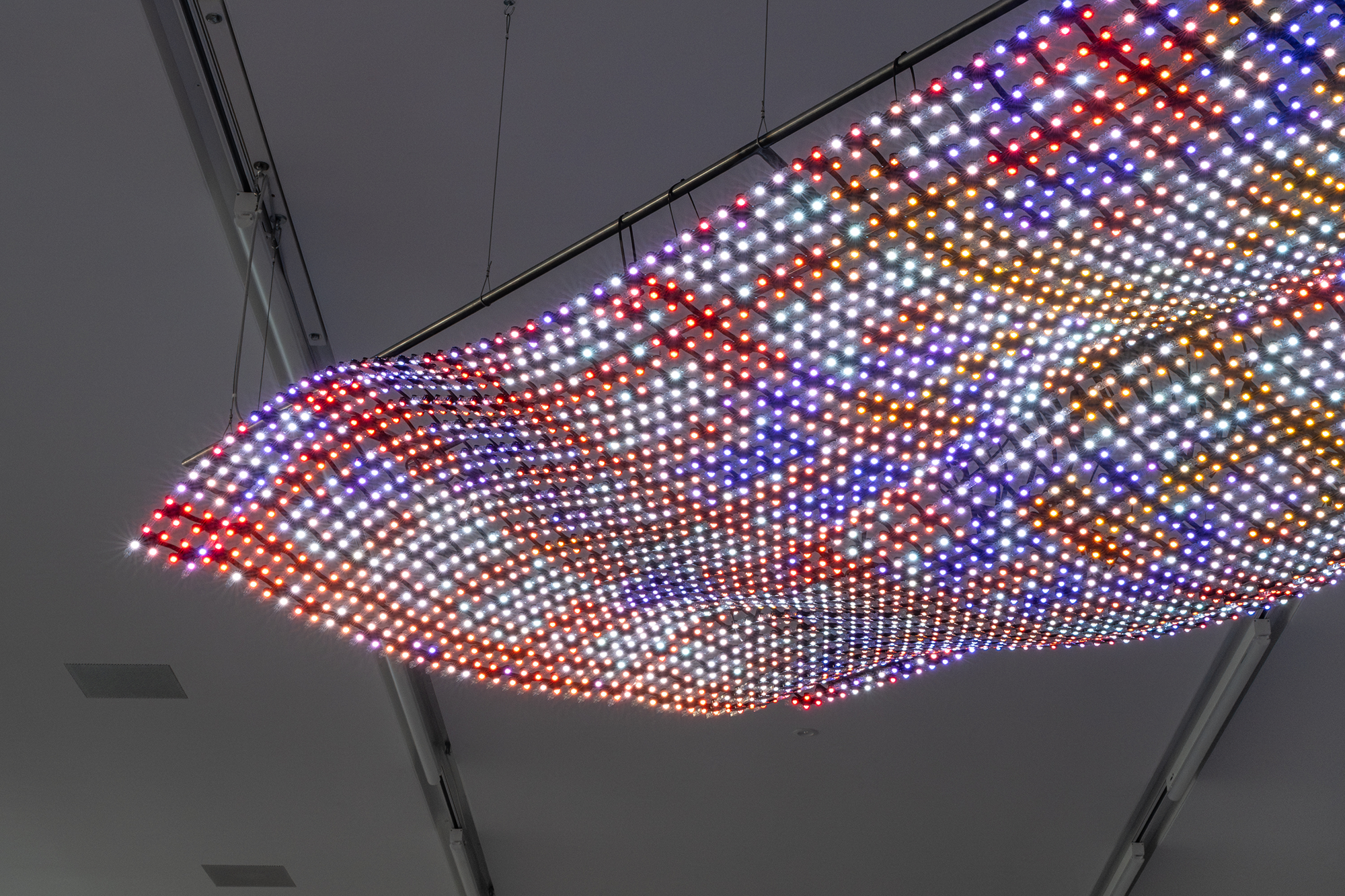
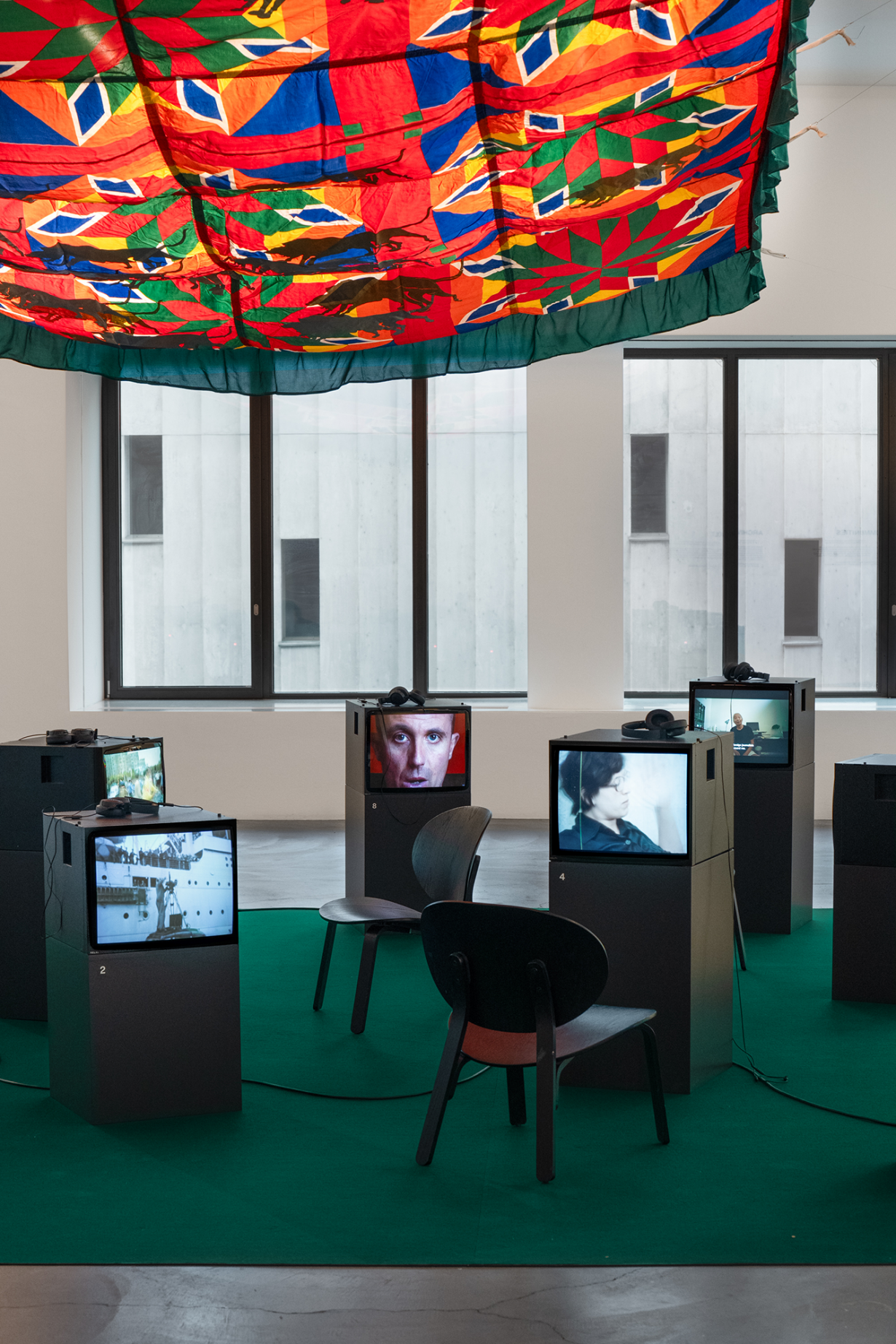
Initiated in 2005 by curator and critic Marco Scotini, the Disobedience Archive is an expanding collection, with no fixed location, of more than 100 videoworks that intersect artistic practice and political activism. The selection here has been made by Raqs Media Collective, who’ve also constructed the scenography. Five canopylike structures, inspired by the shamiana, a South Asian ceremonial tent, and made from a variety of materials including fabric, acrylic glass and LEDs, are paired with ‘chapters’ of the archive. Breaking the space into what the collective describes, in the exhibition brochure, as ‘small worlds of attention’, the canopies designate sites where visitors gather to watch films about the power of media in cultivating human belonging. The quintet of chapters contains, in total, 50 films, under the rubrics ‘Archives in Revolt’, ‘Insurgent Communities’, ‘Diaspora Activism’, ‘Radical Ecologies’ and ‘Gender Disobedience’, and is complemented by three further works from the museum’s collection. A sixth canopy features no films, functioning as a space to talk, listen and gather.
The Disobedience Archive as a whole is concerned with how political images can be received under conditions of what American scholar of communication technologies Katherine Hayles calls ‘hyper attention’, or the capacity to focus on everything at once but nothing in depth. Raqs Media Collective’s invocation of ceremonial tent architecture, conversely, suggests viewing as culturally situated, and therefore always already political. It implies an interruption of Eurocentric regimes of looking, bound up with place (such as museums). That interruption, in turn, incites wider critical reflection on looking as a catalyst for novel social arrangements, at a time when looking has become a form of labour performed ritualistically, on our devices, in the service of digital extractivism. But does politics, configured as a practice of attentional regimes, begin with sitting under cloth tents in white cubes?
So we look. Sim Chi Yin’s Requiem (Internationale, Goodbye Malaya) (2017) shows a group of elderly people attempting to remember songs once sung as guerrilla fighters during the anti-colonial war in Malaya (1948–60). They sing in fragments, forget lines and begin again. The film is an account of how memory and history unfold reciprocally and collectively, such that what is sung may not be an accurate version of the song they used to sing, but is true to how memory was experienced in the moment it was recorded. In R21 aka Restoring Solidarity (2022) Mohanad Yaqubi examines the role of images in facilitating relations between distant peoples. The film begins from an undelivered letter of solidarity, written by a Japanese activist and lost on its way to a Palestinian filmmaker only to be discovered 30 years later by Yaqubi. Fragments of that letter are interspersed with sequences from militant films, made in various other countries, that had been dubbed and screened in Japan in the aftermath of the us’s wartime presence. The film asks how people from very different places (historical, geographical, cultural) come to reconstruct the meaning of images in radically distinct contexts. Piecing together disparate signals, these films suggest a way to engage with the Disobedience Archive more generally, as each viewer reconstructs a whole that is bigger than the sum of its parts.
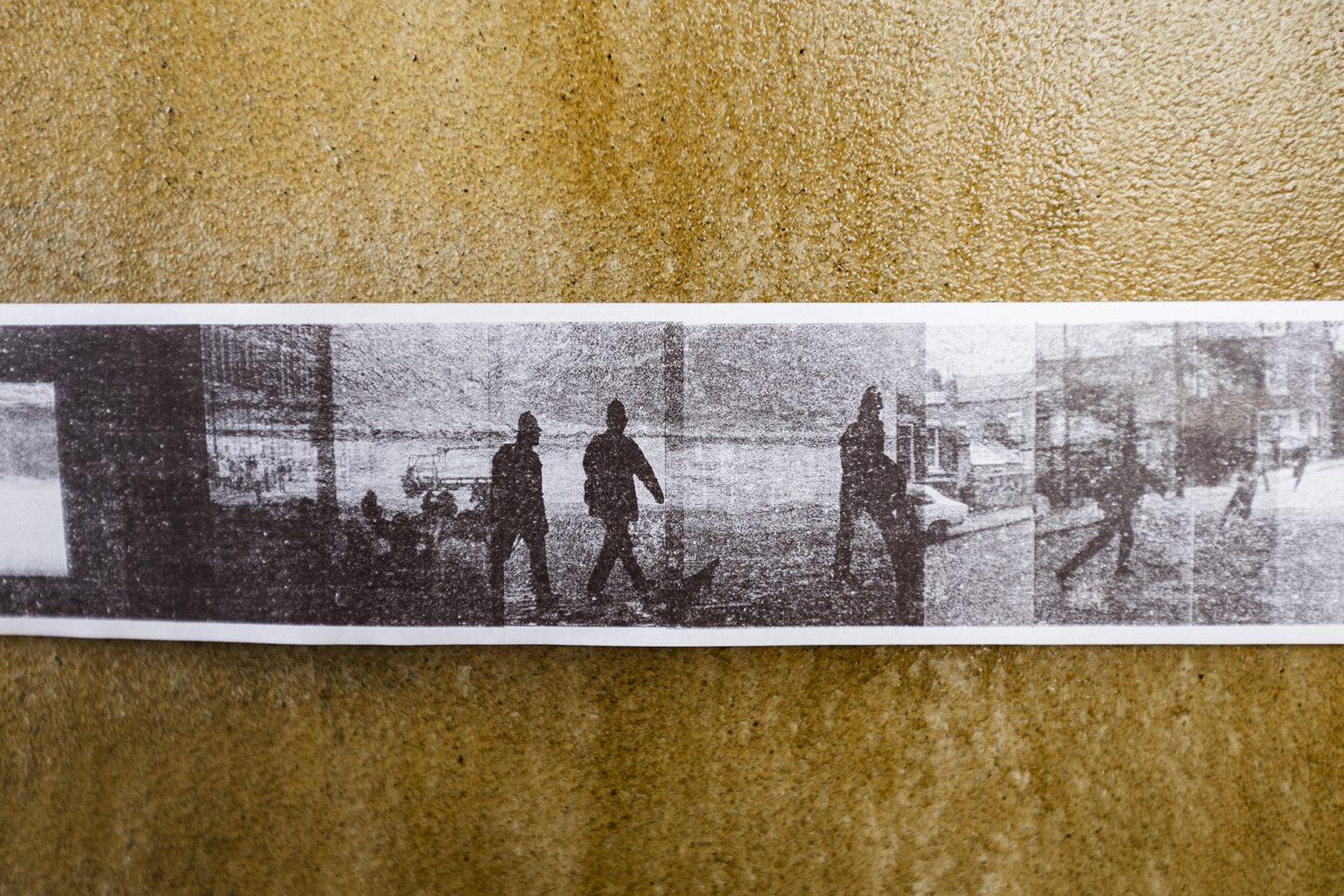
Amid this, Graciela Carnevale’s Archivio Tucumán Arde (1967–75/2014), from the Migros collection, stands apart, albeit in dialogue. It is presented as an assemblage of documents: photographs, posters and archival material connected to Tucumán Arde, the 1968 series of art events organised in Buenos Aires to expose the poverty and exploitation produced by Juan Carlos Onganía’s military dictatorship. Carnevale’s own archive here points back to a moment when art was directly entwined with political action; a strategy for ordering collective attention to provoke political effect.
Overall, the humanistic optimism of this iteration of the Disobedience Archive is rooted in its suggestion that politics begins in breaking the ceaseless flows of visual information by insisting on human contact. As the films frequently suggest how the social is reclaimed through interruption, with letters, photographs, song and film, so it is with the exhibition architecture. It’s been argued that an overabundance of visual information overwhelms, rather than informs, political discourse. Here, visual media are reclaimed, perhaps naively at times, as an opportunity to put the significance of human gathering back into the picture.
Disobedience Archive (Canopy for Broken Time): In dialogue with Raqs Media Collective, Migros Museum of Contemporary Art, Zürich, 7 February – 25 May
From the Summer 2026 issue of ArtReview – get your copy.